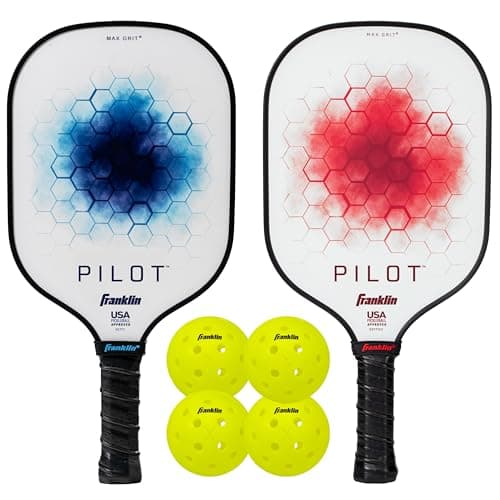
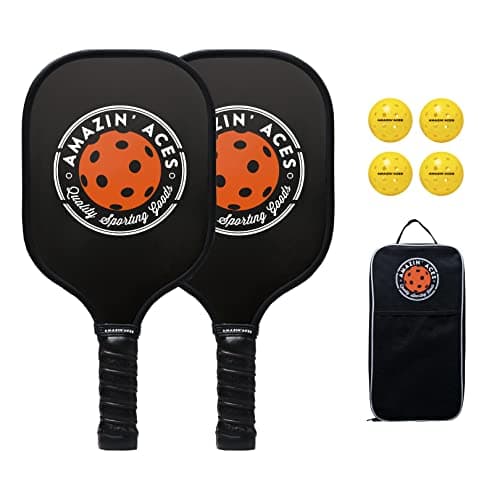
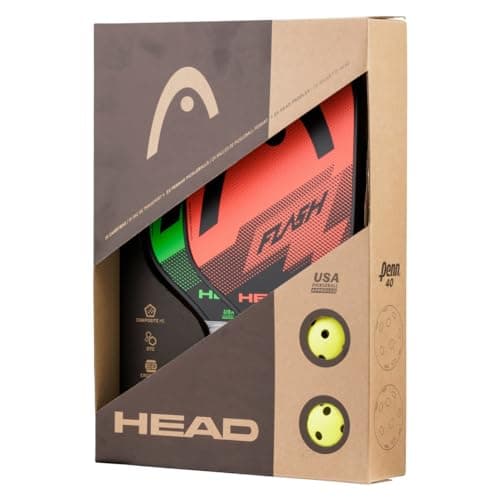
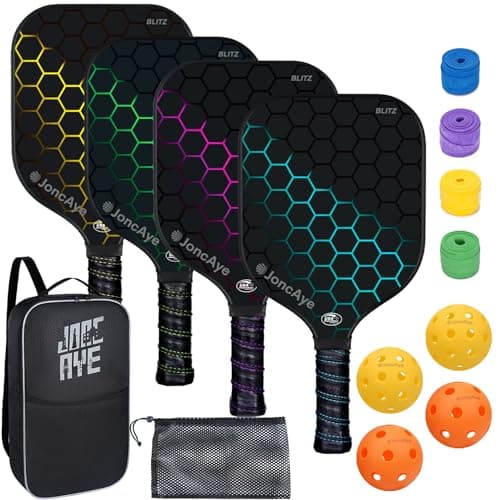
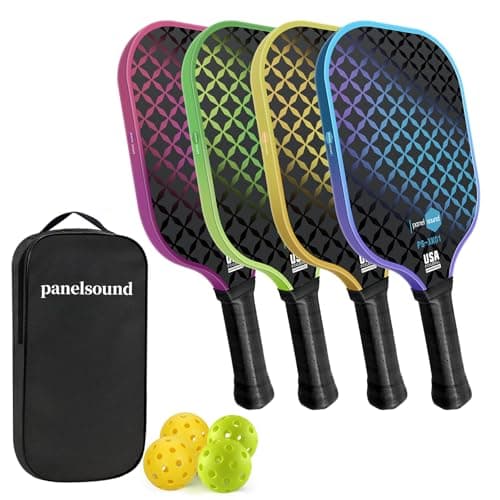
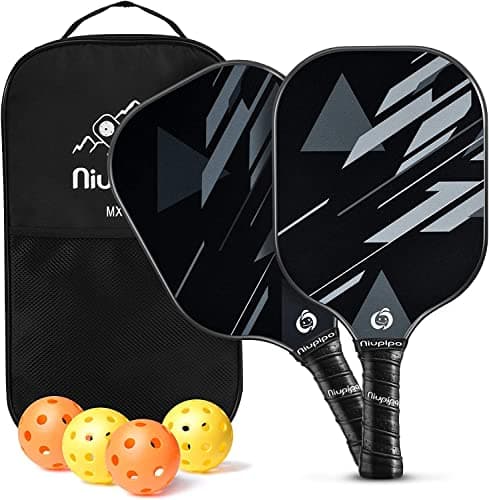
The niupipo 2-paddle set is the best way for two people to start — two USA Pickleball–approved fiberglass paddles, four balls and a bag, all in one order. If you need to outfit four players, the JoncAye 4-paddle set is the value pick.
Who a set is for (and who should skip it)
A set is the right first purchase when you are outfitting more than one person, or you want everything you need to play in a single box: paddles, balls and something to carry them in. It gets a whole family or a pair of friends onto the court the same day, for less than the cost of two decent single paddles.
A set is the wrong purchase if you are one committed player. In that case, two starter paddles are worse value than one good one — put the money into a single beginner paddle you will keep longer.
Fiberglass beats wood — but wood has one use
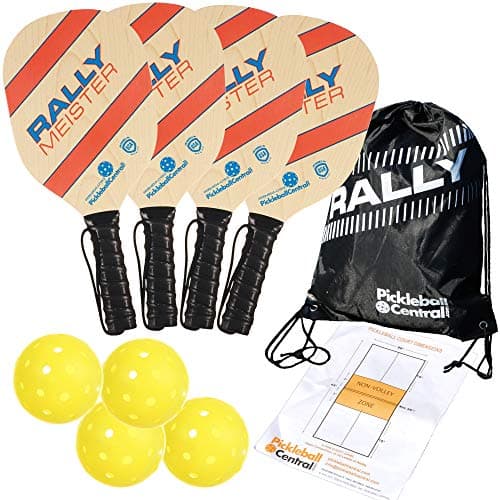
Most of the sets here use fiberglass or graphite composite paddles, which are light, lively and genuinely fun to play with. A couple (the Rally Meister and other wood bundles) use wood paddles, which are heavy and dead by comparison. Wood is fine for exactly one situation: the cheapest possible way to try the sport before you commit. If you already suspect you will keep playing, buy a fiberglass set and skip the wood stage entirely.
Two-paddle vs four-paddle sets
Two-paddle sets put the budget into better paddles for a committed pair. Four-paddle sets spread the budget across four cheaper paddles so a whole doubles game can play at once — great for a family or a group, at the cost of per-paddle quality. Decide how many people need to play at the same time, and let that pick the set size.
What to add later
The balls in most beginner sets are practice-grade. Once you are playing regularly, a fresh set of proper indoor or outdoor balls is a cheap, worthwhile upgrade — and when someone in your group gets serious, a single better paddle is the natural next step.
The one thing no set includes is a net. Public courts have their own, so most players never need one — but if you want a court on the driveway, a portable net is the missing piece. Rally & Dink's roundup of the best pickleball nets is a sensible place to start before you mark out any lines.
How to choose a beginner set
Count the players first
Two people playing: a two-paddle set. A family or group who all want to play at once: a four-paddle set. That number is the first and most important decision — everything else follows from it.
Insist on fiberglass or graphite paddles
Unless you are buying the absolute cheapest way to try the sport, avoid wood-paddle sets. A fiberglass or graphite composite face is light and lively and will not put you off the game the way a heavy wood paddle can.
Check that the paddles are USAPA approved
Approved paddles are legal for organized and league play, so you are not learning on gear you will have to replace the moment you join a group. Most of the reputable-brand sets here are approved; the cheapest generic bundles sometimes are not.
A bag included is a real bonus
Sets that include a carry bag save you a separate purchase and keep the kit together. If a set does not include one, factor in a cheap sling bag — it is a small addition that makes the gear far easier to transport.
How we picked
We have not physically tested this gear
Everyone in this category says they tested twenty paddles. We have not tested any — and we say so. What we did instead: compiled the manufacturer-published specifications (face material, core thickness, grip size, USAPA approval), normalized them, and scored each product against a published rubric weighted for the skill tier this page serves. The scores are judgments from documented research, not measurements we took, because we do not have a lab and are not going to pretend we do.