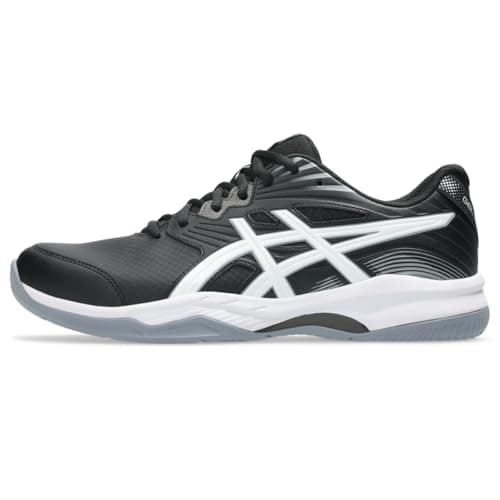
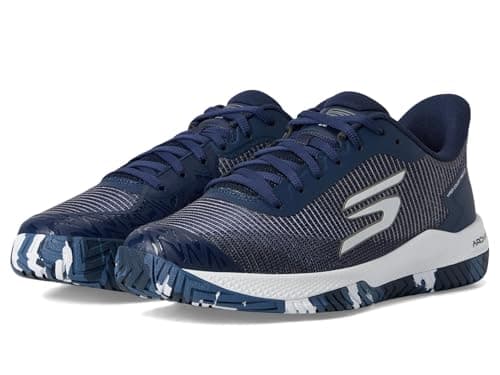
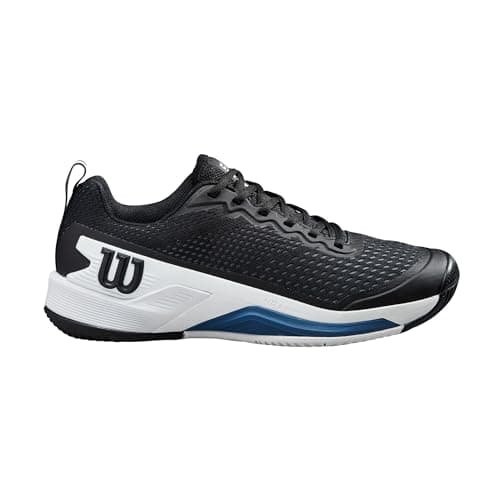
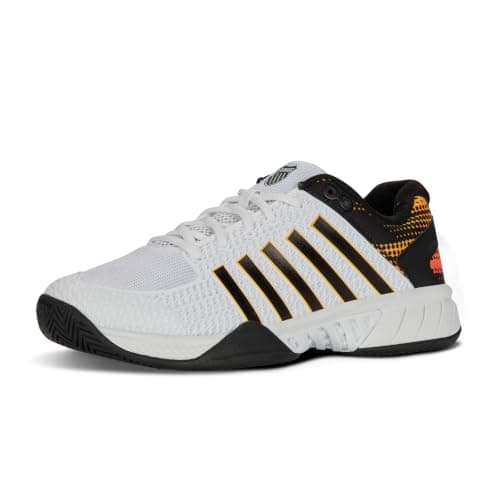
Yes — and unlike running shoes, this is not a mistake. Basketball shoes are built for lateral movement on a hard court, which is exactly what pickleball asks for. They are a reasonable stopgap and a genuinely safe one. They are just heavier, taller and less durable outdoors than the shoe actually designed for this.
Why this question has a different answer than the running-shoe one
People lump “shoes I already own” into one bucket, and that is where the confusion starts. Running shoes fail on a pickleball court for a specific structural reason: they have a tall soft platform and no side structure, so they roll under a lateral push. Basketball shoes do not have that problem. Basketball is a lateral, stop-start, hard-court sport, so a basketball shoe already has a supportive upper, a reinforced sidewall and an outsole made to grip and pivot. On the one property that actually causes injuries, they pass.
So the answer is not “no”. It is “yes, with three specific costs”.
The three real trade-offs
| Trade-off | What it means on a pickleball court | How much it matters |
|---|
| Weight | Basketball shoes are built for jump landings, so they carry more material than a court shoe needs. Pickleball footwork is small, fast and constant. | Noticeable after an hour, especially in the split-step |
| Stack height | A taller midsole sits you further off the ground. More height means more leverage acting on the ankle and knee every time you push off sideways. | Real, and the opposite of what court shoes optimize for — they deliberately sit low |
| Outsole wear | Indoor basketball outsoles use a soft rubber tuned to grip hardwood. On outdoor asphalt or concrete that compound abrades quickly. | Severe outdoors, irrelevant indoors — the single biggest factor in your decision |
High-tops are the wrong half of the category
If you are going to play in basketball shoes, reach for a low-top. The high-top collar that basketball players want for jump landings works against you in pickleball: it restricts the ankle articulation your split-step and shuffle depend on, and it adds weight exactly where you are moving fastest. A low-top basketball shoe is much closer to a court shoe in profile and behavior. It is also worth knowing that the ankle support you actually want in this sport comes from a low, wide, stable platform rather than a tall collar — which is the whole argument in our best shoes for ankle support guide.
Indoors or outdoors decides this
This is the practical fork, and it is worth being blunt about it:
- Indoor play, occasionally. Wear the basketball shoes. The outsole is on the surface it was designed for, the wear rate is fine, and you are not risking anything. Check only that the sole is non-marking, because most indoor venues require it — see indoor vs outdoor shoes.
- Outdoor play, or more than about twice a week. Buy court shoes. You will chew through a soft indoor outsole on asphalt fast enough that the “free” option stops being free, and the weight and height penalties compound the more you play.
What a court shoe gives you that a basketball shoe does not
Set against a basketball shoe specifically — not against a running shoe — a court shoe wins on four narrow points: it sits lower, so lateral push-offs are more stable; it is lighter, so quick footwork costs less; its outsole compound and herringbone pattern are tuned to grip and release on a hard court rather than to stick to hardwood; and its toe cap is built for the drag of a serve rather than for the scuffs of a crossover. None of those are dramatic on their own. Together they are the difference between a shoe that tolerates the sport and one built for it.
The picks below are the court shoes that translate best if you are coming from a basketball shoe: cushioned enough that the change does not feel harsh, but low and light in a way a basketball shoe never is.
Coming from basketball shoes: what will feel different
Expect the first session in court shoes to feel firmer and lower than you are used to. That is the product working, not a defect — the connected, close-to-the-ground feel is what makes hard cuts stable. If you want to soften that transition, prioritize cushioning in your pick rather than fighting it: the ASICS and Skechers options below are the two closest in ride to a well-padded basketball shoe while still sitting low.
Do not, however, chase the highest collar you can find. Ankle stability in pickleball comes from platform geometry, not from fabric around the ankle, and a tall collar buys restriction rather than protection.
Keep the basketball shoes for the gym
If your basketball shoes are indoor models, the best thing you can do for them is stop taking them outside. The soft hardwood-tuned rubber that makes them grip so well is the same compound that abrades on concrete, so splitting duties — court shoes for pickleball, basketball shoes for basketball — makes both pairs last longer than using either for both.
How we picked
We have not physically tested this gear
Everyone in this category says they tested twenty paddles. We have not tested any — and we say so. What we did instead: compiled the manufacturer-published specifications (face material, core thickness, grip size, USAPA approval), normalized them, and scored each product against a published rubric weighted for the skill tier this page serves. The scores are judgments from documented research, not measurements we took, because we do not have a lab and are not going to pretend we do.