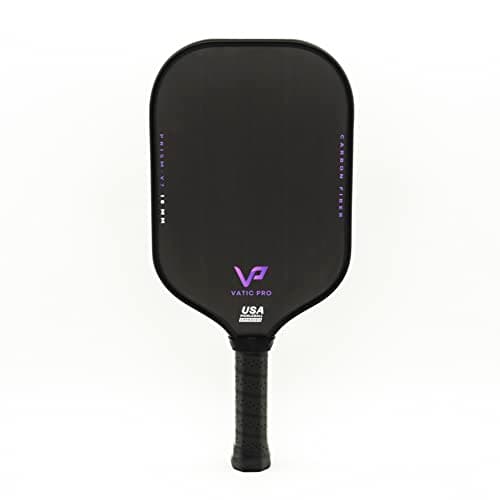
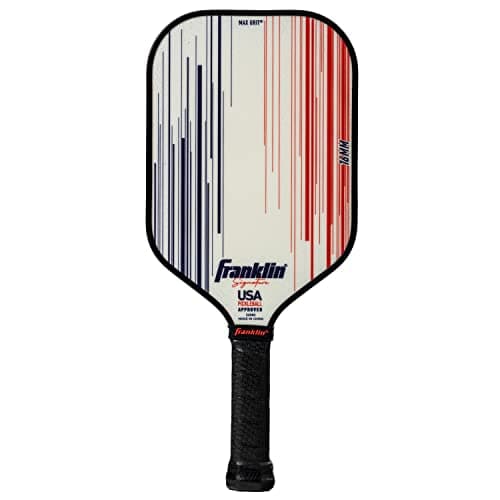
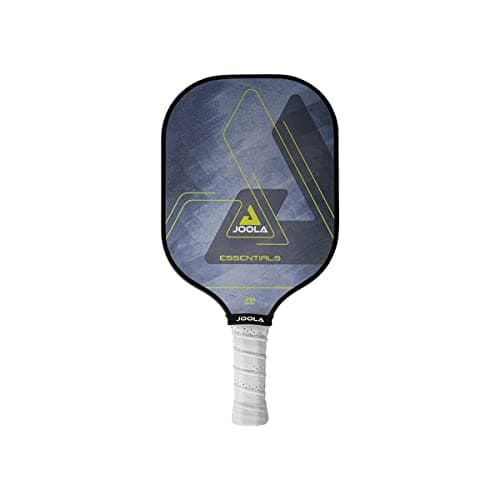
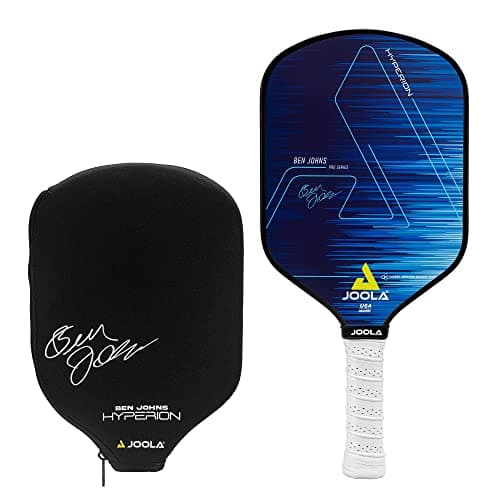
For singles the JOOLA Hyperion is our top pick — an elongated, high-grit carbon paddle that buys you reach on a court you are covering alone. The Vatic Pro Prism is the value alternative with a similar raw-carbon feel, and the Franklin Ben Johns is the cheapest pick here that still drives the ball properly.
Singles is a different sport
Take away your partner and pickleball stops being a soft-game duel and becomes a running game. You cover 20 feet of width by yourself. The kitchen dinking exchange that defines doubles largely disappears, because standing at the net alone leaves both passing lanes open. Instead the point is usually won from deeper in the court: a heavy serve, a deep return, a drive that pushes your opponent behind the baseline, and a ball into the space they cannot reach.
So the paddle priorities invert. In doubles you sacrifice reach for hand speed. In singles you will trade some hand speed for the extra couple of inches that turn a ball you watched into a ball you got a racket on. You also want more from the paddle on serve and on drives, because those are the shots doing the work.
What we looked for
Reach. An elongated shape adds length at the cost of a narrower face, and in singles that is a good trade — the extra reach converts directly into balls retrieved. Our elongated vs standard guide covers what you give up.
Drive and serve weight. A stiffer, more powerful face lets you push an opponent off the baseline, which is how singles points are constructed. That is the opposite of the deadened feel we rank first for doubles.
Spin. Spin matters more in singles than most people expect, because a heavy topspin drive dips into the court and lets you hit harder without sailing long. A high-grit textured face is worth paying for here — see our best paddles for spin if that is your priority.
Fitness is the real equipment
Worth saying plainly on a page trying to sell you a paddle: singles is decided by legs far more than by equipment. Covering a full court alone for a game to 11 is genuinely demanding, and the most common reason a singles player loses is that they stopped getting to balls in the second half of the game. A better paddle is worth a point or two; being able to still move at 9-9 is worth more.
The corollary is that footwear matters more in singles than in doubles, because you are simply doing more of the lateral loading that wrecks running shoes. If you are playing singles regularly on hard courts, read our court shoes vs running shoes guide before you spend another dollar on a paddle.
Elongated paddles have a real downside
The reach is not free. Moving mass toward the tip makes the paddle slower to turn and shrinks the sweet spot, so mis-hits are punished harder and hand battles get more difficult. If you play a mix of singles and doubles — which most people do — an elongated paddle can make you noticeably worse at the doubles half of your week. Be honest about the split before you buy for the format you play less.
Weight: heavier is more defensible here
Singles is the one format where reaching for extra weight makes sense. A heavier paddle adds depth to your serve and drives and helps you block pace back when you are stretched. The limit is your arm: heavier paddles increase the load on the elbow, and singles already involves more swings per game. If you have any history of arm trouble, stay midweight and read our tennis elbow paddle picks instead of chasing mass.
One paddle or two?
If you play both formats seriously, owning two paddles is a legitimate answer and cheaper than people assume — a second budget paddle costs less than most players spend on balls in a year. Use the elongated paddle for singles and a standard shape for doubles. If you would rather own one, buy the standard shape: doubles is what you will actually play most weeks.
Approval still matters
Singles tournament brackets use the same equipment standards as doubles. If organized play is anywhere in your future, confirm USA Pickleball approval on the listing before buying.
How we picked
We have not physically tested this gear
Everyone in this category says they tested twenty paddles. We have not tested any — and we say so. What we did instead: compiled the manufacturer-published specifications (face material, core thickness, grip size, USAPA approval), normalized them, and scored each product against a published rubric weighted for the skill tier this page serves. The scores are judgments from documented research, not measurements we took, because we do not have a lab and are not going to pretend we do.