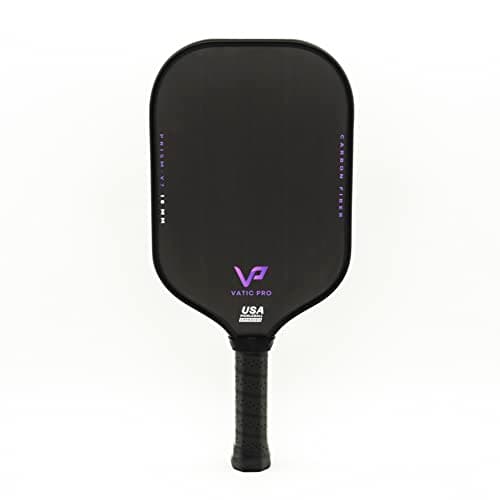
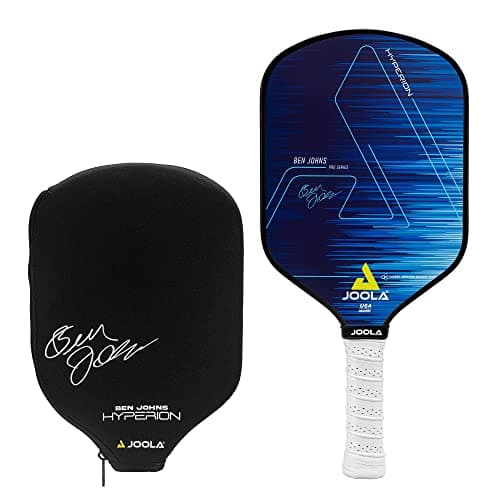
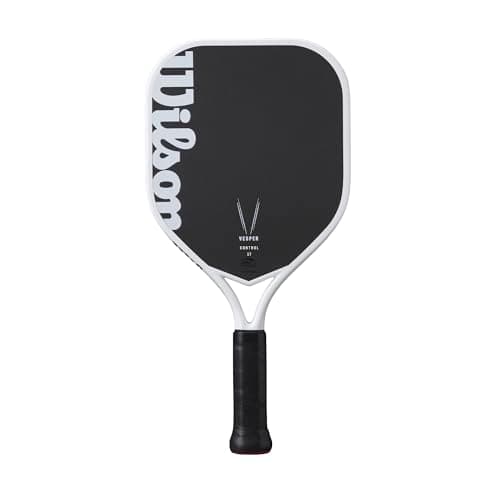
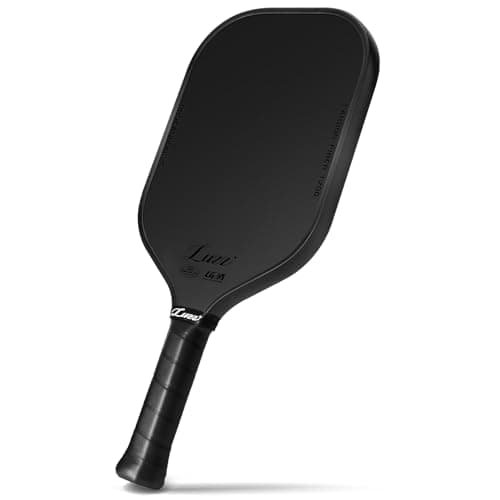
Under $150 the Luzz Cannon is our top pick — a thermoformed T700 carbon paddle with a 16mm core that publishes the same construction as paddles costing far more. The Vatic Pro Prism is the pick if you want more control and less stiffness, the JOOLA Ben Johns Hyperion is the spin paddle, and the Wilson Vesper is the one for a pure soft game.
What changes at $100
Our under-$100 list is a value story: fiberglass and graphite faces, honeycomb cores, and one carbon bargain that sneaks in at the top of the band. The band above it is where the construction changes. Between $100 and $150 you start seeing raw carbon fiber faces from the T700 family, thermoformed unibody builds where the face and edge are pressed as one piece, and foam-injected edge wallsthat manufacturers use to widen the sweet spot and firm up the edge. You also start seeing the big brands' signature paddles, priced for the name as much as the build.
The practical difference is durability of the spin and the feel of the paddle at the edges. A raw carbon face keeps its texture longer than a painted grit coating, which is why our carbon vs fiberglass guide tells improving players to move up when they can. A thermoformed edge does not soften over time the way a glued edge guard can. Whether either is worth the extra money over a $50-something Franklin depends entirely on how often you play and how much of your game is spin.
What we looked for
Construction you cannot get for less. Every pick here publishes something the under-$100 paddles do not: a T700 carbon face, a thermoformed body, foam walls, a 17mm core. A paddle that merely costs more than $100 without adding any of that did not make the list. Approval. All four are sold as USA Pickleball approved; the newer Luzz and JOOLA listings also cite the PBCoR .43 limit that tournament testing now applies, and you can check any model on the approved paddle list linked in the sources. The live price. This is a budget page, so the picks have to actually sit under the line on the day you read it. The budget check below is generated from the same live price data as the buttons, and it will tell you plainly if a paddle has drifted over.
Budget check, as of Sep 17, 2026: 4 of the 4 picks on this page were priced under $150 on Amazon. This line is generated from the same live price data as the buttons, so it updates when the prices do.
How to pick between them
If you want the most construction for the money and you already hit the middle of the face reliably, take the Luzz Cannon— it publishes an elongated 16.54-inch body, a 5.52-inch handle and USAP plus UPA-A approval, and it is the cheapest way into a thermoformed T700 paddle we have found. If you are moving up from a beginner paddle and are not sure you want the stiffness of a full thermoform, the Vatic Pro Prismis the safer landing: Vatic Pro positions it explicitly between “thermoformed paddles that are too powerful” and “Gen-1 paddles that are too soft,” and its published 4.125-inch grip is the smallest here — a point in its favor for smaller hands, which our best paddles for women page goes into.
If spin is the reason you are spending, the JOOLA Hyperion is the only paddle in our registry to score a 10 on it, and its 5.5-inch handle is built for a two-handed backhand. It is also the paddle in this band most likely to drift toward the $150 line, so watch the budget check. And if your game is dinks and resets rather than drives, the Wilson Vesper's 17mm core is the thickest here and scores a 10 on control — it is the paddle to buy if you will trade put-away power for touch, and the wrong one if you will not.
Is $150 the sweet spot?
For most intermediate players, yes. Above $150 the registry's paddles — the Luzz Pro 4 Tornazo and Inferno, for instance — publish spec sheets that are near-identical to the Cannon's apart from the core material story, and no independent lab has separated that story from ordinary foam. Below $100 you give up the raw carbon face and the thermoform. The $100–150 band is where the construction that changes how a paddle plays first appears, without the premium that comes with a flagship badge.
Stiff paddles punish beginners
Three of the four picks here are stiff carbon paddles, and two are thermoformed. That is the point of the band, and it is also the warning: a stiff face makes an off-center hit worse, not better. If you are still learning where the middle of the face is, spend less — our beginner picks are chosen for forgiveness, and the money you save buys balls and a court shoe. Come back to this list when your contact is consistent; the when to upgrade guide describes the signs.
14mm or 16mm?
Two of these paddles are sold in both core thicknesses, and the Amazon listing does not always make the configuration obvious. The 16mm versions are the ones we rank. A 14mm core is poppier and quicker off the face; a 16mm core absorbs more pace and plays softer. Our 14mm vs 16mm guidecovers the trade-off — check the listing's title before you buy.
Check the grip size, not just the price
Published grip circumferences on this page range from 4.125 inches (Prism) to 4.25 inches (Hyperion, with JOOLA noting it may vary). That quarter inch is the difference between a handle you can wrap an overgrip onto and one that is already too big. The grip size guide shows how to measure your hand before you spend $150 on a paddle you cannot hold properly.