Skip to content
Four Oh Club

Learn the game · Guides

How to Hold a Pickleball Paddle

One grip for almost everything — the continental — found two ways, held at about a four out of ten. When to shift toward eastern for a topspin forehand, how the two-handed backhand works, and the four mistakes coaches correct first.

By Stephen V.Updated How we score
#ad

We earn a commission when you buy through our Amazon links, at no extra cost to you. It never changes our rankings, and we say so when the cheaper paddle is the better buy. How this works.

Hold a pickleball paddle with a continental grip: shake hands with the handle so the V between your thumb and index finger sits on the top edge, spread the index finger slightly, and squeeze at about a four out of ten. That one grip covers dinks, volleys, blocks, serves and most drives, and it is the grip every coaching source we read recommends beginners start with. Everything else on this page is a refinement of it.

Why one grip, and why this one

Tennis players arrive with a library of grips and switch between them mid-point. Pickleball mostly does not allow that. Once four players are at the kitchen line, exchanges happen from about fourteen feet apart in a fraction of a second, and as one coaching guide puts it, “there is no time to switch.” You need a grip that is acceptable on the forehand, the backhand and the volley without changing, and that is what the continental is: the face sits square, so the same hand position hits both sides and blocks a fast ball at your chest.

Coaches describe it two ways. Post & Paddle calls it the handshake grip: hold the paddle edge-on, perpendicular to the ground, and shake hands with the handle. Pickleball US's Coach Vincent Tadler uses the bevels — the eight flat edges of the handle — and says “the index knuckle is your anchor”: on the continental, the index knuckle sits on bevel two, the one just clockwise of the top edge for a right-hander. Both methods land your hand in the same place; pick whichever you can feel.

Finding the continental grip, step by step

  1. Hold the paddle edge-on, face perpendicular to the ground, with your non-dominant hand at the throat.
  2. Shake hands with the handle. Your palm approaches from the side, not from above. If you are holding the paddle like a frying pan, you have come in from the wrong direction.
  3. Check the V. The V formed by your thumb and index finger should sit on the top edge of the handle, or very slightly toward the left of it for a right-handed player. Equivalently: index knuckle on bevel two.
  4. Spread the index finger slightly up the handle, like a trigger finger. It gives you control of the face angle without tightening the whole hand.
  5. Relax. Aim for a three or four on a scale of one to ten. If your knuckles are turning white, as Tadler puts it, you are gripping too tight.

Grip pressure is the part everyone gets wrong

A death grip does three things, none of them good. It makes the paddle rigid, so a dink that should die pops up into an easy put-away. It kills the touch you need for a reset. And it loads the forearm on every hit, which is how a season of pickleball turns into a season of elbow pain — our tennis elbow paddle picks exist because of exactly this. Coaches converge on a number: three to four out of ten for dinks and resets, firming to five or six for a volley or block, and a momentary squeeze for an overhead before relaxing again. The grip should feel like you could have the paddle knocked out of your hand by a firm tap.

The eastern shift for topspin

The one place the continental gives something up is the topspin forehand drive. Rotating the hand slightly clockwise — index knuckle onto bevel three — closes the face a touch and makes brushing up the back of the ball more natural. Coaches describe this as “a small turn,” not a re-grip, and the trade is a weaker backhand and slower blocks if you get stuck there. A full western grip, another bevel further round, produces heavy topspin and is poor for “volleys, dinks and backhands, and it is rare in pickleball for exactly that reason.” If you are chasing spin, the paddle matters too: our spin paddle picks and spin-and-control picks rank the faces that reward the brush.

The two-handed backhand

Increasingly common, especially among tennis converts. Keep the dominant hand in its continental position and add the non-dominant hand above it. The second hand adds stability and power to a drive and a firmer block; the cost is reach, because two hands on the handle shortens how far you can stretch. Paddles with a longer handle exist for this — the 5.5-inch handle on the JOOLA Hyperionis the example on this site — but a two-hander works on a standard handle; it is just more crowded.

The mistakes coaches correct first

  1. The frying-pan grip. Face up, hand on top, like holding a spatula. It feels natural on day one and makes every backhand and volley an adventure.
  2. Choking up.Sliding the hand toward the face for “control.” It shortens your reach and it does not add control; a looser grip does.
  3. Palming the handle. The handle should sit in the fingers, not buried in the palm. Fingers give you the face angle; the palm gives you a club.
  4. Changing grips mid-rally. There is no time. Settle on the continental and make the eastern shift only on a forehand drive you have seen coming.

What to look for in the handle itself

None of the above works on a handle that is the wrong size or has gone slick. Grip circumference decides whether you can hold the paddle in the fingers at a four out of ten or have to clamp it in the palm; our grip size guide shows how to measure your hand, and sizing down and building up with an overgrip is almost always better than sizing up. The surface matters too: a worn, shiny grip forces you to squeeze harder just to keep the paddle from turning, which is the pressure problem coming in through the back door. An overgrip is the cheapest fix in the sport. The three below are the ones we rank for a first re-wrap, for sweaty hands and arm pain, and for a known brand — the full ranking is on our overgrips page.

The short answer

Quick picks

#Paddle / gearBest forScorePrice
01
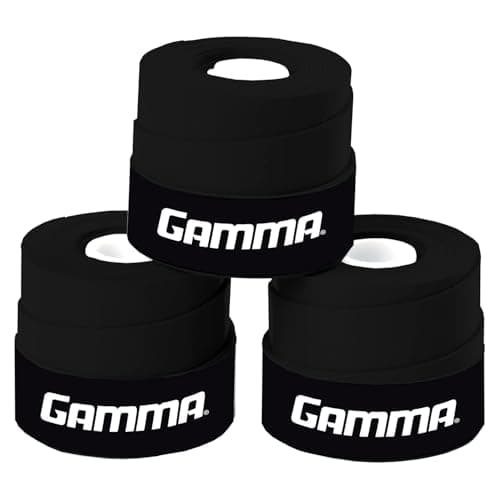
GAMMA GAMMA Supreme Overgrip (3-pack)
GAMMA Supreme Overgrip (3-pack)

The default overgrip to buy first — three wraps for the price of a sandwich, from a brand that also makes paddles.

The first overgrip to try
7.8
$7.99Amazon
02
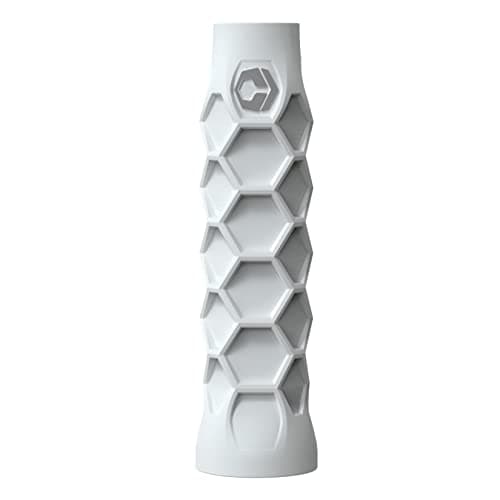
Hesacore Hesacore Pickleball Paddle Grip
Hesacore Pickleball Paddle Grip

Not an overgrip at all — a molded replacement grip whose raised pattern gives your fingers something to hold, which is why players with sore arms keep finding it.

Arm pain and grip strength
8.0
$26.90Amazon
03
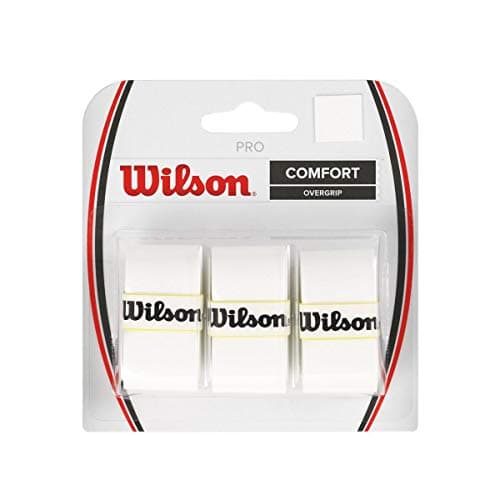
Wilson Wilson Pro Overgrip (3-pack)
Wilson Pro Overgrip (3-pack)

The overgrip half the tennis tour has used for years, and it wraps a paddle handle just as happily.

A known quantity
7.8
$9.00Amazon

#ad · Live prices from the Amazon Product API, as of Sep 17, 2026. Where we have no verified live price, we show none — we would rather leave a gap than print a number that has rotted.

In detail

The picks, in full

01
GAMMA GAMMA Supreme Overgrip (3-pack)

The first overgrip to try

GAMMA Supreme Overgrip (3-pack)

3 grips per packOvergripListed for pickleballBlack
7.8/10

The default overgrip to buy first — three wraps for the price of a sandwich, from a brand that also makes paddles.

Grip
8
Sweat handling
7
Comfort
8
Durability
7
Value
9

Pros

  • Cheap enough to re-wrap the moment the handle goes slick, rather than nursing a dead grip
  • Three per pack covers most of a season for a once-or-twice-a-week player
  • Sold for pickleball as well as tennis, so the width suits a paddle handle

Cons

  • One color in this pack, so you cannot color-code a paddle you share
  • A plain overgrip — it adds feel, not the structural change a replacement grip makes

Don't buy this if…

your hands sweat heavily. A perforated, absorbent grip will stay dry longer than a standard one.

$7.99View on Amazon

Price as of Sep 17, 2026. Prices change — Amazon's is the one that counts.

#ad · we may earn a commission from this link to GAMMA Supreme Overgrip (3-pack)

02
Hesacore Hesacore Pickleball Paddle Grip

Arm pain and grip strength

Hesacore Pickleball Paddle Grip

5.25 in grip sizeReplacement gripFinger support patternSize Small
8.0/10

Not an overgrip at all — a molded replacement grip whose raised pattern gives your fingers something to hold, which is why players with sore arms keep finding it.

Grip
9
Sweat handling
8
Comfort
8
Durability
9
Value
6

Pros

  • Structural, not cosmetic — the molded pattern changes how your hand loads the handle
  • The seller lists reduced vibration and tennis-elbow comfort as the design intent
  • Holds its shape rather than going slick and flat the way a worn overgrip does

Cons

  • Three times the price of a three-pack of overgrips
  • Sized: this is the 5.25 in Small, so check your grip size before ordering
  • The raised pattern is genuinely divisive — some players dislike the feel immediately

Don't buy this if…

you just want a fresh, cheap wrap. This is a considered change to how the paddle feels, not a consumable.

$26.90View on Amazon

Price as of Sep 17, 2026. Prices change — Amazon's is the one that counts.

#ad · we may earn a commission from this link to Hesacore Pickleball Paddle Grip

03
Wilson Wilson Pro Overgrip (3-pack)

A known quantity

Wilson Pro Overgrip (3-pack)

3 grips per packOvergripWilson Pro
7.8/10

The overgrip half the tennis tour has used for years, and it wraps a paddle handle just as happily.

Grip
8
Sweat handling
7
Comfort
8
Durability
8
Value
8

Pros

  • The most widely used overgrip in racquet sports — you know what you are getting
  • Thin enough that it barely changes your grip circumference
  • Easy to find a refill of, in any pro shop or big-box sports aisle

Cons

  • Costs a little more per wrap than the budget multipacks
  • The Amazon listing states only the count — no thickness or material detail

Don't buy this if…

you want to build the handle up a size. An overgrip this thin will not do it — see our grip size guide.

$9.00View on Amazon

Price as of Sep 17, 2026. Prices change — Amazon's is the one that counts.

#ad · we may earn a commission from this link to Wilson Pro Overgrip (3-pack)

Grip by shot

ShotGripPressure (of 10)
Dink, reset, dropContinental3–4
Volley, blockContinental5–6, short punch
ServeContinental, or a small shift toward eastern4–5
Topspin forehand driveSmall shift toward eastern5–6
OverheadContinentalFirm at contact, then relax

The numbers are the ranges coaches quote, not measurements. The point is the pattern: soft shots soft, firm shots briefly firm, and back to soft.

Serving with the continental

The rules require an underhand serve with contact below the waist, and the continental handles it without a change — the face is square and the motion is a low-to-high swing. Our serving guide covers the motion and the serving rules cover what is legal. Players who want topspin on the serve make the same small eastern shift they use on a drive.

Drill it

The fastest way to make the continental automatic is to dink with it for ten minutes before every session and to volley against a wall for five. Our beginner drills and dinking guide both assume this grip.
How we picked

We have not physically tested this gear

Everyone in this category says they tested twenty paddles. We have not tested any — and we say so. What we did instead: compiled the manufacturer-published specifications (face material, core thickness, grip size, USAPA approval), normalized them, and scored each product against a published rubric weighted for the skill tier this page serves. The scores are judgments from documented research, not measurements we took, because we do not have a lab and are not going to pretend we do.

Questions

Frequently asked

What is the correct way to hold a pickleball paddle?
The continental grip: shake hands with the handle held edge-on so the V of your thumb and index finger sits on the top edge, spread the index finger slightly, and hold at about a four out of ten pressure.
How tight should I hold a pickleball paddle?
About three to four out of ten for dinks and resets, five to six for volleys, with a brief squeeze on an overhead. White knuckles mean too tight.
Should beginners use the continental or eastern grip?
Start with the continental; it covers both sides and the volley without switching. Shift a little toward eastern only on a topspin forehand drive once the continental is automatic.
How do you hold a pickleball paddle with two hands?
Keep the dominant hand in its continental position and place the non-dominant hand above it. It adds stability and power on the backhand at the cost of reach.
Does grip size affect how I hold the paddle?
Yes. A handle that is too big forces you to clamp it in the palm; one that is right sits in the fingers at a light pressure. Measure your hand with our grip size guide, and size down rather than up.

Keep reading

Receipts

Sources

We do not run a testing lab, and we do not pretend to. Our specs come from manufacturer listings and spec sheets; our rules and dimensions come from the official rulebook. Where we could not verify something, we say so on the page rather than quietly leaving it out. Read our full method.