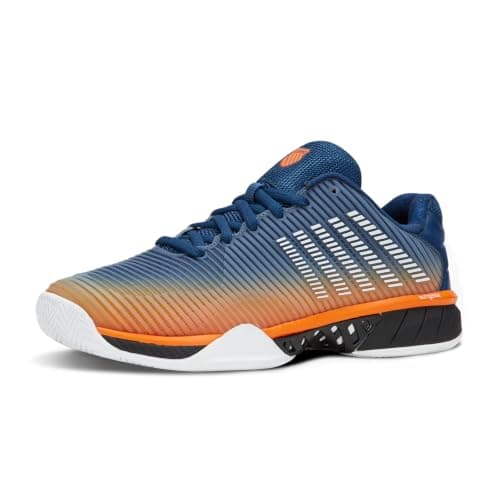
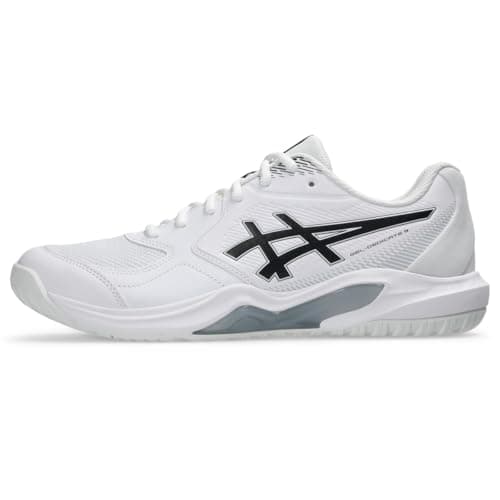
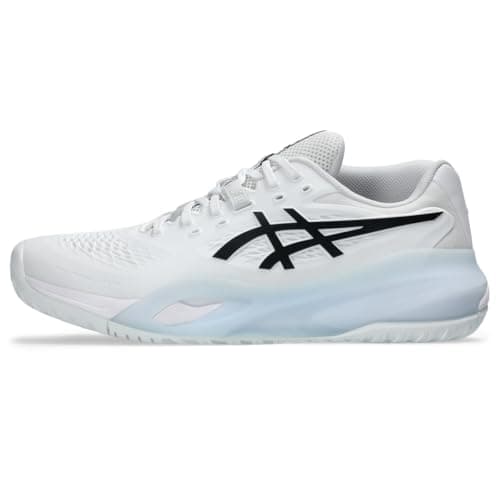
Choose a tennis shoe in this order: court surface, then lateral support, then fit, then outsole durability. Everything else — weight, cushioning feel, color — is a preference, not a decision.
Step 1: court surface
This comes first because it can rule out most of the market in one move.
Hard court is the default in American club tennis. You want a durable compound in a multi-directional or modified herringbone tread. If you do not know what you play on, it is almost certainly this, and the ranking is at best tennis shoes for hard courts.
Clay needs a tight, full-coverage herringbone that grips and then releases, and that sheds the surface rather than packing with it. A hard-court outsole on clay simply skids, and a clay outsole on hard court wears out in weeks.
Grass and indoor carpet are rare enough in club tennis that an all-court shoe is the sane answer unless your club is unusual.
Step 2: lateral support
The structure that stops your foot sliding off the side of the midsole when you plant and change direction. This is the one feature that separates a tennis shoe from every other shoe, and it is where the money goes.
It is also the answer to the question most people arrive with. If you are currently playing in road shoes, this is the structure you are missing, and the whole comparison is at tennis shoes vs running shoes. If what you currently own is a pair of basketball shoes, the answer is different and softer — tennis shoes vs basketball shoes covers it — and if the reason you are still in road shoes is price, the entry-level court shoes in best budget tennis shoes all have the structure this section describes.
Named systems are real: ASICS DYNAWALL, adidas' Torsion shank and high medial wall, Wilson 4D Support Chassis, New Balance PROBANK. A shoe whose maker describes only the cushioning is telling you where its engineering budget went.
Step 3: fit and width
The step most people skip and most people regret. A court shoe has to be snug or your foot slides inside it on hard cuts — which causes blisters and means the support structure is catching the shoe rather than your foot.
Brand lasts vary more than sizes do. Babolat is the narrowest major brand; ASICS is standard-to-snug; adidas is standard; K-Swiss is the roomiest; New Balance is the only brand offering genuine 2E and 4E widths. If one brand has always pinched, the answer is a different brand, not a different size.
Step 4: outsole durability
Last, because it only matters once the first three are right — a durable shoe that does not fit is still the wrong shoe. The brands that are confident name the compound: ASICS AHAR and AHAR Plus, adidas Adiwear, K-Swiss Aösta 7.0, Babolat's Michelin-developed rubber.
If you drag your toe on serve, add a fifth criterion: a reinforced medial toe. adidas Adituff is the best of these and will save you a pair of shoes a year.
Three more fit pages, for the problems this one only touches on. High arches need cushioning and forefoot room rather than motion control; bunions need width in one specific place and a soft upper over the joint; and lightweight tennis shoes are the page for anyone whose problem is two hours on court rather than the fit.
If the shoes you already own come from another court sport, the substitution question is answered in full on tennis shoes vs badminton shoes — short version: a badminton shoe's soft gum outsole is made for a smooth indoor floor and an abrasive hard court will wear the tread flat in a handful of sessions.
Two follow-on pages. Once you own a pair, how long tennis shoes last covers when to replace them and why the tread is the wrong thing to look at. And if your reason for being here is an ankle rather than an arch, tennis shoes for ankle support ranks on torsional stiffness and lateral containment instead of fit.
One worked example of all of this, in the brand most club players end up in: the ASICS Gel-Resolution X is listed as running LONG with the advice to size half down if you are between sizes, while the Court FF 3 is listed TRUE — same brand, same width, different size on your foot. Gel-Resolution vs Court FF works the whole comparison through.
Getting the size right
Three checks, in order, and the order matters because a failure at any step invalidates the ones after it.
Heel lock. Lace up fully, walk, then rise onto your toes. Any heel lift and the shoe is wrong, no matter how good the front feels. A lifting heel means the shoe moves independently of your foot, which is exactly what the support structure is supposed to prevent.
Forefoot width. Your foot should sit on the footbed rather than spilling over its edges. If the upper is visibly bulging at the little toe, you need a wider last, not a longer shoe.
Length. About a thumbnail's width in front of your longest toe when standing. Most players size up a half from their street shoe in tennis models.
Try shoes in the afternoon — feet swell through the day — and in the socks you actually play in.
What cushioning actually does
Cushioning is comfort and impact protection, not support, and the two are often traded against each other. A very soft midsole feels wonderful in a shop and allows more foot movement on a hard lateral push; a firmer one feels unforgiving and holds you better.
For most club players, moderate cushioning with strong support beats maximum cushioning. The exception is a player with existing foot pain, where the calculation genuinely flips — see shoes for plantar fasciitis.
How much to spend
More than you want to and less than the top of the range. The useful tiers:
| Playing | Tier | Example |
|---|
| Once a week or less | Entry court shoe | ASICS Gel-Dedicate 9 |
| Twice a week | Mid performance | Wilson Rush Pro 4.5, HEAD Revolt Pro |
| Three or more times a week | Full performance | ASICS Gel-Resolution X, adidas Barricade |
The jump from running shoes to an entry court shoe is enormous. The jump from entry to premium is real but much smaller, and it is mostly about how long the shoe survives.
Replacement, and the signal to watch
Judge the midsole, not the tread. When the shoe stops feeling supportive on lateral pushes, the foam has compressed permanently and the support structure sits too low to hold you — even though the outsole may look nearly new. For a club player on hard courts that is roughly 60–100 hours of play.
Rotating two pairs if you play three or more times a week meaningfully extends both, because midsole foam needs about a day to recover its structure.
The one thing not to do
Do not buy a tennis shoe a half size large “to be safe”. In a running shoe that is a minor inefficiency; in a tennis shoe it is the cause of blisters, black toenails and a support structure that never reaches your foot. Snug and correct beats roomy and comfortable here, which is the opposite of the advice most people apply to shoes generally.