Skip to content
Four Oh Club

The cheapest upgrade · Strings

Multifilament vs Synthetic Gut

The two cheapest comfortable strings in tennis, and they are not the same thing. One is hundreds of fibers; the other is one fiber with a jacket on. That difference decides which you should buy.

By Stephen V.Updated How we score
#ad

We earn a commission when you buy through our Amazon links, at no extra cost to you. It never changes our rankings, and we say so when the cheaper racquet is the better buy. How this works.

Buy multifilament if your arm matters and synthetic gut if your budget does. Multifilament is hundreds of fine fibers bundled together, which makes it the most comfortable string you can buy without paying for natural gut — and it is the right call for anyone with a sore elbow or over about 45. Synthetic gut is a single solid nylon core with a wrap around it: it costs roughly half as much, lasts a little longer, holds tension respectably and is harsher. For a 3.0 to 3.5 player with a healthy arm who restrings twice a year, synthetic gut is the sensible default. For everyone else, the extra few dollars per restring buys the single biggest comfort upgrade available at this price.

That is the verdict. The sections below are the construction difference it comes from, the honest comparison table, and the three situations where the general answer flips.

What each one actually is

Synthetic gut is a solid monofilament nylon core with one or more outer wraps of thinner filaments. Prince's Duraflex version is the archetype: a solid core with a Duraflex wrap. The solid core is why it is cheap, durable and consistent — and also why it is relatively stiff. It is the string most racquets come pre-strung with and the string most club shops use by default, which is not an accident: it is genuinely good value.

Multifilament replaces that solid core with hundreds (sometimes thousands) of fine fibers twisted and bonded together, in deliberate imitation of natural gut's bundled structure. Each fiber flexes independently, so the whole string stretches more and absorbs more impact energy. Wilson's NXT and Sensation and HEAD's Velocity MLT are all this construction. That is where the comfort comes from and also where the fragility comes from: once the outer fibers abrade, the bundle frays and the string dies visibly.

Both are nylon-family strings. Both are "soft" strings compared to polyester. The difference is architecture, not material, and architecture is what you feel.

Side by side

PropertyMultifilamentSynthetic gut
ConstructionHundreds of fine fibers, twisted and bondedSolid nylon monofilament core with an outer wrap
ComfortHighest of any non-gut stringModerate; noticeably firmer
PowerHigh — more stretch means more free depthModerate and predictable
FeelSoft, cushioned, a longer dwell timeCrisp and a little muted
Tension maintenanceGood at first, then softens as the bundle settlesGood and steady; the solid core holds its shape
DurabilityLower; frays visibly once the outer fibers abradeHigher at the same gauge
Spin potentialLow — it grips the ball but does not snap backLow
Typical cost per restringRoughly double synthetic gutThe cheapest real string there is
Best forSore arms, older players, comfort-first club playBudget club play, juniors, pre-strung replacements

Tension maintenance: the one place synthetic gut genuinely wins

Every string loses tension. TennisCompanion's reference on replacing strings puts the immediate drop at roughly 10 percent in the first 24 hours after stringing, and treats a 10 to 15 lb (about a 30 percent) loss as the point at which a restring is overdue. It also notes that polyester is notorious for losing tension fast, while natural gut has best-in-class tension maintenance.

The two strings on this page sit between those poles, and they fail differently. Synthetic gut's solid core resists creep well, so it holds a fairly steady tension until the wrap wears. Multifilament starts comfortable and gets progressively softer as the fiber bundle settles, so it feels powerful in week two and mushy by week eight, and depth control goes first.

That has a practical consequence: multifilament rewards restringing on a schedule rather than on breakage. If you are the sort of player who restrings only when a string snaps, synthetic gut will serve you better — it stays closer to the same string for longer. Our restring frequency guide has the published table.

Cost, properly calculated

The per-set price is misleading because the two strings live different lengths of time. The number that matters is cost per month of acceptable play.

Buy reels, not sets. This is where the real saving is, and it applies to both. A 200 m reel of NXT is roughly 16 string jobs; a reel of Prince Synthetic Gut is similar. Per restring, a reel is a fraction of a set, and if you are paying a shop for labor anyway you can supply your own string. For anyone restringing three or more times a year, a reel makes a multifilament cost about what synthetic gut costs in sets.

Gauge is the other lever. TennisCompanion's gauge reference gives the standard chart — 16 gauge is 1.26 to 1.34 mm, 17 is 1.16 to 1.24 mm — and notes that thicker string is more durable and longer lasting. So if you break multifilament too fast, go to 16 gauge before you abandon the string type: a 16g multifilament will often outlast a 17g one by enough to change the arithmetic. The same source notes that the studies on gauge and stringbed stiffness have been inconclusive, so do not expect a thinner gauge to solve a comfort problem by itself.

Three situations where the general answer flips

1. You have tennis elbow. Buy multifilament, at the lowest tension in your frame's range, and do not think about the price. The AAOS describes tennis elbow as overuse causing microtearing of the forearm tendons at the elbow, and reports that approximately 80 to 95% of patients succeed with nonsurgical treatment — which makes the equipment side worth getting right. String is the cheapest and largest lever you have. See strings for tennis elbow.

2. You break strings every three weeks. Then neither of these is your string and this is the wrong page. A heavy topspin hitter who shreds nylon needs polyester, which trades comfort for durability and spin — read poly vs multifilament. The honest middle path is a hybrid: polyester in the mains for durability, multifilament in the crosses for comfort.

3. You are stringing a junior's racquet, or a second frame. Synthetic gut, every time. A junior will outgrow the frame before the string matters, and nobody should put a premium multifilament in a backup racquet that lives in a car.

And the string above both of them

Worth naming for completeness, because the whole reason multifilament exists is to imitate it: natural gut is still the most comfortable and most elastic string made, with the best tension maintenance of anything. It costs several times a multifilament and it genuinely dislikes damp weather. If comfort is a medical requirement rather than a preference, and the cost is tolerable, it is the real answer — a gut-and-poly hybrid is what a large share of the professional tour plays. Everyone else: multifilament gets you most of the way there for a fraction.

For the wider map, including polyester and the hybrids, types of tennis strings is the taxonomy and how to choose tennis strings is the decision tree. For the number that matters as much as the string itself, see the tension guide: a multifilament strung tight is less comfortable than a synthetic gut strung loose, which is the most common way players waste money on string.
The short answer

Quick picks

#Racquet / gearBest forScorePrice
01
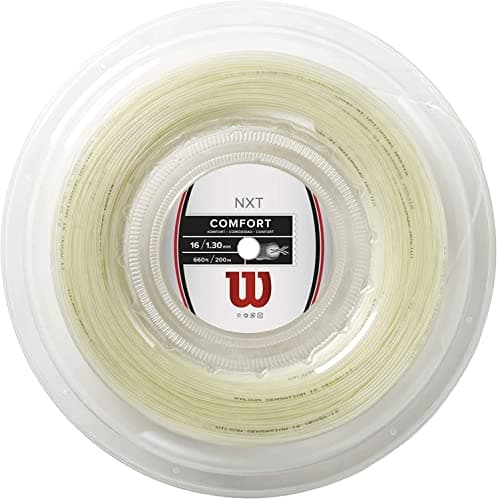
Wilson Wilson NXT 16 (200 m reel)
Wilson NXT 16 (200 m reel)

The premium multifilament, bought the sensible way — a reel. The closest a synthetic string gets to natural gut, at a tenth of gut's price.

Comfort and feel
6.6
$276.21Amazon
02
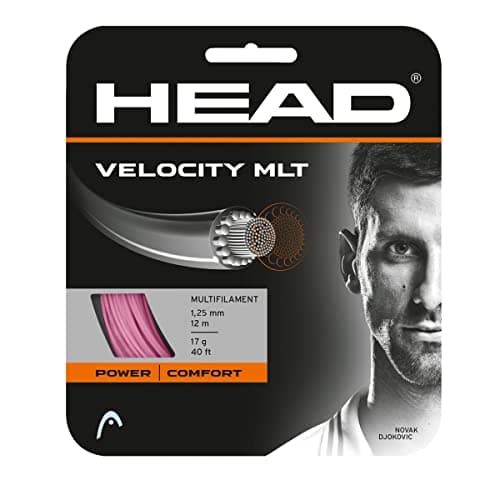
HEAD HEAD Velocity MLT 17 (set)
HEAD Velocity MLT 17 (set)

The budget multifilament, and the right first upgrade from factory string — comfortable, lively and genuinely cheap.

Arm-friendly on a budget
7.0
$10.00Amazon
03
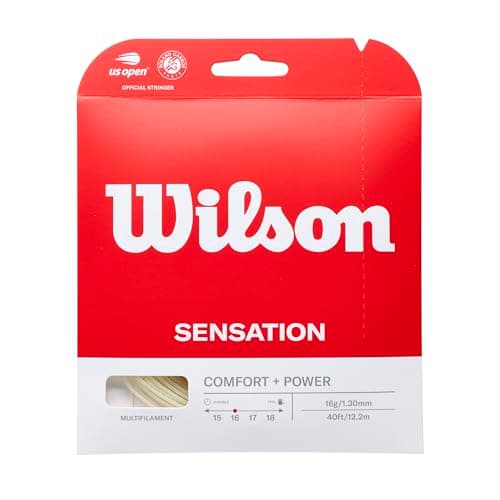
Wilson Wilson Sensation 16 (set)
Wilson Sensation 16 (set)

The string Wilson puts in its own frames at the factory — a soft, forgiving multifilament that is a safe default for any club player.

All-round comfort
7.0
$13.94Amazon
04
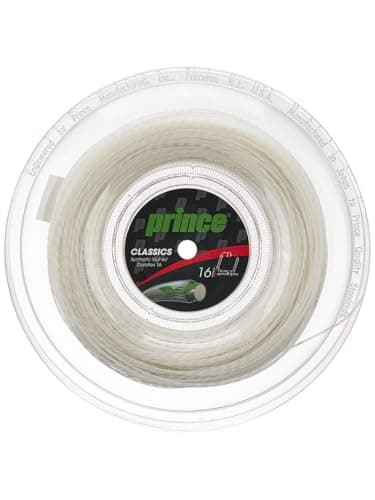
Prince Prince Synthetic Gut Duraflex 16 (reel)
Prince Synthetic Gut Duraflex 16 (reel)

The default string in every club pro shop for thirty years, bought by the reel. Cheap, inoffensive and perfectly adequate for a 3.0.

Beginners and clubs
6.8
$79.95Amazon
05
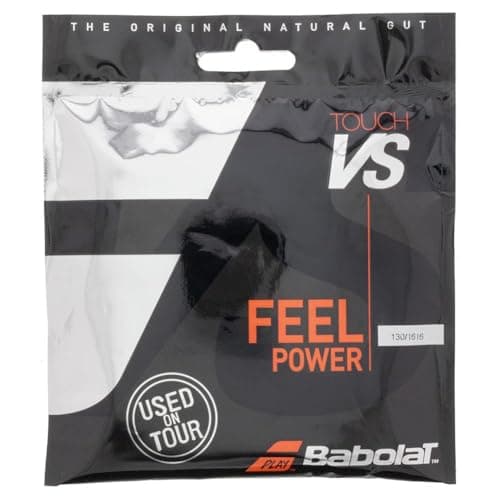
Babolat Babolat VS Touch Natural Gut 16 (set)
Babolat VS Touch Natural Gut 16 (set)

The best-playing string in tennis, and the most expensive. Natural gut is what every synthetic is trying to imitate.

Maximum comfort and feel
6.8
$65.00Amazon

#ad · Live prices from the Amazon Product API, as of October 20, 2026. Where we have no verified live price, we show none — we would rather leave a gap than print a number that has rotted.

In detail

The picks, in full

01
Wilson Wilson NXT 16 (200 m reel)

Comfort and feel

Wilson NXT 16 (200 m reel)

Multifilament16g / 1.30 mm200 m reel (~16 jobs)High elasticity
6.6/10

The premium multifilament, bought the sensible way — a reel. The closest a synthetic string gets to natural gut, at a tenth of gut's price.

Control
6
Spin
5
Comfort
10
Durability
4
Value
8

Pros

  • Thousands of fibers bundled in polyurethane give it the elastic, ball-pocketing feel of natural gut
  • The most arm-friendly synthetic string widely sold — the first thing to try if your elbow hurts
  • A 200 m reel works out to a fraction of the per-job cost of sets

Cons

  • Multifilament frays and breaks far faster than poly if you hit heavy spin
  • A reel is a large up-front purchase that only pays back if you restring often

Don't buy this if…

…you break strings in under ten hours. You will be restringing weekly and should hybrid with a poly.

$276.21View on Amazon

$324.9515% off

Price as of October 20, 2026. Prices change — Amazon's is the one that counts.

#ad · we may earn a commission from this link to Wilson NXT 16 (200 m reel)

02
HEAD HEAD Velocity MLT 17 (set)

Arm-friendly on a budget

HEAD Velocity MLT 17 (set)

Multifilament17g / 1.25 mm40 ft setNylon multifilament
7.0/10

The budget multifilament, and the right first upgrade from factory string — comfortable, lively and genuinely cheap.

Control
6
Spin
5
Comfort
9
Durability
5
Value
10

Pros

  • Multifilament comfort at roughly a third of NXT's per-set price
  • The cheapest meaningful step a 3.0–3.5 player can take toward a softer string bed
  • Lively enough to add free depth to a low-powered frame

Cons

  • Frays and breaks faster than NXT, never mind poly
  • Less control than any polyester — big swings will send balls long

Don't buy this if…

…you break strings every few sessions. Hybrid it with a poly in the mains instead.

$10.00View on Amazon

Price as of October 20, 2026. Prices change — Amazon's is the one that counts.

#ad · we may earn a commission from this link to HEAD Velocity MLT 17 (set)

03
Wilson Wilson Sensation 16 (set)

All-round comfort

Wilson Sensation 16 (set)

Multifilament16g / 1.30 mm40 ft setWilson factory string
7.0/10

The string Wilson puts in its own frames at the factory — a soft, forgiving multifilament that is a safe default for any club player.

Control
6
Spin
5
Comfort
9
Durability
6
Value
9

Pros

  • This is the string in the factory Clash, Blade and Ultra, so you already know how it plays if you own one
  • Thicker 16 gauge makes it more durable than most multifilaments
  • Soft, powerful and completely uncontroversial — hard to be unhappy with

Cons

  • Low control at high swing speeds; a 4.5 hitting out will find it loose
  • Minimal spin potential

Don't buy this if…

…you swing fast and hit heavy topspin. You need a poly in the mains at minimum.

$13.94View on Amazon

Price as of October 20, 2026. Prices change — Amazon's is the one that counts.

#ad · we may earn a commission from this link to Wilson Sensation 16 (set)

04
Prince Prince Synthetic Gut Duraflex 16 (reel)

Beginners and clubs

Prince Synthetic Gut Duraflex 16 (reel)

Solid-core nylon16g / 1.30 mmReelDuraflex wrap
6.8/10

The default string in every club pro shop for thirty years, bought by the reel. Cheap, inoffensive and perfectly adequate for a 3.0.

Control
6
Spin
5
Comfort
7
Durability
6
Value
10

Pros

  • The cheapest per-restring cost of any string here by a wide margin
  • Solid core with a Duraflex wrap: more durable than a plain nylon, softer than any poly
  • Completely predictable — nothing about it will surprise or disappoint a developing player

Cons

  • No standout property: less control than poly, less comfort than multifilament, less spin than either
  • Goes dead quickly; the tension drop is real even if the string has not broken

Don't buy this if…

…you are 4.0 or above. You will feel the lack of control within a set.

$79.95View on Amazon

Price as of October 20, 2026. Prices change — Amazon's is the one that counts.

#ad · we may earn a commission from this link to Prince Synthetic Gut Duraflex 16 (reel)

05
Babolat Babolat VS Touch Natural Gut 16 (set)

Maximum comfort and feel

Babolat VS Touch Natural Gut 16 (set)

Natural gut16g / 1.30 mm40 ft setHighest elasticity
6.8/10

The best-playing string in tennis, and the most expensive. Natural gut is what every synthetic is trying to imitate.

Control
8
Spin
6
Comfort
10
Durability
5
Value
5

Pros

  • Unmatched elasticity and tension maintenance — it holds its tension longer than any synthetic while staying soft
  • The most arm-friendly string available, full stop. For a player with chronic elbow trouble this is the genuine answer
  • Exceptional feel: the ball stays on the string bed longer and you can tell exactly what it is doing

Cons

  • Several times the price of a quality poly, per set
  • Damaged by moisture — it does not survive a rained-on match or a damp car trunk

Don't buy this if…

…you play outdoors in the damp or break strings quickly. The cost per hour becomes indefensible.

$65.00View on Amazon

Price as of October 20, 2026. Prices change — Amazon's is the one that counts.

#ad · we may earn a commission from this link to Babolat VS Touch Natural Gut 16 (set)

How we picked

We have not physically tested this gear

Everyone in this category says they tested twenty racquets. We have not tested any — and we say so. What we did instead: compiled the manufacturer-published specifications (head size, strung weight, string pattern, stiffness, outsole compound), normalized them, and scored each product against a published rubric weighted for the NTRP tier this page serves. The scores are judgments from documented research, not measurements we took, because we do not have a lab and are not going to pretend we do.

Questions

Frequently asked

Is multifilament better than synthetic gut?
More comfortable and more powerful, yes; better value, not always. Multifilament's hundreds of bonded fibers stretch and absorb more impact, which is why it is the most comfortable string short of natural gut. Synthetic gut's solid nylon core costs roughly half as much, lasts longer and holds tension more steadily. Arm first, budget second.
What is the difference between multifilament and synthetic gut?
Construction. Synthetic gut is one solid nylon monofilament core with an outer wrap — cheap, durable, firmer. Multifilament is hundreds of fine fibers twisted and bonded in imitation of natural gut — softer, more powerful, and it frays rather than snapping cleanly. Both are nylon-family soft strings; the architecture is what you feel.
Which string holds tension better?
Synthetic gut, in practice. Its solid core resists creep, so it stays closer to the same string for longer. Multifilament starts lively and softens progressively as the fiber bundle settles, so depth control goes first. Every string drops roughly 10 percent of its tension in the first 24 hours, and a 10 to 15 lb loss is the point to restring.
Is synthetic gut bad for your arm?
Not bad, but firmer than multifilament, and firmness is what you are managing if your elbow hurts. For a healthy arm at 3.0 to 3.5, synthetic gut at a sensible tension is perfectly comfortable. If you have had tennis elbow, go to a multifilament at the low end of your frame's tension range — it is the cheapest meaningful intervention available.
Which string lasts longer?
Synthetic gut, at the same gauge. If you like multifilament but break it too quickly, move to a 16 gauge (1.26-1.34 mm) before giving up on the type — thicker string is more durable, and a 16g multi will often outlast a 17g one by enough to change the cost per month.
How can I make multifilament affordable?
Buy a reel. A 200 m reel is roughly 16 string jobs, which brings the per-restring cost of a premium multifilament down to roughly what synthetic gut costs in individual sets. If you are paying a shop for labor anyway, supplying your own string from a reel is the single biggest saving available in strings.

Keep reading

Receipts

Sources

We do not run a testing lab, and we do not pretend to. Our specs come from manufacturer listings and spec sheets; our rules and dimensions come from the official rulebook. Where we could not verify something, we say so on the page rather than quietly leaving it out. Read our full method.