If you play tennis, buy a tennis shoe. The short answer: a badminton shoe will work on an indoor court for a few sessions and will be destroyed by one outdoor hard court, because its soft gum outsole is made to grip a polished wooden or synthetic indoor floor rather than to survive abrasive acrylic. Going the other way is less damaging and still wrong — a tennis shoe is heavier, stiffer and higher off the ground than badminton footwork wants. For tennis, the ASICS Gel-Resolution X is the pick; if you want the closest thing to a badminton shoe's lightness in a real tennis shoe, the Babolat Jet Mach 4 is it.
That is the whole verdict. What follows is why, because the reasons are specific and they tell you something useful about what to look for in a court shoe generally.
Side by side
| Feature | Tennis court shoe | Badminton shoe |
|---|
| Designed surface | Outdoor hard court, clay, indoor hard | Indoor wood or synthetic sports floor |
| Outsole rubber | Dense abrasion-rated compound (AHAR Plus, Adiwear, Michelin) | Soft non-marking gum rubber, tuned for a clean indoor floor |
| Outsole pattern | Herringbone or multi-directional, with pivot zones | Fine herringbone or hexagonal, optimized for grip and squeak |
| Weight | Heavier; mass buys durability and lateral structure | Noticeably lighter; the sport rewards foot speed above all |
| Lateral support | Reinforced lateral wall, torsion chassis, firm heel counter | Present but lighter; built for lunges rather than long slides |
| Cushioning | Substantial, for hours of running on an unforgiving surface | Thinner, with a lower stack for court feel and fast changes |
| Toe protection | Armored drag guard for the serve drag (Adituff, DragGuard) | Reinforced toe for the forward lunge, not for dragging |
| Typical lifespan in tennis | Months of regular play on hard courts | Weeks at most on an outdoor hard court |
| Outdoor use | Designed for it | Not recommended by the makers |
Why the outsole is the whole difference
Both sports demand grip, stopping power and quick direction changes. But the floor is not the same, and outsole rubber is formulated for a floor.
A badminton court is a smooth indoor surface — wood, or a synthetic mat over it. Grip there comes from soft, tacky, non-marking gum rubber that deforms slightly into the floor's texture. Softness is the feature: it gives the squeaky, instant bite that badminton footwork depends on.
An outdoor tennis court is acrylic paint over asphalt or concrete, mixed with silica sand. It is sandpaper. Soft gum rubber on sandpaper abrades fast, and a badminton outsole will lose its tread pattern in a handful of sessions. That is why tennis outsoles use dense, abrasion-specified compounds instead — ASICS's AHAR Plus, adidas's Adiwear, Babolat's Michelin-made outsoles — and why the better tennis shoes carry a six-month outsole durability guarantee that no badminton shoe offers.
The reverse case is subtler. A tennis outsole on an indoor badminton floor grips perfectly well and does no damage, provided it is non-marking. The problem is everything above the outsole: the shoe is heavier and sits higher, so the fast repeated lunge-and-recover of badminton feels sluggish.
Why the footwork is different
This is the part most comparisons miss, and it explains the weight difference.
Tennis is lateral and long. You cover a 27-foot-wide court, sprint to a wide ball, stop hard, and change direction under load. On clay you also slide. That demands a reinforced lateral wall to stop the foot rolling off the midsole, a torsion chassis to resist twisting, and real cushioning because you are running on concrete for two hours. All of that is weight, and in tennis the weight pays for itself.
Badminton is forward-diagonal and explosive. The court is smaller, the rallies are faster, and the signature movement is a deep forward lunge to the net followed by an instant recovery, repeated hundreds of times. That rewards low stack height, a light shoe and a flexible forefoot. Carrying a tennis shoe's armor through that pattern is paying for protection you do not need against a surface that is not trying to destroy you.
There is a real podiatric dimension here too. Court sports put the foot through repeated side-to-side loading rather than the straight-ahead cycle of running, which is exactly why podiatrists point court players at court shoes rather than running shoes — see tennis shoes vs running shoes for that comparison, which is the more dangerous mistake of the two.
Can you use badminton shoes for tennis?
On an indoor tennis court, for a few sessions: yes, with caveats. The grip will be good. What you will miss is lateral support on a wide ball and cushioning in the second hour. If you are playing social indoor tennis once and own badminton shoes, wear them rather than running shoes — they are at least built for side-to-side movement.
On an outdoor hard court: no. You will sand the outsole flat, lose the tread, and then lose grip at exactly the moment you need it. This is not a longevity argument, it is a safety one: a worn smooth outsole on a dusty hard court slides when you plant.
On clay: no. Clay needs a full herringbone pattern that packs and releases the surface. A badminton tread clogs and then skates. See clay court shoes.
Can you use tennis shoes for badminton?
Yes, as long as the outsole is non-marking — and check that, because many clubs enforce it strictly and some tennis outsoles will mark a wooden floor. You will be slower than you would be in a badminton shoe and the shoe will last essentially forever indoors.
If you play both sports regularly, the honest answer is to own both pairs. They are not expensive relative to a season of either sport, and the single-shoe compromise costs you durability in tennis or speed in badminton. If you must pick one pair for both, pick the tennis shoe: it survives both surfaces, where the badminton shoe survives only one.
So which tennis shoe
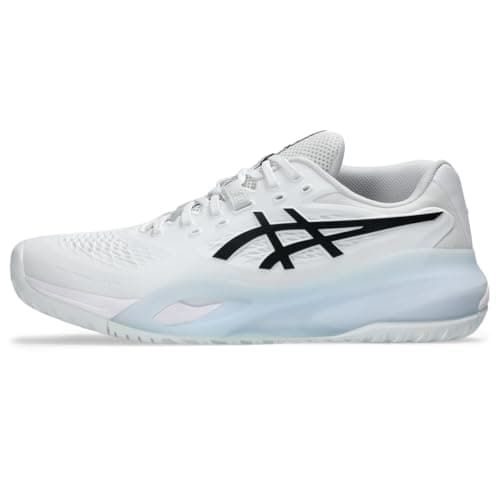
ASICS Gel-Resolution X if you want the most supported, most durable option: a full-length AHAR Plus outsole, a re-engineered DYNAWALL lateral wall and a FlyteFoam Blast+ midsole. This is the shoe for a player who slides, stops hard and plays long matches.
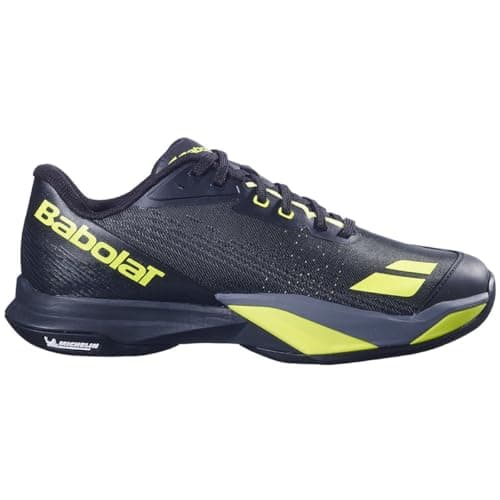
Babolat Jet Mach 4 if what attracted you to a badminton shoe was the lightness. A Matryx woven upper and a Michelin outsole make it the quickest-feeling real tennis shoe here, and the closest thing in a tennis shoe to badminton-shoe foot speed.
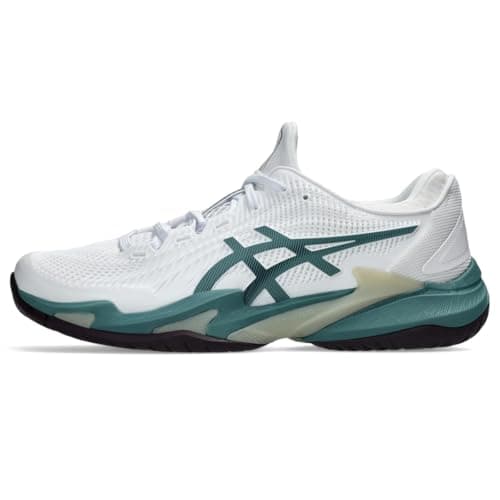
ASICS Court FF 3 if you play an attacking, forward-moving game. A low-profile fit and FLYTEFOAM midsole suit a player who comes forward, which is the tennis pattern closest to badminton's.
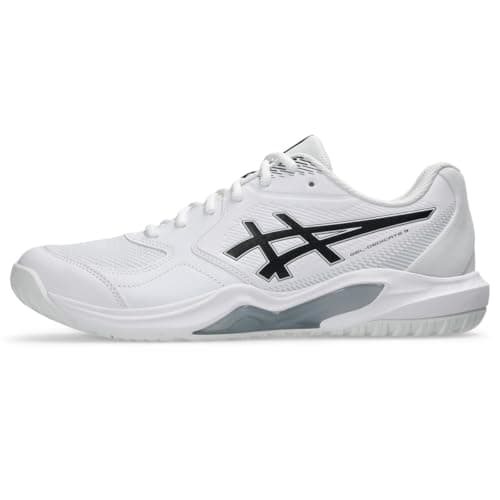
ASICS Gel-Dedicate 9 if you are testing whether you need a real court shoe at all. It is a genuine tennis shoe at an entry price, with a herringbone outsole and a wrapped midsole, and it is the correct way to find out.
One note on terminology, because it causes real confusion: on this site a "tennis shoe" always means a court shoe — a herringbone or multi-directional outsole, a lateral chassis and a toe drag guard. It never means the lifestyle sneakers sold under the same words. If fit rather than sport is your constraint, start at court shoes for wide feet or how to choose tennis shoes.