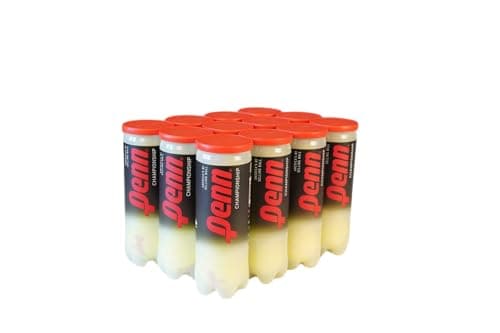
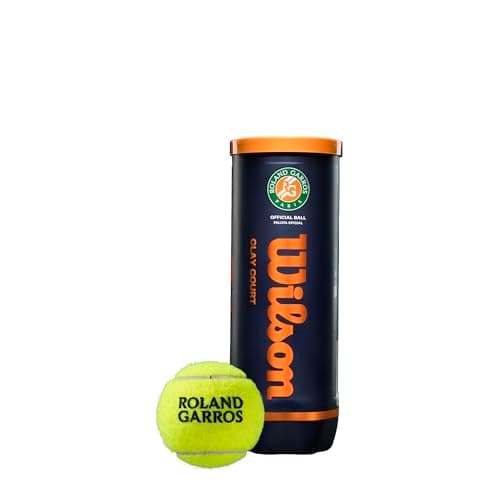
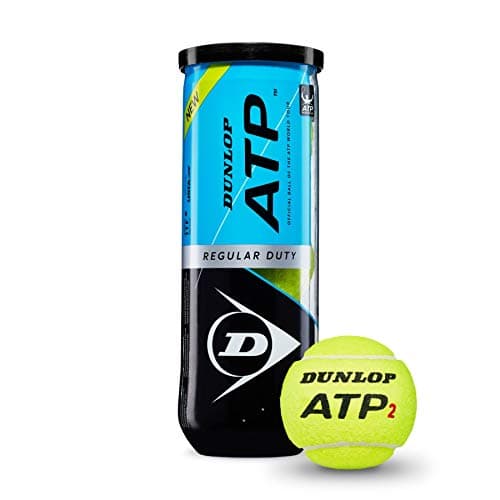
Buy a regular duty ball. The Dunlop ATP Super Premium regular duty is the pick — it is the one ball here whose own listing names the surface, sold as best for clay and indoor courts, and it is an ATP-series ball rather than a club-grade one. For the same felt at club prices, buy Penn Championship regular duty by the dozen cans. If you play clay every single week and want to buy once, the Wilson Roland Garros clay-court case is the surface-specific answer from the brand that supplies the clay-court major. What you should not buy is the extra duty ball sitting next to them on the shelf.
This is one of the few gear questions in tennis with a genuinely clean answer, and it is almost universally got wrong in the US, because extra duty is the default here and most players have never looked at that line on the can.
Regular duty vs extra duty, and why clay flips the answer
The difference is the felt. TennisCompanion's ball guide describes regular duty felt as "softer, thinner, and less durable" and says it is the right choice "If you play on clay courts, carpet, or turf," while abrasive hard courts call for extra duty balls with "thicker, more durable felt."
Read that twice, because the instinct is backwards. On a hard court, the surface is sanding the ball, so you want more felt to sand away. On clay, nothing is sanding the ball — instead the loose surface material works into the nap, and a thick extra duty felt picks up clay, swells and fluffs. A fluffed ball is slower through the air, heavier, and sits up higher, which is exactly the set of changes that makes the third set feel like you are hitting a beach ball.
So the rule: hard court, extra duty. Clay, Har-Tru or indoor, regular duty. It is printed on every can. The reason this page exists is that in the US you have to look for it, because extra duty is what the shelf is stocked with.
What clay does to a ball that a hard court does not
It makes them filthy, not bald. A clay-court ball reaches the end of its playable life looking terrible but with its felt largely intact, which is the opposite of a hard-court ball. Do not judge a clay ball by its color — judge it by whether it still comes off the strings predictably.
It makes them heavier as they go. Surface material in the nap is weight, and weight in the ball is load in your arm. This is a real reason clay players report more arm soreness late in a long match with the wrong balls.
It rewards a premium ball more than a hard court does. On a hard court a cheap ball dies of felt wear and there is not much to do about it. On clay, the construction quality of the ball — how tightly the felt is bonded, how consistent the core is — decides how long it resists fluffing. This is the one surface where paying up for an ATP or tournament-grade ball shows up in how the second hour plays.
Indoor courts, and the altitude exception
Regular duty is not only the clay answer — it is the indoor answer too. Published ball guidance groups clay, carpet and turf together for exactly this reason, and an indoor hard court is usually less abrasive than an outdoor one because it is not weathered. The Dunlop pick above is sold for clay and indoor courts on the same listing, which is the clearest statement of that overlap you will find on a can.
The one case where neither felt is the right question is altitude. High-altitude balls exist as a separate product, differing in internal pressure rather than in felt, so that the bounce matches a standard ball lower down; published guidance puts the threshold around 4,000 ft, with some makers marking it from 3,500 ft. If you play a mile up, that is the line on the can to look for, and it is independent of whether you are on clay or concrete.
So which should you buy?
You play on clay or Har-Tru and want the best-playing ball → Dunlop ATP Super Premium regular duty. Sold for clay and indoor, ATP-series construction, in a two-can pack that is the right size to try a ball before committing.
You play clay regularly and want value → Penn Championship regular duty, 12 cans. The same ball everybody at your club already uses, in the correct felt, at club-ball pricing. Most clay players are buying the extra duty version of exactly this ball.
Clay is all you play and you buy once a season → Wilson Roland Garros clay court, by the case. Wilson is the official ball at Roland Garros, which is the clay-court Grand Slam, and this is a clay-specific ball rather than an all-court one.
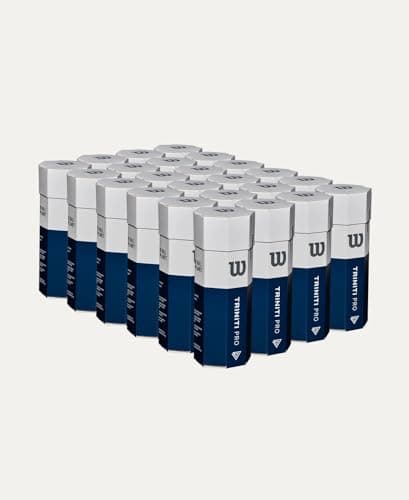
You are on clay and tired of buying balls at all → Wilson Triniti. Its plastomer core means there is no pressure to leak away in the first place, and Wilson's own lab figure — dated, footnoted, and theirs — is that it keeps its fresh-ball feel four times longer than a traditional Wilson ball. It plays slightly duller than a fresh can and the pack sizes are large. The fuller argument is on the longest-lasting balls page.
You split your week between clay and hard courts → buy both felts and keep them in separate pockets of the bag. One ball for two surfaces means being wrong on one of them. If you would rather have a single answer, buy extra duty for the hard court and accept the fluffing on clay, because the reverse — regular duty on concrete — destroys the ball in a session.
Your shoes have the same split, incidentally, and with higher stakes: a herringbone clay outsole on a hard court wears out fast, and a hard-court tread on clay slides unpredictably. That is the subject of the best shoes for clay courts.