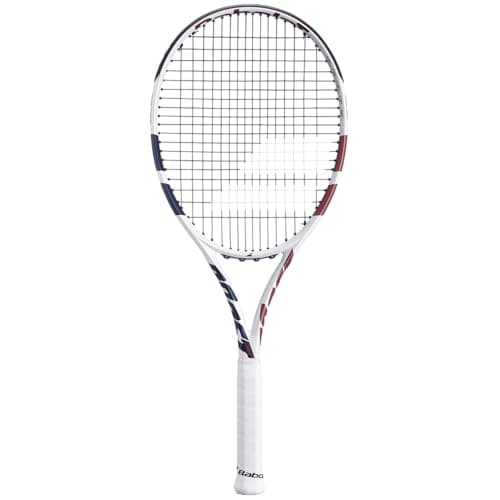
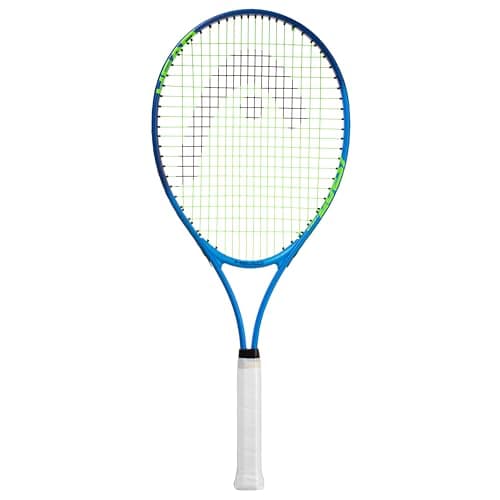
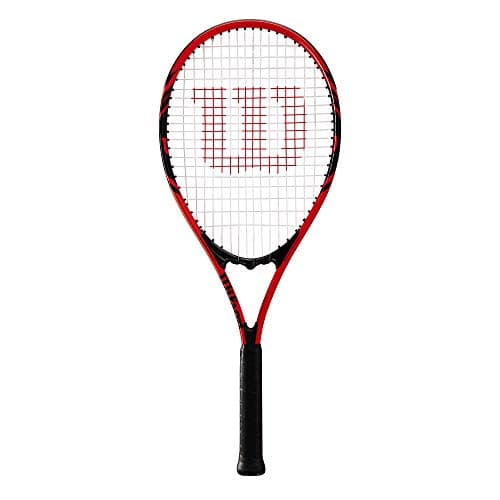
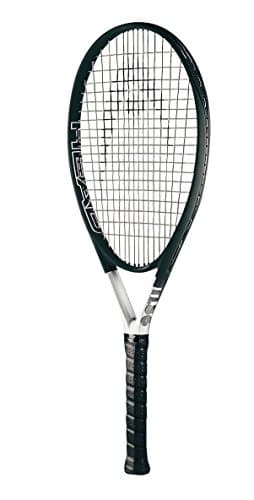
The best tennis racket for a beginner is the HEAD Ti S6 — a 115 sq in head and under nine ounces, which together mean the ball goes over the net even when you catch it off-centre. If you have already booked lessons and know you are staying, the Babolat Boost Drive is the better buy: a real graphite frame you will not out-grow in a season.
The mistake almost every beginner makes
You watch tennis, you see a player you like, you buy their racket. It is completely understandable and it is completely wrong. A professional's frame is heavy, has a small head and is built to remove power, because a pro generates so much racket-head speed that an ordinary frame would send every ball long.
Put that racket in a beginner's hand and two things happen. The small head means most of your contacts are off-centre, and off-centre on a control frame is a shot that dies in the net. And the frame supplies no power of its own, so you start swinging harder to compensate — which wrecks the technique you are trying to build. People quit tennis over this.
What a beginner racket actually needs
Three things, in this order.
A big head.105 sq in at minimum, and 110–115 is better. Head size is forgiveness: the larger the string bed, the more of it produces a decent shot. Your contact point is not yet repeatable, and a big head is what covers that.
Low weight. Under about 10 oz strung. A light frame gets to the ball even when you prepare late, which at this level is most of the time. It also means you can still hold it up in the third set of your first ever match.
A price you will not resent. This is the one nobody says out loud. A meaningful share of people who buy a tennis racket play with it four times. Spending $300 before you know which group you are in is a bad bet, and the frames on this page are chosen so that the bet is small.
Spin, control and the things you can safely ignore
You will read a lot about string patterns, swing weight and spin potential. None of it matters yet. Spin is generated by racket-head speed and a brushing swing path, and you do not have either one reliably. A frame marketed on spin will not give you spin; it will give you a shorter sweet spot. Come back to all of this when you reach 3.5, at which point it starts to be true.
Beginner frame specs, side by side
| Racket | Head size | Weight | Strung? | Who it is for |
|---|
| HEAD Ti S6 | 115 sq in | 8.9 oz strung | Yes | Maximum forgiveness and free power |
| Babolat Boost Drive | 105 sq in | 9.5 oz strung | Yes | Committed beginners who will improve into it |
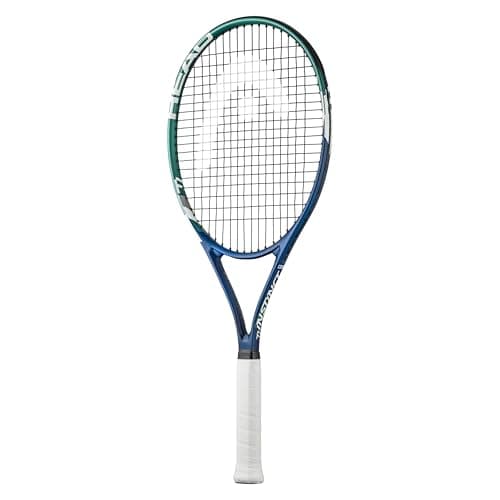
| HEAD Ti Conquest | 110 sq in | Light | Yes | The cheapest real racket here |
| HEAD Ti Instinct Comp | 107 sq in | Light | Yes | The forgiving/controllable compromise |
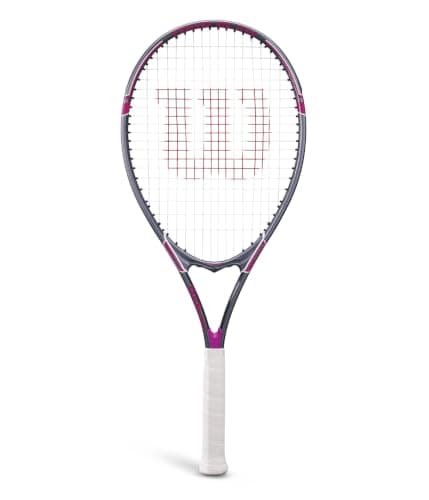
| Wilson Tour Slam | 112 sq in | Light | Yes | Social and occasional play |
| Wilson Federer Adult | Oversize | Light | Yes | Gifts and first-ever racquets |
Every frame on this page ships strung. That is deliberate: a beginner should not have to make a string decision, pay a second bill, and wait a week before they can play.
Grip size is the spec beginners get wrong
Head size gets all the attention and grip size causes all the problems. A grip that is too small makes you squeeze, and squeezing is the fastest route to tennis elbow in a new player. Most adult men land on 4 3/8" (grip size 3) and most adult women on 4 1/4" (grip size 2), but measure rather than assume — our grip size guide has the ruler test, and the fix if you buy one that is slightly too small.
What to buy alongside it
Two things, and neither is expensive. First, proper tennis shoes— this matters more than the racket does, because running shoes on a tennis court are how people turn ankles. Second, a case of balls rather than a single can; you will get through them faster than you think and the per-can price drops sharply.
You do not need a bag, a dampener, an overgrip or a ball machine yet. The gear checklist sets out what is genuinely required versus what the shop will try to add.
When to upgrade
You have out-grown a beginner frame when two things are true: you can rally ten balls cross-court without thinking about it, and you are starting to hit balls long when you swing properly. That second one is the real signal — it means the frame is now giving you more power than you need, which is the exact moment a 3.5–4.0 frame starts to make you better rather than worse. For most people playing weekly, that is somewhere between six months and two years.
How we picked
We have not physically tested this gear
Everyone in this category says they tested twenty racquets. We have not tested any — and we say so. What we did instead: compiled the manufacturer-published specifications (head size, strung weight, string pattern, stiffness, outsole compound), normalized them, and scored each product against a published rubric weighted for the NTRP tier this page serves. The scores are judgments from documented research, not measurements we took, because we do not have a lab and are not going to pretend we do.