Skip to content
Four Oh Club

Bags, machines & training · Gear

The Best Tennis Ball Machines Under $1,000

A thousand dollars is the line where a ball machine stops being an aspiration and becomes a purchase. It is also the line below which almost nobody publishes a spin figure — so here is what you actually get.

By Stephen V.Updated How we score
#ad

We earn a commission when you buy through our Amazon links, at no extra cost to you. It never changes our rankings, and we say so when the cheaper racquet is the better buy. How this works.

The best tennis ball machine under $1,000 is the TENNIIX Basic: a published 18.7 lb, 100-plus ball capacity and a four-hour runtime, with app and voice control, which is the most complete set of published numbers anyone offers inside this band. The Nisplay Portable is the one to buy instead if spin is the point — it is the only machine here published as dual-motor topspin and backspin — and the Furlihong 3819BH is the budget pick, a real machine rather than a tosser at roughly a fifth of the ceiling. Below that top pair the band gets interesting rather than worse: the L1 is the lightest thing here at a published 13.2 lb, the Pusun publishes the longest battery life, and the Sports Tutor Tennis Twist is the only machine in the band from an established American ball-machine company with a full first-party spec table.

What $1,000 actually buys, and where the real cliff is

The $1,000 line is not an arbitrary round number in this category. It is roughly where two different kinds of product meet. Below it you are buying a feeder: a portable box that puts a ball in roughly the same place at a speed you can rally with, controlled from your phone. Above it you are buying a trainer: oscillation you can program, a published spin range, a hopper measured in triple figures and a build designed to be wheeled onto a club court every week for years.

That matters because the single most common mistake in this band is buying at the top of it for features that only exist above it. If you are stretching to the $900 range, look hard at what another few hundred dollars gets you on the full ball machine ranking before you commit — and if you are not sure you will use it at all, is a tennis ball machine worth it does the cost-per-session arithmetic first, which is the honest order to read these pages in.

The four specs that decide it

Every machine in this band publishes some subset of four numbers, and the gaps in that subset tell you more than the numbers themselves.

1. Ball speed — and the km/h trap.This is the spec most likely to mislead you here, because the import machines publish it in kilometers per hour and the American ones publish it in miles per hour or not at all. The L1 and the Pusun both publish a 60 km/h ceiling, which is roughly 37 mph. That is a perfectly good 3.0 to 3.5 rally ball and it is nowhere near a 4.0 first serve. The Furlihong publishes up to 30 mph. The Nisplay publishes a 68 mph maximum, which is the only genuinely fast number in the band. The Sports Tutor Tennis Twist publishes no speed at all — only a toss distance of 12 to 20 feet — so it cannot be compared with any of them on pace.

2. Ball capacity. Capacity is the spec that decides whether a session is hitting or collecting, and the spread in this band is enormous: 100-plus balls on the TENNIIX, 80-plus on the Nisplay, 65-plus on the Pusun, up to 60 on the L1, and 28 on the Tennis Twist. A hopper holds around 70 to 75 balls, so a 28-ball machine is a third of a hopper and you will be picking up before you have found your rhythm. Pair any machine here with a ball hopper and a case of balls; the machine is half the purchase.

3. Weight. The whole argument for a machine in this band is that you can carry it, and the published figures are 11 lb (Tennis Twist), 13.2 lb (L1), 18.7 lb (TENNIIX) and 26 lb (Nisplay). The Pusun and the Furlihong publish no weight at all, which on a product sold as portable is a conspicuous omission. For context, the cheapest machine on the site above this band, the Lobster Sports Elite Liberty, sits around 35 lb — the difference between one-handed and two-handed.

4. Control. App and remote control is the feature that has genuinely trickled down: the TENNIIX, the L1 and the Pusun all publish it, and all three cost less than a performance racquet and a restring. It matters more than it sounds, because the alternative is walking to the machine between every drill, which is how a machine ends up in the garage.

The spec almost nobody publishes: spin

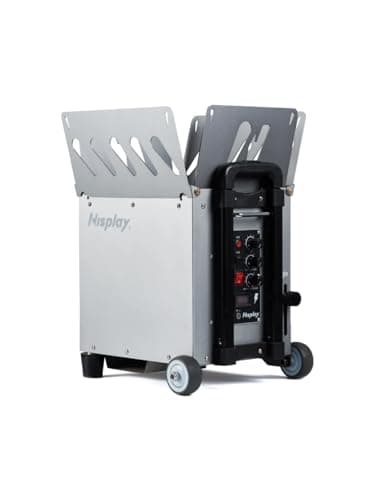
Here is the honest center of this page. Of the six machines, exactly one — the Nisplay — is published as a dual-motor machine producing both topspin and backspin. The others are published as launchers or feeders, and where a listing mentions spin it does not quantify it.

That is a real limitation and it is worth understanding before you spend. A ball with no spin behaves differently in the air and off the bounce from a ball hit by a person. It sits up rather than dipping, and it does not kick. Practicing against it will groove your swing and your footwork, and it will not prepare you for the heavy ball a 4.0 hits at you on a Tuesday night. If reading a spinning ball is the thing you want to fix, the dual-motor Nisplay is the pick in this band and the advanced ball machine page is the page to read for what proper programmable spin costs.

Oscillation, and why its absence is not fatal

Oscillation — the machine sweeping the ball side to side so you have to move — is the other feature that mostly lives above this band. None of the six publishes a programmable oscillation pattern, and the Tennis Twist's spec sheet does not mention oscillation at all.

It is less of a loss than it looks for one reason: you can oscillate the machine by moving yourself. Set it to feed to one place and work on a cross-court pattern from a different starting position each time, or angle the machine down the line and recover to the middle after every ball. What you cannot fake is an unpredictable ball, so a fixed-feed machine is a technique and fitness tool rather than a reaction tool. Plan the session accordingly.

Battery, and the AC question

Published run times in this band are 4 hours (TENNIIX), 4-plus hours (Nisplay) and 3 to 5 hours (Pusun). The Tennis Twist is the odd one out and the most practical: Sports Tutor publishes 5 to 10 hours on six D-cell alkaline batteries, and sells an AC-powered version at the same list price. If your club has power at the court, an AC machine never needs charging and never degrades, and that is a genuine long-run advantage over every lithium machine here.

What no machine in this band will do

Said plainly, because every page in this category is tempted to skip it.

It will not hit you a heavy ball. With one exception the band is spin-free, and the fast one tops out around a club rally pace.

It will not make you move unpredictably. No programmable oscillation means you always know where the ball is going.

It will not survive club-level abuse indefinitely. These are light plastic boxes with published weights in the teens. That is the trade for carrying them.

It will not collect the balls. Nothing in tennis does, which is why the hopper is not optional.

What it will do is let you hit four hundred forehands on a Wednesday evening with nobody else on the court, and for a club player grooving a stroke that is worth more than any of the features above it.

Which pick, by what you are actually doing

One machine for everything, carried in one hand → the TENNIIX Basic. The best-documented machine in the band and the only one combining a triple-figure hopper with a teenage weight.

You want to practice against spin → the Nisplay Portable. The only published dual-motor topspin and backspin machine under the band, and the only one with a genuinely fast published ceiling.

Weight is the thing stopping you → the L1 at a published 13.2 lb, with the widest published elevation range here for lob and short-ball work.

You coach, or you hit for hours → the Pusun PT-Mini Pro for the longest published battery, or the Tennis Twist in its AC version if there is a socket.

It is for a child or a true beginner → the Sports Tutor Tennis Twist. A ball every five seconds to the same spot is exactly what a learner needs, and it is the only machine here whose maker publishes a full spec table.

Budget is the constraint → the Furlihong 3819BH. Five published angles, two power levels, four feed intervals, up to 30 mph, for less than a performance frame.

The short answer

Quick picks

#Racquet / gearBest forScorePrice
01
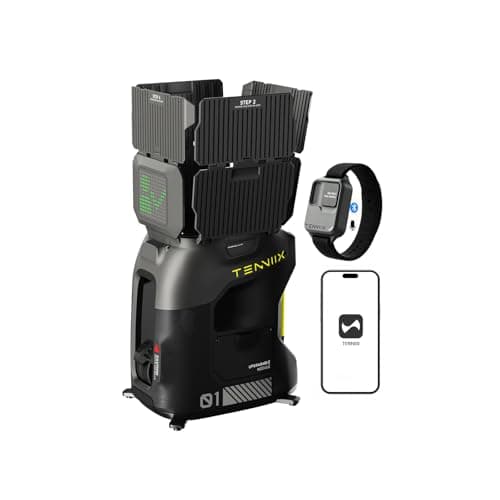
TENNIIX TENNIIX Basic Tennis Ball Machine
TENNIIX Basic Tennis Ball Machine

The lightest machine on this site at a published 18.7 lb, with app and voice control at a price where most machines have a single dial.

Lightest to carry
7.8
$699.99Amazon
02
Nisplay Nisplay Portable Tennis Ball Machine
Nisplay Portable Tennis Ball Machine

The cheapest tennis ball machine we can find that is still a real machine: dual motors for genuine topspin, 80+ balls, and under 30 lb to carry.

The cheapest real machine
7.4
$859.00Amazon
03
L1 L1 Tennis Ball Machine (13.2 lb)
L1 Tennis Ball Machine (13.2 lb)

The lightest machine in the band at a published 13.2 lb, with the widest published elevation range — the one you will actually carry to the court.

The lightest machine under $1,000
7.2
$521.55Amazon
04
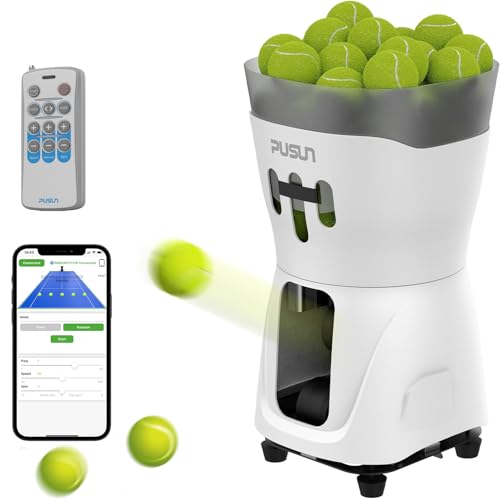
Pusun Pusun PT-Mini Pro Tennis Ball Machine
Pusun PT-Mini Pro Tennis Ball Machine

The longest published battery life in the band — 3 to 5 hours — with a 65-ball hopper and the same app-and-remote control as machines costing more.

Long sessions on one charge
7.0
$549.00Amazon
05
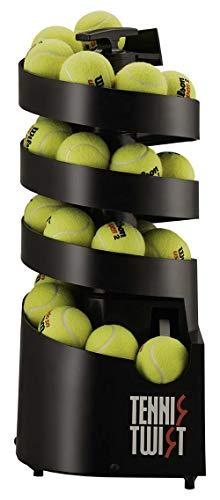
Sports Tutor Sports Tutor Tennis Twist
Sports Tutor Tennis Twist

The one machine in the band from an established American ball-machine company, built deliberately as a beginner's feeder — and the only one whose maker publishes a full spec table.

Beginners, juniors and absolute reliability
5.4
$359.00Amazon
06
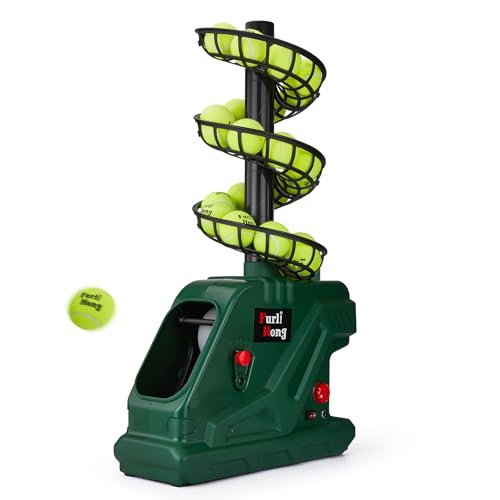
Furlihong Furlihong 3819BH Portable Tennis Ball Machine
Furlihong 3819BH Portable Tennis Ball Machine

The cheapest thing on this page that is genuinely a ball machine rather than a tosser, at roughly a fifth of what the band allows.

Budget — the lowest-cost real machine
5.4
$191.99Amazon

#ad · Live prices from the Amazon Product API, as of November 22, 2026. Where we have no verified live price, we show none — we would rather leave a gap than print a number that has rotted.

In detail

The picks, in full

01
TENNIIX TENNIIX Basic Tennis Ball Machine

Lightest to carry

TENNIIX Basic Tennis Ball Machine

100+ ball capacity18.7 lb75 mph4 hr runtime
7.8/10

The lightest machine on this site at a published 18.7 lb, with app and voice control at a price where most machines have a single dial.

Feed quality
7
Build
6
Portability
10
Programmability
8
Value
8

Pros

  • 18.7 lb published weight is light enough to carry in one hand with a bag over the other shoulder, which is the difference between using a machine and leaving it at home
  • 100+ ball capacity is the largest hopper in this price band
  • Smart app and voice control plus multiple training modes, which at this price is unusual — most budget machines offer a speed dial and nothing else

Cons

  • Listed as 'Basic' in the maker's own range, so the feature set is the entry point rather than the full version
  • Availability has been intermittent — the listing has shown multi-day dispatch estimates rather than immediate stock

Don't buy this if…

…you want a machine that will still be serviceable in ten years. The established brands have parts and service networks that a newer entrant does not.

$699.99View on Amazon

$899.9922% off

Price as of November 22, 2026. Prices change — Amazon's is the one that counts.

#ad · we may earn a commission from this link to TENNIIX Basic Tennis Ball Machine

02
Nisplay Nisplay Portable Tennis Ball Machine

The cheapest real machine

Nisplay Portable Tennis Ball Machine

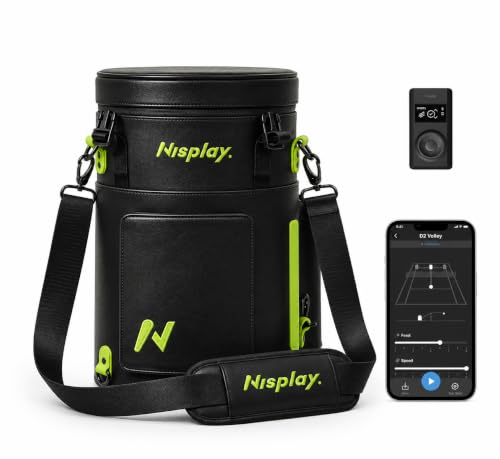
80+ ball capacity26 lbMax 68 mph4+ hr external battery
7.4/10

The cheapest tennis ball machine we can find that is still a real machine: dual motors for genuine topspin, 80+ balls, and under 30 lb to carry.

Feed quality
7
Build
6
Portability
9
Programmability
6
Value
9

Pros

  • Dual motors, which is what allows real topspin and backspin rather than a flat feed — single-motor machines at this price cannot do it
  • 26 lb published weight means one person can get it out of a car and onto a court without help
  • 80+ ball capacity is roughly two hoppers, so a solo session does not become a collecting session every four minutes

Cons

  • 68 mph top speed is well below the tour-level machines; it will not simulate a 4.5 opponent's pace
  • The 4+ hour runtime figure is for the external lithium battery, which is the part most likely to degrade with age

Don't buy this if…

…you are a 4.5+ player wanting match-pace drilling. Buy the Lobster Elite Liberty or above, where the speed range and programmability actually match your game.

$859.00View on Amazon

Price as of November 22, 2026. Prices change — Amazon's is the one that counts.

#ad · we may earn a commission from this link to Nisplay Portable Tennis Ball Machine

03
L1 L1 Tennis Ball Machine (13.2 lb)

The lightest machine under $1,000

L1 Tennis Ball Machine (13.2 lb)

13.2 lb publishedUp to 60 balls10-60 km/h (about 6-37 mph)15-55 degree angle
7.2/10

The lightest machine in the band at a published 13.2 lb, with the widest published elevation range — the one you will actually carry to the court.

Portability
10
Ball speed
5
Capacity
5
Control
8
Value
8

Pros

  • 13.2 lb published is light enough to carry in one hand with a racquet bag on the other shoulder, which is the whole argument for a portable machine
  • A published 15 to 55 degree elevation range is the widest here, and elevation is what turns a feeder into a lob and short-ball drill
  • App plus a pocket remote, so you can change the feed from the baseline instead of walking to the machine between every drill

Cons

  • The published speed ceiling of 60 km/h is roughly 37 mph — fine for a 3.0-3.5 rally ball, not enough to practice against real pace
  • Up to 60 balls is the smallest published hopper in the band; expect to collect more often than you hit
  • Speed is published in km/h only, with no mph figure and no published spin rate at all

Don't buy this if…

…you are a 4.0+ wanting to drill against pace. The ceiling here is a comfortable rally ball, and no amount of carrying convenience fixes that.

$521.55View on Amazon

$699.0025% off

Price as of November 22, 2026. Prices change — Amazon's is the one that counts.

#ad · we may earn a commission from this link to L1 Tennis Ball Machine (13.2 lb)

04
Pusun Pusun PT-Mini Pro Tennis Ball Machine

Long sessions on one charge

Pusun PT-Mini Pro Tennis Ball Machine

65+ ball capacity60 km/h max (about 37 mph)3-5 hour batteryApp + remote control
7.0/10

The longest published battery life in the band — 3 to 5 hours — with a 65-ball hopper and the same app-and-remote control as machines costing more.

Portability
7
Ball speed
5
Capacity
7
Control
8
Value
8

Pros

  • A published 3 to 5 hours of battery covers a full coaching morning, which is longer than most players will keep feeding themselves balls
  • 65+ balls is a usable hopper — roughly a hopper and a bit, so a basket lasts a drill rather than a minute
  • App and remote control at the bottom of the band, a feature that used to mean a four-figure machine

Cons

  • Published at 60 km/h, roughly 37 mph, so like the L1 it feeds a rally ball rather than real pace
  • The listing publishes no weight, which on a machine sold as portable is the number you most need
  • No published spin control — the listing describes a serve launcher, not a topspin feeder

Don't buy this if…

…spin is what you want to practice against. Nothing here is published as a dual-motor topspin machine — the Nisplay is, and it costs more.

$549.00View on Amazon

Price as of November 22, 2026. Prices change — Amazon's is the one that counts.

#ad · we may earn a commission from this link to Pusun PT-Mini Pro Tennis Ball Machine

05
Sports Tutor Sports Tutor Tennis Twist

Beginners, juniors and absolute reliability

Sports Tutor Tennis Twist

28 ball capacity11 lb with batteryBall every 5 seconds12-20 ft adjustable toss
5.4/10

The one machine in the band from an established American ball-machine company, built deliberately as a beginner's feeder — and the only one whose maker publishes a full spec table.

Portability
10
Ball speed
3
Capacity
3
Control
4
Value
7

Pros

  • Sports Tutor publishes an actual spec table — 28 balls, 11 pounds with battery, a ball every 5 seconds, a toss adjustable from 12 to 20 feet, 5 to 10 hours of play on six D cells — which not one of the import machines here does
  • 11 pounds published is the lightest machine on the page, and it is made in the USA by the company behind the Tennis Tutor line
  • Sold in both AC and battery versions at the same published price, so a club with power at the court is not paying for a battery it will not use

Cons

  • Sports Tutor publishes NO ball speed in mph for this machine, only a toss distance of 12 to 20 feet — so you cannot compare its pace with anything else here
  • 28 balls is by far the smallest hopper in the band; this is a short-drill machine, not a session machine
  • No oscillation is mentioned anywhere in the published specs, and no spin — it tosses to one place at one trajectory

Don't buy this if…

…you are an adult club player who wants to move. This is a feeder for a child or a true beginner learning to swing at a predictable ball.

$359.00View on Amazon

Price as of November 22, 2026. Prices change — Amazon's is the one that counts.

#ad · we may earn a commission from this link to Sports Tutor Tennis Twist

06
Furlihong Furlihong 3819BH Portable Tennis Ball Machine

Budget — the lowest-cost real machine

Furlihong 3819BH Portable Tennis Ball Machine

5 adjustable angles2 power levels4 serve intervalsUp to 30 mph
5.4/10

The cheapest thing on this page that is genuinely a ball machine rather than a tosser, at roughly a fifth of what the band allows.

Portability
8
Ball speed
2
Capacity
4
Control
4
Value
9

Pros

  • Costs less than a single performance racquet, which puts a machine within reach of a player who would otherwise never own one
  • Publishes its adjustability in plain counts — 5 angles, 2 power levels, 4 feed intervals — rather than in marketing adjectives
  • Up to 30 mph is published in mph, so for once you can compare it directly with the machines above it

Cons

  • 30 mph is a feeding speed, not a rally speed — this is for grooving a swing and for juniors, not for drilling against pace
  • Two power levels is the whole speed range; there is no fine control between them
  • No published weight, capacity, battery life or spin figure anywhere on the listing

Don't buy this if…

…you are 3.5 or above and want practice that feels like tennis. Spend up to the TENNIIX or the Nisplay, or save for a Lobster.

$191.99View on Amazon

$239.9920% off

Price as of November 22, 2026. Prices change — Amazon's is the one that counts.

#ad · we may earn a commission from this link to Furlihong 3819BH Portable Tennis Ball Machine

How to read a sub-$1,000 ball machine listing

Convert the speed before you compare it.A listing that says 60 km/h is advertising roughly 37 mph, which reads very differently next to a machine publishing 68 mph. The km/h number is not dishonest — it is the manufacturer's home unit — but it does flatter the machine to a US buyer scanning quickly.

Treat a missing weight as a heavy weight. Two machines in this band publish no weight. A manufacturer that has built something genuinely light says so in the title, because it is the main thing it has to sell.

Read “capacity” as balls you must buy. A 100-ball machine needs a hundred balls, which is roughly four cases. Budget for that and for a case of decent balls — or better, for pressureless practice balls, which do not go dead in the machine between sessions.

Check whether “remote” means a phone or a fob. A pocket remote works with sweaty hands and gloves; a phone app needs you to unlock a screen mid-drill. The L1 publishes both, which is the right answer.

What to buy alongside it

A machine is the expensive third of a workable solo session. The other two thirds are a hopper and enough balls to fill the machine twice, and both are cheap by comparison. A wheeled hopper is worth the small premium over a basket here — you will be filling it every few minutes for an hour, bent over, and your back notices.

One more: a machine session is far more repetitions per hour than a match, and repetitions are what wear out a grip and a string bed. Expect to restring sooner than the calendar says if you start hitting with a machine twice a week; how often to restring has the published guidance.

Where to spend more, and where not to

Spend more for spin and oscillation. These are the two features that genuinely change what you can practice, and they are the two this band mostly lacks. If they matter to you, the honest advice is to save rather than to buy the most expensive machine under $1,000.

Do not spend more for a bigger hopper alone. Beyond about 100 balls you are paying for capacity you will use once per session, and the pick-up time is the same either way.

Do not spend more for speed you cannot return. A 3.0 player practicing against 60 mph is not practicing, they are flinching. The band's typical ceiling of roughly 37 mph is genuinely the right pace for a developing player, and it is the cheapest part of the spec sheet to over-buy.
How we picked

We have not physically tested this gear

Everyone in this category says they tested twenty racquets. We have not tested any — and we say so. What we did instead: compiled the manufacturer-published specifications (head size, strung weight, string pattern, stiffness, outsole compound), normalized them, and scored each product against a published rubric weighted for the NTRP tier this page serves. The scores are judgments from documented research, not measurements we took, because we do not have a lab and are not going to pretend we do.

Questions

Frequently asked

Is a tennis ball machine under $1,000 actually any good?
For grooving a stroke, yes — genuinely good. Published capacities here run to 100-plus balls, published weights down to 11 lb, and three of the six publish app and remote control, which is a feature set that cost four figures a few years ago. What you do not get under $1,000 is spin (one exception, the Nisplay) or programmable oscillation, so treat it as a repetition and footwork tool rather than a practice partner.
What is the cheapest tennis ball machine worth buying?
In this band, the Furlihong 3819BH — it publishes five angles, two power levels, four feed intervals and up to 30 mph, which makes it a machine rather than a tosser. Below that bracket you are into hand-fed ball tossers, which are a different product and worth buying only for a young child. Our wider pick for cheapest-worth-owning is on best budget tennis ball machines.
Do any ball machines under $1,000 have topspin?
One of the six here publishes it: the Nisplay Portable, as a dual-motor machine producing topspin and backspin. The rest are published as launchers or feeders with no quantified spin. If spin is the reason you want a machine, that narrows the band to one choice, and programmable spin patterns are an above-$1,000 feature.
How many balls do I need for a ball machine?
Enough to fill it at least twice, so 120 to 200 for a 100-ball machine. Pressureless practice balls are the right choice because they do not go flat sitting in a hopper between sessions, and a machine is hard on balls either way — the feed wheels scuff felt faster than a racquet does.
Battery or AC-powered?
AC if there is reliably a socket at your court, because an AC machine never needs charging and has no battery to degrade. Sports Tutor publishes both versions of the Tennis Twist at the same list price, which is unusual and makes the choice purely practical. Otherwise battery, and published run times in this band are 3 to 5 hours — longer than you will want to feed yourself balls.

Keep reading

Receipts

Sources

We do not run a testing lab, and we do not pretend to. Our specs come from manufacturer listings and spec sheets; our rules and dimensions come from the official rulebook. Where we could not verify something, we say so on the page rather than quietly leaving it out. Read our full method.