Skip to content
Four Oh Club

The cheapest upgrade · Strings

What It Costs to Restring a Tennis Racket

Labor plus string, and the two are priced separately. Here are published numbers rather than estimates, and the point where buying a machine starts to make sense.

By Stephen V.Updated How we score
#ad

We earn a commission when you buy through our Amazon links, at no extra cost to you. It never changes our rankings, and we say so when the cheaper racquet is the better buy. How this works.

Restringing a tennis racket costs labor plus string, and the two are priced separately. Racquet Point, whose pricing page we cite below, publishes $25 labor per tennis racquet, with synthetic gut string starting at $4.99 and premium strings "typically run $14 to $22+". So a budget restring lands around $30 and a premium one around $45 to $50 before any shipping. Their own worked examples are "~$30" for a budget mail-in job and "~$75" for a premium one including a $30 shipping add-on. Prices vary by shop and city, and that is the honest range to budget against.

We are quoting one shop's published price list rather than inventing a national average, because a national average for this is not a thing anybody publishes and we are not going to make one up. Use it as a reference point and check your own club or local shop — which, conveniently, is also the cheapest option for most people, because there is no shipping.

The two halves of the bill

Labor. What you pay somebody to do the job: mount the frame, pull every string to tension, weave the crosses, tie off and finish. It is skilled, it takes 30 to 40 minutes, and it does not vary with which string you choose. $25 per racquet is the published figure we are working from.

String. Entirely your choice, and the half with the enormous range. Published prices on the same page: synthetic gut "starts at $4.99", premium strings including Luxilon, Tecnifibre, Solinco and natural gut hybrids "typically run $14 to $22+".

So the string is between about 17% and about 47% of the bill, which is why the single most effective way to control restringing cost is to be honest about which string you actually need. Which is the next section.

Which string tier you actually need

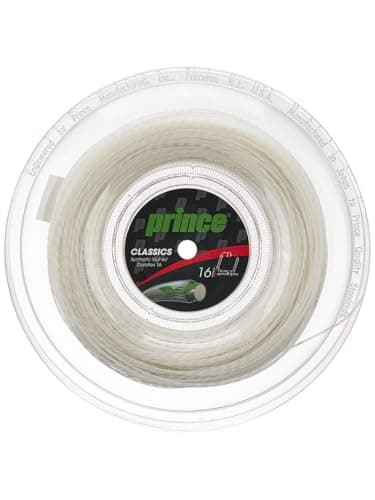
Under $5 — synthetic gut. A solid nylon core with wraps. The honest answer for most club players below 4.0: it is comfortable, reasonably durable, plays well enough that you will not notice what you are missing, and it keeps a restring near $30. Prince Synthetic Gut is the one here. If you are not breaking strings and your arm is fine, you do not need to spend more.

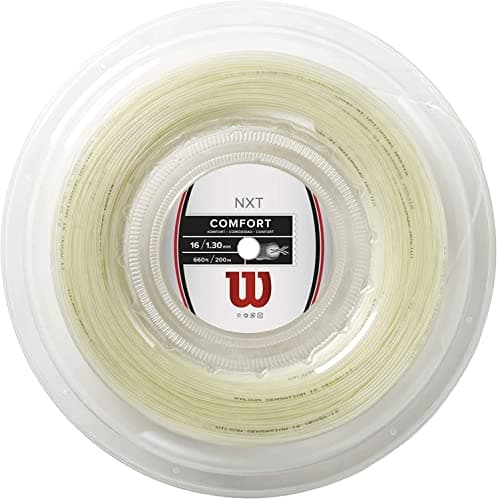
$10–20 — multifilament. Thousands of fine fibers in a matrix. This is the tier worth paying for if your arm hurts, because it stretches on impact and returns depth rather than shock. Wilson NXT is the reference. A genuinely good reason to upgrade; see arm-friendly strings.

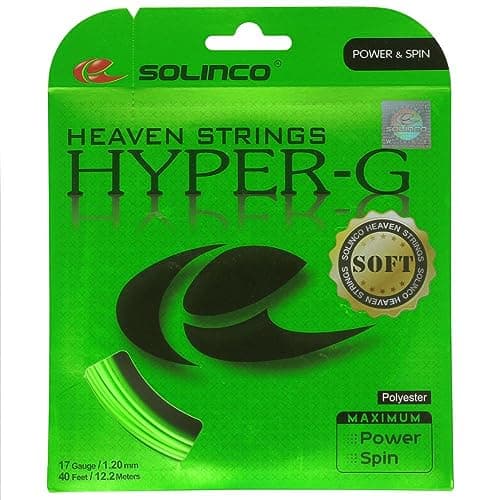
$12–22 — polyester. Stiff, control-oriented, spin-friendly, and the right choice if you swing fast enough to need it. Solinco Hyper-G is the one here. If you are below about 4.0 and your arm is sensitive, this tier is a cost you are paying for a benefit you are not collecting — poly vs multifilament has that argument in full.

$22+ — natural gut and gut hybrids. The best-playing string there is, and it does not last. Real for a 4.5+ who wants the feel; an expensive mistake for anybody else.

What it costs you per year

The useful number is annual, not per job, and it depends on one rule: restring as many times a year as you play per week — plus immediately whenever you break one. Someone playing twice a week restrings roughly twice a year.

Using the published $25 labor and the string tiers above:

How often you playRestrings/yearWith $5 synthetic gutWith $18 premium string
Once a week1~$30~$43
Twice a week2~$60~$86
Three times a week3~$90~$129
Four+ times a week, or you break strings6–12~$180–360~$258–516

Those are arithmetic on the published figures, not survey data. The row that matters is the last one, because that is where the whole economics changes.

When buying a machine pays for itself

Two savings, and people usually notice only the first one.

You stop paying labor. $25 a job. At six restrings a year that is $150 you keep.

You start buying string by the reel, which is the bigger saving. A set is one racquet's worth, about 40 feet. A reel is 200 meters — roughly sixteen racquets — and the cost per restring drops substantially. This is the part that makes home stringing genuinely cheap rather than just free labor.

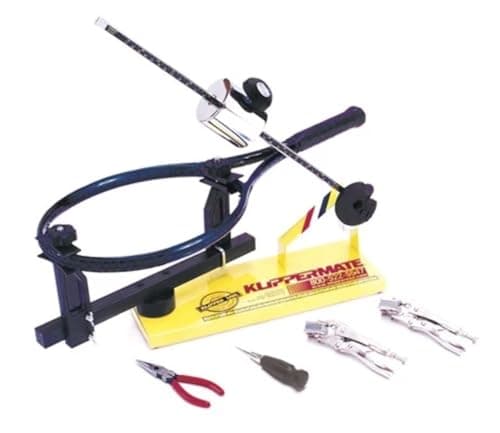
Put together: a drop-weight machine like the Klippermate plus a reel of synthetic gut pays back in roughly a season for somebody restringing six or more times a year, and faster if you string for more than one person in the house. Below about two restrings a month it does not pay, and your time is worth more than the labor you save.

The real catch is not money, it is the first two racquets, which will take over an hour each and will not be good. How to restring a tennis racket walks the process so you know what you are signing up for.

Four ways to spend less

1. Use a cheaper string, if you do not need an expensive one. The single biggest lever, and the one most people have backwards. If you are not breaking strings and your arm is comfortable, synthetic gut at under $5 is the right string and it halves the bill.

2. Use your club or local shop rather than mailing it. The cited pricing shows a $30 shipping add-on, which can be as much as the labor. Local is usually 24 to 48 hours as well, against 5 to 10 days door to door by mail.

3. Do not restring on a schedule you do not need. "As many times a year as you play per week" is the working rule. If you play once a week socially and the string is not fraying or dead, once a year is genuinely fine.

4. Do not drop tension to make string last. It does not work that way, and it is worth saying because it sounds plausible. Change tension because of how you want the racquet to play — the tension guide covers that properly.

One thing worth paying for

If you own two frames and play league, pay for them to be strung together with the same string at the same tension. A spare frame that plays differently is not really a spare — it is a second racquet you have to adjust to mid-match. It costs nothing extra beyond the second job, and it is the one place where the cheap option is a false economy.

And if you are weighing restringing cost against replacing the racquet entirely: a restring is almost always the better spend. New string in a frame you already like changes how it plays far more than most people expect, for a fraction of a new frame. The comparison is in what tennis gear costs.

The cost per job is only half the annual number — the other half is how many jobs. How often to restring a tennis racket has the published frequency table, and multiplying the two is what makes owning a stringing machine worth the arithmetic. Which string you buy next time is how to choose tennis strings.
The short answer

Quick picks

#Racquet / gearBest forScorePrice
01
Prince Prince Synthetic Gut Duraflex 16 (reel)
Prince Synthetic Gut Duraflex 16 (reel)

The default string in every club pro shop for thirty years, bought by the reel. Cheap, inoffensive and perfectly adequate for a 3.0.

Beginners and clubs
6.8
$79.95Amazon
02
Wilson Wilson NXT 16 (200 m reel)
Wilson NXT 16 (200 m reel)

The premium multifilament, bought the sensible way — a reel. The closest a synthetic string gets to natural gut, at a tenth of gut's price.

Comfort and feel
6.6
$276.21Amazon
03
Solinco Solinco Hyper-G Soft 17 (set)
Solinco Hyper-G Soft 17 (set)

The best-value spin poly, and the one to buy first. Hyper-G gives you most of an RPM Blast for roughly half the price.

Best-value polyester
8.2
$12.99Amazon
04
Klippermate Klippermate Racquet Stringer
Klippermate Racquet Stringer

The machine that pays for itself in about ten restrings. A simple drop-weight stringer that has been made in the US for decades.

Stringing your own
7.4
$379.00Amazon

#ad · Live prices from the Amazon Product API, as of October 20, 2026. Where we have no verified live price, we show none — we would rather leave a gap than print a number that has rotted.

In detail

The picks, in full

01
Prince Prince Synthetic Gut Duraflex 16 (reel)

Beginners and clubs

Prince Synthetic Gut Duraflex 16 (reel)

Solid-core nylon16g / 1.30 mmReelDuraflex wrap
6.8/10

The default string in every club pro shop for thirty years, bought by the reel. Cheap, inoffensive and perfectly adequate for a 3.0.

Control
6
Spin
5
Comfort
7
Durability
6
Value
10

Pros

  • The cheapest per-restring cost of any string here by a wide margin
  • Solid core with a Duraflex wrap: more durable than a plain nylon, softer than any poly
  • Completely predictable — nothing about it will surprise or disappoint a developing player

Cons

  • No standout property: less control than poly, less comfort than multifilament, less spin than either
  • Goes dead quickly; the tension drop is real even if the string has not broken

Don't buy this if…

…you are 4.0 or above. You will feel the lack of control within a set.

$79.95View on Amazon

Price as of October 20, 2026. Prices change — Amazon's is the one that counts.

#ad · we may earn a commission from this link to Prince Synthetic Gut Duraflex 16 (reel)

02
Wilson Wilson NXT 16 (200 m reel)

Comfort and feel

Wilson NXT 16 (200 m reel)

Multifilament16g / 1.30 mm200 m reel (~16 jobs)High elasticity
6.6/10

The premium multifilament, bought the sensible way — a reel. The closest a synthetic string gets to natural gut, at a tenth of gut's price.

Control
6
Spin
5
Comfort
10
Durability
4
Value
8

Pros

  • Thousands of fibers bundled in polyurethane give it the elastic, ball-pocketing feel of natural gut
  • The most arm-friendly synthetic string widely sold — the first thing to try if your elbow hurts
  • A 200 m reel works out to a fraction of the per-job cost of sets

Cons

  • Multifilament frays and breaks far faster than poly if you hit heavy spin
  • A reel is a large up-front purchase that only pays back if you restring often

Don't buy this if…

…you break strings in under ten hours. You will be restringing weekly and should hybrid with a poly.

$276.21View on Amazon

$324.9515% off

Price as of October 20, 2026. Prices change — Amazon's is the one that counts.

#ad · we may earn a commission from this link to Wilson NXT 16 (200 m reel)

03
Solinco Solinco Hyper-G Soft 17 (set)

Best-value polyester

Solinco Hyper-G Soft 17 (set)

Square-profile co-polyester17g / 1.20 mmSoft variant40 ft set
8.2/10

The best-value spin poly, and the one to buy first. Hyper-G gives you most of an RPM Blast for roughly half the price.

Control
9
Spin
9
Comfort
6
Durability
7
Value
10

Pros

  • Square profile for spin, in the Soft version that takes a real edge off the harshness of standard Hyper-G
  • Among the cheapest quality polys sold, which matters because poly needs replacing often
  • Holds tension noticeably better than most budget polyesters

Cons

  • 'Soft' is relative — it is still a polyester and still stiffer than any multifilament
  • The bright green dye transfers onto light-colored frames

Don't buy this if…

…you are stringing a stiff frame and have elbow history. Soft poly is not soft enough for that combination.

$12.99View on Amazon

$13.997% off

Price as of October 20, 2026. Prices change — Amazon's is the one that counts.

#ad · we may earn a commission from this link to Solinco Hyper-G Soft 17 (set)

04
Klippermate Klippermate Racquet Stringer

Stringing your own

Klippermate Racquet Stringer

Drop-weight tensioner2-point mountingMade in USALifetime support
7.4/10

The machine that pays for itself in about ten restrings. A simple drop-weight stringer that has been made in the US for decades.

Accuracy
8
Build
8
Ease of use
6
Speed
5
Value
10

Pros

  • Drop-weight tensioning is gravity-based, so it is inherently accurate and never needs calibration
  • At club restringing prices it pays for itself inside a season of regular play
  • Decades-long production run means parts, tutorials and support all still exist

Cons

  • Two-point mounting puts more stress on the frame than a six-point machine — technique matters
  • Slow. Expect well over an hour for your first few jobs

Don't buy this if…

…you restring twice a year. The machine will never pay back and the shop will do a better job.

$379.00View on Amazon

Price as of October 20, 2026. Prices change — Amazon's is the one that counts.

#ad · we may earn a commission from this link to Klippermate Racquet Stringer

How we picked

We have not physically tested this gear

Everyone in this category says they tested twenty racquets. We have not tested any — and we say so. What we did instead: compiled the manufacturer-published specifications (head size, strung weight, string pattern, stiffness, outsole compound), normalized them, and scored each product against a published rubric weighted for the NTRP tier this page serves. The scores are judgments from documented research, not measurements we took, because we do not have a lab and are not going to pretend we do.

Questions

Frequently asked

How much does it cost to restring a tennis racket?
Labor plus string. Racquet Point publishes $25 labor per tennis racquet, with synthetic gut string from $4.99 and premium strings "typically $14 to $22+" — so roughly $30 for a budget restring and $45 to $50 for a premium one, before shipping. Their own mail-in examples run about $30 budget and about $75 premium with a $30 shipping add-on.
Is restringing a tennis racket worth it?
Almost always, yes — it is the cheapest way to change how a racquet plays. The same frame strung with a stiff polyester and with a soft multifilament plays like two different racquets, and that costs a fraction of a new frame. Strings also lose tension continuously whether you play or not.
How often should you restring a tennis racket?
The working rule is as many times a year as you play per week, plus immediately whenever you break a string. Twice a week means about twice a year. If you play once a week socially and the string is not fraying or dead, once a year is genuinely fine.
Is it cheaper to restring your own racket?
Only at volume. You save about $25 of labor per job, but the bigger saving is buying string by the reel — 200 meters does roughly sixteen racquets at a much lower cost per restring. A drop-weight machine pays back in about a season at six or more restrings a year; below about two a month it does not.
Why is some tennis string so much more expensive?
Because the materials and construction differ enormously. Synthetic gut is a nylon core with wraps and starts under $5; multifilament bundles thousands of fine fibers for comfort; polyester is a stiff control string; natural gut is a genuinely animal-derived string that plays best and lasts least. For most club players below 4.0, synthetic gut is the right choice.

Keep reading

Receipts

Sources

We do not run a testing lab, and we do not pretend to. Our specs come from manufacturer listings and spec sheets; our rules and dimensions come from the official rulebook. Where we could not verify something, we say so on the page rather than quietly leaving it out. Read our full method.