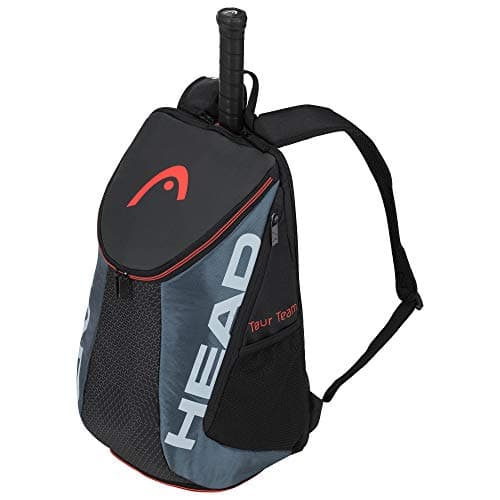
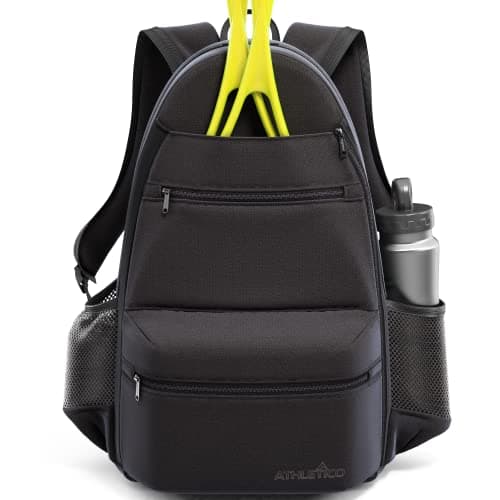
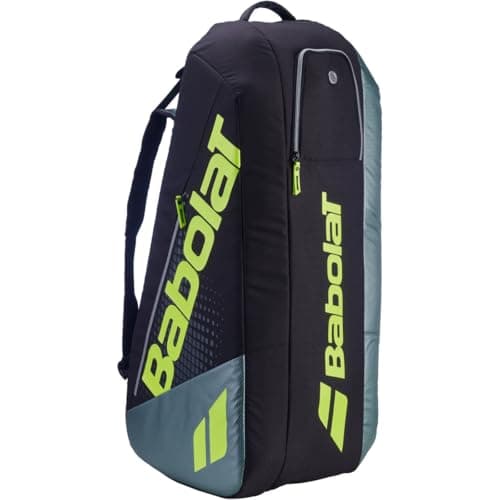
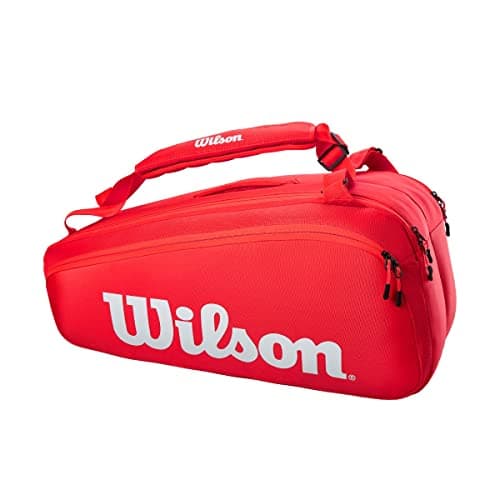
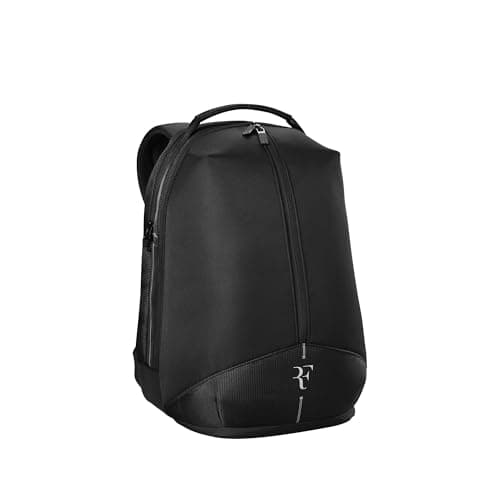
For travel, buy a two-racquet backpack, not a six-pack. A backpack holds two frames, shoes and kit, fits an overhead bin or under a seat, and leaves both hands free through a terminal — and the shape is what keeps it out of the oversize conversation. The premium pick is the Wilson RF backpack; the best value is the HEAD Tour Team backpack with its separate shoe compartment; the cheapest sensible one is the Athletico Compact City. If you genuinely need six frames on a trip, the Babolat Pure Aero RH6 is the thermal six-pack that travels best, and it is going in the hold.
Our live bag pages are organized by gender, which is the right split for buying a league bag and the wrong one entirely for this question. Traveling with racquets is its own problem, so this page is organized around it.
What a travel bag actually has to do
Four requirements, and only one of them is about tennis.
1. Fit the airline's shape. A tennis racquet is about 27 inches long, which is longer than most carry-on size limits in one dimension. A backpack-shaped bag presents as a backpack and generally goes in a bin or under a seat without comment. A long thermal six-pack with a shoulder strap presents as a long bag, and that is where a gate agent starts measuring. Published dimensions matter here: HEAD publishes its Tour 12R XL at 31 x 13 x 17 inches, and Babolat publishes the RH12 at 35 x 45 x 80 cm — both unambiguously checked luggage.
2. Carry hands-free. You are moving through a terminal with a boarding pass, a phone and a coffee. Backpack straps are the only sensible answer, and every bag on this page has them.
3. Keep damp court shoes away from clean clothes. On a trip you have one bag doing several jobs. A separate shoe compartment stops that becoming a problem, and the HEAD Tour Team publishes one.
4. Protect the frames from temperature and compression. Hold luggage is cold, cargo areas are rough, and both are harder on strings than play is. A thermal compartment helps — Babolat publishes three isothermal compartments on the RH12 and HEAD publishes CCT+ climate control on one compartment of the Tour XL. If a frame is going in the hold, loosen nothing and pad everything; a racquet between two layers of clothing survives better than a racquet alone in a bag.
Can you take a tennis racket on a plane?
Generally yes as carry-on, with the caveat that it depends on the airline and the agent, and nobody can promise you otherwise. A racquet is not a prohibited item in the way a bat or a club is; the problem is purely dimensional, because 27 inches exceeds the longest side of many carry-on allowances.
Three practical notes. A two-racquet backpack is the shape that gets through most often, which is the entire argument of this page. Hand luggage is also where you want the frames if you can manage it, because hold handling is what cracks a throat. And if you are checking them, put the bag inside a suitcase or pad it heavily rather than checking a thin racquet bag on its own.
Travel bag versus league bag
These are different purchases and buying one for the other is the mistake this page exists to prevent.
A league bag optimizes for capacity and temperature: six to twelve racquets, thermal compartments, shoe pockets, a dozen zips. It lives in a car trunk and goes from the trunk to the court. That is what the main bag ranking covers.
A travel bag optimizes for shape and carry: two racquets, compact, straps, a bin or a seat. It is smaller than you think you want and that is the point.
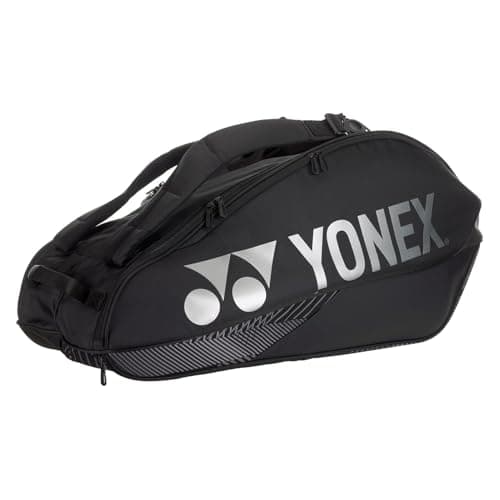
The six-packs on this page are here for the case where you need six frames at a destination — a tournament, a week-long camp, a coaching trip. The Babolat Pure Aero RH6 publishes a thermal main compartment, a shoe compartment and backpack straps, which is the right combination if it has to be a six-pack. The Yonex Pro 6 is the organized alternative, and the Wilson Super Tour 9-pack is what coaches and tournament players carry when capacity has stopped being negotiable.
So which bag should you buy?
You fly to play, a few times a year, with two frames → Wilson RF backpack. The premium two-racquet backpack, and built to be treated as luggage rather than as a kit bag.
One bag for travel and for club tennis → HEAD Tour Team backpack. Two racquets, a separate shoe compartment and padded straps, at a price that makes it the default recommendation for most club players anyway.
Cheapest bag that still works → Athletico Compact City. Two racquets, a compact profile, a water-bottle pocket. It is the commuting bag that happens to be a good travel bag.
A tournament trip with a full kit → Babolat Pure Aero RH6, with its thermal compartment and backpack straps. Accept that it is checked luggage.
Coaching or a camp → Wilson Super Tour 9-pack, three main compartments and a thermal lining. Nobody is calling this a travel bag, and sometimes you need it anyway.
Two things to pack with it. Keep a spare set of strings or a second frame if you are going somewhere without a stringer — restringing away from home is expensive and slow. And carry a couple of fresh cans of balls, because buying decent balls in an unfamiliar town takes longer than packing them did.
One honest note on the figures above: every dimension, capacity and compartment detail on this page is the manufacturer's published specification. We have not measured any of these bags, and we cannot tell you what a specific airline will do on a specific day. The scores are judgments from documented specifications against our rubric, weighted here toward portability and carry rather than capacity.
One question this page assumes rather than answers: can you bring a tennis racket on a plane? The TSA's own entry says yes in both carry-on and checked bags, which means the only real constraint is your airline's cabin-bag size rule — a bag-shape problem, not a security one.
For everything that is not a flight, two smaller formats fit a club player better. Small 3-racquet bags are the right size for two frames and a session's kit, and tennis backpacks carry the same load on both shoulders with somewhere for your shoes.