Skip to content
Four Oh Club

Bags, machines & training · Gear

Are Tennis Ball Machines Worth It?

Yes — but only for the player who will actually get it out of the car. The machine is not the expensive part of owning a ball machine. The friction is.

By Stephen V.Updated How we score
#ad

We earn a commission when you buy through our Amazon links, at no extra cost to you. It never changes our rankings, and we say so when the cheaper racquet is the better buy. How this works.

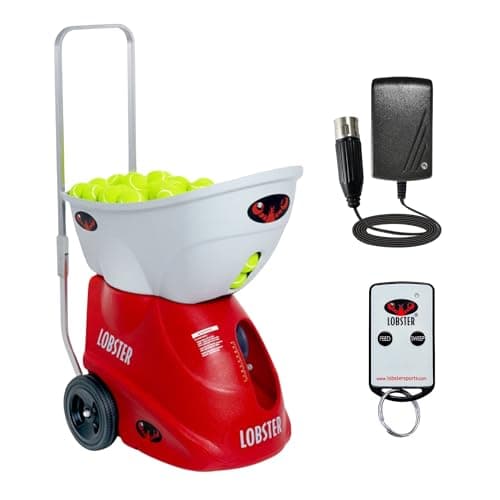
Yes, if you will use it twice a month for two years, and no otherwise. At a four-figure price and roughly 50 sessions, a Lobster Elite Liberty works out at about the cost of a single private lesson per outing — and unlike a lesson, it is available at 7am on a Tuesday. The reason most ball machines end up in a garage is not the money. It is weight, charging and ball collection, which is why the machine we recommend to most people is the one that is easiest to carry rather than the one with the most features.

That is the whole answer. The rest of this page is the arithmetic behind it, the reason these machines cost what they cost, and the honest list of things a machine will and will not fix in your game.

The cost arithmetic, done properly

A ball machine competes with two things: a hitting partner (free, unreliable) and a coach (excellent, expensive). The useful comparison is cost per hour of quality repetition.

A private lesson at a club is the benchmark most players already pay. A good battery machine costs roughly what ten to fifteen of those lessons cost. If you use it fortnightly for two years — 50 sessions — you are paying something like one lesson's worth of money per session, and the machine still has years left in it. Use it weekly and the figure halves. Use it four times and it was the worst value purchase in your tennis life.

So the break-even is not a price. It is a habit. Before you spend, answer one question honestly: where will the machine live, and how far is that from a court you can book? A machine in a hall closet eight minutes from a public court gets used. A machine in a loft forty minutes from a court does not, regardless of how good it is.

Why are tennis ball machines so expensive?

This is the second half of the same search, and the answer is unsatisfying but real: it is a low-volume product with a high-torque drivetrain, a large battery and an outdoor duty cycle.

The throwing mechanism is the cost. Firing a ball at 60 to 70 mph with repeatable spin needs two counter-rotating wheels under precise speed control. Making those two wheels hold their speed under load, ball after ball, for an hour, is the engineering problem, and it is why single-motor machines are cheap and feed flat balls.

The battery is the second cost. Two to four hours of motor duty outdoors means a substantial lithium pack and a charger, both of which are expensive and both of which are the parts that age.

Volume is the third. Tennis ball machines sell in thousands, not millions. There is no scale discount, no commodity supply chain, and a service network has to be paid for out of a small number of units. That is also why the established brands cost more than the new direct-to-consumer entrants: you are partly buying the fact that someone will still sell you a drive wheel in six years.

The flip side, and it is a real one: the market below a thousand dollars has become genuinely competent in the last few years. Machines like the Nisplay and the TENNIIX offer dual motors and real topspin at a price that used to buy a basket and a bucket. If the four-figure number is what is stopping you, start there and read the budget machine page.

Does a ball machine improve your game? Yes, at three specific things

1. Technical repetition under no pressure. A machine gives you the same ball a hundred times. Nothing else in tennis does. If you are rebuilding a forehand or grooving a new grip, a machine is the single best tool there is, and it is better than a coach for this particular job because a coach cannot feed 200 identical balls in twenty minutes.

2. Fitness with a racquet in your hand. An oscillating machine on a two-second feed is a brutal and specific workout. Twenty minutes of it is worth an hour of social doubles for your legs.

3. Shots you never get to practice. Short balls, high balls, deep returns to your backhand. In a normal hit, your partner feeds you what they can. A machine feeds you what you are bad at, which is the whole point.

And here is what it will not fix, said plainly, because the pages that sell these machines rarely say it. A machine cannot teach you to read an opponent, cannot disguise a shot, and cannot punish you for a bad decision. Its ball always arrives from the same place with the same intention. Players who train exclusively on a machine tend to develop lovely strokes and poor anticipation. The machine is a supplement to playing, not a substitute for it — and if what you actually want is more match-like practice, read how to practice tennis alone, which covers the cheaper options first.

The cheaper things to try first

If you are not sure, do not spend four figures to find out. In rough order of cost:

A hopper and a wall. A 75-ball hopper and a practice wall gives you unlimited repetition for the price of a string job. The ball is wrong — it comes back flat and fast — but for footwork and racquet preparation it is real practice.

A basket of serves. The one part of tennis you can practice alone, at full quality, with no equipment beyond balls. Most club players never do it, and it is the cheapest rating point available to them.

Renting a machine. Many clubs and public facilities have one. Two hours with a club machine will tell you more about whether you want to own one than any review will, including this page.

If all three of those leave you wanting the real thing, you have your answer, and the picks below are where to spend.

The short answer

Quick picks

#Racquet / gearBest forScorePrice
01
Lobster Sports Lobster Sports Elite Liberty
Lobster Sports Elite Liberty

The ball machine to buy. Battery powered, genuinely portable, with oscillation and spin — the cheapest machine that is not a compromise.

Most club players
8.4
$1,179.00Amazon
02
Tennis Tutor Tennis Tutor ProLite Plus
Tennis Tutor ProLite Plus

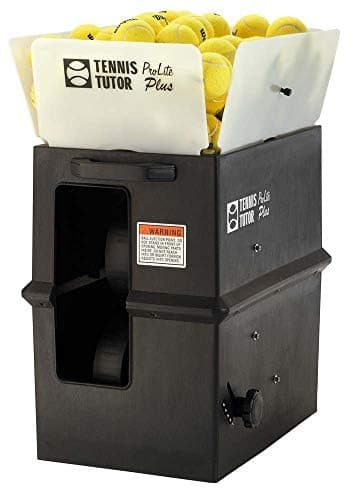
The light one. Under the weight of the Lobsters with one-touch spin and 75 mph feeds — the machine for someone who has to carry it up steps.

Lightest full machine
8.4
$1,329.00Amazon
03
Nisplay Nisplay Portable Tennis Ball Machine
Nisplay Portable Tennis Ball Machine

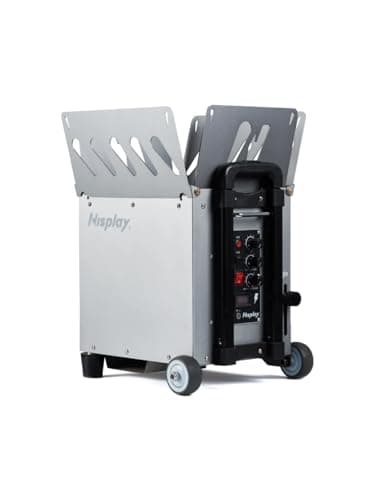
The cheapest tennis ball machine we can find that is still a real machine: dual motors for genuine topspin, 80+ balls, and under 30 lb to carry.

The cheapest real machine
7.4
$889.00Amazon

#ad · Live prices from the Amazon Product API, as of October 20, 2026. Where we have no verified live price, we show none — we would rather leave a gap than print a number that has rotted.

In detail

The picks, in full

01
Lobster Sports Lobster Sports Elite Liberty

Most club players

Lobster Sports Elite Liberty

Battery, 2-4 hr runtimeRandom horizontal oscillationTopspin/backspin~35 lb
8.4/10

The ball machine to buy. Battery powered, genuinely portable, with oscillation and spin — the cheapest machine that is not a compromise.

Portability
9
Features
7
Build
9
Ease of use
9
Value
8

Pros

  • Battery operation and large wheels mean one person can actually get it onto a public court — the thing that decides whether a machine gets used
  • Random horizontal oscillation makes you move, which is the entire reason to own a machine rather than a basket
  • Adjustable topspin and backspin, not just a feed

Cons

  • Horizontal oscillation only — no vertical, so every ball arrives at the same depth
  • Four figures. This is the most expensive thing on the site

Don't buy this if…

…you want varied depth as well as width. Step up to the Elite Two for vertical oscillation.

$1,179.00View on Amazon

Price as of October 20, 2026. Prices change — Amazon's is the one that counts.

#ad · we may earn a commission from this link to Lobster Sports Elite Liberty

02
Tennis Tutor Tennis Tutor ProLite Plus

Lightest full machine

Tennis Tutor ProLite Plus

Up to 75 mphOne-touch topspin/underspinBuilt-in oscillatorMade in USA
8.4/10

The light one. Under the weight of the Lobsters with one-touch spin and 75 mph feeds — the machine for someone who has to carry it up steps.

Portability
10
Features
7
Build
9
Ease of use
9
Value
7

Pros

  • The lightest full-feature machine here, which is the single biggest predictor of whether a machine gets used
  • One-touch spin switching means you change from topspin to slice without a settings menu
  • 75 mph top speed is genuinely enough to practice returns against

Cons

  • Smaller ball capacity than the Lobster Elite Two
  • Fewer drill features for a comparable price

Don't buy this if…

…you leave the machine at a home court. Buy the feature set instead of the light weight.

$1,329.00View on Amazon

Price as of October 20, 2026. Prices change — Amazon's is the one that counts.

#ad · we may earn a commission from this link to Tennis Tutor ProLite Plus

03
Nisplay Nisplay Portable Tennis Ball Machine

The cheapest real machine

Nisplay Portable Tennis Ball Machine

80+ ball capacity26 lbMax 68 mph4+ hr external battery
7.4/10

The cheapest tennis ball machine we can find that is still a real machine: dual motors for genuine topspin, 80+ balls, and under 30 lb to carry.

Feed quality
7
Build
6
Portability
9
Programmability
6
Value
9

Pros

  • Dual motors, which is what allows real topspin and backspin rather than a flat feed — single-motor machines at this price cannot do it
  • 26 lb published weight means one person can get it out of a car and onto a court without help
  • 80+ ball capacity is roughly two hoppers, so a solo session does not become a collecting session every four minutes

Cons

  • 68 mph top speed is well below the tour-level machines; it will not simulate a 4.5 opponent's pace
  • The 4+ hour runtime figure is for the external lithium battery, which is the part most likely to degrade with age

Don't buy this if…

…you are a 4.5+ player wanting match-pace drilling. Buy the Lobster Elite Liberty or above, where the speed range and programmability actually match your game.

$889.00View on Amazon

Price as of October 20, 2026. Prices change — Amazon's is the one that counts.

#ad · we may earn a commission from this link to Nisplay Portable Tennis Ball Machine

What to look for, in the order that matters

1. Weight, then weight, then weight. The single best predictor of whether a machine gets used is whether one person can get it from a car to a court without resenting it. Under 30 lb is a one-person carry. Over 40 lb with no wheels is a two-person job, and a two-person job does not happen spontaneously.

2. Battery, not mains. Public courts do not have power. A mains-only machine is a home-court machine, and if you had a home court you would already own one.

3. Oscillation. A machine that feeds to one spot is a feeder. A machine that moves you is practice. Horizontal (side to side) is the one that matters; vertical adds depth variation and roughly doubles the price.

4. Spin, which means two motors. Topspin and backspin come from two wheels running at different speeds. One motor means a flat feed, which plays nothing like a real ball.

5. Hopper size. Everything above 70 balls is fine. Below that you spend your session collecting. And buy pressureless practice balls for it — a machine eats pressurized balls and they go dead in a fortnight anyway.

6. Remote or app. Genuinely useful rather than a gimmick: without it, every settings change is a walk to the far baseline, and you will stop making them.

Which of the three below

The Lobster Elite Liberty is the default: battery, random horizontal oscillation, real spin, around 35 lb with wheels. The Tennis Tutor ProLite Plus is the lighter choice if there are steps between your car and the court, with one-touch spin switching and 75 mph feeds. The Nisplay is the way to find out whether you will use a machine at all without spending four figures to do it — dual motors, 80+ balls, a published 26 lb.

If you are a 4.5 or above, none of these three is really your machine; the advanced-player machines are the ones with the speed range and the programmability to match your game.
How we picked

We have not physically tested this gear

Everyone in this category says they tested twenty racquets. We have not tested any — and we say so. What we did instead: compiled the manufacturer-published specifications (head size, strung weight, string pattern, stiffness, outsole compound), normalized them, and scored each product against a published rubric weighted for the NTRP tier this page serves. The scores are judgments from documented research, not measurements we took, because we do not have a lab and are not going to pretend we do.

Questions

Frequently asked

Are tennis ball machines worth the money?
For a player who will use one twice a month for a couple of years, yes: across roughly 50 sessions a good battery machine costs about what one private lesson costs per outing, and it is available whenever the court is. For a player who will use it four times, no. The deciding variable is not price, it is how far the machine lives from a court you can book.
Why are tennis ball machines so expensive?
Three reasons. Repeatable 60-70 mph feeds with spin need two precisely speed-controlled counter-rotating wheels under load; outdoor use needs a large lithium battery and charger, which are the costliest and shortest-lived parts; and the whole category sells in thousands of units rather than millions, so there is no volume discount and a service network has to be funded from a small base.
Does a tennis ball machine improve your game?
At three things, substantially: technical repetition (nothing else gives you the same ball a hundred times), tennis-specific fitness, and practicing the shots you never get fed in a normal hit. It does not teach anticipation, disguise or decision-making, because the ball always arrives from the same place with the same intention. Treat it as a supplement to playing, not a replacement.
What should I try before buying a ball machine?
A ball hopper and a practice wall, a basket of serves, and two hours on the machine at your club if it has one. All three cost almost nothing and together they will tell you whether the habit is real. If you still want one afterwards, that is your answer.
What is the most important spec on a ball machine?
Weight, by a wide margin, because it decides whether the machine gets used. After that: battery rather than mains power, horizontal oscillation, two motors (which is what makes real spin possible), a hopper of 70 balls or more, and a remote so you are not walking to the baseline for every settings change.

Keep reading

Receipts

Sources

We do not run a testing lab, and we do not pretend to. Our specs come from manufacturer listings and spec sheets; our rules and dimensions come from the official rulebook. Where we could not verify something, we say so on the page rather than quietly leaving it out. Read our full method.