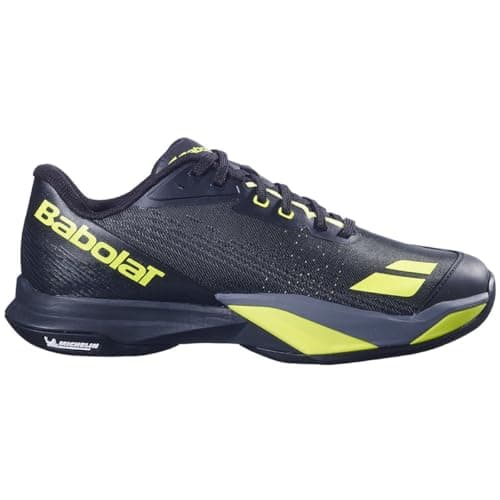
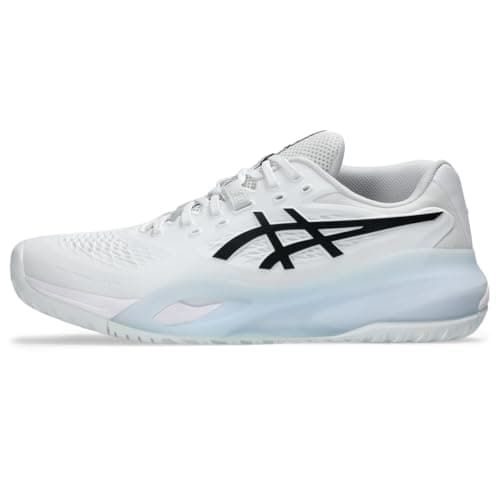
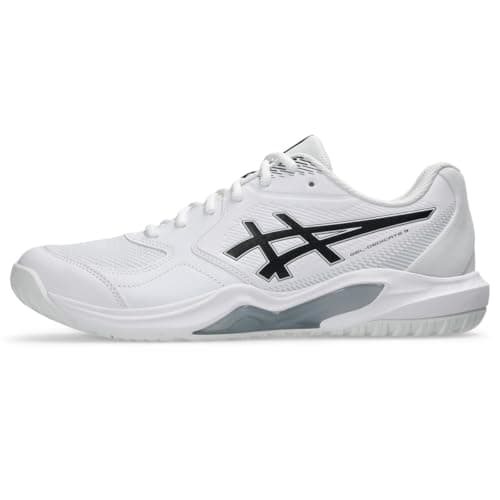
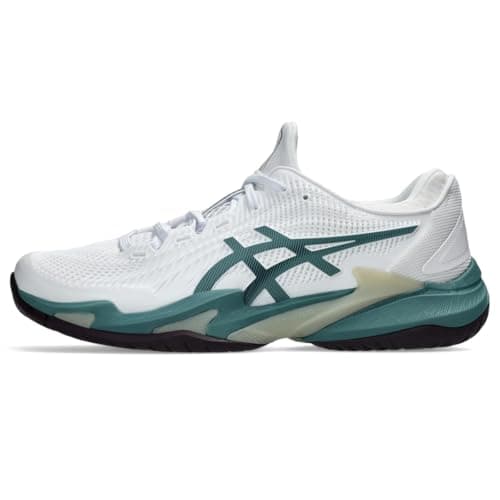
Tennis court shoes and paddle-court shoes are built to the same brief, and if you already own tennis shoes you do not need a second pair — yours work. Both categories use the same court outsole patterns, the same reinforced lateral walls and the same low, firm midsole, because both sports are made of sideways stops. The one real difference is weight and quickness: a paddle court is a third the size of a tennis court, so the shoes sold for it skew lighter and lower. If you want one pair for both and you play tennis seriously, the ASICS Court FF 3 or the Babolat Jet Mach 4 are the light end of tennis and cross over best. The direction that does not work is the other one: a lightweight paddle-court shoe is not enough shoe for a full tennis court.
We are a tennis site and we stay one — the paddle sports are covered properly elsewhere and we have nothing to sell you for them. What we can answer is the question club players actually ask us, which is about the shoes already in their bag: are these the same thing, and can I use mine?
Why they are nearly the same shoe
Both sports are played on a hard court, in short bursts, with constant changes of direction. That produces an identical set of engineering requirements, and both categories answer them the same way:
The outsole. Dense, abrasion-rated rubber in a herringbone or multi-directional pattern, non-marking so indoor venues allow it. Identical thinking. ASICS publishes a full-length AHAR Plus outsole on the Gel-Resolution X; the shoes sold for paddle courts use the same family of compounds and treads, because the surface is the same surface.
The lateral wall. A stiffened structure around the sides to stop the upper shearing off the midsole under a sideways load — ASICS DYNAWALL, adidas Torsion, Wilson's 4D chassis. Both categories have it, for the same reason.
The low, firm midsole. Both keep you close to the court, because stack height is leverage for an ankle to roll over. Neither looks like a modern running shoe.
That shared design is why the podiatry argument is about running shoes, not about this comparison: the risk a court-sport practice describes comes from footwear "designed for forward motion, not the lateral cuts" a racket sport demands. Both of these categories are designed for the cuts.
The three differences that are real
1. Court size, and therefore weight. A tennis singles court is 78 feet long; a paddle court is 44. Less ground to cover and shorter sprints mean the shoes sold for the smaller court can be lighter and softer, because they do not need to survive a player sliding into a wide ball from the doubles alley. Tennis shoes are heavier on purpose. That extra build is why they cross over and the lighter shoe does not.
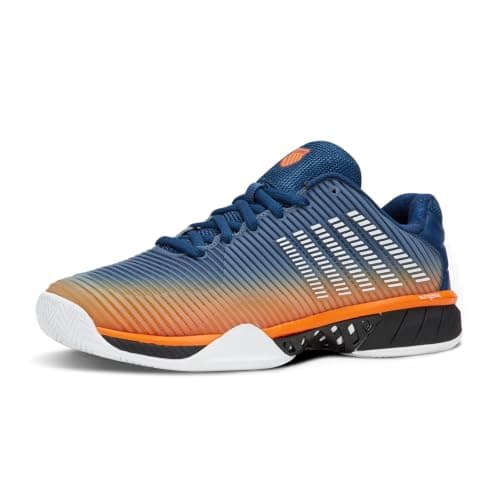
2. Toe drag. Tennis has a serve you drag your back toe through; the paddle sports have an underhand serve that does not. So tennis shoes carry armor the other category does not need — adidas publishes an Adituff toe drag guard, K-Swiss a DragGuard toe. If you play both, that armor is pure upside.
3. Forefoot flex and short-step quickness. The smaller court is played in tiny adjustment steps at the net rather than long recovery strides. Lighter, more flexible shoes feel better doing that, which is the genuine reason a dedicated category exists at all, and the reason the lightest tennis shoes are the best crossover picks rather than the heaviest.
Can you use tennis shoes on a paddle court?
Yes. Everything a paddle court asks of a shoe, a tennis court asks harder: same outsole requirement, same non-marking rule, same lateral load, more of it. Your tennis shoes are over-specified for the smaller court, and the only cost is a few extra ounces and a slightly less nimble feel at the net.
If you play a lot of both and want to optimize for the lighter feel without giving up tennis, buy at the light end of tennis rather than buying out of the category. The ASICS Court FF 3 publishes a low-profile fit and a FLYTEFOAM midsole; the Babolat Jet Mach 4 publishes a Matryx woven upper and a Michelin outsole and is the lightest shoe on this site. Both are real tennis shoes that feel quick in short steps.
And the other direction?
This is the half of the question that matters, and the answer is no, not really. A lightweight shoe built for a 44-foot court does not have the outsole volume, the lateral wall or the toe armor to survive a full tennis court. You will feel it in two places: the outside edge of the shoe on a wide forehand, and the toe of your back foot after a set of serving.
If tennis is your main sport, buy a tennis shoe and use it for everything else. That is the whole recommendation, and it is the cheaper one too.
What actually decides your shoe
Not the sport. Your foot and your surface. In order: width, then arch and any history of heel pain, then hard court versus clay. The full process is in how to choose tennis shoes, and if budget is the binding constraint, start at budget court shoes.