ASICS is the best tennis shoe brand for most club players, and the Gel-Resolution is the reason: it is the reference stability court shoe, built around lateral support and outsole durability rather than weight. If your foot is wide, New Balance is the brand to shop first because it is the only one that sells court shoes in real width options. If you want the lightest shoe that is still a court shoe, Babolat. If you want the most shoe for the least money, K-Swiss.
One clarification before anything else, because the search term is ambiguous and this site is not: this page is about tennis court shoes — shoes with a court outsole and lateral support, for playing tennis on a court. It is not about the lifestyle sneakers also sold as "tennis shoes" for walking or standing all day. Those are a different product with a different sole and no lateral structure, and recommending one for tennis would be an injury risk, not a style preference.
That matters because of what a court shoe is for. As Michigan Foot & Ankle Specialists put it, "wearing running shoes for tennis significantly increases lateral ankle sprain risk because running shoes are designed for forward motion, not the lateral cuts that tennis requires constantly" — while tennis shoes have "reinforced lateral walls, extra durability at the toe drag area, and appropriate lateral stability." The brands below are ranked on how well they do exactly that. The full argument is in tennis shoes vs running shoes.
How to read a brand ranking
Brands are not ranked by quality here, because at this level they are all competent. They are ranked by what they optimize for, because that is the thing that decides whether a brand suits you. Three questions sort almost everybody:
How wide is your foot? This overrides everything. A shoe from the "best" brand in the wrong width is worse than a middling shoe that fits. Covered in court shoes for wide feet.
Do you wear through outsoles? If you destroy a pair in three months, buy for durability and ignore weight.
Do you move more than you hit? Serve-and-volley and all-court players want a lighter, faster shoe than a baseline grinder does.
ASICS — the stability and durability brand
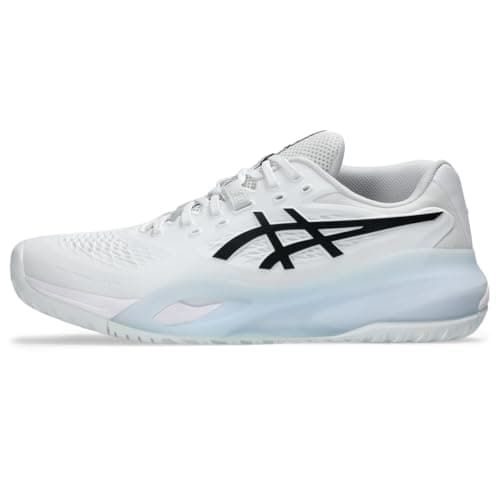
Optimizes for: lateral support and outsole life. Pick: Gel-Resolution.
ASICS is the default recommendation in club tennis for a straightforward reason: the Gel-Resolution line is the reference stability court shoe, and it has been iterated on for a long time rather than redesigned every season. What you get is a substantial, structured shoe with a reinforced lateral wall and a hard-wearing outsole, and what you pay for it is weight. If you grind out baseline rallies on hard courts and you have ever rolled an ankle, start here.
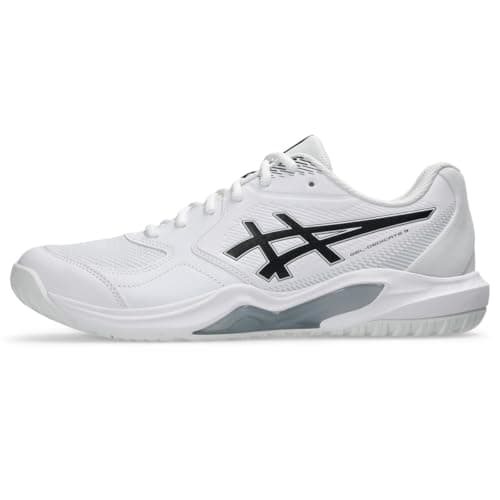
ASICS also owns the cheap end properly, which is unusual. The Gel-Dedicate is a genuine court shoe at an entry price — a real outsole and real lateral structure, with less cushioning and a shorter life — and it is the right first court shoe for somebody coming off running shoes. The Court FF is the other direction: lighter and faster, for a player who moves forward more than sideways.
Downside: weight, and a fit that runs narrow-to-standard. Not the brand for a broad foot.
adidas — the structure brand
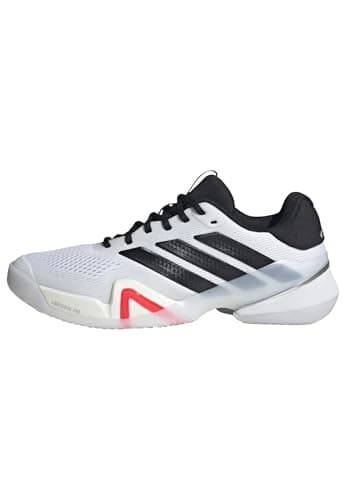
Optimizes for: lockdown and durability. Pick: Barricade.
The Barricade has spent two decades as the most heavily built shoe in tennis, and that is still what adidas is for in this category: maximum structure, maximum lockdown, a shoe that holds your foot in place through a hard change of direction and does not give up. The historical reputation for outsole durability is a real part of the brand's identity in tennis.
Downside: it is a lot of shoe. If you are light, quick and value feel, the Barricade will feel like boots. It also has one of the longer break-in periods in this category.
New Balance — the width brand
Optimizes for: fit, in actual widths. Pick: 996.
This is the most practically useful entry on the page. New Balance is the brand that applies its general-footwear width system to court shoes, which means a genuine 2E or 4E option rather than "try a half size up and hope." For a wide foot that is not a preference, it is the difference between playing and getting blisters on the outside of the forefoot every session.
If your feet are broad, start here before you read anything else about brands. The reasoning in full is in court shoes for wide feet, and court shoes for flat feet covers the related arch question.
Downside: a shorter tennis-specific line than ASICS or adidas, so there is less choice once you have fixed the width.
Babolat — the tennis-only brand
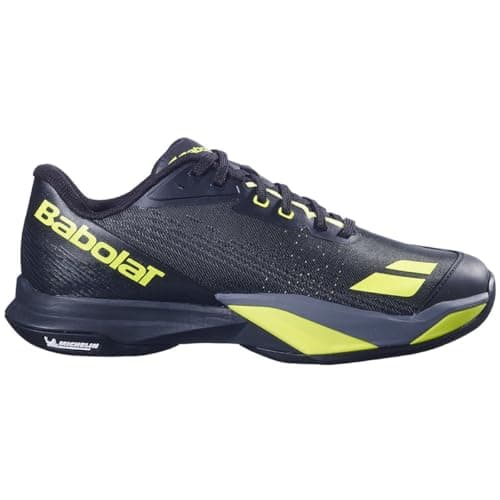
Optimizes for: low weight and speed. Pick: Jet Mach.
Babolat is the only major name here that makes nothing but tennis equipment, and it shows in the shoes: the Jet line is built around being light and fast rather than maximally armored. For a player who covers the court and wants to feel quick, this is the brand. It is also the brand to pick if a structured shoe like the Barricade has always felt like too much shoe.
Downside: lighter construction means less outsole life and less lateral wall. If you wear through shoes, this is the wrong trade.
K-Swiss — the value brand
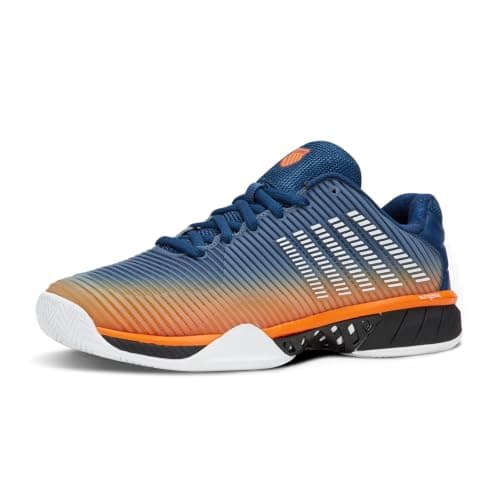
Optimizes for: price per court-ready feature. Pick: Hypercourt.
K-Swiss has been a tennis brand since well before it was a lifestyle one, and the Hypercourt line is where that heritage still lives. It is consistently the most court shoe available at a mid price — proper outsole, proper lateral structure, sensible cushioning — without the premium the bigger names charge for their flagship.
Downside: it does not win any individual category. It is the sensible choice rather than the specialist one.
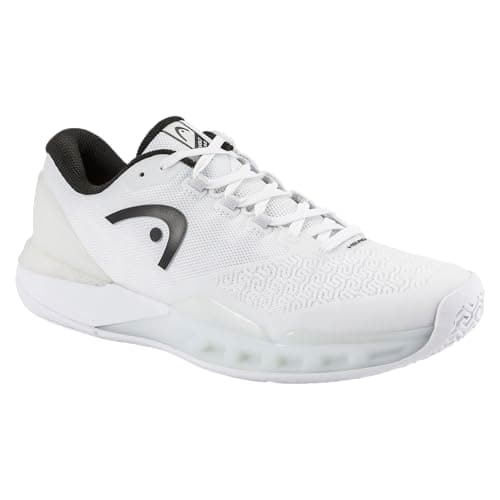
Wilson and HEAD — the racquet brands
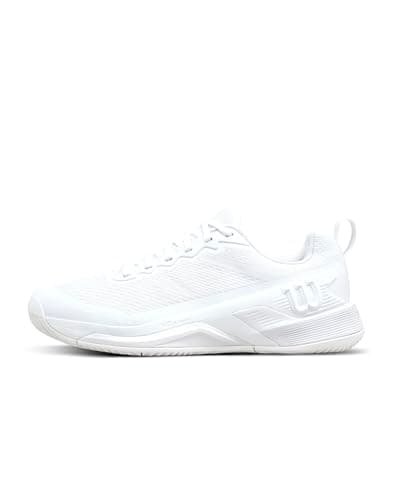
Optimize for: a complete tennis range. Picks: Wilson Rush Pro, HEAD Revolt Pro.
Both are racquet companies first, and both make perfectly good court shoes that tend to be bought by players already invested in the brand's frames. The Rush Pro and the Revolt Pro are real court shoes with real outsoles and no gimmicks; neither is the best shoe in any particular category, and neither is a mistake.
Downside: narrower ranges and less iteration than the footwear specialists. If you have a specific fit problem, these are not the brands with the tool to fix it.
Nike, and a note on what is not here
Nike makes court shoes, and the Vapor and Zoom lines are serious tennis products. They are not ranked on this page for a specific reason: this site only ranks products we have resolved to a live listing in our registry, and we do not currently carry a Nike court shoe. We would rather tell you that than pad the page.
What we will say is the thing that catches people out with Nike specifically: it is also the largest maker of lifestyle sneakers in the world, and a search for "Nike tennis shoes" returns far more of those than of court shoes. If you shop Nike for tennis, check for a herringbone or modified-herringbone court outsole and a reinforced lateral wall. If the sole is a flat lifestyle pattern, it is not a tennis shoe whatever the listing calls it.
That caution applies across the board, which is the real reason this page exists. Several of these brands make both, and the word "tennis shoes" in American English covers both meanings. The court shoe is the one with the herringbone sole and the stiff collar.
So which brand should you buy?
Wide feet → New Balance, in a real width. Nothing else matters until this is solved.
You roll ankles, or you grind baseline rallies → ASICS Gel-Resolution, or the adidas Barricade if you want even more structure.
You wear through outsoles in a season → adidas or ASICS. Buy for durability and accept the weight. The full ranking for that problem, including what fails first and in what order, is the longest lasting tennis shoes.
You want to feel fast → Babolat Jet Mach, or the ASICS Court FF.
Budget is the constraint → K-Swiss Hypercourt at mid price, or the ASICS Gel-Dedicate as a genuine entry-level court shoe.
You play on clay → brand matters less than outsole pattern; see clay court shoes. Likewise for hard courts, which is what most of the ranking above assumes.
And whatever brand you land on, fit it in the socks you intend to play in — a thick tennis sock changes shoe fit by a meaningful amount, which is covered in the tennis sock ranking and in how to choose tennis shoes.