Skip to content
Four Oh Club

The cheapest upgrade · Strings

How Often Should You Restring a Tennis Racquet?

The rule of thumb is as many times a year as you play per week. Almost nobody does it, and almost everybody is playing on dead string.

By Stephen V.Updated How we score
#ad

We earn a commission when you buy through our Amazon links, at no extra cost to you. It never changes our rankings, and we say so when the cheaper racquet is the better buy. How this works.

Restring as many times per year as you play per week. Twice a week means at least twice a year — and that is a floor, not a target, because polyester goes dead long before it breaks.

The rule, and why it under-states the case

The “times per week equals times per year” rule has been club wisdom for decades and it is a reasonable minimum. It was also devised when most people played natural gut or synthetic gut, which degrade gradually and visibly.

Modern polyester does not behave that way. It loses tension and elasticity rapidly and then sits in the frame looking perfectly fine for months. A player who waits for a break on a poly bed may be playing on a dead string bed for most of the year.

Dead is worse than broken

A broken string is obvious and you replace it. A dead string bed is invisible, and it is quietly costing you two things.

Performance. The snapback that generates spin depends on the mains being able to move and return. As polyester stiffens and notches, that movement goes away. You lose spin first, then depth control.

Your arm. As strings lose elasticity they stiffen, so an old bed transmits more shock than a fresh one. If you have an elbow that occasionally grumbles, playing on six-month-old poly is one of the most reliable ways to wake it up. See strings for tennis elbow.

The four signs it is finished

1. Visible notching.Look where the mains cross the crosses. Deep grooves mean the mains can no longer slide and return — the string is mechanically done.

2. The mains stay out of place. Healthy strings spring back into alignment after a shot. If you are constantly straightening them by hand, snapback has gone.

3. The sound changes.A fresh bed is crisp. A dead one is dull and “clunky”. Most players notice this before they consciously register it.

4. Balls start landing long, then short. First the string loses control as tension drops, then it stiffens and loses power. If your depth has become unpredictable and your technique has not changed, suspect the string.

How long each type lasts

As playable life, not as time-until-breakage. Polyester:roughly 10–20 playing hours for most club players, and less if you hit heavy spin. Multifilament:degrades more gradually, often 20–30 hours, and usually breaks before it feels truly dead. Natural gut:the best tension maintenance of any string — it plays well for a long time, which is part of what you are paying for. Synthetic gut: goes dead quickly but is cheap enough that it does not matter.

The short answer

Quick picks

#Racquet / gearBest forScorePrice
01
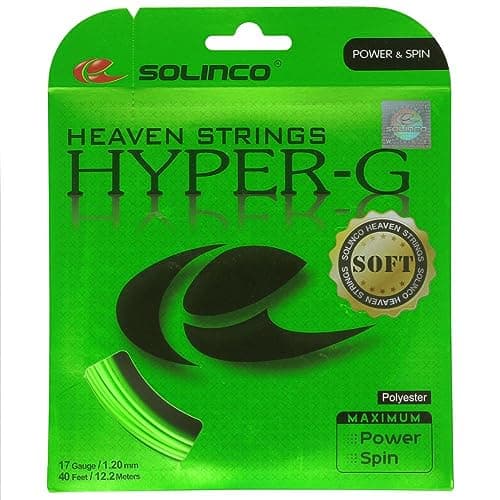
Solinco Solinco Hyper-G Soft 17 (set)
Solinco Hyper-G Soft 17 (set)

The best-value spin poly, and the one to buy first. Hyper-G gives you most of an RPM Blast for roughly half the price.

Best-value polyester
8.2
$12.99Amazon
02
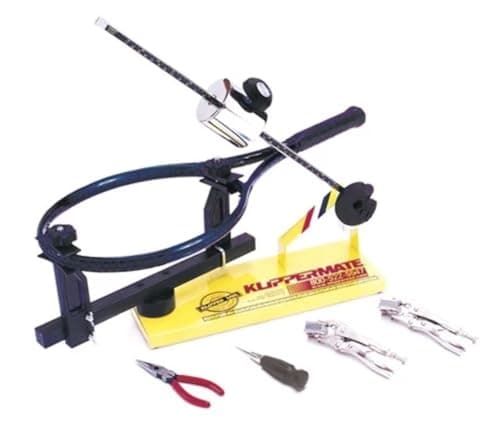
Klippermate Klippermate Racquet Stringer
Klippermate Racquet Stringer

The machine that pays for itself in about ten restrings. A simple drop-weight stringer that has been made in the US for decades.

Stringing your own
7.4
$379.00Amazon
03
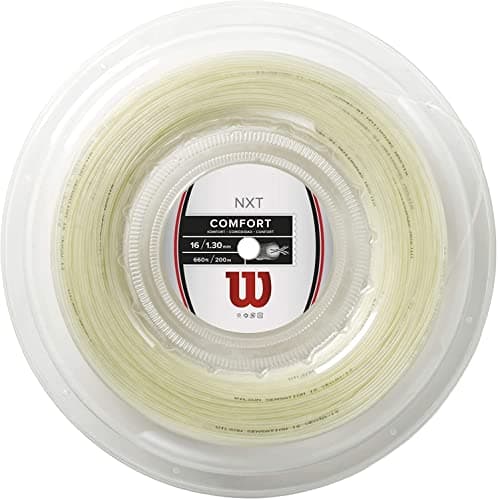
Wilson Wilson NXT 16 (200 m reel)
Wilson NXT 16 (200 m reel)

The premium multifilament, bought the sensible way — a reel. The closest a synthetic string gets to natural gut, at a tenth of gut's price.

Comfort and feel
6.6
$324.95Amazon
04
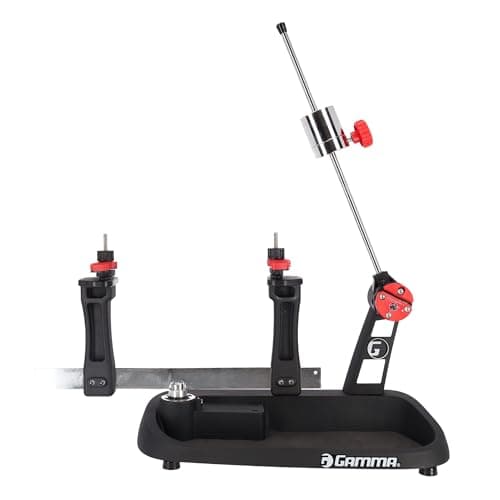
GAMMA GAMMA Momentum 2 Drop Weight Stringing Machine
GAMMA Momentum 2 Drop Weight Stringing Machine

The upgrade machine: a six-point mounting drop-weight stringer for someone stringing for a family, a team or a small club.

Clubs and teams
7.6
$469.99Amazon

#ad · Live prices from the Amazon Product API, as of October 7, 2026. Where we have no verified live price, we show none — we would rather leave a gap than print a number that has rotted.

In detail

The picks, in full

01
Solinco Solinco Hyper-G Soft 17 (set)

Best-value polyester

Solinco Hyper-G Soft 17 (set)

Square-profile co-polyester17g / 1.20 mmSoft variant40 ft set
8.2/10

The best-value spin poly, and the one to buy first. Hyper-G gives you most of an RPM Blast for roughly half the price.

Control
9
Spin
9
Comfort
6
Durability
7
Value
10

Pros

  • Square profile for spin, in the Soft version that takes a real edge off the harshness of standard Hyper-G
  • Among the cheapest quality polys sold, which matters because poly needs replacing often
  • Holds tension noticeably better than most budget polyesters

Cons

  • 'Soft' is relative — it is still a polyester and still stiffer than any multifilament
  • The bright green dye transfers onto light-coloured frames

Don't buy this if…

…you are stringing a stiff frame and have elbow history. Soft poly is not soft enough for that combination.

$12.99View on Amazon

$13.997% off

Price as of October 7, 2026. Prices change — Amazon's is the one that counts.

#ad · we may earn a commission from this link to Solinco Hyper-G Soft 17 (set)

02
Klippermate Klippermate Racquet Stringer

Stringing your own

Klippermate Racquet Stringer

Drop-weight tensioner2-point mountingMade in USALifetime support
7.4/10

The machine that pays for itself in about ten restrings. A simple drop-weight stringer that has been made in the US for decades.

Accuracy
8
Build
8
Ease of use
6
Speed
5
Value
10

Pros

  • Drop-weight tensioning is gravity-based, so it is inherently accurate and never needs calibration
  • At club restringing prices it pays for itself inside a season of regular play
  • Decades-long production run means parts, tutorials and support all still exist

Cons

  • Two-point mounting puts more stress on the frame than a six-point machine — technique matters
  • Slow. Expect well over an hour for your first few jobs

Don't buy this if…

…you restring twice a year. The machine will never pay back and the shop will do a better job.

$379.00View on Amazon

Price as of October 7, 2026. Prices change — Amazon's is the one that counts.

#ad · we may earn a commission from this link to Klippermate Racquet Stringer

03
Wilson Wilson NXT 16 (200 m reel)

Comfort and feel

Wilson NXT 16 (200 m reel)

Multifilament16g / 1.30 mm200 m reel (~16 jobs)High elasticity
6.6/10

The premium multifilament, bought the sensible way — a reel. The closest a synthetic string gets to natural gut, at a tenth of gut's price.

Control
6
Spin
5
Comfort
10
Durability
4
Value
8

Pros

  • Thousands of fibres bundled in polyurethane give it the elastic, ball-pocketing feel of natural gut
  • The most arm-friendly synthetic string widely sold — the first thing to try if your elbow hurts
  • A 200 m reel works out to a fraction of the per-job cost of sets

Cons

  • Multifilament frays and breaks far faster than poly if you hit heavy spin
  • A reel is a large up-front purchase that only pays back if you restring often

Don't buy this if…

…you break strings in under ten hours. You will be restringing weekly and should hybrid with a poly.

$324.95View on Amazon

Price as of October 7, 2026. Prices change — Amazon's is the one that counts.

#ad · we may earn a commission from this link to Wilson NXT 16 (200 m reel)

04
GAMMA GAMMA Momentum 2 Drop Weight Stringing Machine

Clubs and teams

GAMMA Momentum 2 Drop Weight Stringing Machine

Drop-weight tensioner6-point mountingSwivel clampsTabletop
7.6/10

The upgrade machine: a six-point mounting drop-weight stringer for someone stringing for a family, a team or a small club.

Accuracy
8
Build
9
Ease of use
8
Speed
6
Value
7

Pros

  • Six-point mounting supports the frame in far more places, which matters when you are stringing other people's racquets
  • Swivel clamps are a real time saver over fixed clamps on a budget machine
  • GAMMA is the largest stringing-machine brand in the US, so consumables are easy to source

Cons

  • Several times the price of a Klippermate for a difference most home stringers will not use
  • Still a drop weight, so still slower than an electronic machine

Don't buy this if…

…you only string your own two frames. The Klippermate does that job for a fraction of the cost.

$469.99View on Amazon

Price as of October 7, 2026. Prices change — Amazon's is the one that counts.

#ad · we may earn a commission from this link to GAMMA Momentum 2 Drop Weight Stringing Machine

A realistic schedule

You playMinimum (the old rule)Better, on polyester
Once a weekOnce a yearTwice a year
Twice a weekTwice a yearThree or four times a year
Three times a weekThree times a yearEvery two months
Competitively, most daysWeekly or moreWeekly or more

When a stringing machine pays for itself

Do the arithmetic rather than the vibe. Take your club's restring labour charge, multiply by how many jobs a year you actually need from the table above, and compare against a machine.

At typical US club rates, a Klippermatepays for itself in roughly ten jobs — which is one to two years for a committed club player, or a single season for a family with three players. The GAMMA Momentum 2costs more and adds six-point mounting and swivel clamps, which matters once you are stringing other people's frames.

The real cost is time: well over an hour for your first few, and 30–40 minutes once practised. If your time is worth more than the saving, use a stringer — but then actually use them on schedule.

Two frames, strung the same

If you play competitively, carrying a second racquet strung identically to the first is worth more than most gear upgrades. A string break mid-match on a single-frame setup means either borrowing something unfamiliar or retiring.

“Identically” matters: same string, same tension, same grip build-up, strung within a few days of each other. A spare frame that plays differently is barely better than no spare. A bag with thermal-lined compartments keeps both consistent between sessions.

Storage affects string life

Heat is the enemy. A racquet left in a hot car accelerates tension loss substantially, and repeated heat cycling is worse than one hot afternoon. A thermal-lined bag genuinely slows this down, which is the practical case for spending money on a bag rather than a rucksack.

Natural gut adds moisture to the list — it is damaged by damp and should never be left in a wet bag.

The cheapest performance advice on this site

If you take one thing from the whole strings hub: a mid-range racquet with a fresh string bed beats a premium racquet with a dead one, every time, and it is not close. Players spend hundreds on frames and then play eighteen months on the string it came with.

If you have not restrung this year and you play weekly, book it before you read any more of our racquet reviews.
How we picked

We have not physically tested this gear

Everyone in this category says they tested twenty racquets. We have not tested any — and we say so. What we did instead: compiled the manufacturer-published specifications (head size, strung weight, string pattern, stiffness, outsole compound), normalized them, and scored each product against a published rubric weighted for the NTRP tier this page serves. The scores are judgments from documented research, not measurements we took, because we do not have a lab and are not going to pretend we do.

Questions

Frequently asked

How often should you restring a tennis racquet?
At minimum, as many times per year as you play per week. On polyester, more often than that — roughly every 10–20 playing hours, because poly goes dead well before it breaks.
Should I restring if the strings have not broken?
Yes, especially with polyester. Unbroken does not mean playable: strings lose tension and elasticity, which costs you spin and depth control and increases the shock reaching your arm.
How do I know when my strings are dead?
Four signs: deep notching where mains cross crosses, mains that no longer spring back into alignment, a dull rather than crisp sound, and depth that has become unpredictable without any change in your technique.
Is it worth buying a stringing machine?
If you need four or more restrings a year, or you string for a family, yes — a basic drop-weight machine typically pays for itself in around ten jobs. The real cost is time: 30–40 minutes a frame once you are practised.

Keep reading

Receipts

Sources

We do not run a testing lab, and we do not pretend to. Our specs come from manufacturer listings and spec sheets; our rules and dimensions come from the official rulebook. Where we could not verify something, we say so on the page rather than quietly leaving it out. Read our full method.