If you break polyester in under ten hours, put the poly in the mains and a multifilament in the crosses — you keep most of the durability and get a noticeably softer string bed. If a full poly bed is hurting your arm but you like the control, do the opposite: soft string in the mains, poly in the crosses, because the mains dominate how a racquet plays. Either way, drop the crosses by 2 to 3 lb and never more than 5. That is the whole technique. Everything below is which strings, why, and when a hybrid is the wrong answer.
The definition first, because the word gets used loosely. Hybrid stringing refers to a stringing method where two different strings are combined when stringing a racquet— one string in the mains (the vertical strings running from the handle to the tip) and a different one in the crosses. A retailer's category page puts the purpose plainly: hybrids combine two different sets of string on the mains and crosses, usually pairing two different material types, to offer increased playability, durability, or spin. The same term also covers the same string in two different gauges, or a textured string paired with its smooth version, which are smaller adjustments than a genuine two-material hybrid.
The one rule that decides everything: the mains dominate
If you remember a single thing from this page, make it this one. Published guidance is unambiguous: the string you choose for the mains will dominate the racquet's overall feel and performance. The mains are longer, they move and snap back, and they are the strings doing the work on a brushed ball. The crosses hold the bed together and wear the mains down over time.
That means the hybrid question is not “which two strings” but “which string do I want to feel, and what is the cheapest, toughest thing I can put behind it”. Want comfort? Soft string in the mains. Want control and spin? Poly in the mains. Want to make an expensive string last? Expensive string in the mains, cheap and tough in the crosses — which is exactly how the professional tour buys natural gut.
A hybrid where the poly is in the crosses is sometimes called a reverse hybrid, because the tour-standard arrangement for a gut hybrid is gut mains and poly crosses. Do not read anything into the naming. Both arrangements are legitimate; they answer different questions.
Why anyone bothers: three real reasons and one bad one
1. A string that breaks too fast. The most common honest reason. If you saw through a multifilament in three sessions, a full bed of multi is money set on fire. Poly mains with a multi cross keeps the tough string where the wear happens and puts the comfortable one where it does not.
2. A full poly bed that is hurting. Polyester is the stiffest common material and the one implicated most often in arm trouble. A hybrid is the standard step down from full poly — you keep some of the control and lose a meaningful amount of the harshness. Published guidance lists improving comfort for players struggling with full poly as one of the main reasons to go hybrid, and it is the reason we recommend hybrids most often on this site. If your arm is the actual problem, read best strings for tennis elbow first; a hybrid is one tool there, not the only one.
3. Cost per hour of acceptable play. One set of poly can do the crosses on two frames, which halves the cost of the tough half of the bed. For gut, the arithmetic is the entire argument: gut in the mains of a hybrid means one expensive set strings two racquets' worth of mains instead of one full bed. Our is natural gut worth it page runs that case in full.
4. Easing a junior into polyester. Published advice is to keep strong intermediate-to-advanced juniors off full poly until roughly age 16, with a hybrid as the stepping stone. We mention it because it is in the source, not because we have a junior product lane.
And the bad reason: because the pros do it. The most popular setup on tour is natural gut with polyester, and that is a real fact about tour stringing, but tour players get fresh frames strung every match by professional stringers and are solving problems you do not have. Copying a setup does not import the swing that makes it work.
Tension: the rule is smaller than you think
This is the part people get wrong, and the error is almost always in the same direction — too big a gap between the two halves.
The published rule of thumb is to drop the crosses by 2-3 lbs, and no more than 5 lbs. The reason to drop them at all is to let the mains move a little more freely, which is where the snap-back that generates topspin comes from. The reason to keep the drop small is that a large difference produces an inconsistent string bed and premature main breaks— a loose cross lets a tight main saw against it.
A more useful way to think about it than “always drop the crosses”: set the tension for the more powerful of the two strings and drop the less powerful one, whichever position it is in. A stiff poly at a given number plays tighter than a multifilament at the same number, so matching the dial does not match the feel.
Two practical points on top of the rule. First, stay inside the frame's published tension range for both halves — most modern frames publish something like 45 to 60 lb, and nothing about a hybrid licenses you to go outside it. Second, write the two numbers down. A hybrid you cannot reproduce is an experiment you cannot learn from, and the difference between a bed you loved and one you did not is often a couple of pounds. Full reasoning on the tension guide.
The four combinations worth running, cheapest first
Each of these pairs products that are on this page. Prices are live in the table above; the brackets below are deliberately qualitative, because a number typed into prose is wrong by next week.
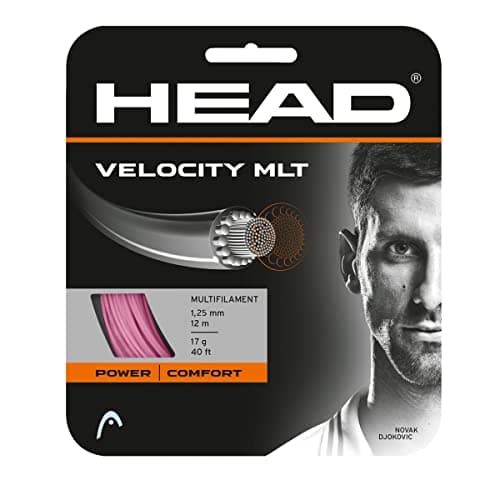
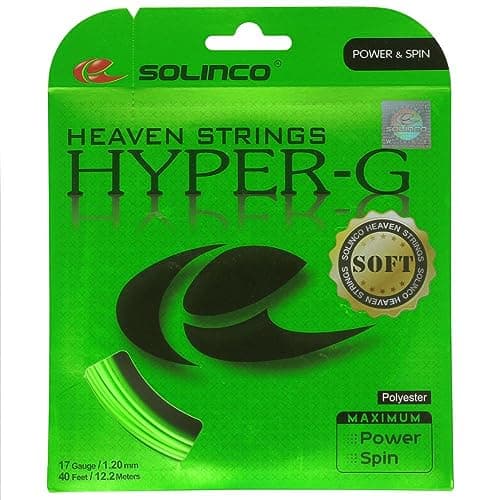
1. Poly mains + multifilament crosses — the durability hybrid. The cheapest useful hybrid in tennis and the right first experiment for a string breaker. Put a shaped poly like Solinco Hyper-G Soft in the mains and a cheap multi like HEAD Velocity MLT in the crosses. You keep the control and the spin window, and the bed is softer than full poly. Both strings here are at the cheap end of the market, so this costs about what one premium set costs.
2. Multifilament mains + poly crosses — the comfort hybrid. The same two strings, reversed, and a genuinely different racquet. Because the mains dominate, putting the multi in the mains gives you most of a multifilament's feel with a tougher cross holding it together. This is the setup we point an aching elbow at when full multi is not durable enough. Give up some control and some spin.
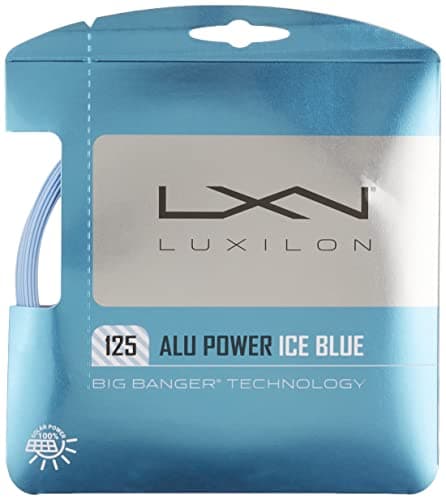
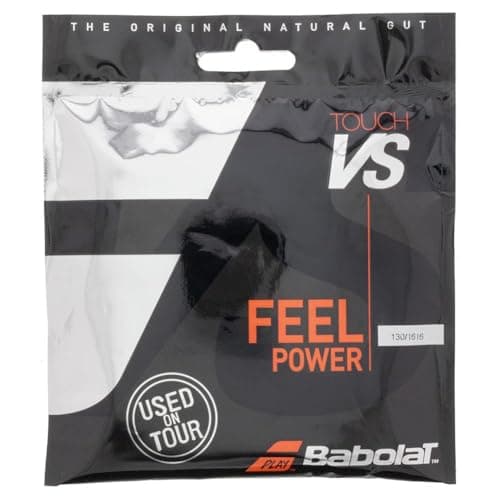
3. Natural gut mains + poly crosses — the tour hybrid. Babolat VS Touch in the mains and Luxilon ALU Power in the crosses is the reference version of the most popular hybrid on tour. Gut brings elasticity, tension maintenance and comfort no synthetic matches; the ALU cross brings durability and stops you paying gut prices for the whole bed. ALU Power is a co-polymer with aluminum fibers at 1.25 mm, and it is the control benchmark every other poly gets measured against. This is the most expensive hybrid on the page by a wide margin, and for most club players it is a luxury rather than an upgrade.
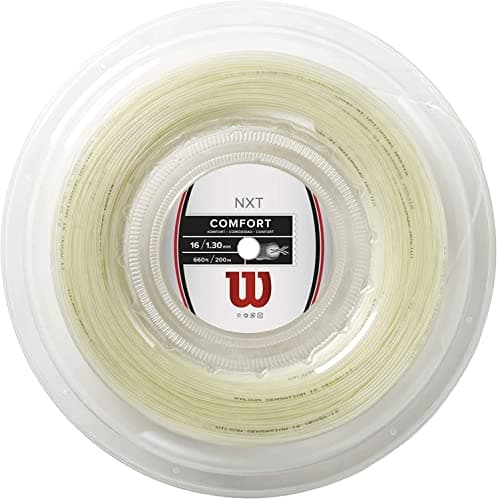
4. Premium multifilament mains + poly crosses — the gut hybrid without the gut. Wilson NXTin the mains, bought as a reel so the per-job cost collapses, with a poly cross. NXT is the benchmark premium multi and is engineered to imitate gut's ball-pocketing response. It does not match gut's tension maintenance, and it costs a fraction as much. For a player who wants the gut-hybrid feel on a club budget, this is the honest answer. The poly vs multifilament comparison explains what you are trading.
One combination we are not recommending: poly with poly. Pairing two polyesters, or a textured poly with its smooth version, is a real thing advanced players do to fine-tune a bed they already like, but it does not solve either problem a club player has. If full poly is too stiff, two polys are still too stiff. And a kevlar hybrid — a half-set of kevlar with a synthetic gut cross, which is how those pre-packaged sets are built — is the most durable setup in tennis and the harshest. It exists for chronic string breakers who have tried everything else, and it is not a comfort solution.
Buy two sets, not a pre-packaged hybrid
Pre-packaged hybrids exist and they are convenient: a single pack containing a half-set of each string, sometimes with the option to decide which goes in the mains — a retailer describes one as something that can be strung with either string in the mains to enhance either durability or playability, and another names its contents outright as a Luxilon/NXT pairing.
They are also usually the more expensive way to buy, and published guidance recommends buying the two strings separately for exactly that reason: you can test combinations, mix gauges, and get two jobs out of the tougher half instead of one. The exception is the first time you try a hybrid, when a single pack is a cheap way to find out whether you like the idea at all.
If you are buying separately, remember what you need: a half set for each half of the bed, which means one full set of poly crosses two frames. That is where the real saving lives, and it is why an inexpensive poly like Hyper-G Soft is a better cross string than its price suggests.
Whichever arrangement you land on, a hybrid is only as good as the poly in it, and that is the half of the decision this page has taken for granted. The best polyester strings ranks the candidates for the mains — and for the crosses in a reverse hybrid — with the honest cons on each, including which ones go dull fastest.
Which hybrid for your problem
| Your problem | Mains | Crosses | What you give up |
|---|
| I break strings in a few sessions | Shaped poly | Cheap multifilament | Some comfort against full multi |
| Full poly is hurting my arm | Multifilament | Poly | Control and some spin |
| I want the best-playing bed I can afford | Natural gut | Poly | Money, and moisture tolerance |
| I want gut feel on a budget | Premium multi (reel) | Poly | Tension maintenance |
| I string once a year and do not break strings | Run a full multifilament bed instead | Nothing — a hybrid is not your fix |
Every row above is a judgment from the published material cited at the foot of this page, applied to the club player this site is written for. We have not strung and hit these combinations back to back.
The drawbacks nobody mentions
A hybrid is a compromise by construction. The published limit is worth quoting because it is the honest frame for the whole page: a hybrid doesn't fully maximize either string's qualities. A full poly bed generates more topspin than a poly-and-multi hybrid. A full gut or multifilament bed is more comfortable and more powerful than any hybrid containing poly. You are buying the middle of the road on purpose.
The two halves die at different rates, and that costs you a set. Strings lose tension at different speeds — published measurements put the first-24-hour drop at roughly ten percent for a typical job, and treat a 10 to 15 lb or 30% total loss as the point where a bed is finished. In a gut/poly hybrid the poly usually goes dead first, and you cannot sensibly replace half a bed: pulling one string out of a strung frame risks the frame, so the gut comes out too. Factor that into the cost argument before you decide a gut hybrid is cheap.
It is more work at the machine. A hybrid is a two-piece job, so it takes longer and usually costs a little more in labor than a one-piece job. Ask your stringer before you hand over the frame, especially for a gut hybrid, because a badly built one notches the gut at the crossings and you will have paid gut prices for a short life. What a job costs is on what restringing costs, and if you string your own, our stringing walkthrough covers the two-piece pattern.
It adds a variable when you may already have too many. If you have changed frame, string and tension in the same month, you will not know what did what. Change one thing at a time, which is a dull discipline and the only one that teaches you anything.
Who should skip a hybrid entirely
If you do not break strings. The main reason for a hybrid is durability you are not short of. Run a full multifilament bed and restring on schedule — see how often to restring.
If you are below about 3.5. At that level the string bed is not the limiting factor, and a full soft bed is both cheaper and more forgiving. Start at strings for beginners instead.
If what you actually want is more spin. A full bed of shaped poly spins more than a hybrid does. Go to strings for spin and accept the stiffness, or change the frame — on EZONE vs VCORE the difference between the spin frame and the power frame in the same brand is ten points of swingweight, which does more for your ball than any cross string will.
If you are buying a frame this month. Sort the racquet first, then string it. A frame that suits your swing changes more than a string bed does, and the band where last season's tour frames live is on best rackets under $200.
Gauge, while you are in there
One adjustment that pairs naturally with a hybrid: thinner mains bite and move more, thicker crosses last longer. If you are already mixing materials, mixing gauges is a legitimate second lever — a 17g main with a 16g cross is a common setup for a player who wants spin and string life at once. The trade-offs are the same ones in 16 vs 17 gauge, and the honest caveat is that the same string in two gauges shows negligible difference in tension maintenance, so this is a feel and durability lever rather than a performance one.
What we did not do
We have not strung these five strings in every combination above and hit with them, and nothing here is presented as a play test. Every mechanism claim and every tension figure is quoted from the published guidance cited below, read on the day this page was written; the recommendations are judgments about which published properties suit which problem, made against the rubric on methodology. Where the sources disagree — and on whether crosses should ever be tighter than mains, they do — we say so rather than picking the tidier answer.