Skip to content
Four Oh Club

The flagship · Racquets

How to Add Weight to a Tennis Racquet

Lead tape is the cheapest real upgrade in tennis, and the only one that is fully reversible. Where you put it decides what it does — and most people put it in the wrong place.

By Stephen V.Updated How we score
#ad

We earn a commission when you buy through our Amazon links, at no extra cost to you. It never changes our rankings, and we say so when the cheaper racquet is the better buy. How this works.

The fix, in one paragraph: buy half-inch lead tape, cut four strips of five inches each (that is 2.5 grams apiece at the published 0.5 grams per inch, so 10 grams in total), clean the inside of the hoop with alcohol, and stick two strips at 3 o'clock and two at 9 o'clock — the sides of the head, level with the middle of the stringbed. That is the placement that adds stability against a heavy ball with the least cost to how fast the racquet swings, and it is the right first move for roughly nine players out of ten. Hit with it for a week before you add any more.

Everything else on this page is about the other placements, the arithmetic, and the mistakes. But the paragraph above is the answer, and it is reversible: peel the tape off and you have your old racquet back, which is what makes this the lowest-risk change in tennis.

Why add weight at all

One reason, really: stability. A heavier racquet is pushed around less by the ball. If your frame feels fine on a rally ball and gets twisted or knocked back by a hard serve or a heavy topspin forehand, you do not need a different racquet — you need a few grams in the right place.

Two secondary reasons. Plow-through: more mass behind the ball means more depth for the same swing. And feel: a slightly heavier frame damps the high-frequency buzz that makes some stiff racquets unpleasant.

And one reason not to: if your problem is that you are late on the ball, adding weight will make it worse, not better. Weight buys stability at the cost of speed. Be honest about which one you are short of.

The four placements, and exactly what each one does

3 and 9 o'clock — stability. The sides of the hoop. Tennis Warehouse's own customization guide puts it plainly: placing weight at the sides "not only makes the racquet heavier, but will help reduce frame twisting," and it tends to increase power for most players too. Critically, weight here adds less swingweight than the same mass higher up the hoop, so the racquet still feels like your racquet. This is the default and the place to start.

12 o'clock — plow-through and swingweight. The tip. The same guide recommends 5 to 10 grams at the 12 o'clock position to make a racquet swing heavier without much added static weight. A couple of grams goes a very long way here — mass at the tip is the furthest from your hand, so it has the largest effect on how heavy the swing feels. Add 2 grams, hit, then decide. This is the placement most often overdone.

2 and 10 o'clock — a higher sweet spot. The upper shoulders. Per the same source, weight here "will effectively raise the racquet's sweetspot," which makes contact high in the stringbed feel more solid. Useful if you hit a lot of high-contact topspin forehands and the ball feels dead up there. A compromise between the stability of 3-and-9 and the swingweight of 12.

The handle — counterweighting. This is the other half of the search term, and it exists to undo something. Adding weight to the head makes a racquet head-heavy; adding weight in the handle shifts the balance back without removing the stability you just added. Tennis Warehouse's guidance is that counterweighting means adding weight to the handle area, and that they do not recommend adding more weight in the upper hoop of head-heavy frames without it.

How to add weight to a tennis racket handle

Three ways, from easiest to most permanent.

1. Wrap tape around the top of the handle, under the grip. Peel the grip back, wrap lead tape around the pallet just above where your hand sits, re-wrap the grip. Takes ten minutes, fully reversible, and adds up to about 10 grams comfortably. This is also the method to use on frames with a dampening system built into the handle, which per Tennis Warehouse "may not allow for adding weight inside the handle" at all.

2. Inside the butt cap. Lever off the butt cap (it is usually stapled), drop weight into the handle cavity, replace it. Tennis Warehouse recommends lead fishing weights here rather than tape, because they are denser and you are working in a confined space. Secure them with silicone or cotton so nothing rattles — a loose weight inside a handle is both maddening and a real risk to the frame.

3. A heavier replacement grip. The zero-effort version: a thicker leather or synthetic replacement grip adds several grams right where you want them and improves the feel at the same time. If you only need a small balance correction, do this and skip the tape entirely — see grips and overgrips and how to regrip a racquet.

The arithmetic, so you do not need a scale

Published figures, from Tennis Warehouse's customization guide: one inch of half-inch-wide lead tape weighs 0.5 grams. Quarter-inch tape is half that, so 0.25 grams per inch — which matches the roll already in our registry. That gives you everything you need:

TapePer inch2.5 g strip10 g total
1/2 in lead (Gamma)0.5 g5 in4 strips of 5 in
1/4 in lead (standard)0.25 g10 in4 strips of 10 in
1/4 in lead (1 g/in roll)1.0 g2.5 in4 strips of 2.5 in
Tungsten tuning tapeNot publishedWeigh itWeigh it

The recommended starting point is about 10 grams divided into four strips of 2.5 grams. Do not mix rolls of different density and assume one figure covers both — the 1 gram-per-inch quarter-inch roll in our picks is four times the density of standard quarter-inch tape, which is excellent when you want short strips and a trap if you forget.

Doing it: six steps

1. Decide what you are fixing. Twisted on heavy balls, so 3 and 9. Ball landing short, so 12. Contact feels dead high in the strings, so 2 and 10. Racquet now head-heavy, so the handle.

2. Clean the surface. Alcohol on a cloth, inside the hoop where the bumper channel runs. Lead tape adhesive does not stick to court dust.

3. Cut matched pairs. Always symmetrical. Identical lengths at 3 and at 9. An asymmetric racquet twists on contact in a way nobody enjoys.

4. Apply inside the hoop, not outside. Tuck it into the groove under the bumper where it is protected from scrapes and almost invisible. Press it down hard with a thumbnail along its whole length.

5. Start small and stop. 10 grams total, then play. Two or three sessions. Your arms will tell you more than any spec.

6. Wash your hands. It is lead. Not dangerous to handle sensibly, but wash your hands afterwards and keep the roll away from children. If that bothers you, buy tungsten tape instead — it is denser than lead, lead-free, and in our picks.

Four mistakes

Too much, too fast. 20 grams at 12 o'clock turns a nimble frame into a club. The racquet will feel powerful for three games and exhausting for the rest of the match.

Asymmetry. Four inches at 3 and six at 9 is a frame that twists. Always pairs.

Ignoring balance. Weight in the head moves the balance point toward the head and makes the racquet feel slower and more jarring even when the static weight increase is small. If it suddenly feels sluggish, counterweight the handle rather than removing the hoop tape.

Weighting a frame you do not understand yet. Customize a racquet you have played for months, not one you bought last week. If you are not sure the frame is right at all, the answer is a different racquet, not tape — start at how to choose a racquet.

And one closing note on the arm, because adding weight is often an elbow decision in disguise: mass absorbs shock, so a heavier frame is usually kinder to your arm, not harsher. What hurts arms is stiffness and tight stiff string. If your elbow is the reason you are here, add the weight and also read strings for tennis elbow and how to prevent tennis elbow.

If you want the concept behind all of this before you start sticking tape on a frame you paid for, swing weight explained sets out what the number actually measures, why two racquets of identical static weight play nothing alike, and which end of the scale suits which player.
The short answer

Quick picks

#Racquet / gearBest forScorePrice
01
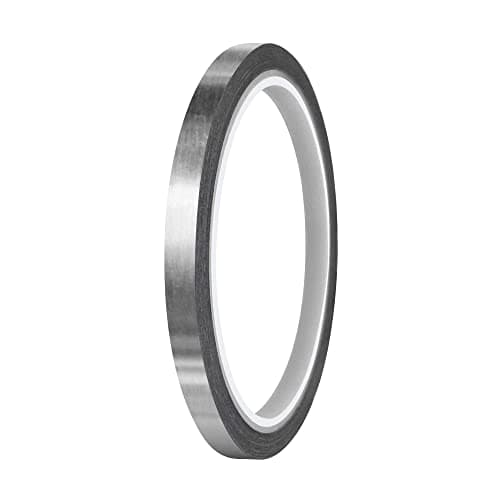
Gamma Gamma Lead Tape (1/2 in)
Gamma Lead Tape (1/2 in)

The standard half-inch lead tape, which matters because half-inch is the width every published customization guide uses in its arithmetic. Tennis Warehouse's figure of half a gram per inch is for exactly this width.

Following a published recipe
8.2
$5.99Amazon
02
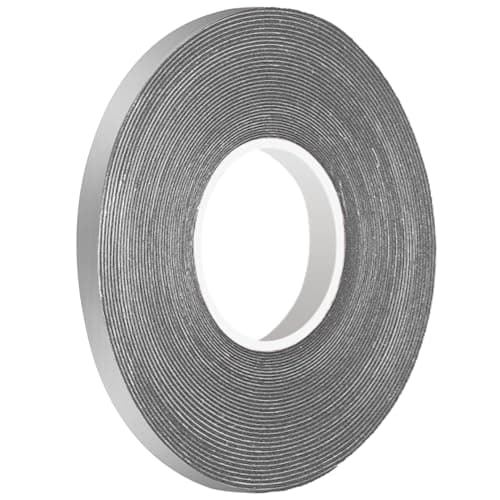
Generic Lead Tape for Tennis Racquet, 1/4 in x 200 in (1 g per inch)
Lead Tape for Tennis Racquet, 1/4 in x 200 in (1 g per inch)

The dense one: a published 1 gram per inch at a quarter-inch width, so you get the same mass in half the footprint. The tape to use when you want 8 grams at 12 o'clock without a silver stripe down the hoop.

Maximum weight in minimum tape
8.0
$15.99Amazon
03
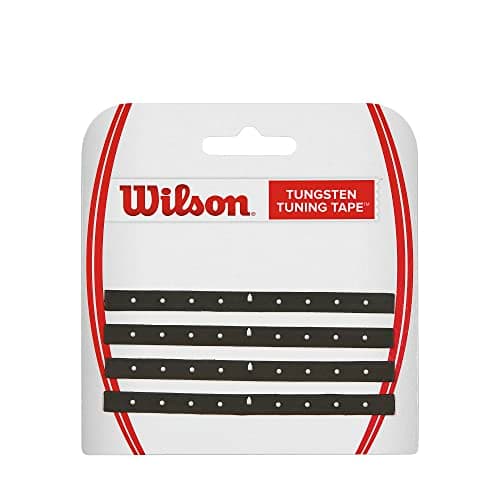
Wilson Wilson Tungsten Tuning Tape
Wilson Tungsten Tuning Tape

The lead-free option, and the one to start with if the idea of handling lead bothers you. Tungsten is dense enough to do the same job in a similar length of tape, from a frame maker, with no lead-handling caveat attached.

Weighting without lead
7.6
$11.95Amazon
04
Nebudo Nebudo Lead Tape for Racquet Customization
Nebudo Lead Tape for Racquet Customization

The cheapest meaningful upgrade to a racquet you already own. Add mass where you need it and change how the frame plays.

Customizing a frame
8.2
$14.99Amazon

#ad · Live prices from the Amazon Product API, as of October 20, 2026. Where we have no verified live price, we show none — we would rather leave a gap than print a number that has rotted.

In detail

The picks, in full

01
Gamma Gamma Lead Tape (1/2 in)

Following a published recipe

Gamma Lead Tape (1/2 in)

1/2 in widthSilverSelf-adhesiveStrip roll
8.2/10

The standard half-inch lead tape, which matters because half-inch is the width every published customization guide uses in its arithmetic. Tennis Warehouse's figure of half a gram per inch is for exactly this width.

Effectiveness
9
Precision
9
Ease of use
8
Safety
6
Value
9

Pros

  • Half-inch is the reference width: at the published 0.5 g per inch, a 5-inch strip is 2.5 g and the standard 10 g starting point is four of them, with no scale needed
  • Gamma has sold this for years, so the format is the one the guides and forum posts assume you have
  • One roll will customize several frames

Cons

  • It is lead. Wash your hands after applying it and keep the roll away from children
  • Half an inch is wide enough to be visible on a light-colored hoop

Don't buy this if…

…you would rather not handle lead at all. The Wilson tungsten tape does the same job without it.

$5.99View on Amazon

$7.9925% off

Price as of October 20, 2026. Prices change — Amazon's is the one that counts.

#ad · we may earn a commission from this link to Gamma Lead Tape (1/2 in)

02
Generic Lead Tape for Tennis Racquet, 1/4 in x 200 in (1 g per inch)

Maximum weight in minimum tape

Lead Tape for Tennis Racquet, 1/4 in x 200 in (1 g per inch)

1/4 in width200 in roll1 g per inchSelf-adhesive
8.0/10

The dense one: a published 1 gram per inch at a quarter-inch width, so you get the same mass in half the footprint. The tape to use when you want 8 grams at 12 o'clock without a silver stripe down the hoop.

Effectiveness
9
Precision
8
Ease of use
9
Safety
6
Value
8

Pros

  • A published 1 g per inch makes the arithmetic trivial and the strips short — the usual 2.5 g strip is two and a half inches, not five
  • Quarter-inch width tucks inside the bumper groove on most frames, so it is close to invisible once applied
  • 200 inches is 200 grams of adjustment, which is more customization than most players will use in a decade

Cons

  • A published 1 g per inch at 1/4 inch is double the density of standard 1/4 inch tape, so do not mix it with another roll and assume one figure covers both
  • Generic listing, no brand support if the adhesive disappoints

Don't buy this if…

…you are following a guide written around half-inch tape and would rather not re-do the arithmetic. Buy the Gamma.

$15.99View on Amazon

Price as of October 20, 2026. Prices change — Amazon's is the one that counts.

#ad · we may earn a commission from this link to Lead Tape for Tennis Racquet, 1/4 in x 200 in (1 g per inch)

03
Wilson Wilson Tungsten Tuning Tape

Weighting without lead

Wilson Tungsten Tuning Tape

Tungsten, not leadSelf-adhesive stripTuning tape formatWilson
7.6/10

The lead-free option, and the one to start with if the idea of handling lead bothers you. Tungsten is dense enough to do the same job in a similar length of tape, from a frame maker, with no lead-handling caveat attached.

Effectiveness
8
Precision
6
Ease of use
8
Safety
10
Value
6

Pros

  • No lead, which removes the only genuine health caveat in racquet customization and the reason some players never try it
  • Dense enough that you are not covering half the hoop to get a few grams
  • Sold by a frame manufacturer, so the adhesive is specified for a painted graphite surface rather than for a workshop

Cons

  • Costs more per gram than lead tape, which is the entire reason lead is still the default
  • The listing does not publish a grams-per-inch figure, so you need a scale to know exactly what you added

Don't buy this if…

…you want to know the exact mass of every strip before you apply it. Buy a lead tape that publishes a grams-per-inch figure and weigh nothing.

$11.95View on Amazon

$13.6512% off

Price as of October 20, 2026. Prices change — Amazon's is the one that counts.

#ad · we may earn a commission from this link to Wilson Tungsten Tuning Tape

04
Nebudo Nebudo Lead Tape for Racquet Customization

Customizing a frame

Nebudo Lead Tape for Racquet Customization

1/4" width197 inch roll0.25 g per inchSelf-adhesive
8.2/10

The cheapest meaningful upgrade to a racquet you already own. Add mass where you need it and change how the frame plays.

Effectiveness
9
Build
7
Ease of use
7
Durability
8
Value
10

Pros

  • Lets you add stability at 3 and 9 o'clock, or power at 12, without buying a different racquet
  • 0.25 g per inch is a fine enough increment to make small, reversible changes
  • One roll customises several frames for the price of a can of balls

Cons

  • Adding weight is easy to overdo; a few grams changes swing weight more than people expect
  • Lead requires sensible handling — wash your hands after applying it

Don't buy this if…

…you do not already know what your racquet is missing. Customize a frame you understand, not one you just bought.

$14.99View on Amazon

Price as of October 20, 2026. Prices change — Amazon's is the one that counts.

#ad · we may earn a commission from this link to Nebudo Lead Tape for Racquet Customization

How we picked

We have not physically tested this gear

Everyone in this category says they tested twenty racquets. We have not tested any — and we say so. What we did instead: compiled the manufacturer-published specifications (head size, strung weight, string pattern, stiffness, outsole compound), normalized them, and scored each product against a published rubric weighted for the NTRP tier this page serves. The scores are judgments from documented research, not measurements we took, because we do not have a lab and are not going to pretend we do.

Questions

Frequently asked

How do you add weight to a tennis racket?
Lead tape, applied in matched pairs inside the hoop. The standard first move is about 10 grams total — four strips of 2.5 g — split between 3 o'clock and 9 o'clock on the sides of the head. Clean the surface with alcohol first, tuck the tape into the bumper groove, press it down hard, then play with it for a week before adding more.
Where should I put lead tape on my racket?
3 and 9 o'clock for stability against a heavy ball, with the least change to how the racquet swings. 12 o'clock for plow-through and swingweight — 5 to 10 grams there is a lot, so start with 2. 2 and 10 o'clock to raise the sweet spot for high-contact topspin. The handle to counterweight anything you added up top.
How much does lead tape weigh per inch?
Half-inch-wide lead tape weighs 0.5 grams per inch, so a 2.5 g strip is five inches and the standard 10 g starting point is four five-inch strips. Quarter-inch tape is half that at 0.25 g per inch — except for the denser rolls sold at a published 1 gram per inch, which are four times standard, so never mix rolls and assume one figure.
How do you add weight to a tennis racket handle?
Three ways. Easiest: peel the grip back, wrap lead tape around the top of the handle, re-wrap. Most permanent: lever off the butt cap and add dense weight (fishing weights work better than tape in a confined cavity) secured so it cannot rattle. Zero-effort: fit a heavier leather or synthetic replacement grip. Note that frames with handle dampening systems may not have room inside at all.
Is adding lead tape to a racket safe?
Handled sensibly, yes: wash your hands after applying it and keep the roll away from children. If you would rather not handle lead at all, tungsten tuning tape does the same job without it, at a higher cost per gram. Either way the change is fully reversible — peel it off and you have your original racquet back.
Will adding weight make my racket more powerful?
Usually, in the sense that matters: more mass behind the ball means more depth for the same swing, and weight at the sides tends to increase power for most players as well as reducing twisting. But it also makes the racquet slower to move. If you are already late on the ball, weight will hurt more than it helps.

Keep reading

Receipts

Sources

We do not run a testing lab, and we do not pretend to. Our specs come from manufacturer listings and spec sheets; our rules and dimensions come from the official rulebook. Where we could not verify something, we say so on the page rather than quietly leaving it out. Read our full method.