The problem: your grip has gone slick, hard or sticky, you are squeezing the handle to hold on, and your shots have got worse without your technique changing. The fix: ten minutes and one new grip. Unwrap the old grip, start the new one at the butt end, wrap upward with about a sixteenth of an inch of overlap, keep light tension, trim at the top and tape it. You need scissors and nothing else.
One piece of vocabulary first, because it is the thing people get wrong and it changes which product you need.
A replacement grip (also called a base grip) is the thick, cushioned grip that came on the racquet, wrapped directly onto the bare handle. It is 1.5 to 2 mm thick and it is structural — it is part of your grip size. An overgrip is a thin, cheap wrap — around 0.5 mm — that goes on over the replacement grip and gets changed every few weeks.
If your handle feels hard and dead, you need a new replacement grip. If it just feels slippery, you need an overgrip, and that takes two minutes rather than ten. Most club players need the overgrip far more often than the regrip, and the difference between the two is covered in full in overgrip vs replacement grip.
How to regrip a tennis racket, step by step
1. Unwrap the old grip. Peel off the finishing tape at the top of the handle and unwind the grip downward toward the butt cap. It will come off in one piece. Pull the staple at the butt end out with your fingers or a pair of pliers — there is usually exactly one.
2. Clean the handle and leave it alone otherwise. Wipe off old adhesive residue with a dry cloth. Do not sand the handle, do not add anything, and do not remove the original butt cap. The pallet underneath is your grip size, and it is the one part of the handle you should not modify — if the size is wrong, that is a grip size question, not a regrip one.
3. Start at the butt, not the top. Peel the backing off the first inch of the new grip, line the tapered end up with the bottom edge of the handle, and press it down at an angle so it sits flush with the butt cap. Almost every regrip that goes wrong goes wrong here: start too high and you will run out of grip before the top.
4. Wrap upward, overlapping about a sixteenth of an inch. Rotate the racquet in one hand and feed the grip with the other, keeping light, even tension — enough to stop wrinkles, not enough to stretch it thin. Each turn should cover a sliver of the one below. More overlap gives you a thicker, softer handle and you will run short; less overlap leaves gaps that blister your palm.
5. Follow the bevels. A tennis handle is an octagon. Keep the overlap consistent as you go round and the ridges will land evenly, which is what lets you feel the bevels through the grip. Feeling the bevels is how you find a Continental grip without looking — see how to grip a tennis racket.
6. Trim and finish. Stop about an inch below the throat, cut the grip at an angle so the edge lies flat against the last wrap, and wrap the finishing tape over the join two or three times. Pull the tape firm. If your grip came with a staple for the butt end, use it; if not, the tape is enough.
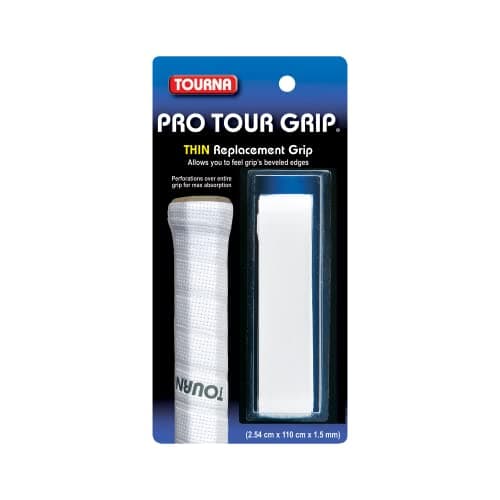
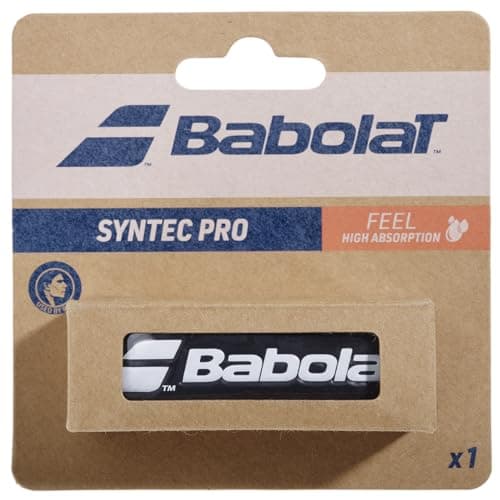
7. Check what you have changed. A replacement grip is part of your grip size, so swapping a 1.9 mm grip for a 1.5 mm one makes the handle measurably thinner. Babolat publishes the Syntec Pro at 1.9 mm and 110 cm long; Tourna publishes the Pro Tour at 1.5 mm. That 0.4 mm of difference around an octagonal handle is roughly a third of a grip size — enough to notice on your first serve.
How to put on a tennis overgrip
Same motion, less commitment, and this is the one you will do most often.
Leave the replacement grip on the handle. Start at the butt end with the tapered edge, wrap upward with a slight overlap under light tension, trim at an angle near the throat and tape it. Two minutes. Most overgrips come with a small strip of finishing tape in the packet.
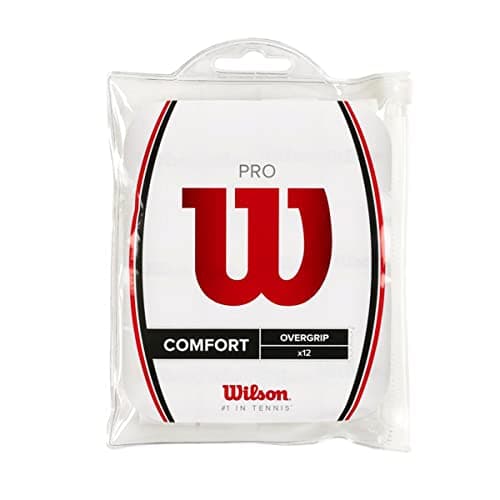
Three things worth knowing. An overgrip adds about 0.5 mm — Wilson publishes the Pro Overgrip at exactly that — which is a quarter to a third of a grip size, so if you go from no overgrip to one, you have changed your grip size slightly. You can stack two if you want a thicker handle, but two thin wraps feel vague compared with one correct-size handle. And you can wrap an overgrip over an overgrip in a pinch, which every club player has done and nobody should make a habit of.
How often should you regrip a tennis racket?
These are two different schedules and conflating them is why people play on dead handles.
The overgrip: when it stops feeling right. For most club players playing two or three times a week, that is every two to four weeks; for a heavy sweater in summer it can be every session. There is no mystery to the test — if the grip feels slick or the surface has gone shiny, change it. At a few dollars a wrap this is the cheapest maintenance in tennis, which is why overgrips are sold in packs of 10, 12 and 30 rather than singly.
The replacement grip: once or twice a year for a regular club player. The signs are different: the cushioning has gone flat and hard, the surface is shiny or tacky-sticky rather than grippy, the edges have lifted, or it has started to smell. A replacement grip that has compressed has also made your handle thinner than you bought it.
The tell that it is overdue: you are gripping harder than you used to. A dead grip makes you squeeze, squeezing tightens your forearm, and a tight forearm is one of the mechanisms behind tennis elbow. That is the real reason this is maintenance rather than vanity.
Which grip to buy
Four grips cover every version of this job, and they sit below this section because the fix is the method, not the product.
Replacing a dead base grip, like for like → Babolat Syntec Pro. It publishes 1.9 mm of thickness and 110 cm of length, which is a full-size cushioned grip and the closest thing to what came off most frames.
Replacing a base grip you intend to cover with an overgrip → Tourna Pro Tour at 1.5 mm. The published thinness is the point: it leaves room for an overgrip without pushing your handle up a size.
The overgrip you change every few weeks → Wilson Pro Overgrip, 0.5 mm and sold 12 to a pack. Tacky rather than absorbent.
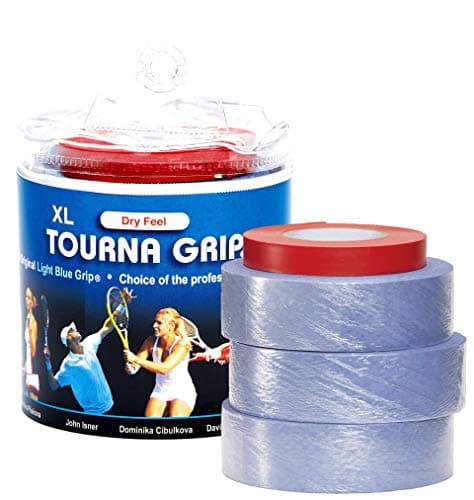
If your hands sweat → Tourna Grip XL, the dry-feel absorbent grip, in the 30-pack. A tacky grip gets slick when it is wet; a dry grip gets better. The full ranking for that problem is overgrips for sweaty hands, and the general ranking is the best tennis overgrips.
One honest note on specs: Wilson publishes no thickness figure for its Pro Performance replacement grip on the listing we resolved, so we cannot tell you what it does to your grip size. The Babolat and the Tourna both publish theirs, which is the reason they are ranked above it here.