Skip to content
Four Oh Club

The flagship · Racquets

The Best Tennis Rackets for Men

Men's club players buy too heavy and too small far more often than the reverse. These seven are ranked on published specs against the swing you actually have, not the one you want.

By Stephen V.Updated How we score
#ad

We earn a commission when you buy through our Amazon links, at no extra cost to you. It never changes our rankings, and we say so when the cheaper racquet is the better buy. How this works.

The best tennis racket for a men's club player is the Wilson Blade 98 v9: a 98 sq in control frame at 11.1 oz strung that rewards a full swing without the free depth that sends balls long. If you want one frame that does everything, the HEAD Speed MP. If you hit short and want the racquet to help, the Babolat Pure Drive. For a first racquet, the HEAD Geo Speed, pre-strung and cheap enough to be a low-risk experiment.

Like the women's list, this page exists because the query exists, not because men's racquets are a design category. There is no men's frame geometry. What there is, statistically, is a heavier weight band and larger grip sizes — and a very specific buying mistake that men make far more often than women.

The mistake: buying for the swing you want

The pattern is consistent enough to be predictable. A 3.5 man watches a tour player, buys a 97 sq in, 12 oz, 18x20 player's frame, and then spends a season unable to generate depth, late on fast balls, and shortening his swing to compensate.

A tour frame is not a better racquet. It is a frame that supplies nothing and demands everything, and it is correct only if you already generate the racquet-head speed to make it work. Buying one earlier does not accelerate you toward it; it teaches you a compensating swing you then have to unlearn.

The honest test is the error pattern from your last three matches. Balls sailing long means the frame is giving you more than your swing can contain — go smaller and heavier. Frame shanks, netted balls and mishits mean your contact point is not repeatable enough yet — stay at 100 sq in and revisit in a season.

Weight: the one spec worth being brave about

This is where the men's version of this question genuinely differs. For a player with the strength to swing it, more mass is better than more stiffness. A heavier frame produces a heavier ball, is more stable against pace, and does it without the shock a stiff light frame transmits. That is the opposite trade to the one most marketing pushes.

The practical range: 10.5–11.2 oz strung suits most 3.5–4.0 players, and 11.2–12 oz suits 4.5+. If you are between, the useful experiment is lead tape at 3 and 9 on a frame you already own, which is the cheapest way to find out whether you want more mass before you pay for it.

What you should not do is buy weight to feel serious. A frame you cannot get round in a fast exchange costs you more than the extra plow-through gains you, every time.

98 vs 100, and the 18x20 question

Two square inches sounds like nothing and is the main decision on this page. A 100 sq in head gives you roughly a centimeter more tolerance in each direction before the shot degrades — which is about the size of a typical club-player miss. A 98 trades that for depth control and feel. The full logic is at how to choose tennis racket size.

String pattern is the quieter version of the same decision. A 16x19 has wider spacing, so the mains slide and snap back more and generate more spin; an 18x20 is denser, flatter and far more controlled, and it suits a flat hitter who wants the ball to go exactly where it was aimed. The Dunlop CX 200 LS here is the control-pattern option, and it undercuts the flagship control frames considerably.

The best tennis racquet for men beginners

A separate measured sub-question with a different answer. A beginner frame should be oversize, light and pre-strung — the HEAD Geo Speed here is exactly that, and it costs less than a single restring on a performance frame. There is no advantage whatever in a 3.5-and-above frame while your contact point is still random, and there is a real disadvantage: it makes the ball hard to get over the net, which is the thing that makes beginners quit.

Spend the difference on court shoes instead. That is not a throwaway line — shoes are the one purchase that affects whether you get injured rather than how well you play. See the best tennis shoes for men and the full beginner ranking at best tennis rackets for beginners.

The short answer

Quick picks

#Racquet / gearBest forScorePrice
01
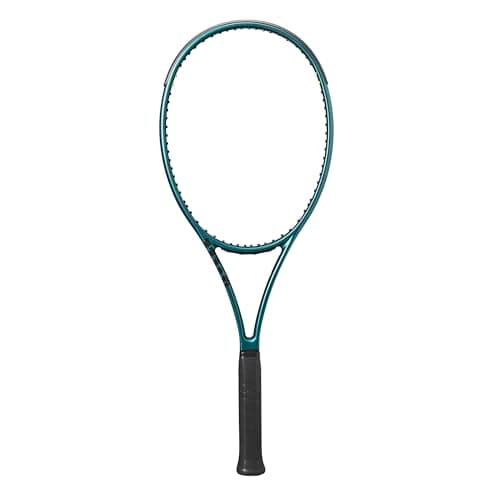
Wilson Wilson Blade 98 (16x19) v9
Wilson Blade 98 (16x19) v9

The control benchmark that still hits a heavy ball — the most-used frame in competitive club tennis, and deservedly.

Advanced all-courters
7.8
$209.00Amazon
02
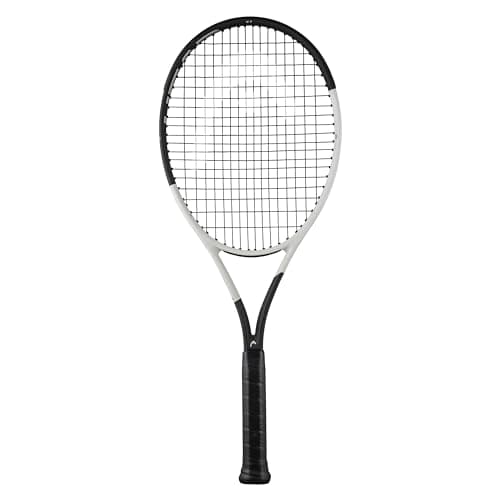
HEAD HEAD Speed MP (2024)
HEAD Speed MP (2024)

The fast, modern all-court frame — a 100 sq in head with a dense-enough pattern to control it. Djokovic's family of racquet, in a club-playable spec.

Fast-swinging all-courters
7.8
$169.00Amazon
03
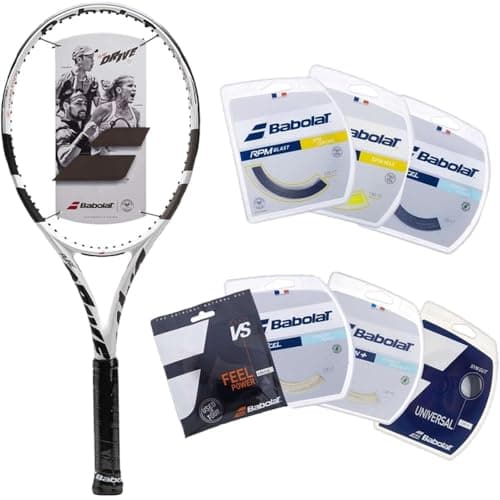
Babolat Babolat Pure Drive (Wimbledon 11th Gen)
Babolat Pure Drive (Wimbledon 11th Gen)

The most popular performance racquet in the world, in a Wimbledon colorway. If you want free power from a 100 sq in frame, this is still the benchmark.

Power baseliners
7.2
$309.00Amazon
04
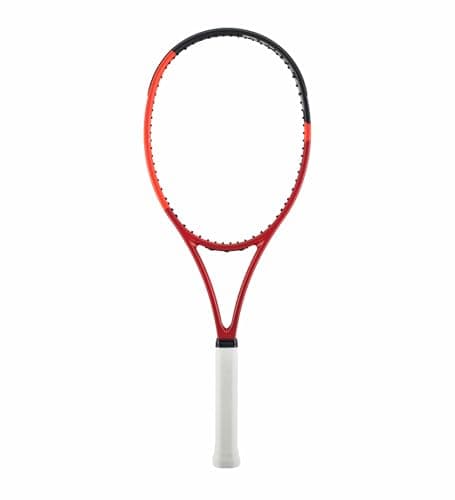
Dunlop Dunlop CX 200 LS (2024)
Dunlop CX 200 LS (2024)

A control frame at an intermediate price — the cheapest way into a genuine player's racquet, if you are willing to string it yourself.

Control on a budget
7.6
$129.99Amazon
05
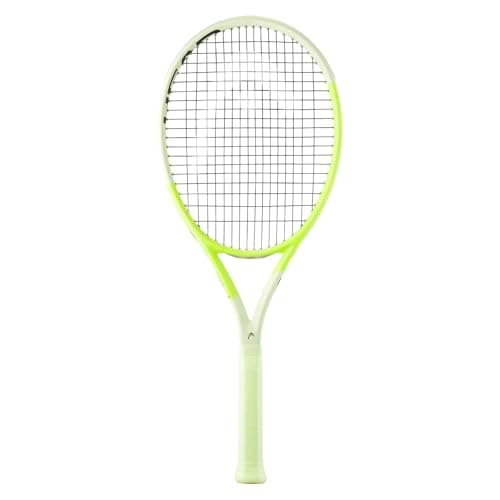
HEAD HEAD Extreme MP (2024)
HEAD Extreme MP (2024)

HEAD's spin frame, and the best-value one here: Aero-style spin access at well under Babolat money.

Spin on a budget
8.0
$199.00Amazon
06
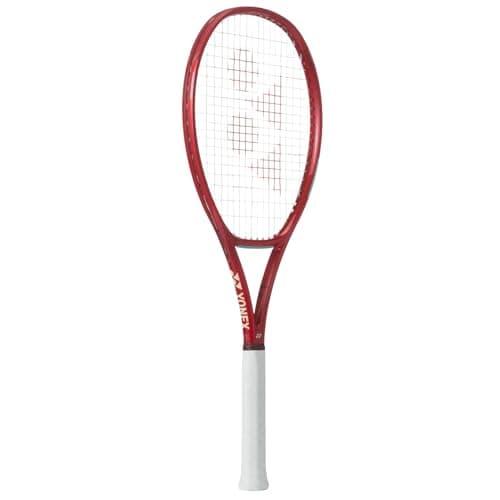
Yonex Yonex VCORE 98 (8th Gen)
Yonex VCORE 98 (8th Gen)

The advanced spin frame. A 98 that still dips the ball savagely — the choice for a 4.5 who lives on heavy, high-bouncing topspin.

Advanced spin players
7.8
$305.00Amazon
07
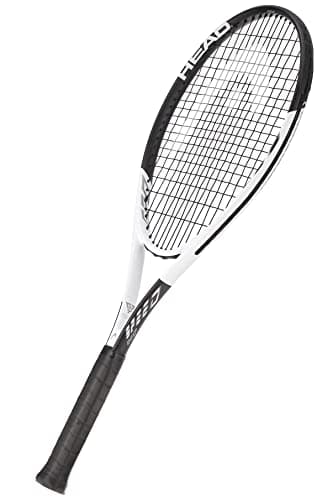
HEAD HEAD Geo Speed
HEAD Geo Speed

A light, oversize HEAD for the player who wants swing speed without arm strain — the budget frame that is easiest to serve with.

Light swing speeds
6.6
$43.97Amazon

#ad · Live prices from the Amazon Product API, as of October 20, 2026. Where we have no verified live price, we show none — we would rather leave a gap than print a number that has rotted.

In detail

The picks, in full

01
Wilson Wilson Blade 98 (16x19) v9

Advanced all-courters

Wilson Blade 98 (16x19) v9

98 sq in head11.4 oz strung16x19 patternFORTYFIVE flex
7.8/10

The control benchmark that still hits a heavy ball — the most-used frame in competitive club tennis, and deservedly.

Control
9
Power
7
Spin
8
Comfort
8
Value
7

Pros

  • FORTYFIVE construction gives it a flex profile that is comfortable without going soft — the reason it is the default 4.5 recommendation
  • 16x19 on a 98 is the sweet spot of the whole racquet market: control, but with real spin access
  • Ships strung with Sensation 16, a comfortable multifilament, so the factory setup is actually usable

Cons

  • Needs a full swing to produce depth; it does not help a short stroke
  • The v9's muted feel divides opinion against the crisper v7

Don't buy this if…

…you need help generating pace. The Blade rewards the swing you bring; it adds nothing.

$209.00View on Amazon

Price as of October 20, 2026. Prices change — Amazon's is the one that counts.

#ad · we may earn a commission from this link to Wilson Blade 98 (16x19) v9

02
HEAD HEAD Speed MP (2024)

Fast-swinging all-courters

HEAD Speed MP (2024)

100 sq in head11.3 oz strung16x19 patternAuxetic 2.0
7.8/10

The fast, modern all-court frame — a 100 sq in head with a dense-enough pattern to control it. Djokovic's family of racquet, in a club-playable spec.

Control
9
Power
7
Spin
8
Comfort
7
Value
8

Pros

  • Combines a 100 sq in head with control-frame weight, so it is forgiving without being loose
  • Auxetic 2.0 gives crisp, precise feedback — you know exactly where on the face you hit it
  • Very quick through the air for its weight, which suits a serve-and-first-strike game

Cons

  • Crisper and stiffer-feeling than the Clash or Boom — less forgiving on the arm
  • Falls between stools for some: not as controlled as a 98, not as powerful as a Pure Drive

Don't buy this if…

…you are prone to elbow pain. The Speed's crisp feel comes from a frame that transmits rather than absorbs.

$169.00View on Amazon

Price as of October 20, 2026. Prices change — Amazon's is the one that counts.

#ad · we may earn a commission from this link to HEAD Speed MP (2024)

03
Babolat Babolat Pure Drive (Wimbledon 11th Gen)

Power baseliners

Babolat Pure Drive (Wimbledon 11th Gen)

100 sq in head11.2 oz strung16x19 patternRA 69 stiffness
7.2/10

The most popular performance racquet in the world, in a Wimbledon colorway. If you want free power from a 100 sq in frame, this is still the benchmark.

Control
7
Power
10
Spin
8
Comfort
5
Value
6

Pros

  • Enormous, effortless depth — the stiff beam returns energy rather than absorbing it
  • 16x19 pattern plus that power makes a genuinely heavy topspin ball once you can brush up on it
  • The most widely demoed frame in tennis, so coaches and stringers all know how to set it up for you

Cons

  • Stiff. The Pure Drive's reputation for being hard on the arm is earned, and a poly string makes it worse
  • This is a limited-edition colorway at a limited-edition price — the standard Pure Drive is the same frame for less

Don't buy this if…

…you have ever had tennis elbow. Buy the Clash 100 instead; it is the same job description with none of the shock.

$309.00View on Amazon

Price as of October 20, 2026. Prices change — Amazon's is the one that counts.

#ad · we may earn a commission from this link to Babolat Pure Drive (Wimbledon 11th Gen)

04
Dunlop Dunlop CX 200 LS (2024)

Control on a budget

Dunlop CX 200 LS (2024)

98 sq in head10.4 oz unstrung16x19 patternUnstrung
7.6/10

A control frame at an intermediate price — the cheapest way into a genuine player's racquet, if you are willing to string it yourself.

Control
9
Power
6
Spin
7
Comfort
7
Value
9

Pros

  • Real control-frame geometry (98 sq in, thin beam) at roughly half the price of the Blade or Prestige
  • The LS spec is lighter than the standard CX 200, which makes it usable for a 3.5 who wants a smaller head
  • Dunlop's CX line is a genuine tour frame family, not a recreational one wearing the name

Cons

  • Unstrung, and this frame really wants a thoughtful string setup rather than whatever is on the machine
  • Smaller 98 sq in head is unforgiving if your contact point is not consistent yet

Don't buy this if…

…you are still mishitting regularly. A 98 punishes that in a way a 100 does not.

$129.99View on Amazon

Price as of October 20, 2026. Prices change — Amazon's is the one that counts.

#ad · we may earn a commission from this link to Dunlop CX 200 LS (2024)

05
HEAD HEAD Extreme MP (2024)

Spin on a budget

HEAD Extreme MP (2024)

100 sq in head11.1 oz strung16x19 patternAuxetic 2.0
8.0/10

HEAD's spin frame, and the best-value one here: Aero-style spin access at well under Babolat money.

Control
7
Power
8
Spin
9
Comfort
7
Value
9

Pros

  • Spin-oriented string spacing and a fast-swinging beam, at roughly two-thirds the price of the Pure Aero
  • Auxetic 2.0 layup is noticeably softer than HEAD's previous generation
  • Balanced enough to volley with, which most dedicated spin frames are not

Cons

  • Lower brand resale value than the Babolat equivalents
  • Spin ceiling is high but not quite Pure Aero high

Don't buy this if…

…you need maximum control for flat redirection. This is a swing-fast, brush-up frame.

$199.00View on Amazon

Price as of October 20, 2026. Prices change — Amazon's is the one that counts.

#ad · we may earn a commission from this link to HEAD Extreme MP (2024)

06
Yonex Yonex VCORE 98 (8th Gen)

Advanced spin players

Yonex VCORE 98 (8th Gen)

98 sq in isometric head11.4 oz strung16x20 patternGraphite + VDM
7.8/10

The advanced spin frame. A 98 that still dips the ball savagely — the choice for a 4.5 who lives on heavy, high-bouncing topspin.

Control
9
Power
7
Spin
9
Comfort
8
Value
6

Pros

  • Yonex's spin-specific frame geometry gets more rotation out of a 98 than the head size should allow
  • Isometric head shape keeps the sweet spot usable despite the smaller face
  • Vibration Dampening Mesh makes it one of the more comfortable control frames

Cons

  • Premium price with almost no discounting
  • Needs full swings and real racquet-head speed to come alive

Don't buy this if…

…you hit flat. A VCORE in a flat hitter's hand is an expensive control frame with a weird beam.

$305.00View on Amazon

Price as of October 20, 2026. Prices change — Amazon's is the one that counts.

#ad · we may earn a commission from this link to Yonex VCORE 98 (8th Gen)

07
HEAD HEAD Geo Speed

Light swing speeds

HEAD Geo Speed

115 sq in headPre-strungGraphite composite4 3/8" grip
6.6/10

A light, oversize HEAD for the player who wants swing speed without arm strain — the budget frame that is easiest to serve with.

Control
5
Power
8
Spin
5
Comfort
7
Value
8

Pros

  • Very light head-light balance makes it quick through the air on serves and volleys
  • Large head and open pattern give access to depth with a short, incomplete swing
  • Cheap enough to be a second racquet or a loaner

Cons

  • Lacks the mass to hold up against a hard hitter — it gets pushed around on pace
  • The frame's power means long rallies tend to end with balls sailing long

Don't buy this if…

…you play doubles against hard servers. You need plow-through this frame does not have.

$43.97View on Amazon

$59.9927% off

Price as of October 20, 2026. Prices change — Amazon's is the one that counts.

#ad · we may earn a commission from this link to HEAD Geo Speed

The seven frames, by published spec

RacquetHeadPatternOptimisesLevel
Wilson Blade 98 (16x19) v998 sq in16x19Control with spin access4.0–5.0
HEAD Speed MP (2024)100 sq in16x19All-court balance3.5–4.5
Babolat Pure Drive100 sq in16x19Free depth (RA 69)3.0–4.5
Dunlop CX 200 LS (2024)98 sq inControl patternFlat-hitting precision, value4.0–5.0
HEAD Extreme MP (2024)100 sq in16x19Spin and shot shape3.5–4.5
Yonex VCORE 98 (8th Gen)98 sq in isometric16x19Spin with a damped handle4.0–5.0
HEAD Geo SpeedOversize16x19Free depth, pre-strung, cheap2.0–3.0

Which one, in one line each

Your errors go long and you want one serious frame → Blade 98 v9. You want a single frame for singles, doubles and everything else → Speed MP. You hit short and need help with depth → Pure Drive. You are a flat hitter who wants control for less money → CX 200 LS. You hit with a western grip and live on topspin → Extreme MP. You want spin at 4.0+ and your arm needs looking after → VCORE 98, where the isometric head and the VDM handle insert damp impact at the source. You have never owned a racquet → Geo Speed.

Grip size: men buy too large more often than too small

And too large is the error that carries a cost. A grip you have to squeeze harder to control is one of the recognized contributors to tennis elbow, and the standard club-shop instinct — hand the big guy the 4 5/8 — gets it wrong often.

Measure it: with an eastern forehand grip you should be able to slide the index finger of your other hand into the gap between your fingertips and the base of your thumb. Between sizes, buy down and add an overgrip, because a grip can be built up and cannot be reduced. Method in full at tennis grip size.

String it like the frame you bought

The frame choice sets the string choice, and this is where most men's club players quietly injure themselves. A stiff frame plus a tight full polyester bed is the single most common injury pathway in club tennis, and it is exactly what happens when someone buys a Pure Drive and is told poly gives more control.

In a stiff power frame, hybrid it or use a multifilament, toward the lower end of the published tension range. In a soft control frame like the Blade or the CX, a full poly is comfortable and the control pairs well. The decision process is at how to choose tennis strings, and the comfort-specific version at strings for tennis elbow.

What to buy alongside it

Court shoes on a men's last, a bag with a thermal racquet compartment, a multipack of overgrips and a set of string. In that order, and the shoes first. The full kit is at tennis gear for men.
How we picked

We have not physically tested this gear

Everyone in this category says they tested twenty racquets. We have not tested any — and we say so. What we did instead: compiled the manufacturer-published specifications (head size, strung weight, string pattern, stiffness, outsole compound), normalized them, and scored each product against a published rubric weighted for the NTRP tier this page serves. The scores are judgments from documented research, not measurements we took, because we do not have a lab and are not going to pretend we do.

Questions

Frequently asked

What is the best tennis racket for men?
The Wilson Blade 98 v9 for a club player whose errors go long: a 98 sq in control frame at 11.1 oz strung with a 16x19 pattern. The HEAD Speed MP is the better buy if you want one frame for everything, and the Babolat Pure Drive if you hit short and want free depth.
What is the best tennis racquet for men beginners?
The HEAD Geo Speed — oversize, light and pre-strung, at a price below a single restring on a performance frame. A player's frame offers a beginner nothing and makes the ball harder to get over the net, which is what makes people quit.
How heavy should a men's tennis racquet be?
Roughly 10.5–11.2 oz strung for most 3.5–4.0 players and 11.2–12 oz for 4.5+. For a player strong enough to swing it, more mass beats more stiffness: a heavier frame hits a heavier ball without the shock. But a frame you cannot get round in a fast exchange costs more than the extra mass gains.
Should a man buy a 98 or a 100 head size?
100 unless your misses are consistently long. The two square inches are worth about a centimeter of extra margin in each direction, which is roughly the size of a typical club-player miss. Move to 98 once you are finding the middle of the string bed nearly every time.

Keep reading

Receipts

Sources

We do not run a testing lab, and we do not pretend to. Our specs come from manufacturer listings and spec sheets; our rules and dimensions come from the official rulebook. Where we could not verify something, we say so on the page rather than quietly leaving it out. Read our full method.