Skip to content
Four Oh Club

Bags, machines & training · Gear

The Best Tennis Balls for a Ball Machine

A ball machine does not care how a ball feels. It cares that every ball in the hopper is the same as the last one — which rules out the balls in your bag.

By Stephen V.Updated How we score
#ad

We earn a commission when you buy through our Amazon links, at no extra cost to you. It never changes our rankings, and we say so when the cheaper racquet is the better buy. How this works.

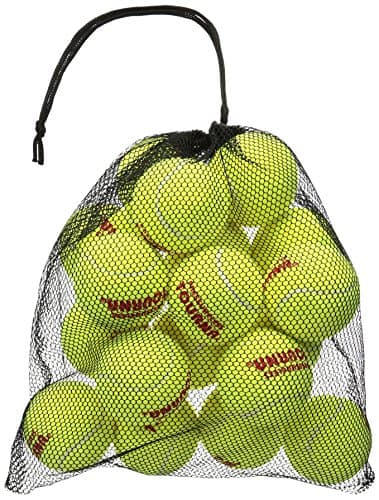
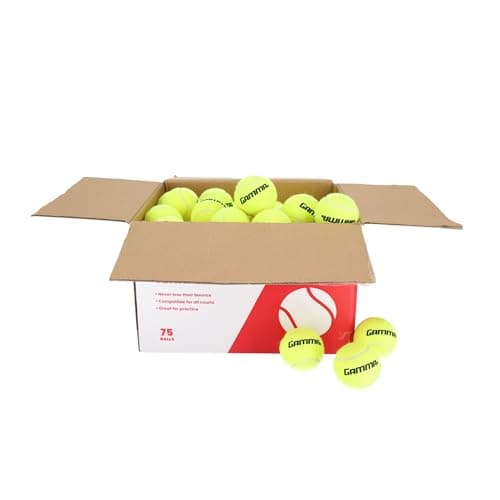
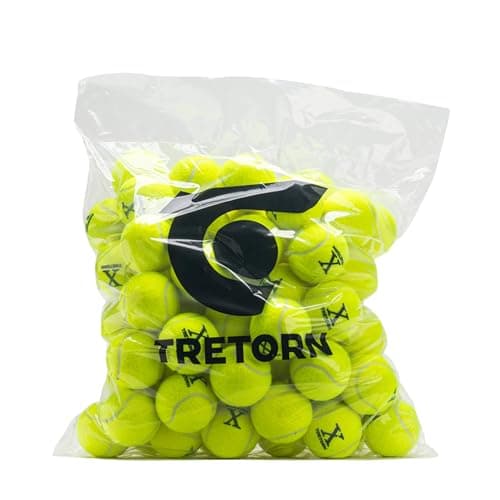
Buy pressureless balls, in a bag of at least 60. The GAMMA pressureless 75-ball box is the right default: 75 balls fills a standard 75-ball hopper exactly once, the listing states machine compatibility, and a pressureless ball has no internal pressure to lose so it does not go flat sitting in your garage between sessions. If you want the pressureless ball that feels closest to real tennis, pay up for the Tretorn Micro-X and its micro-cell core. If you are feeding by hand from a basket and want the cheapest possible, the Tourna mesh bag of 18 is the floor.

Two searches land here — best tennis balls for a ball machine and best tennis balls for practice — and they are the same question. Both are asked by someone who has just bought a machine or a hopper, looked at what filling it would cost in cans, and realized that is not how this is done.

Why pressureless, specifically

A pressurized ball bounces because of the gas pressure inside it, and that pressure escapes whether you play or not. For match play that is a cost of doing business. For a machine it is a design problem: a hopper of balls that were fresh in March is a hopper of inconsistent balls in June, and a machine feeding inconsistent balls produces inconsistent practice, which is the opposite of the point.

A pressureless ball has no pressure inside to lose. TennisCompanion's guide puts the trade-off plainly: pressureless balls "tend to be more durable and long-lasting" and are useful for practice and ball machines, at the cost of being "slightly heavier and less lively." A machine does not notice the second part. You will, for the first ten minutes, and then you will stop noticing.

There is one real cost to the heavier ball, and it is not feel: a heavier ball loads the arm more over a long feeding session. If you have a history of elbow trouble, a two-hundred-ball session with pressureless balls is a bigger load than the same session with fresh pressurized ones. Shorter sessions, and look at the low-compression options if your arm is the constraint.

How many balls do you actually need?

More than you think, and the arithmetic is simple. Hoppers and machines are commonly built around 75 or 100 balls — the Tourna Ballport and GAMMA Hi-Rise are both 75-ball designs, and a machine like the TENNIIX takes 100-plus. One load is four to eight minutes of feeding, so a single hopper per pickup is the rhythm of a session.

Which makes 60 to 75 balls the real minimum purchase, and a bag of 18 a hand-feeding quantity rather than a machine one. Buying 24 balls for a 75-ball machine means you pick up three times as often as you hit, and the most common reason a new ball machine stops getting used is exactly that: the session is all walking.

Add 10 to 20 percent for attrition, too. Balls go over fences, into net posts and under benches, and a bag that started at 75 is a bag of 68 by midsummer.

What wrecks a ball machine

Wet balls. The single worst thing you can feed a machine. Damp felt swells, grips the throwing wheels differently and jams. Never feed a machine balls picked up off a wet court, and dry a hopper out before storing it.

Bald balls. Worn felt is slippery and feeds erratically. Pressureless balls do not go dead but their felt does wear, and a worn pressureless ball flies strangely enough to make a drill useless. Retire them when they are shiny.

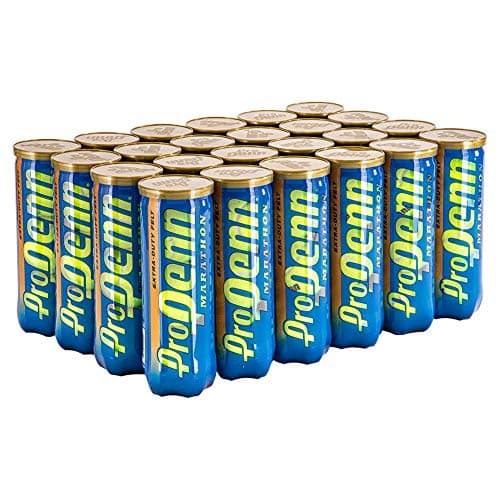
Mixed balls. A hopper with twenty pressureless and twenty fresh pressurized balls in it feeds two different speeds at random. Keep them in separate bags. If you want the machine to feed match-feel balls for a specific drill, fill it entirely with pressurized ones and accept the shorter life — the Pro Penn Marathon is the pick there, and it is the reason it is on this page.

How to store and rotate a bag of practice balls

Pressureless balls do not need a sealed can, which is the whole point, but they do need to be dry and they do need to be kept separate from your match balls. The practical setup is two containers: a hopper or bucket that lives with the machine and never leaves the house, and three fresh cans in the bag for playing. Mixing them is how a drill session ends up producing two different speeds at random.

Rotate rather than replace. As the felt on the oldest third of a bag goes shiny, those balls stop feeding predictably — pull them and top the bag back up rather than waiting for the whole batch to go. A bag of 75 bought once and topped up annually is the steady state, and it is far cheaper than replacing 75 balls at a time every other year.

So which should you buy?

You own a machine or a 75-ball hopper → GAMMA pressureless, 75 balls. Fills it once, states machine compatibility, lasts years.

You want pressureless balls that feel like tennis → Tretorn Micro-X, 72. The micro-cell core is Tretorn's published construction for bounce consistency and it is the reason the brand has the reputation it has. Costs more than twice a generic bag.

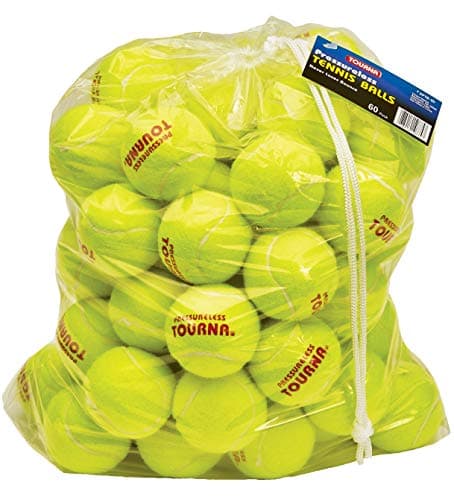
You want the sensible middle → Tourna pressureless, 60 count. Enough to fill a hopper most of the way, at a price where losing a few over the fence is not an event.

You feed by hand from a basket → Tourna mesh bag of 18. The cheapest per ball on the site, in a bag that throws in a car.

You want match-feel balls for drilling → Pro Penn Marathon extra duty, by the case. Pressurized, so it will go dead, but Penn publishes a real durability mechanism for the Marathon line and a case is the only sane way to buy a ball you intend to drill with.
The short answer

Quick picks

#Racquet / gearBest forScorePrice
01
GAMMA GAMMA Pressureless Practice Balls (75)
GAMMA Pressureless Practice Balls (75)

The answer to the durability question if what you actually want is a hopper that never needs refreshing. A pressureless ball has no internal pressure to lose, so it does not go dead — it only wears its felt down, over years rather than weeks.

Ball machines and hoppers
8.6
$79.99Amazon
02
Tretorn Tretorn Micro-X Pressureless (bag of 72)
Tretorn Micro-X Pressureless (bag of 72)

The pressureless ball people buy when they have been disappointed by pressureless balls. Tretorn's Micro-X construction fills the core with micro-cells rather than leaving it hollow, which is the mechanism behind its reputation for feeling closer to a real ball than a plain rubber-cored practice ball. It is also the most expensive ball on this page.

Pressureless that feels like tennis
8.2
$149.00Amazon
03
Tourna Tourna Pressureless Tennis Balls (60 count)
Tourna Pressureless Tennis Balls (60 count)

The sensible middle of the pressureless range: 60 balls at a price that makes filling a hopper a decision you make once. Buy these if the balls are going into a ball machine or a basket and you are feeding rather than playing points.

Filling a hopper or machine
8.0
$53.52Amazon
04
Tourna Tourna Pressureless Balls, Mesh Bag of 18
Tourna Pressureless Balls, Mesh Bag of 18

The lowest price per ball on this page by a wide margin, and the honest answer to cheapest tennis balls if what you want is simply something to hit. These are pressureless practice balls in a mesh bag, not match balls — they feel heavier and duller off the strings, and they do not go dead.

The outright cheapest ball
8.6
$19.50Amazon
05
Penn Pro Penn Marathon Extra Duty (case)
Pro Penn Marathon Extra Duty (case)

The ball to buy when the thing you are tired of is balls going dead. Penn publishes an actual durability mechanism for the Marathon line — an Encore core built to hold pressure and a woven LongPlay felt built to resist wear — and sells it by the case, which is the only sensible way to buy a ball you intend to play with for weeks.

Players tired of dead balls
8.6
$116.90Amazon

#ad · Live prices from the Amazon Product API, as of October 20, 2026. Where we have no verified live price, we show none — we would rather leave a gap than print a number that has rotted.

In detail

The picks, in full

01
GAMMA GAMMA Pressureless Practice Balls (75)

Ball machines and hoppers

GAMMA Pressureless Practice Balls (75)

75 ballsPressurelessHigh-visibility feltMachine compatible
8.6/10

The answer to the durability question if what you actually want is a hopper that never needs refreshing. A pressureless ball has no internal pressure to lose, so it does not go dead — it only wears its felt down, over years rather than weeks.

Ball life
10
Consistency
9
Feel
5
Visibility
9
Value
10

Pros

  • Pressureless construction removes the failure mode entirely: there is no pressure inside to escape, so these do not go flat sitting in a hopper between sessions
  • The listing states machine compatibility, which matters — a ball machine is unforgiving of soft or inconsistent balls and these feed consistently
  • 75 balls fills a 75-ball hopper exactly once, which is a neater piece of arithmetic than it sounds when you are loading a basket

Cons

  • A pressureless ball feels heavier and harder off the strings than a pressurized one, and plays dead by comparison. These are practice balls, not match balls
  • Heavier balls are harder on an elbow over a long feeding session
  • The felt still wears, and worn felt on a pressureless ball flies strangely

Don't buy this if…

…you want these for matches or social sets. Pressureless balls are for drilling, feeding and machine work; play your matches with a pressurized ball.

$79.99View on Amazon

Price as of October 20, 2026. Prices change — Amazon's is the one that counts.

#ad · we may earn a commission from this link to GAMMA Pressureless Practice Balls (75)

02
Tretorn Tretorn Micro-X Pressureless (bag of 72)

Pressureless that feels like tennis

Tretorn Micro-X Pressureless (bag of 72)

72 ballsPressurelessMicro-cell coreYellow
8.2/10

The pressureless ball people buy when they have been disappointed by pressureless balls. Tretorn's Micro-X construction fills the core with micro-cells rather than leaving it hollow, which is the mechanism behind its reputation for feeling closer to a real ball than a plain rubber-cored practice ball. It is also the most expensive ball on this page.

Ball life
10
Consistency
9
Feel
8
Visibility
8
Value
6

Pros

  • The micro-cell core is Tretorn's published construction for bounce consistency, not a vague durability adjective
  • 72 balls is a full ball-machine load plus spares, which is the quantity a machine owner actually needs
  • Does not go dead, so a bag bought this season is still a bag next season

Cons

  • Costs more than twice what a generic pressureless bag of the same count costs
  • Still firmer and heavier than a fresh pressurized ball, as every pressureless ball is

Don't buy this if…

…the balls are going in a hopper for volume feeding. A cheaper pressureless ball does that job and the feel premium is wasted.

$149.00View on Amazon

Price as of October 20, 2026. Prices change — Amazon's is the one that counts.

#ad · we may earn a commission from this link to Tretorn Micro-X Pressureless (bag of 72)

03
Tourna Tourna Pressureless Tennis Balls (60 count)

Filling a hopper or machine

Tourna Pressureless Tennis Balls (60 count)

60 ballsPressurelessPractice ballYellow
8.0/10

The sensible middle of the pressureless range: 60 balls at a price that makes filling a hopper a decision you make once. Buy these if the balls are going into a ball machine or a basket and you are feeding rather than playing points.

Ball life
9
Consistency
8
Feel
6
Visibility
8
Value
9

Pros

  • 60 balls gets a standard 75-ball hopper most of the way full in one purchase
  • Pressureless means the hopper in your garage is still usable after a month of not playing
  • Priced so that losing a few over the fence is not an event

Cons

  • Feels dead compared with a pressurized ball; this is a feeding ball
  • Felt still wears, and a worn pressureless ball flies strangely

Don't buy this if…

…you want the pressureless ball that feels most like tennis. That is the Tretorn Micro-X, for roughly double.

$53.52View on Amazon

Price as of October 20, 2026. Prices change — Amazon's is the one that counts.

#ad · we may earn a commission from this link to Tourna Pressureless Tennis Balls (60 count)

04
Tourna Tourna Pressureless Balls, Mesh Bag of 18

The outright cheapest ball

Tourna Pressureless Balls, Mesh Bag of 18

18 ballsPressurelessMesh carry bagPractice ball
8.6/10

The lowest price per ball on this page by a wide margin, and the honest answer to cheapest tennis balls if what you want is simply something to hit. These are pressureless practice balls in a mesh bag, not match balls — they feel heavier and duller off the strings, and they do not go dead.

Cost per ball
10
Consistency
7
Ball life
9
Visibility
7
Value
10

Pros

  • Nothing else here comes close on cost per ball
  • Pressureless construction means there is no pressure to leak, so these do not go flat between sessions
  • A mesh bag is a better container than a bucket for throwing in a car

Cons

  • Pressureless balls play dead and heavy next to a fresh pressurized ball — this is a drilling ball, not a match ball
  • Heavier balls are harder on an elbow over a long session

Don't buy this if…

…you are buying balls for matches or social sets. Buy a Penn Championship case and keep these for the wall.

$19.50View on Amazon

Price as of October 20, 2026. Prices change — Amazon's is the one that counts.

#ad · we may earn a commission from this link to Tourna Pressureless Balls, Mesh Bag of 18

05
Penn Pro Penn Marathon Extra Duty (case)

Players tired of dead balls

Pro Penn Marathon Extra Duty (case)

Extra duty feltSold by the caseEncore+ coreLongPlay+ woven felt
8.6/10

The ball to buy when the thing you are tired of is balls going dead. Penn publishes an actual durability mechanism for the Marathon line — an Encore core built to hold pressure and a woven LongPlay felt built to resist wear — and sells it by the case, which is the only sensible way to buy a ball you intend to play with for weeks.

Ball life
9
Consistency
9
Feel
8
Visibility
8
Value
9

Pros

  • Penn publishes the actual mechanism rather than just the adjective: Encore+ "helping the core hold its structure, pressure, and response over time" and LongPlay+ as "an engineered woven felt designed to last longer and resist wear over time"
  • Extra duty felt is the right call for hard courts, which is where felt wears out fastest and where most club tennis happens
  • Buying by the case is what actually lowers cost per playing hour; a durable ball bought three at a time is still an expensive ball

Cons

  • Penn publishes no number behind the durability claim on the current listing — "the most durable premium tennis ball in the market" is an adjective, not a test result, and we are not going to treat it as one
  • A case is a real outlay next to a single can, so this is the wrong purchase if you play twice a month
  • Extra duty felt is slightly heavier through the air than regular duty and fluffs up more on clay

Don't buy this if…

…you play on clay or indoor carpet. Extra duty felt is built for abrasive hard courts; on clay it picks up and fluffs, and a regular duty ball will both play and last better.

$116.90View on Amazon

Price as of October 20, 2026. Prices change — Amazon's is the one that counts.

#ad · we may earn a commission from this link to Pro Penn Marathon Extra Duty (case)

How we picked

We have not physically tested this gear

Everyone in this category says they tested twenty racquets. We have not tested any — and we say so. What we did instead: compiled the manufacturer-published specifications (head size, strung weight, string pattern, stiffness, outsole compound), normalized them, and scored each product against a published rubric weighted for the NTRP tier this page serves. The scores are judgments from documented research, not measurements we took, because we do not have a lab and are not going to pretend we do.

Questions

Frequently asked

What are the best tennis balls for a ball machine?
Pressureless balls. The GAMMA pressureless 75-ball box is the default: 75 balls fills a standard hopper exactly once, the listing states machine compatibility, and there is no internal pressure to leak away between sessions. The Tretorn Micro-X is the upgrade if you want pressureless balls that feel closer to a real ball.
Can you use regular tennis balls in a ball machine?
Yes, and they work fine while they are fresh. The problem is consistency over time: a pressurized ball goes dead in the hopper whether you play or not, so a machine loaded with month-old cans feeds a mix of speeds. If you do use pressurized balls, fill the machine entirely with them rather than mixing.
How many tennis balls do you need for a ball machine?
Sixty to a hundred. Hoppers and machines are commonly built around 75 or 100 balls, one load is four to eight minutes of feeding, and a session is one load per pickup. Buying 24 balls for a 75-ball machine means the session is mostly walking. Add 10 to 20 percent for balls lost over fences.
Do pressureless tennis balls go dead?
Not in the way pressurized balls do, because there is no internal pressure to escape. What wears out is the felt, over years rather than weeks. Retire them when they look shiny and slippery — worn felt feeds erratically through a machine and flies strangely.
Are pressureless balls bad for your arm?
They are heavier than a fresh pressurized ball, and a heavier ball loads the arm more over a long feeding session. That matters if you have a history of elbow trouble — keep machine sessions shorter, and look at low-compression balls if your arm is the limiting factor rather than your time.

Keep reading

Receipts

Sources

We do not run a testing lab, and we do not pretend to. Our specs come from manufacturer listings and spec sheets; our rules and dimensions come from the official rulebook. Where we could not verify something, we say so on the page rather than quietly leaving it out. Read our full method.