Natural gut is worth it for three players: someone with chronic elbow or shoulder trouble who has already tried everything softer in a synthetic, a strong player who wants gut in the mains of a hybrid, and anyone who genuinely does not break strings and plays often enough that tension retention matters more than the price of a set. For everybody else — which is most club players — a premium multifilament gets you most of the way for a fraction of the cost, and the money is better spent on more frequent restringing. If you break strings in under ten hours, gut is not a close call: it is a waste.
We should be clear about the part that is not in dispute. Natural gut really is the best- playing string made, and every synthetic on the market is an attempt to imitate it. It is made from the fibrous and stretchy serous membrane of cow intestines, and that material does something no extruded polymer has matched: it stretches a long way, returns to shape, and keeps doing both for months. The retailer category page puts it plainly — gut retains its tension and optimal playing characteristics longer than any other string type and can be tightly tensioned for control without compromising comfort, which is the trade-off every other string forces you to make.
What you are actually paying for
Three properties, and they are real rather than marketing.
1. Elasticity. Published guidance describes gut as very elastic, giving a plush feel at ball contact, and says the strings stretch and return to their original form better than synthetic tennis strings. That elasticity is also where the power comes from: because gut is so elastic, it can add power to your shots. A softer string that also hits harder is not a combination any polyester offers.
2. Tension maintenance. This is the one that matters most and gets discussed least. All strings lose tension — published measurements put the drop at roughly ten percent in the first 24 hours after stringing, and treat a 10 to 15 lb or 30% total drop as the point at which a job is finished. Polyester is notorious for losing tension fast; natural gut has best-in-class tension maintenance and resilience. A gut job plays like itself for most of its life. A poly job plays like itself for a few weeks and then plays like a dead board for however long you leave it in.
3. Comfort, which is the medical argument. For a player with lateral elbow pain, string bed stiffness is one of the few variables you can change this week. Gut is the softest option that does not also go mushy, and it is the one string we would tell someone to try before concluding that they need a different frame. If that is you, read best strings for tennis elbow first — it ranks the whole category, and there are cheaper things to try before this.
The three reasons it is usually not worth it
It is the most expensive string in tennis, by a wide margin. The retailer guidance says so flatly: natural gut is the most expensive string option in the tennis market. Against the reference polyester on this page, a set of premium gut runs several times the price — and against a budget multifilament it is roughly an order of magnitude. You can see both live prices in the table above and do the arithmetic for yourself; we will not print a number here that is wrong by next Tuesday.
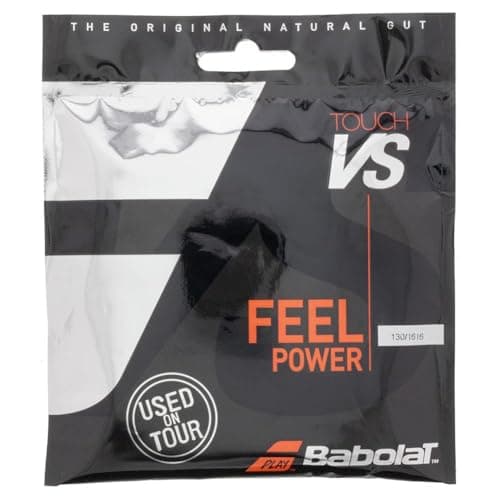
It is damaged by moisture. Coated guts resist this better — the coating helps protect the string from changes in the weather, and Babolat's VS Touch carries a Thermogut treatment published as being for durability — but the underlying material is organic and water is its enemy. A rained-on match, a damp bag left in a car trunk overnight, outdoor humidity in August: all of these shorten a gut job in a way they do not shorten a poly job. If you play outdoors in a wet climate, this alone decides it.
It is not durable for a string breaker. The published position is specific: for advanced players, natural gut is not as durable as a polyester string. Coated gut is as durable if not more durable than some multifilament strings, which is a real claim but a modest one — it puts gut in the same durability class as a premium multi costing a fraction as much. If you hit heavy topspin and saw through a string bed in a few weeks, the cost per hour becomes impossible to defend.
The cost argument that actually works
There is one honest version of the value case, and it is worth understanding because it is the only one that survives contact with a calculator. The retailer argument runs: if you are not a string breaker, it holds its playability and tension very well, and you don't need to restring very often because it will play well throughout its life.
That is true, and it inverts the comparison. The right way to think about string cost is per hour of play at acceptable quality, not per set. A poly job that goes dead in three weeks and gets left in for three months was not cheap — it was three months of playing with a bad string bed. A gut job that genuinely plays well for its whole life, replaced on schedule, can come out closer than the sticker price suggests.
The catch: that argument only works if you were alreadyrestringing on a sensible schedule, which most club players are not. The published rule of thumb — restring as many times per year as you play per week, doubled if you take performance seriously — means a twice-a-week player should be doing four jobs a year minimum. If you restring once a year when something snaps, you are not the player for whom gut pencils out; you are the player who should put a cheap multifilament in and restring three times more often. Our full schedule is at how often to restring a tennis racket.
The cheaper string that gets you most of the way
This is the recommendation most people reading this page actually need. A premium multifilament is thousands of fibers bundled in polyurethane, and it is engineered specifically to imitate gut's elastic, ball-pocketing response. It gets a long way there. It does not match gut's tension maintenance and it does not quite match the feel, but the gap between a premium multi and gut is far smaller than the gap between a premium multi and the polyester most club players are playing with.
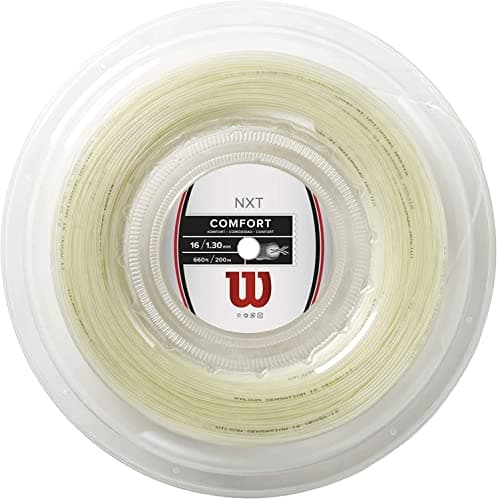
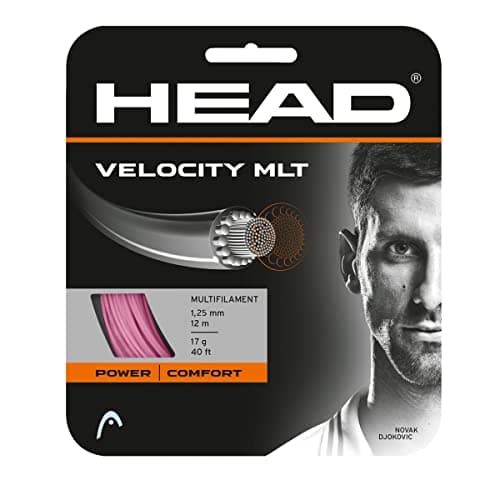
Wilson NXT is the benchmark in that class, and buying it as a reel rather than in sets is how you make it genuinely cheap per job. HEAD Velocity MLT is the budget option and the right first upgrade from whatever your frame shipped with — it is the cheapest string on this page and it is comfortable. Either one, restrung on time, beats gut left in too long. The comparison in full is at poly vs multifilament, and types of tennis strings explains the four families if any of this is new.
The hybrid: how good players actually buy gut
Almost nobody at the top of the game plays a full bed of gut. They play a hybrid: natural gut in the mains, where elasticity and feel live, and a polyester in the crosses, where durability and spin come from. The mains are the strings that move and wear, so a cheaper, tougher cross string protects the expensive part — and you get roughly two cross-string jobs out of one set of poly.
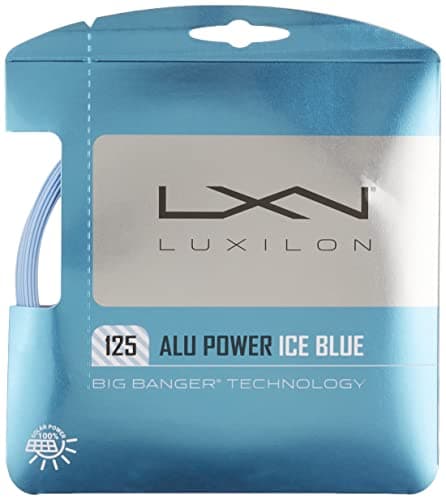
Luxilon ALU Power is the reference cross for this, and it is the most-used string on the professional tour for exactly this reason. A gut-mains hybrid costs meaningfully less per job than a full gut bed, lasts longer, gives up some of the comfort and keeps most of the feel. If you have decided you want gut, this is almost certainly the way to buy it, and it is the setup we point advanced players at on best strings for advanced players.
One warning on hybrids: a stringer has to know what they are doing, and a two-piece job costs a little more in labor. Ask before you hand over a frame, because a badly built hybrid notches the gut at the crossings and you will have paid gut prices for a short life.
So: should you buy it?
Yes, probably — if you have persistent elbow pain, have already tried a soft multifilament at a low tension, and have not fixed it; or if you are a 4.5+ player building a gut-mains hybrid; or if you are a touch player who does not break strings and restrings on schedule anyway.
No — if you break strings quickly, play outdoors in the damp, restring once a season, are below about 4.0, or are hoping a string will add power you could get from a frame. In the last case the honest answer is upstream of the string bed: see best strings for power and spin, or how to choose a tennis racket if the frame is the real problem.
Try it once, either way, if you are curious. One set in one frame, played back to back against your usual setup, tells you more than any page can. It is an expensive experiment and it is a finite one, and plenty of players run it, decide they cannot tell the difference, and never think about gut again. That is a perfectly good outcome and a cheaper one than a year of wondering.
And if the arm problem that brought you here has not responded to any string, the frame is the next variable. Published stiffness is the spec that matters, and the gap between two frames in the same brand can be larger than the gap between two strings — Wilson Clash vs Blade shows an eight-point flex difference between two racquets sold to the same player.
Natural gut against the alternatives
| Property | Natural gut | Premium multifilament | Polyester |
|---|
| Comfort | Best available | Very good | Poor to fair |
| Tension maintenance | Best in class | Good | Loses tension fast |
| Power | High (from elasticity) | High | Low |
| Control at high tension | Yes, without losing comfort | Softens as tension rises | Best |
| Durability for a string breaker | Not as durable as poly | Similar to coated gut | Best |
| Moisture tolerance | Poor (coating helps) | Good | Excellent |
| Price bracket | Highest in tennis | Mid | Low to mid |
| Who it is for | Sore arms, touch players, hybrid mains | Almost every club player | Heavy hitters, spin, string breakers |
Every row in that table is a published claim from the sources at the foot of this page, not a rating we invented. The price row is deliberately a bracket rather than a number — live prices for all four products on this page are in the table above and are checked daily.
Three ways to buy gut, cheapest first
1. Gut mains, poly crosses. The standard hybrid. One set of gut strings the mains; one set of poly does the crosses on two frames. Lowest cost per job of the three, most durable, and the setup the professional tour uses. Give up a little comfort against a full bed.
2. Gut mains, multifilament crosses. Softer than option 1 and the gentlest thing you can put in a racquet short of full gut. Less durable, because nothing in the bed is tough. The right hybrid for an arm problem rather than for performance.
3. A full bed of gut. The best-playing string bed in tennis and the one almost nobody needs. If you are going to do this, do it in one frame and keep a second frame strung with something ordinary, so a wet match does not end your day.
Look after it or do not bother
Gut is the one string where storage changes the economics. Keep the frame out of a hot car and out of a wet bag; dry the strings if you have played in drizzle; do not leave a gut-strung racquet in an unheated garage over winter. None of this is fussy — it is the same care a wooden instrument wants, and the reason is the same, because the material is organic.
A thing it is fair to say and rarely said: this maintenance burden is itself part of the answer to “is it worth it”. If remembering to bring your racquet indoors is not something you are going to do, buy a multifilament and enjoy not thinking about it.
When to restring it
Same rule as any string, with one adjustment. Published guidance says to restring when the notches are cutting roughly half to three-quarters of the way through a string, or when the bed has lost in the region of 10 to 15 lb from where it started. Gut arrives at the second condition far later than poly does, which is the whole value proposition — so with gut you are usually watching the notching rather than the feel.
The adjustment: do not try to stretch a gut job because it still feels good. It feeling good is what you paid for, and it will keep feeling good right up to the point where a notched main snaps mid-rally. Full schedule at how often to restring, and the labor costs at what restringing costs.
What we did not do
We have not strung these four strings and hit with them back to back, and nothing above is presented as a play test. Every property claim is sourced to published manufacturer or specialist-retailer material, cited below, and the judgments are about who those published properties suit. Our scoring rubric and its limits are on methodology.