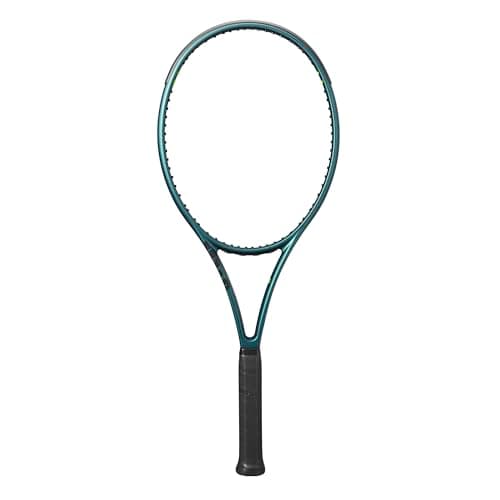
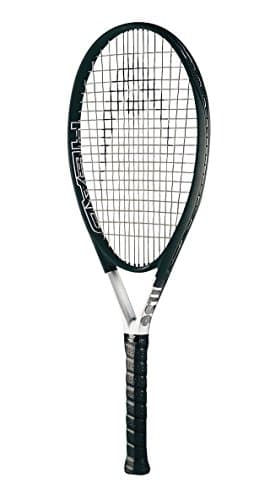
If what you need is the lightest playable racquet, buy the HEAD Ti S6: a published 8.9 oz strung at 115 square inches, which is the lightest full-size frame we list and the easiest swing in tennis. If you want light and a frame you can still hit a controlled backhand with, buy the Wilson Blade 100L at 10.4 oz strung — a real performance frame that happens to be light, rather than a recreational frame that happens to be a racquet. And read the warning in the third section before you buy anything here, because the lightest frames are usually the stiffest, and stiffness is what hurts arms.
This page is written for a player whose constraint is effort: a slower swing, a sore shoulder, a wrist that complains, two hours of court time you want to finish, or simply a frame that feels like hard work by the third set. That is a real buyer and the market mostly ignores them — almost every marketing dollar in racquets goes to spin and power for people who already swing fast.
It is deliberately a different page from racquets for seniors, which is organized around an older player's whole situation — balance, arm comfort, head size, string choice. This one ranks on a single published number: strung weight. If you came here because you searched for a weight, that is the spec you get.
The weight ladder
| Racquet | Published weight | Head size | Who it is for |
|---|
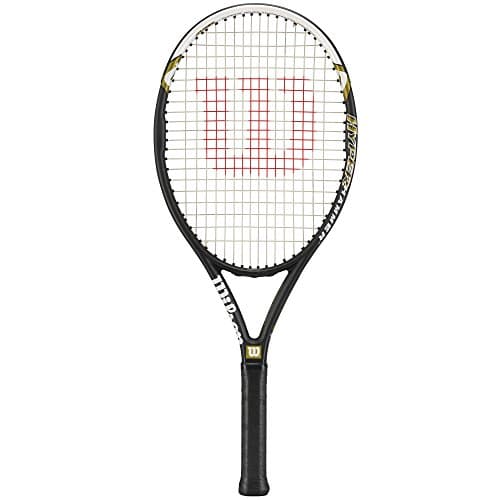
| HEAD Ti S6 | 8.9 oz strung | 115 sq in | The absolute lightest, head-heavy for free depth |
| Wilson Hyper Hammer 5.3 | 9.2 oz strung | 110 sq in | Same idea, more pronounced head-heavy balance |
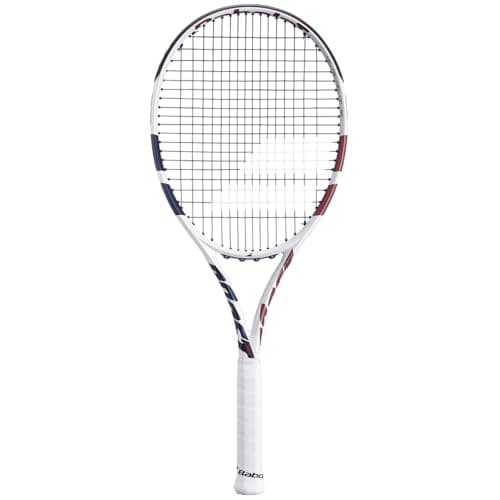
| Babolat Boost Drive | 9.5 oz strung | 105 sq in | Light with a smaller head and full graphite |
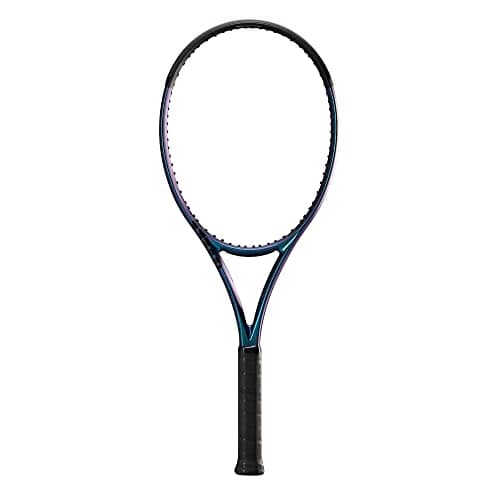
| Wilson Ultra 100UL v4 | 9.5 oz unstrung | 100 sq in | Light frame in a mainstream performance line |
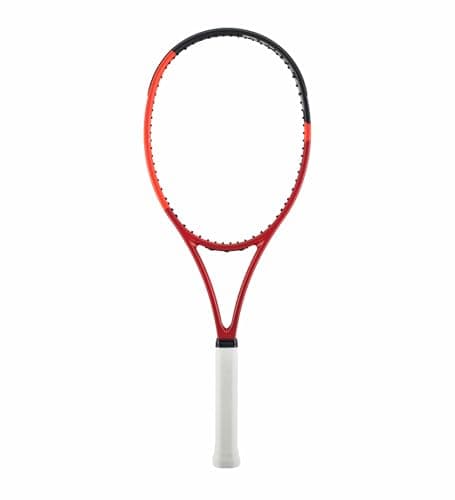
| Dunlop CX 200 LS | 10.4 oz unstrung | 98 sq in | Light frame with control-frame geometry |
| Wilson Blade 100L v9 | 10.4 oz strung | 100 sq in | A genuine player's frame, made light |
One note on reading that table, because it is the most common spec confusion in racquets: some manufacturers publish strung weight and some publish unstrung. A string job plus an overgrip adds roughly three quarters of an ounce. So the Ultra 100UL at 9.5 oz unstrung is close to the Boost Drive at 9.5 oz strung in the hand, not lighter than it. We have labeled each figure as published rather than converting, because a conversion would be our number rather than the manufacturer's.
What light frames give up
Stability. This is the real cost and it is not small. A light racquet is pushed around by a heavy ball: the frame twists on an off-center hit and gets knocked back by pace. Against a hard-hitting opponent you will feel it on every return. The larger head sizes here compensate partly — a bigger stringbed twists less on a given off-center hit — which is why the lightest frames in the world are also the largest.
Precision. Mass is what lets a frame hold a line through contact. Light frames tend to produce a slightly less predictable depth, which is why almost nobody above 4.5 plays one.
Power on your terms. A light racquet gives you power the manufacturer chose (via stiffness and head size) rather than power you generate. Fine if your swing is slow; a liability if it is fast, because you will overhit.
The trap: light usually means stiff
This is the single most important thing on the page and the thing most lightweight racquet guides skip. A frame gets its power from two places: mass and stiffness. Take the mass away and the only lever left is stiffness. So the very lightest frames tend to be the stiffest, and frame stiffness is the property most associated with shock traveling up your arm.
That creates a genuine fork, and it depends on which part of you is complaining.
Tired shoulder, tired legs, slow hands → go as light as you like. Ti S6 or Hyper Hammer. The weight you do not have to move is the point.
Sore elbow → do not buy the lightest frame. Buy a flexible one and accept some weight. The Wilson Clash 100 v3 is published at RA 54 with FORTYFIVE flex, which is exceptionally low for a modern 100 sq in frame, and the Blade 100L on this page shares the FORTYFIVE flex construction at 10.4 oz strung — which is the best compromise available between light and flexible. The AAOS describes tennis elbow as overuse microtearing of the forearm tendons at the elbow and reports that roughly 80 to 95% of patients succeed with nonsurgical treatment, so getting the equipment right is worth doing properly: read racquets for tennis elbow.
Both → Blade 100L, strung with a soft multifilament at the low end of the range. Light, flexible, and a frame you will not outgrow.
Two cheaper changes that feel like a lighter racquet
A thinner overgrip, or none. Two overgrips and a dampener is most of an ounce at the end of the handle, and it all has to be accelerated. Strip it back and the racquet you own gets measurably lighter today.
A thinner, softer string at lower tension. A thin multifilament at the bottom of your frame's range adds free depth, so you can swing less hard for the same result — which is, functionally, exactly what a lighter racquet buys you. The tension guide has the ranges.
And the reverse operation is worth knowing too: if a light frame turns out to be too light and unstable, you do not have to replace it. Six grams of lead tape at 3 and 9 o'clock adds stability without much swingweight — how to add weight to a racquet has the arithmetic.
As everywhere on this site: we have not hit with these frames. Every weight, head size and pattern above is the manufacturer's published figure, and the scores are judgments from that documentation against our rubric, weighted here toward low weight and ease of swing rather than toward control.