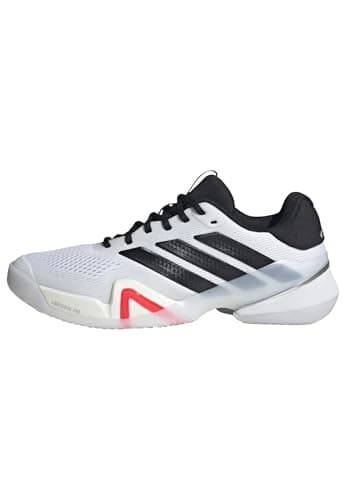
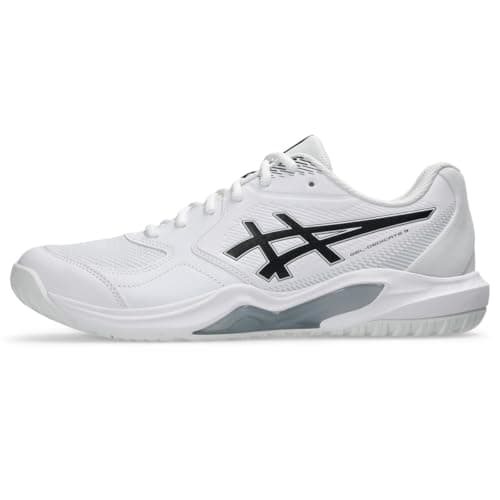
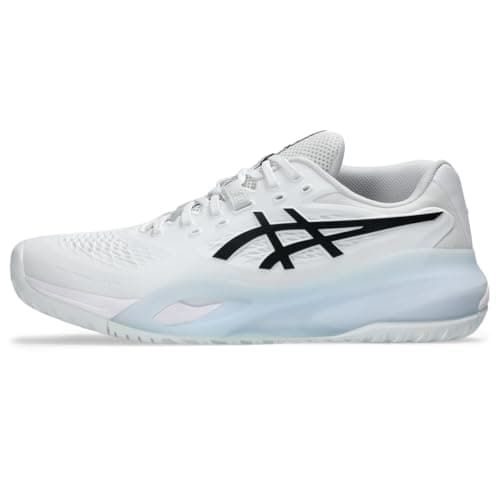
You can play recreational tennis in basketball shoes without hurting yourself, which is not true of running shoes — both are built to resist sideways load. But a basketball outsole is soft gum rubber tuned for a clean indoor hardwood floor, and an abrasive outdoor hard court will chew through it in weeks while gripping worse than a herringbone tread would. If you play more than a few times a month, switch: the benchmark court shoe is the ASICS Gel-Resolution X, the most heavily built is the adidas Barricade, and the cheapest genuine court shoe is the ASICS Gel-Dedicate 9.
One clarification first, because the phrase is ambiguous in American English and this site is not. This page means actual tennis court shoes — a court outsole, a reinforced lateral wall, a tennis last. It does not mean the lifestyle sneakers also sold as "tennis shoes" for walking. If you are comparing basketball shoes against those, the answer is simply that neither belongs on a court.
Why this comparison is close
Basketball and tennis ask for the same basic thing from a shoe: stop the foot sliding off the platform when you load it sideways. Both sports are built out of hard changes of direction, so both shoe categories carry a stiffened structure around the sides of the foot, a dense outsole rather than a soft blown-rubber one, and a lower, firmer ride than a running shoe.
That shared design brief is why the honest answer here is "not ideal" rather than "dangerous." The podiatry argument against running shoes on court is specific and strong — a court-sport practice puts it as "wearing running shoes for tennis significantly increases lateral ankle sprain risk because running shoes are designed for forward motion, not the lateral cuts that tennis requires constantly" — and the court-shoe features it names as the fix are "reinforced lateral walls, extra durability at the toe drag area, and appropriate lateral stability." A basketball shoe has the first and the third. It is the middle one it does not have.
The four real differences
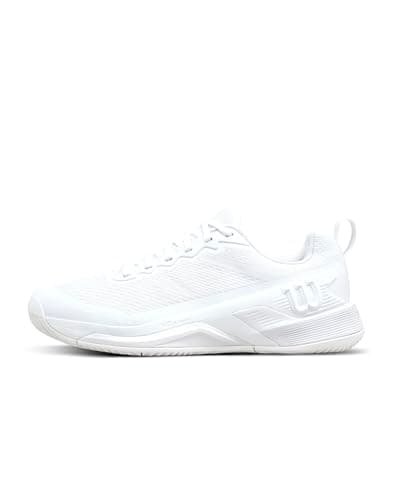
1. The outsole rubber and pattern. This is the big one. A basketball outsole is soft gum rubber in a herringbone-ish pattern, optimized for a polished indoor hardwood floor — grippy, quiet, and deliberately soft because hardwood is not abrasive. An outdoor hard court is acrylic paint over asphalt or concrete, which is essentially sandpaper. Soft gum rubber on sandpaper wears fast. A tennis outsole uses a dense abrasion-rated compound instead: ASICS publishes a full-length AHAR Plus rubber outsole in a multi-directional tread with pivot points on the Gel-Resolution X, adidas an Adiwear outsole on the Barricade, Wilson a Duralast outsole on the Rush Pro.
2. Ankle height. Basketball shoes come in mid and high-top cuts because basketball involves landing from a jump on other people's feet. Tennis does not, and tennis players slide and pivot constantly, so a court shoe is almost always a low-top: a high collar restricts the ankle motion you need to recover from a wide ball, and adds weight where you feel it most. A high-top is not a safety upgrade for tennis. It is a constraint.
3. Stack height and midsole stiffness. Basketball shoes carry a lot of cushioning for impact absorption on landing, which raises you off the floor. Court shoes sit lower and firmer, because every millimeter of stack is extra leverage for your ankle to roll over on a sliding stop. The Gel-Resolution X publishes FlyteFoam Blast+ with GEL — cushioned, but at court height.
4. The toe drag guard. A serving tennis player drags the toe of the back foot across the court on almost every serve. Court shoes armor exactly that spot — adidas publishes an Adituff toe drag guard on the Barricade, K-Swiss a DragGuard toe on the Hypercourt. A basketball shoe has no reason to and does not, so the toe is the first thing to go. This is the failure most players notice.
What a basketball shoe is genuinely good at on a tennis court
Worth saying, because the honest version of this comparison is not a wipeout.
Lateral stability. The chassis and lateral walls are real. If the choice in front of you is basketball shoes or running shoes for a social hit, wear the basketball shoes.
Cushioning. More of it than most court shoes, which is pleasant on a concrete-base hard court if your knees complain.
Indoor hard courts. On a cushioned indoor surface a basketball outsole grips well and wears slowly, because that is close to what it was built for. Many indoor venues also require non-marking soles, and most modern basketball outsoles qualify.
So can you play tennis in basketball shoes?
For a few social sets, yes — and better than in running shoes. As a regular choice, no, for two reasons that have nothing to do with injury. The first is money: you will destroy a pair of basketball shoes on outdoor hard courts far faster than a court shoe, and basketball shoes are not cheap. The second is grip, which is the part players get wrong. A soft gum outsole on a dusty outdoor court glazes over and then skates. A herringbone or multi-directional court tread clears dust and bites.
There is also a weight argument. A court shoe is already a heavy shoe by athletic standards; a mid-top basketball shoe with a thick stack is heavier again, and you cover a lot of ground in two hours of singles.
And the reverse: tennis shoes for basketball?
Also workable and also not ideal, in the opposite direction. A court shoe has the lateral structure basketball needs and a low-top cut plenty of guards prefer anyway. What it does not have is landing cushioning — a tennis midsole is deliberately low and firm, and repeatedly coming down from a rebound in one is harsh on the heels and knees. It also has a dense outsole that grips hardwood fine but feels dead compared with gum rubber.
The real objection is the one nobody mentions: tennis outsoles are built to abrade against a hard court, and on an indoor wood floor that density buys you nothing while costing you feel.
Which court shoe to switch into
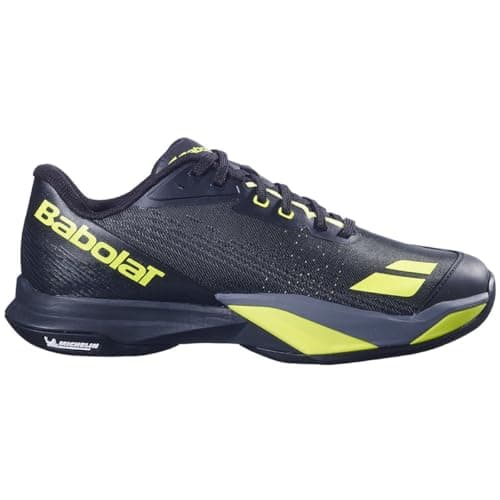
The five above cover the honest range. If you want the reference stability shoe, the ASICS Gel-Resolution X is where club tennis starts. If you liked how locked-in a basketball shoe felt, the adidas Barricade is the closest thing in tennis — the most structured shoe in the category, with the drag guard and the Adiwear outsole to match. If you want the lighter, quicker end, the Babolat Jet Mach 4. If this is an experiment, the ASICS Gel-Dedicate 9 is a real court shoe at an entry price and the correct way to find out whether you care.
Fit comes before all of that, though. If your foot is broad, start at court shoes for wide feet instead, and if you have arch or heel pain read court shoes for plantar fasciitis first. Surface matters next: most of the ranking above assumes hard courts, and clay needs a different outsole entirely.
The third comparison in this group is the closest of the three. Tennis shoes vs badminton shoes sets two court shoes against each other: the same soft-gum-versus-abrasion-rated outsole question as basketball, but with lateral support and stack height as the second axis.