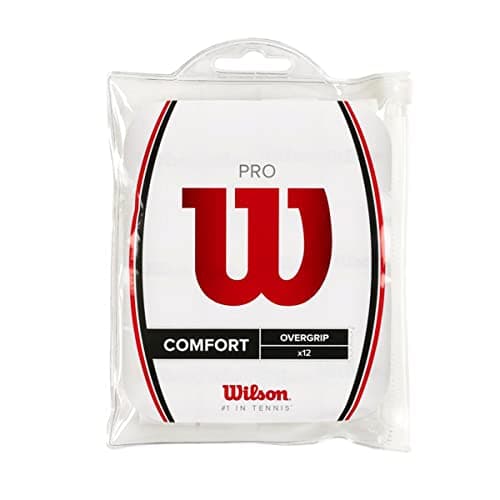
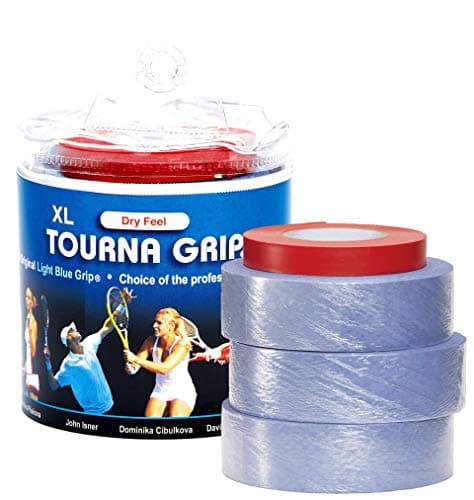
If your hands sweat, buy Tourna Grip. It is the only overgrip that works by absorption rather than tack, which means it gets grippier as it takes up moisture — the opposite behavior to everything else on the shelf. For everyone else, the Wilson Pro Overgrip is the default for good reason: thin, tacky from the first wrap, and cheap in a 12-pack.
If you are not yet sure how you should be holding the handle in the first place, start with how to grip a tennis racket — grip pressure and hand position matter more than which wrap is on the handle, and a grip you have to squeeze is a route to tennis elbow.
Tacky versus absorbent
This is the whole category, and most players have never been told there is a choice.
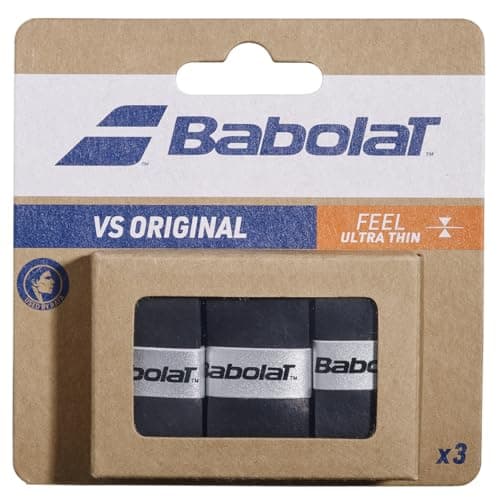
Tacky grips — the Wilson Pro, the Babolat VS, almost everything — are polyurethane and feel sticky out of the packet. They are comfortable and immediately grippy. As they get wet, the tack goes away, which is exactly when you need it.
Absorbent grips — Tourna Grip is the famous one — feel dry and slightly papery when new. They work by wicking moisture off your hand, and they get grippier as they do it. In heat or humidity they are not slightly better; they are a different experience.
The catch is that the first five minutes with a Tourna Grip feels wrong to anyone used to tack. Give it a full session before you judge it.
Thickness changes your grip size
An overgrip adds roughly 1/16 of an inch, which is half a grip size. Two overgrips take you up a full size.
This is genuinely useful: it is why the advice on our grip size guideis to buy the smaller of two frame sizes and build up. It is also a trap — if you wrap a new overgrip over three old ones because you never took them off, your grip is now a size and a half too big and you wonder why your wrist hurts.
Remove the old one. Every time.
Overgrips are also the one tennis purchase that is a safe gift, because unlike shoes and racquets they do not depend on fit — the other being a bag. Where both sit in a complete kit is at tennis gear for women, and the bag ranking for a narrower carry is at best tennis bags for women.
Overgrip versus replacement grip
Two products that get confused constantly. The replacement grip is the base layer bonded to the bare handle — thicker, changed maybe once a year. The overgrip goes on top, is thin and cheap, and is a consumable.
Never strip the replacement grip to fit an overgrip. You lose the handle's bevel definition, which is how you locate your grip without looking, and about a quarter of a grip size.
Why this matters more than it sounds
A slick grip makes you squeeze harder to stop the racquet moving. Sustained gripping loads the forearm extensor tendons, which is the mechanism behind tennis elbow. A fresh overgrip is a few dollars; the alternative is a season.
One group needs a narrower answer than this page gives. If your hands sweat, a tacky grip loses its grip exactly when you need it and an absorbent one gains it — which is a material difference rather than a preference. That ranking is at the best overgrips for sweaty hands.
The other few-dollar accessory on a racquet is a vibration dampener, and it is the one most often bought for the wrong reason. The dampener page ranks the field on the two things that actually differ — whether it stays in, and how much ping it kills — explains where to fit one within the Rules of Tennis, and says plainly that a dampener will not help a sore elbow.
The four compared
| Grip | Type | Thickness | Pack | Best for |
|---|
| Tourna Grip XL Original | Absorbent | Thin | 30 | Sweaty hands, heat, humidity |
| Wilson Pro Overgrip | Tacky | 0.5 mm | 12 | The safe default |
| Babolat VS Original | Tacky | Ultra-thin | 3 | Maximum handle feel |
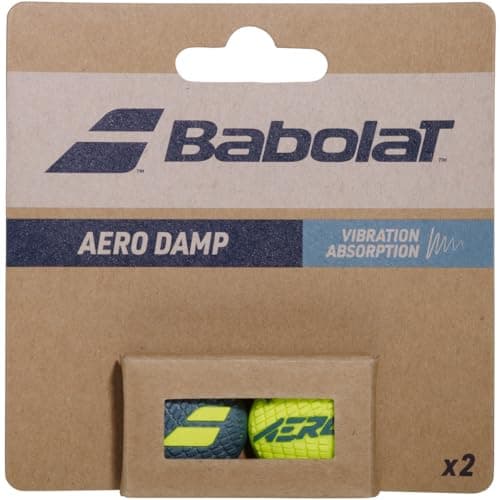
| Babolat Aero Damp | Dampener (not a grip) | — | 2 | Killing string ping |
Buy in the biggest pack you will get through. Overgrips are a consumable and the per-grip price falls sharply with pack size — the 3-pack is for trying something, not for stocking up.
Worth being clear about what this page is and is not ranking: everything here is an overgrip, the thin wrap that goes on top of the grip your racquet came with. The thicker base grip underneath is a different product with a different replacement schedule — see overgrip vs replacement grip if the handle itself has gone hard and flat.
How to wrap one properly
Start at the butt end, not the top. Peel the backing, line the tapered start against the butt cap, and wrap upward toward the throat with about a 1–2 mm overlap, keeping steady tension throughout.
Wrapping downward from the top is the common mistake: your hand then slides against the exposed edges of each wrap rather than over them, and the grip unravels within a session.
Finish with the supplied finishing tape, and pull each turn firm but not stretched — an over-stretched grip relaxes unevenly and bunches.
When to change it
When it stops being tacky, or stops absorbing. For a tacky grip in normal conditions that is every 6–10 playing hours; in summer heat, less. Tourna Grip is designed to be changed often and some players change it every session.
The practical signal: if you notice yourself gripping harder, it is done.
The dampener, stated honestly
The Babolat Aero Damp is on this page because it lives in the same part of the bag and costs the same as a grip, not because it does the same job.
It removes the high-frequency string ping, which many players find distracting. It does not reduce the frame vibration that loads the tendon, so it is not treatment for arm pain — a point we repeat because it is the most common misunderstanding in tennis accessories. Buy it if you dislike the sound. If your elbow hurts, change your string.