If you play USTA League in the United States, NTRP is the rating that decides what you can enter, and it is the only one that matters to you. If you want more match play than league offers, or you are a junior or a parent dealing with college recruiting, UTR is the number people will ask for. They are not two scales for the same measurement: NTRP sorts players into half-step bands from 2.0 up, assigned through USTA League play; UTR is a continuous number — “a number between 1.00 and 16.50”— computed from the weighted average of up to 30 of your most recent match ratings in the last 12 months. And no, there is no official conversion between them.
That last point is why this page exists in the shape it does. Search “NTRP to UTR” and you will be handed tidy tables: 4.0 equals UTR 6 to 8, and so on. We went looking for the authoritative version of that table and it does not exist. The closest thing to first-party material is a Universal Tennis support page that carries charts headed “Men: NTRP to UTR Conversion Recommendation” and “Women: NTRP to UTR Conversion Recommendation”, offered as “guidance on where your UTR rating may be”— and those charts are published as images, so their numbers cannot be quoted as text. This site does not print a spec it has not sourced, so you will not find a conversion table below. What you will find is how each system works, which tells you why a clean mapping cannot exist.
How NTRP is produced
NTRP is the USTA's National Tennis Rating Program, and it is a banded system: 2.0, 2.5, 3.0, 3.5, 4.0 and up, with published written descriptions of what a player at each level can do. The USTA publishes those level definitions as player guidelines, and they describe tennis in words — what your second serve is like, whether you can hit with directional control under pressure — rather than in numbers.
Getting one works in two stages. You self-ratethrough the USTA's system when you first enter league play, picking the band whose description matches your game. After that it stops being your opinion: your rating is computed from your match results in USTA League, and recalculated at the end of the season. Play up and win and you go up; the computer does not care what you told it in March.
Three consequences worth understanding:
It is league-shaped. Your NTRP comes from sanctioned league matches, so if you do not play league, you do not really have a computed rating — you have a self-rate and an opinion.
It is banded, and the band is the point. A 4.0 flight is a flight of 4.0s, which is what makes league competitive. It is also why a strong 4.0 and a weak 4.0 carry the same label, and why “sandbagging” arguments exist at all.
It is American. NTRP is a USTA program. Outside the United States, it is a number people have heard of rather than one they use.
Our full level chart is on NTRP ratings explained, and the two bands this site is built around have their own pages: what a 3.5 looks like and what a 4.0 looks like.
How UTR is produced
UTR — the Universal Tennis Rating — is a continuous algorithmic number, and Universal Tennis publishes how it works in enough detail to describe honestly.
The scale. A player's UTR is a number between 1.00 and 16.50. Two decimal places, no bands, and the same scale for everybody: players are rated based on actual results, not age, gender, nationality, or socioeconomic status. A 13-year-old and a 55-year-old with the same number are, by the system's logic, the same standard of player.
The window. Your rating is the weighted average of up to 30 of their most recent match ratings, and only matches within the last 12 months count toward a player's UTR Rating. It is a rolling picture of recent form rather than a season-end verdict.
What each match contributes. Every match produces a match rating from two inputs: the UTR Rating difference between opponents and the competitiveness of the match, as determined by the percentage of total games won. That second input is the one club players find surprising — losing 6-4 6-4 to a much stronger player can help your rating, because games won against a known quantity is the measurement. Winning is not the only thing that counts.
How much each match counts. Each match rating is then weighted on four published factors: format — as the match format increases in length, more weight is given; competitiveness, where a wider rating gap between the players earns less weight; reliability — as the reliability of the opponent's UTR Rating increases, more weight is given; and time degradation, which gives more credit to matches played within the last few months.
How fast you get one. One match result is all it takes to receive a projected UTR Rating, and after approximately five matches, the rating becomes fully reliable. That is the single most useful fact on this page: five matches is a weekend, and it is a shorter path to a real number than a USTA League season.
Side by side
| NTRP | UTR |
|---|
| Run by | USTA (United States) | Universal Tennis (global) |
| Shape | Half-step bands (2.0, 2.5, 3.0 …) | Continuous, 1.00 to 16.50 |
| Starts as | A self-rating you choose | A projected rating after one match |
| Becomes real when | League results are computed | After approximately five matches |
| Input window | League season results | Up to 30 matches, last 12 months |
| Separates by age / gender | Yes, for league play | No — one pool, results only |
| Credit for losing well | No, in the band sense | Yes — percentage of games won is an input |
| Mainly used for | USTA League eligibility and flights | Flex leagues, events, junior and college pathways |
Every row in that table is sourced to the USTA and Universal Tennis material cited at the foot of this page. The one row we cannot give you is a conversion row, and the table above is the reason why.
Why the conversion tables online are guesses
Look at what the two systems eat. NTRP is computed from league match results inside age-and-gender-separated flights and expressed as a band. UTR is computed from up to 30 matches against anyone at all, weighted by format and opponent reliability, and expressed to two decimals. They are not measuring the same thing on different scales; they are different measurements.
Three specific reasons a mapping breaks:
1. One pool versus many. UTR deliberately rates everyone against everyone — not by age or gender. NTRP league play is separated. A women's 4.0 and a men's 4.0 are both 4.0; their UTRs are typically not the same number, which is why Universal Tennis's own guidance charts are published separately for men and women rather than as one table.
2. A band is a range. Any honest conversion from a band produces a range, not a number, and the ranges for neighboring bands overlap. “4.0 equals UTR 6.5” is false precision at both ends.
3. Different clocks. UTR degrades old matches and recomputes constantly; NTRP lands at the end of a season. A player improving quickly has a UTR that moves monthly and an NTRP that has not caught up until the next computation.
So when a site hands you a conversion chart, ask where it came from. The ones we checked either attribute the numbers to a body that does not publish them, or cite “research” without naming it. Universal Tennis does publish guidance for placing unrated players — and it uses it the sensible way, asking in its own words for “details about your tennis history or NTRP rating” “which our team will then use to best place you against similarly rated players”. That is a seeding hint, not an equivalence.
Which one do you actually need?
You play USTA League, or want to: NTRP. It is the entry requirement. Self- rate honestly — the band descriptions are published, and over-rating yourself costs you a season of losses while under-rating gets corrected by the computer anyway.
You want more matches than league gives you: UTR. Flex leagues and UTR-rated events sort by the number, five matches gets you a reliable one, and the single-pool design means you can be matched against anybody of your standard rather than only your age bracket.
You are a junior, or a parent of one: UTR, and probably both. College recruiting conversations happen in UTR, because it compares a 16-year-old in Ohio with a 19-year-old in Spain on one scale.
You are a social player who does not compete: neither. You do not need a rating to enjoy tennis, and a self-assessed band is plenty for finding hitting partners. If you want a reference point, read the NTRP descriptions and be honest about which one sounds like your Saturday.
You are gear shopping: neither, and both. No rating tells you what to buy, but your level does — which is why this site is organized by it. The level hubs are beginner (2.0-3.0), intermediate (3.5-4.0) and advanced (4.5+), and if you only know your UTR, the honest translation for gear purposes is not a chart: it is the NTRP description that sounds like your tennis.
Getting each rating, step by step
To get an NTRP rating: read the USTA's published level guidelines, self-rate into the band that matches, join a USTA League team, and play the season. Your computed rating arrives from your results at the end of it. The self-rate is the only part you control, and it is worth getting right rather than optimistic.
To get a UTR: create a profile, play rated matches, and look at the number. One result produces a projected rating; approximately five produce a fully reliable one. Because opponent reliability is a published weighting factor, matches against players with established ratings do more for yours than matches against other unrated players.
If you have both: expect them to disagree about how good you are, and do not try to reconcile them with arithmetic. They are answering different questions.
What neither rating tells you
How you lose. Both systems compress a tennis match into a result. Neither knows that your backhand breaks down under pace, which is the thing your lesson should be about.
Doubles, properly. NTRP league is mostly doubles and UTR issues ratings for both, but a doubles result tells you less about an individual than a singles result does. A strong doubles player and a strong singles player at the same number play very different tennis. If doubles is your game, the frame choice follows from that, not from the rating — see racquets for doubles.
Whether your gear fits your level. The most common mismatch we see is not a player with the wrong rating; it is a 3.5 playing with a 4.5's control frame because someone recommended it, or a 4.0 still on the oversize racquet they bought as a beginner.
Gear by level, since that is the useful translation
Three frames, one per band, as a starting point rather than a prescription. Each links through to the full ranking for its level.
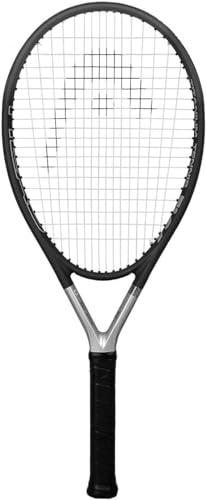
2.5-3.0 (NTRP beginner bands). The HEAD Ti S6 is the oversize, ultra-light frame that has outsold almost everything for twenty years, and it does the one job a developing player needs: free depth from a short swing. Full field at best racquets for beginners.
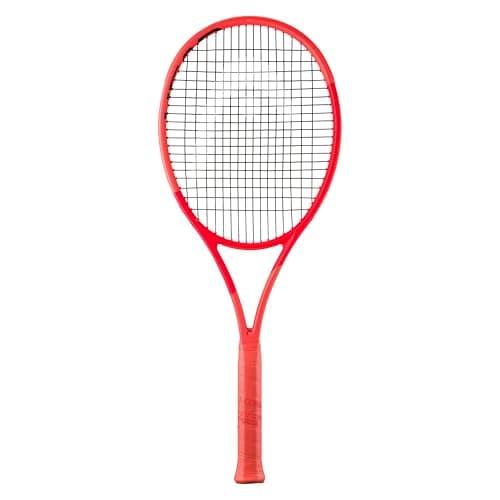
3.5-4.0 (the four-oh club). The HEAD Radical MP is the all-court frame for a player who now generates their own pace and wants control rather than help. More at best racquets for intermediate players and the 4.0 page.
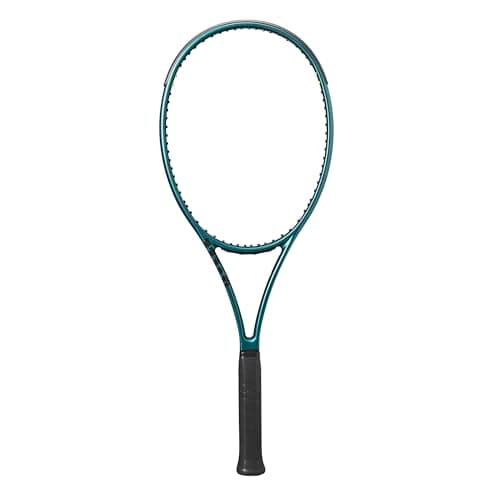
4.5+ (advanced). The Wilson Blade 98 is the control benchmark — a thin-beam 98 that gives you nothing until you swing, which is exactly what a player at this level wants. Field at best racquets for advanced players.
If you are holding a frame you have had for years and wondering whether your improvement has outgrown it, that is a different question with its own page: when to replace a tennis racket.
A word on WTN, since it is the third system
The ITF's World Tennis Number turns up in the same searches, and it is a real system with a different direction of travel: lower numbers are stronger, which immediately breaks any instinct built on UTR. We are not going to describe it in detail from secondary sources, and we are certainly not going to publish a WTN conversion — the formulas circulating for that are third-party regressions over junior match data, not published mappings. If WTN is the number being asked of you, get it from the body that issues it.
What we did not do
We did not publish a conversion table, because no governing body publishes one and the charts that exist as first-party guidance are images we cannot quote. We did not model one ourselves either; a regression we ran would be a guess with decimals on it. Everything above about NTRP comes from the USTA's own published material and everything about UTR from Universal Tennis's own support documentation, both cited below and read on the day this page was written. The gear judgments are ours, against the rubric on methodology.