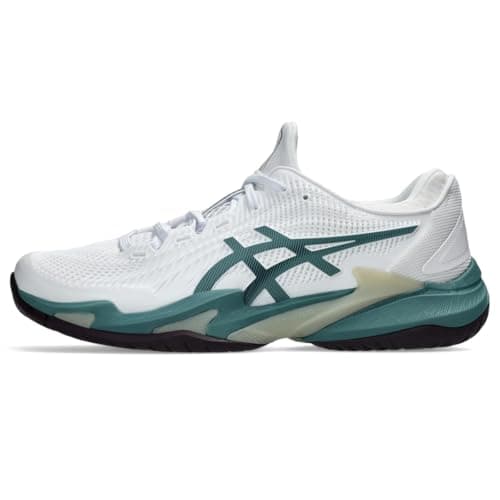
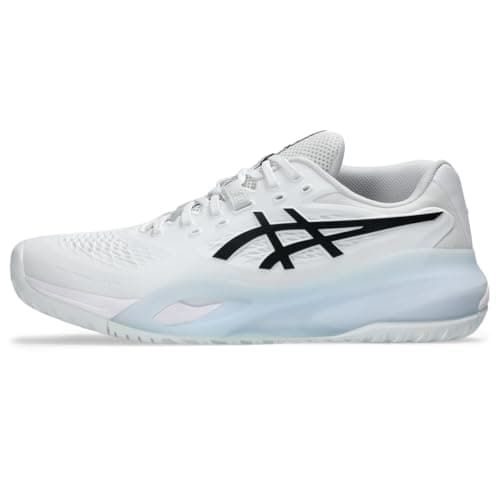
Buy the Gel-Resolution X if you grind from the baseline, slide into your shots or have ever rolled an ankle. Buy the Court FF 3 if your game is first-step speed and you are at the net more than you are behind the baseline. The published weights are 16.1 oz and 15.3 oz at size 10.5 — eight-tenths of an ounce per shoe, which sounds trivial written down and is not trivial in the fifth set of a league match. Everything else about the two shoes follows from that difference: the Resolution spends its weight on containment, and the Court FF spends its lack of weight on quickness.
The second thing to know is a fit detail that costs people a return. Tennis Warehouse lists the Gel-Resolution X's length as LONG and advises going half a size down if you are between sizes; it lists the Court FF 3's length as TRUE. If you own one and are buying the other, do not carry your size across without reading that. The same block lists break-in as YES for the Resolution and SLIGHT for the Court FF, which is the honest warning that the supportive shoe is also the stiff one out of the box.
What the published specs actually say
ASICS Gel-Resolution X (men's). 16.1 oz at size 10.5 US. Full-length Flexion Fit upper with DYNALACING. FlyteFoam Blast+ and ECO Foam in the midsole with ASICS' GEL for shock. A re-engineered DYNAWALL for lateral stability. A full-length AHAR Plus rubber outsole in a multi-directional tread with pivot points, plus a PGuard toe protector. Surface: all court / hard. Fit: long, medium width, medium arch, break-in yes.
ASICS Court FF 3 (men's). 15.3 oz at size 10.5. Mesh and TPU upper with PGuard on the toe and the medial side. FlyteFoam midsole, described as ultra-lightweight cushioning, with a Midfoot Trusstic System that adds rigidity and resists unwanted twisting, plus GEL for court shock. A three-piece outsole whose sections move independently for flexibility, in AHAR Plus rubber with a modified herringbone tread. Surface: hard / all court. Fit: true, medium width, medium arch, break-in slight.
Both run the same outsole compound, which is the single most useful thing on this page: you are not trading away durable rubber by picking the lighter shoe. What you are trading is how that rubber is held together— one full-length slab against three pieces that flex independently.
The real difference is the chassis, not the cushioning
Both shoes use FlyteFoam and both use GEL, so the marketing copy reads almost identically. The structural difference is what each one does to stop your foot moving sideways off the sole when you plant on a wide ball.
The Resolution's answer is DYNAWALL— a lateral support wall, re-engineered on this generation specifically for more lateral stability. It is a physical barrier: the foot reaches the edge of the platform and the wall is there. That is the most protective structure in a mainstream court shoe, and it is the reason this model is our pick on best tennis shoes for ankle support and on best hard-court tennis shoes.
The Court FF's answer is a Midfoot Trusstic System— torsional rigidity through the middle of the shoe, which stops the forefoot and heel twisting independently. That is a genuinely useful structure, and it is not the same job. Torsional rigidity keeps the shoe from wringing out; a lateral wall keeps your foot on top of it. If your failure mode is rolling over the outside edge, the Resolution is the answer and the Court FF is a compromise.
The flip side is honest too. The Court FF's three-piece outsole is specified to flex between its sections, which is exactly what you want if you are pushing off hard in the first step toward a drop shot. A full-length rigid slab is stable and a little slower to get moving.
Who should buy which, concretely
Buy the Gel-Resolution X if you play mostly from the baseline and your points end on a wide ball; you slide on hard court on purpose; you have had an ankle or a knee problem; you are hard on shoes and want the model specialist retailers are willing to back with an outsole guarantee; or you simply want the safest default. It is the most widely worn shoe in club tennis and the reason is not fashion.
Buy the Court FF 3 if your game is coming forward: serve and volley, chip and charge, doubles at the net. If your complaint about your last pair was that it felt like wearing a boot. If you want court feel on a split-step. Or if you have had no stability problems and want the lighter shoe for a full day of league tennis.
Buy neither if your problem is foot shape rather than playing style. A medium-width, medium-arch shoe in either model will not solve a wide foot or a collapsed arch, and both of these are listed as medium / medium. Start at best tennis shoes for wide feet or best tennis shoes for flat feet instead, because fit beats features every time.
The clay and women's versions, and the gap between them
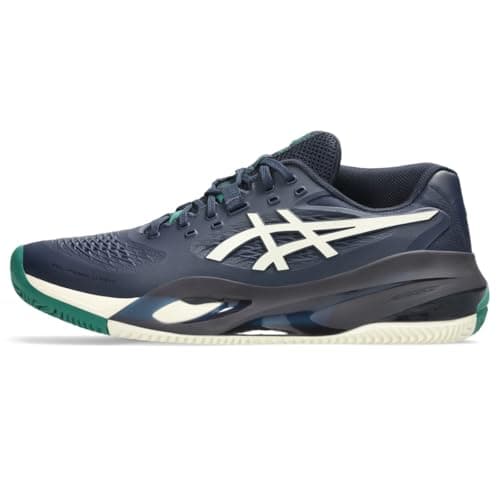
If you play on clay or Har-Tru, neither hard-court shoe above is the right buy and the decision is made for you: the Gel-Resolution X Clay is the same platform with a clay-specific full herringbone outsole, which is the only tread that both grips and releases on a loose surface. A hard-court multi-directional tread skids on clay and packs with it. The full argument is on best clay-court tennis shoes.
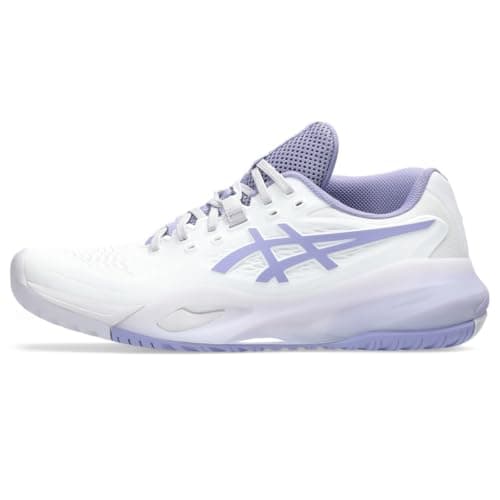
On the women's side, the Gel-Resolution X (women's)is built on a women's-specific last rather than scaled down from the men's shoe, and it carries the same DYNAWALL and the same AHAR Plus outsole. Here is the honest gap: our registry does not hold a women's Court FF 3, so if you are a woman who wants the lighter, faster ASICS, this page cannot rank one for you — the Court FF is made in a women's version, we have simply not resolved a live listing for it, and we do not link to products we have not verified. The women's shortlist we can stand behind is on best women's tennis shoes.
Durability: same rubber, different guarantee
AHAR Plus is ASICS' hard-wearing compound and it is on both shoes, so the raw material is a wash. The difference is who stands behind it. The Gel-Resolution X listing carries a one-time six-month outsole durability guarantee — and that guarantee is the retailer's, not ASICS'. Its published terms are narrow: it covers the rubber outsole only, the shoe must be worn completely through the outsole and into the midsole or insole, and it is void if the shoe is abused or mishandled. No such guarantee is stated on the Court FF 3 listing we cite.
Treat that as a signal rather than a warranty you will claim. A retailer offering to replace a shoe that wears through in six months is telling you which model it expects to survive, and it is worth saying plainly that the guarantee is attached to the purchase channel and not to the shoe, so buying the same model elsewhere does not carry it. If outsole life is your priority above everything, most durable tennis shoes ranks the category, and how long tennis shoes last explains why the tread is usually the last thing to fail.
If both are more shoe than you need
Both of these are performance shoes at performance prices. If you play once a week, the Gel-Dedicateline sits in a much lower bracket and is a real court shoe with a real court outsole — it is simply less of everything. That is the right trade for a casual player and the wrong one for a league player, and we lay it out on best budget tennis shoes.
Head to head, on published specs
| Spec | Gel-Resolution X | Court FF 3 |
|---|
| Published weight | 16.1 oz (size 10.5 US) | 15.3 oz (size 10.5) |
| Length / fit | Long — size half down if between | True |
| Width | Medium | Medium |
| Arch | Medium | Medium |
| Break-in | Yes | Slight |
| Lateral support | Re-engineered DYNAWALL | Midfoot Trusstic System (torsional) |
| Midsole | FlyteFoam Blast+ / ECO Foam + GEL | FlyteFoam + GEL |
| Outsole | Full-length AHAR Plus, multi-directional, pivot points | Three-piece AHAR Plus, modified herringbone |
| Toe protection | PGuard toe | PGuard toe + medial |
| Surface | All court (hard) | Hard (all court) |
| Outsole guarantee | Retailer's 6-month, one-time | None stated |
| Our score | 8.6 | 8.0 |
Both weights are published at size 10.5, which is the only way to compare them honestly — a shoe weight quoted without a size is meaningless, and the gap scales with your foot. Sources for every cell are at the foot of this page.
Which one, by player
Hard-court baseliner who slides → Gel-Resolution X. Serve-and-volleyer or net-first doubles player → Court FF 3. History of ankle rolls → Gel-Resolution X, for DYNAWALL. Hates a stiff shoe, plays three times a week → Court FF 3, for the slight break-in. Destroys outsoles in a season → Gel-Resolution X. Plays on clay or Har-Tru → Gel-Resolution X Clay, not either hard-court model. Woman buying her first serious court shoe → Gel-Resolution X women's, on the women's last.
Sizing, because this is where the money gets wasted
The Resolution runs long and the Court FF runs true, which means the two shoes are not the same size on your foot even in the same nominal number. If you are ordering online and have worn neither, order the Court FF in your normal size and the Resolution a half size down from it only if you sit between sizes — the retailer's own fit note is the one we are repeating, and it is more reliable than a review.
A second sizing rule that applies to both: a court shoe has to be snug through the midfoot or the lateral structure has nothing to hold. A shoe your foot slides inside is an unsupported shoe no matter which chassis it has. Our fit walk-through is at how to choose tennis shoes.
Price brackets, honestly
Both sit in the performance bracket, and the Court FF has typically been the pricier of the two despite being the lighter shoe — it is a newer platform. That ordering moves around with colorway and stock, which is why we show the live price in the table above rather than printing a number here that would be stale within the week. If the gap between them is large on the day you look, take the cheaper one that matches your game; neither is enough better than the other to pay a wide premium for the wrong fit.
What we did not do
We have not worn either shoe, and we have not measured an outsole. Everything above comes from the published spec sheets and fit blocks cited below, plus what those specifications reliably mean for a court-sport movement pattern. Our scoring rubric and its limits are set out on methodology.