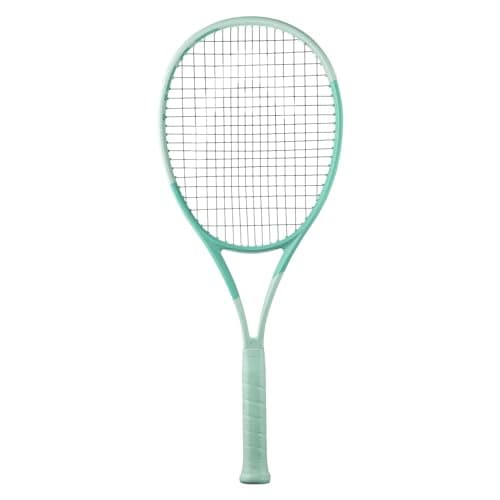
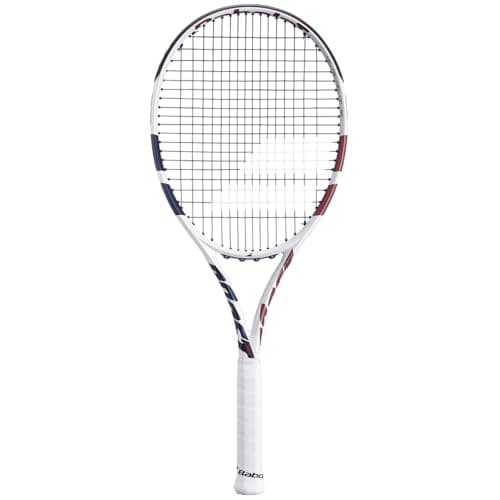
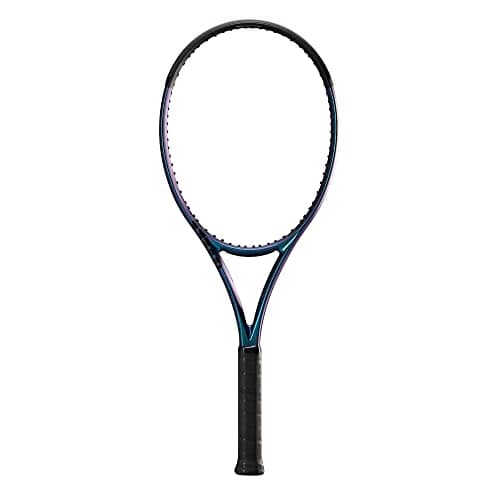
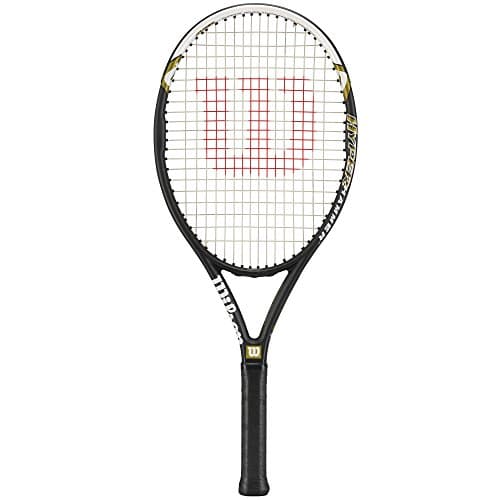
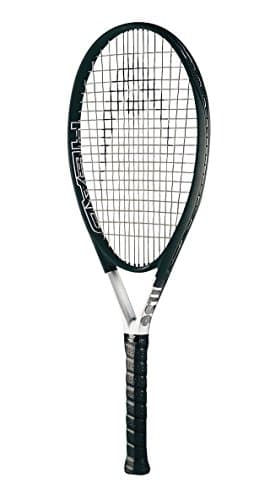
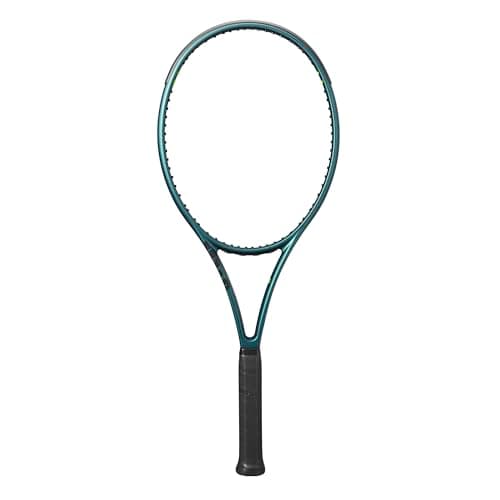
The best tennis racket for a woman playing club tennis is the Wilson Blade 100L v9: 10.4 oz strung, 100 sq in, 16x19 — a genuine control frame at a weight a developing swing can get round. For a first racquet, the Babolat Boost Drive; for the best value at 3.5–4.0, the HEAD Boom MP, which ships strung. If you have lost racquet-head speed or are coming back after a break, the Wilson Hyper Hammer 5.3 and the HEAD Ti S6 are the two frames that supply depth for you.
First, the thing the marketing will not tell you: there is no women's-specific racquet. No women's frame geometry, no women's head size, no women's string pattern. Manufacturers do not design one, and the frames marketed that way are simply the lighter end of an existing line in a different cosmetic.
So what are you actually shopping for?
Three real things, none of which is a women's label.
Weight, in the 9.5–10.5 oz strung band. This is the one that matters. A frame you cannot get round in a fast exchange will make you late on every ball, and the compensation is a shortened swing that then costs you depth. Average female club players are on average lighter and have less upper-body mass than average male club players, so the weight band that suits them skews lighter — that is a statistical tendency about bodies, not a design category.
Grip size, usually 4 1/8 to 4 3/8. Smaller hands need smaller grips, and this is the spec people get wrong most often. It is also measurable rather than guessable: the method is at tennis grip size. A grip that is too large is one of the recognized contributors to tennis elbow, and it is stocked less deeply at the small end, which is the practical reason the women's-marketed models exist at all.
A 100 sq in head and a 16x19 pattern, at almost every level below 4.5. That combination is forgiving on mishits and open enough to reward the topspin you are developing. The sizing logic is at how to choose tennis racket size.
If you are a strong 4.5 hitting a heavy ball, ignore all of the above and buy from the advanced list. Nothing about this page says a woman should play a lighter frame than her game wants.
The best tennis racket for women beginners
A real sub-question with its own measured demand, and the answer is different. A beginner frame has one job: make the ball go over the net and in, while your contact point is still random. That means oversize and light, and it means pre-strung, because paying for a stringing job on a first racquet is money spent on nothing.
The Babolat Boost Drive is the pick — a light frame from a serious racquet company, pre-strung, at a price that does not hurt if tennis does not stick. The HEAD Ti S6 is the alternative if you want maximum free depth: 115 sq in and 8.9 oz is a trampoline, and that is exactly right while you are learning, and exactly wrong a season later when you can swing properly. Full beginner ranking at best tennis rackets for beginners.
The upgrade most women make too early, and one they make too late
Too early: moving to a 98 sq in head because a coach plays one. A 98 rewards consistent contact and punishes everything else, and the move only pays once you are hitting the middle of the string bed nearly every time. Stay at 100 longer than you think.
Too late: getting off a beginner oversize. If you are now rallying consistently and your errors go long, the frame is actively working against you, and the adaptation — decelerating through contact to keep the ball in — is a technique habit you will later have to unlearn. That is the upgrade worth making the moment you notice it.
Weight is a training variable, not a fixed property
Worth saying because the lighter-frame advice can read as a ceiling. It is not. A heavier frame produces a heavier ball with less effort per unit of result, it is more stable against pace, and plenty of 4.0–4.5 women play 11 oz+ frames very happily. If a frame feels marginally too heavy, that is frequently a strength and conditioning question rather than a buying one.
The cheap experiment in the other direction: a few grams of lead tape at 3 and 9 on a frame you already like adds stability and plow-through for the price of a coffee. See training aids, where the tape lives.
The six frames, by published spec
| Racquet | Head | Strung weight | Pattern | Level |
|---|
| Wilson Blade 100L v9 | 100 sq in | 10.4 oz | 16x19 | 3.5–4.5 |
| HEAD Boom MP | 100 sq in | Ships strung | 16x19 | 3.5–4.0 |
| Babolat Boost Drive | 105 sq in | Light, pre-strung | 16x19 | 2.0–3.0 |
| Wilson Ultra 100UL v4 | 100 sq in | 9.5 oz unstrung | 16x19 | 3.0–3.5 |
| Wilson Hyper Hammer 5.3 | Oversize, head-heavy | Light | 16x20 | Seniors, returning players |
| HEAD Ti S6 | 115 sq in | 8.9 oz | 16x19 | 2.0–3.0 |
Every figure above is the manufacturer's or specialist retailer's published number. Where a listing publishes an unstrung weight rather than a strung one, the table says so — stringing typically adds about half an ounce, and comparing a strung figure against an unstrung one is how people end up with a frame two classes heavier than they wanted.
Which one, in one line each
You play league or regular social matches → Blade 100L v9. You want the best value and do not want to pay for stringing → Boom MP. This is your first racquet → Boost Drive. You want something very light that is still a performance frame → Ultra 100UL v4. You have lost racquet-head speed → Hyper Hammer 5.3. You want maximum free power for the least money → Ti S6.
Grip size, and the one adjustment that is free
Measure before you order. Hold the racquet in your dominant hand with an eastern forehand grip; you should be able to slide the index finger of your other hand into the gap between your fingertips and the base of your thumb. No gap means the grip is too small; no room for the finger means too large.
The asymmetry matters: a grip can be built up but it cannot be reduced. If you are between sizes, buy the smaller one and add an overgrip, which is a few dollars and takes two minutes. Buying the larger one and discovering it is too large means buying another racquet.
Should you buy the women's cosmetic version?
If it is the frame you want and the price is the same, there is no reason not to — it is the same racquet. Two things to check before you do: that the spec is identical rather than a lighter variant you did not intend to buy, and that the grip size you need is actually in stock in that cosmetic, since limited colorways are often stocked in fewer sizes.
What you should not do is pay a premium for it. A limited-edition cosmetic on an identical frame is a paint job, and the standard version is the same racquet for less.
What to buy alongside it
A frame is one of five purchases, and the other four are cheaper and matter more than people expect: court shoes on a women's last, a bag with a thermal compartment, a pack of overgrips, and a set of string chosen for your arm rather than your ambitions. The whole kit, in buying order, is at tennis gear for women.