Skip to content
Four Oh Club

Court footwear · Shoes

The Best Tennis Shoes for Clay Courts

Clay is the one surface where the outsole is not a durability question but a technique question. The wrong tread stops you sliding, and sliding is how clay is played.

By Stephen V.Updated How we score
#ad

We earn a commission when you buy through our Amazon links, at no extra cost to you. It never changes our rankings, and we say so when the cheaper racquet is the better buy. How this works.

The best clay-court tennis shoe is the ASICS Gel-Resolution X Clay — the same DYNAWALL support structure as the hard-court model on a clay-specific full herringbone outsole. But read the next section before you buy: most American club players who play clay occasionally do not need a second pair, and we would rather say so.

What clay actually requires

On a hard court the outsole has one job: grip, and survive. On clay it has two jobs that contradict each other. It has to grip enough for you to push off and change direction, and then releaseenough to let you slide into the shot and recover out of it. Sliding on clay is not a loss of control — it is the technique.

A full-coverage herringbone tread does both. The tight parallel ridges bite into the loose top layer when loaded across them and let go when loaded along them. The pattern is also self-clearing: clay packs into the channels and is pushed out as the shoe flexes, so grip does not fade over a match.

A hard-court outsole does neither. Its multi-directional tread with pivot points is designed to grip in every direction on a fixed surface. On clay it packs solid within a few games, becomes a smooth plate, and then skids unpredictably — which is worse than sliding deliberately, because you cannot time it.

Do you actually need clay shoes?

An honest answer, which is not the answer a shoe page usually gives.

If you play on clay or Har-Tru most weeks: yes. It is a genuine performance and safety difference and you will feel it immediately.

If you play clay a few times a year: no. Use your hard-court shoes, accept that they will skid more, and do not try to slide into shots the way a clay regular does. A second pair of shoes that sits in a cupboard for eleven months is worse value than almost anything else on this site.

If you split roughly evenly: buy the clay pair. The asymmetry is that a clay outsole wears out very quickly on hard courts, whereas a hard-court shoe on clay is merely suboptimal. One pair of each is the only workable answer, and the clay pair is the one you cannot substitute.

Support does not change on clay

One persistent myth worth killing: that clay's softer surface means you need less support. Clay courts are more forgiving of impact, which is a joint-loading question, and that is real. They are not more forgiving of lateral force. If anything, controlled sliding puts the ankle through a wider range of motion under load than a hard-court stop does.

The Gel-Resolution X Clay keeps the full DYNAWALL structure for exactly this reason. A clay shoe is a hard-court shoe with a different outsole, not a lighter shoe.

The short answer

Quick picks

#Racquet / gearBest forScorePrice
01
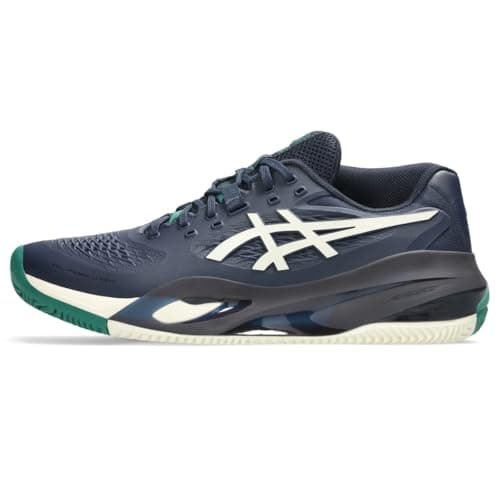
ASICS ASICS Gel-Resolution X Clay (Men's)
ASICS Gel-Resolution X Clay (Men's)

The clay-court version of the best support shoe in tennis — a full herringbone outsole that lets you slide on purpose and stop on command.

Clay and Har-Tru
7.8
$119.95Amazon
02
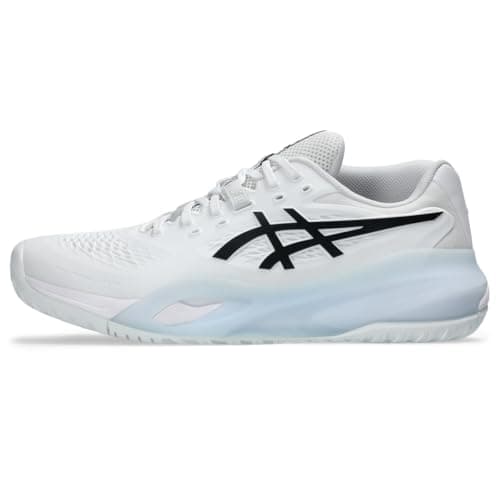
ASICS ASICS Gel-Resolution X (Men's)
ASICS Gel-Resolution X (Men's)

The most supportive tennis shoe sold, and the default answer to 'best tennis shoes'. If you slide, stop and change direction hard, buy these.

Hard-court baseliners
8.6
$139.95Amazon
03
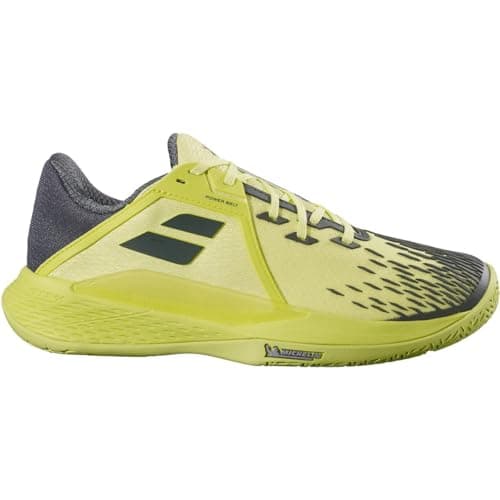
Babolat Babolat Propulse Fury 3 All Court (Men's)
Babolat Propulse Fury 3 All Court (Men's)

Babolat's stability shoe — the heavier, more supportive counterpart to the Jet Mach, with a Michelin outsole.

Stability with cushioning
8.4
$99.00Amazon
04
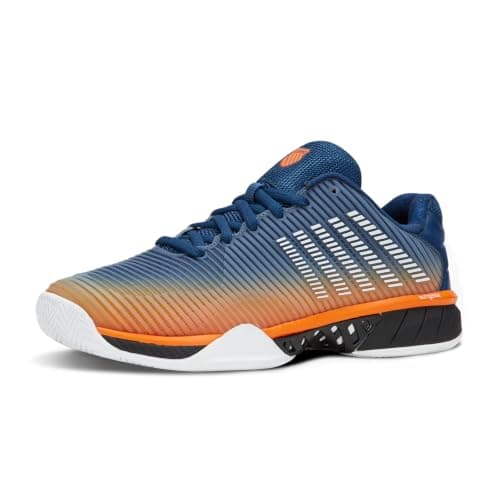
K-Swiss K-Swiss Hypercourt Express 2 (Men's)
K-Swiss Hypercourt Express 2 (Men's)

The comfort pick. K-Swiss builds the widest, most immediately wearable court shoe — no break-in, no hot spots.

Wide feet and comfort
8.4
$130.00Amazon

#ad · Live prices from the Amazon Product API, as of October 7, 2026. Where we have no verified live price, we show none — we would rather leave a gap than print a number that has rotted.

In detail

The picks, in full

01
ASICS ASICS Gel-Resolution X Clay (Men's)

Clay and Har-Tru

ASICS Gel-Resolution X Clay (Men's)

Full herringbone outsoleRe-engineered DYNAWALLClay-specific treadClay court
7.8/10

The clay-court version of the best support shoe in tennis — a full herringbone outsole that lets you slide on purpose and stop on command.

Stability
9
Cushioning
8
Durability
7
Comfort
8
Value
7

Pros

  • Tight full-coverage herringbone is the only tread pattern that both grips and releases on clay — a hard-court outsole just skids
  • The closed tread sheds clay instead of packing it, so grip does not fade through a match
  • Keeps the Gel-Resolution's DYNAWALL lateral support, so nothing is given up on stability

Cons

  • The soft clay compound wears down very fast if you use it on hard court
  • Limited US sizing — clay models are stocked thinly outside clay-heavy regions

Don't buy this if…

…you play mostly on hard courts and occasionally on clay. One pair of hard-court shoes is the better buy.

$119.95View on Amazon

Price as of October 7, 2026. Prices change — Amazon's is the one that counts.

#ad · we may earn a commission from this link to ASICS Gel-Resolution X Clay (Men's)

02
ASICS ASICS Gel-Resolution X (Men's)

Hard-court baseliners

ASICS Gel-Resolution X (Men's)

Full-length AHAR Plus outsoleRe-engineered DYNAWALLFlyteFoam Blast+ midsoleHard court
8.6/10

The most supportive tennis shoe sold, and the default answer to 'best tennis shoes'. If you slide, stop and change direction hard, buy these.

Stability
10
Cushioning
8
Durability
10
Comfort
7
Value
8

Pros

  • DYNAWALL midsole technology physically blocks the foot from rolling over the edge during a hard lateral stop — the single most important thing a tennis shoe does
  • Full-length AHAR Plus rubber in a multi-directional tread with pivot points — the hardest-wearing compound ASICS makes, and the reason specialist retailers are willing to put outsole durability guarantees on this model
  • The most widely worn shoe in club tennis, so sizing advice is easy to find

Cons

  • Heavy and stiff out of the box; it takes a few sessions to break in
  • The support structure means less ground feel than a speed shoe

Don't buy this if…

…you are a serve-and-volley player who wants a light, fast shoe. Look at the Court FF 3.

$139.95View on Amazon

$164.9515% off

Price as of October 7, 2026. Prices change — Amazon's is the one that counts.

#ad · we may earn a commission from this link to ASICS Gel-Resolution X (Men's)

03
Babolat Babolat Propulse Fury 3 All Court (Men's)

Stability with cushioning

Babolat Propulse Fury 3 All Court (Men's)

Michelin outsoleKompressor SystemPower Belt midfootAll court
8.4/10

Babolat's stability shoe — the heavier, more supportive counterpart to the Jet Mach, with a Michelin outsole.

Stability
9
Cushioning
9
Durability
8
Comfort
8
Value
8

Pros

  • Kompressor shock-absorption system under the forefoot is Babolat's most cushioned platform
  • Power Belt wraps the midfoot and genuinely reduces the sideways roll the Jet Mach allows
  • Michelin outsole again — grip and wear are both strong

Cons

  • Heavier than the Jet Mach, and you feel it on recovery steps
  • Babolat's fit runs narrow across the whole range

Don't buy this if…

…you have wide feet. Babolat is the narrowest major brand on court.

$99.00View on Amazon

$149.0034% off

Price as of October 7, 2026. Prices change — Amazon's is the one that counts.

#ad · we may earn a commission from this link to Babolat Propulse Fury 3 All Court (Men's)

04
K-Swiss K-Swiss Hypercourt Express 2 (Men's)

Wide feet and comfort

K-Swiss Hypercourt Express 2 (Men's)

Aösta 7.0 rubberDragGuard toeWide toe boxAll court
8.4/10

The comfort pick. K-Swiss builds the widest, most immediately wearable court shoe — no break-in, no hot spots.

Stability
8
Cushioning
8
Durability
8
Comfort
10
Value
8

Pros

  • The roomiest standard-width toe box of the men's shoes here, which is why it is our wide-foot recommendation
  • Comfortable from the first wear — effectively no break-in period
  • Aösta 7.0 outsole rubber is a genuine durability compound, not an entry-level one

Cons

  • That roomy fit means slightly more foot movement inside the shoe on hard cuts
  • Less lateral wall than the Gel-Resolution

Don't buy this if…

…you have narrow feet. You will swim in these and lose the stability you paid for.

$130.00View on Amazon

Price as of October 7, 2026. Prices change — Amazon's is the one that counts.

#ad · we may earn a commission from this link to K-Swiss Hypercourt Express 2 (Men's)

The options, honestly labelled

ShoeOutsoleClay verdict
ASICS Gel-Resolution X ClayClay-specific full herringbonePurpose-built; the right answer
ASICS Gel-Resolution X (hard)Full-length AHAR Plus, multi-directionalThe same shoe, wrong tread for clay
Babolat Propulse Fury 3 All CourtMichelin all-courtAll-court compromise; workable occasionally
K-Swiss Hypercourt Express 2Aösta 7.0, modified herringboneModified herringbone copes better than most

The second row is there deliberately. The honest comparison for most readers is not between four clay shoes — it is between buying a clay shoe and using the hard-court shoe they already own.

Har-Tru is not European red clay

Most American “clay” is Har-Tru: crushed basalt, greener, firmer and with a coarser top dressing than the crushed-brick red clay used in Europe. It plays faster, the slide is shorter, and it is less forgiving of a packed outsole.

Clay-specific shoes work on both. The practical difference is that Har-Tru is more abrasive, so a clay outsole lasts somewhat less long on it than it would on red clay — worth knowing when you are weighing whether the second pair pays for itself.

Clay-court shoe care

Three habits that double the life of a clay pair, and none of them cost anything.

Knock them out after every session. Clay left packed in the tread dries hard and stops the channels self-clearing next time. Tap the soles together before they go in the bag.

Never put them in a washing machine. It degrades the adhesive between outsole and midsole, which is the join that fails first on any court shoe.

Dry them out of the bag. A damp shoe sealed in a bag overnight is how uppers delaminate. A bag with a ventilated shoe compartment helps more than it sounds.

Socks and the clay reality

Clay gets inside everything. A higher-cuffed tennis sock keeps a meaningful amount of grit out of the shoe, and grit inside a shoe is abrasive against both your foot and the lining. It is a small thing that clay regulars do and visitors do not.

If you only take one thing

Do not buy a clay shoe to wear on hard courts. The softer compound and open tread wear away extremely fast on abrasive acrylic — weeks rather than months. It is the single most common way players waste money on clay shoes, and it is entirely avoidable.
How we picked

We have not physically tested this gear

Everyone in this category says they tested twenty racquets. We have not tested any — and we say so. What we did instead: compiled the manufacturer-published specifications (head size, strung weight, string pattern, stiffness, outsole compound), normalized them, and scored each product against a published rubric weighted for the NTRP tier this page serves. The scores are judgments from documented research, not measurements we took, because we do not have a lab and are not going to pretend we do.

Questions

Frequently asked

Do I need special shoes for clay courts?
If you play clay most weeks, yes — a full herringbone outsole grips and releases and sheds clay, which a hard-court tread cannot do. If you play clay a few times a year, your hard-court shoes are fine; just do not try to slide.
Can I wear clay court shoes on a hard court?
You can, briefly, and you should not. The softer compound and more open tread of a clay outsole wear away very quickly on abrasive hard-court acrylic — often in weeks. It is the fastest way to waste a good pair of shoes.
What is the difference between clay and hard court tennis shoes?
Almost entirely the outsole. A clay shoe uses a tight full-coverage herringbone that both grips and releases and self-clears packed clay; a hard-court shoe uses a durable multi-directional tread with pivot points. The upper and support structure are usually identical.

Keep reading

Receipts

Sources

We do not run a testing lab, and we do not pretend to. Our specs come from manufacturer listings and spec sheets; our rules and dimensions come from the official rulebook. Where we could not verify something, we say so on the page rather than quietly leaving it out. Read our full method.