For most club players the best polyester is a soft one, and the Solinco Hyper-G Soft 17 is the pick: a shaped co-polyester in the softer variant of the string that made Solinco's name, at a fraction of what the tour benchmark costs. That benchmark is Luxilon ALU Power, which is the string most of the ATP is strung with and the one everything else gets measured against. If spin is the whole point, the Babolat RPM Blast. If your arm is the reason you are reading this, the Yonex Poly Tour Pro. And if you have never hit a poly and want to find out cheaply, the Volkl Cyclone.
First, the honest framing, because polyester is the string most often sold to the wrong player. Published guidance is unambiguous about what the material is for: “Because of their firm make-up, polyester strings naturally are control-oriented” and “the spin potential is unmatched”. Shaped profiles “can help grip the ball for more spin”, and the strings “snap back into place reliably, and that can also help boost spin”. That is the case for poly, and it is a strong one.
The case against is in the same document and it is just as plain. Polyester is “quite firm feeling” and is “generally not a good choice for players who are struggling with arm problems”. It is recommended for “advanced players who have the full, fast swings” needed to make the stiffness pay, and players who do not break strings often may find other materials “a better option”. A second published source puts the central drawback even more bluntly: most polys lose tension and start to feel noticeably dull relatively quickly.
So before the ranking, the filter. If you do not break strings, do not play poly. Its two headline virtues — durability and control under a fast swing — are things you are paying for in comfort and will not collect. The poly versus multifilament page is the decision to make first; this page assumes you have made it.
The criteria this ranking uses
Five things separate one polyester from another. None of them is measured by us — we have no lab, and nothing below is a test result.
- Profile: shaped or round.A shaped string — square, hexagonal, octagonal, seven-sided — has edges that bite into the ball. Published guidance credits shaped profiles with helping “grip the ball for more spin”. Round polys are smoother, usually a little more comfortable, and give up some bite.
- Stiffness within the category.“Soft poly” is relative. A soft co-polyester is still firmer than almost any multifilament, so this is a ranking inside a narrow band, not a comfort claim against other materials.
- Tension maintenance. The thing polys are worst at and the reason a dead poly feels so bad. All of them lose tension; some hold on noticeably longer.
- Gauge.Thinner bites more and breaks sooner. 17g / 1.20–1.25 mm is the club standard here; the 16 versus 17 gauge page covers the trade properly.
- Set or reel. A reel is dramatically cheaper per restring and only makes sense above a certain frequency. The two reels on this page make that point by themselves.
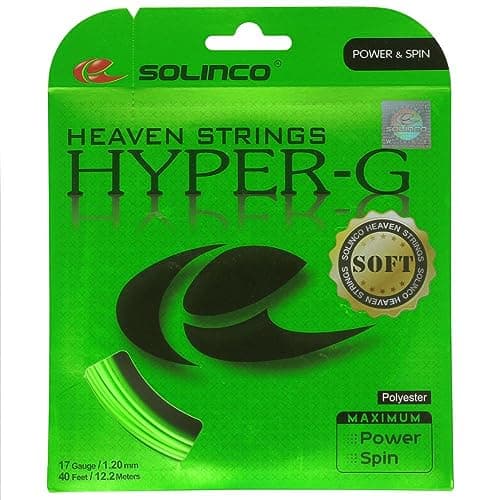
1. Solinco Hyper-G Soft 17 — the one most club players should buy
Hyper-G is a square-profile co-polyester and one of the genuine success stories of the last decade; the Soft version is the same string in a more forgiving formulation. The reason it leads this page is that it sits in the one place a 3.5 to 4.0 player actually wants to be: a shaped poly with real bite, in the softer half of the category, at a price that makes restringing on schedule realistic rather than aspirational.
Published commentary on the family is useful here precisely because it is not uniformly positive. Standard Hyper-G can feel “too firm in a full bed”, while the Soft variant is “easier on the arm than many firm, control-first polys”. That is the whole argument for buying this one rather than the original. It suits “players who swing aggressively and want the confidence to aim small”.
The honest con: soft co-polys generally trade some tension stability for the comfort, and a square profile wears its edges down, so the bite fades before the string breaks. You will feel this one go dull rather than snap.
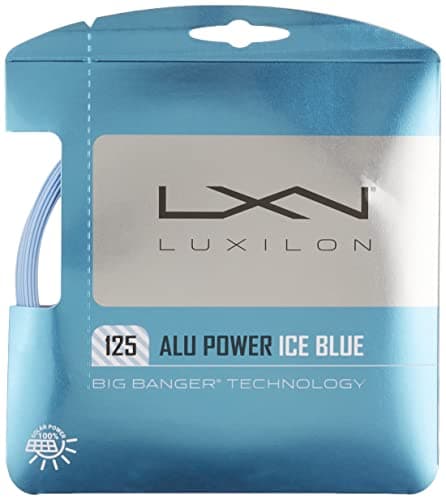
2. Luxilon ALU Power — the benchmark, and priced like it
Every poly on this page exists in relation to ALU Power. It is a co-polymer with aluminum fibers and a fluorocarbon resin at a 1.25 mm gauge, it is the string the professional game is largely strung with, and published commentary credits it with “a rare balance of spin, control, and durability” for “strong intermediate to advanced players”.
It is also the string that most clearly illustrates the material's weakness, because the same source that praises it notes it “will still lose tension more quickly over time”. ALU Power is not a string you fit and forget for a season. It is a string you fit, play at its best for a few weeks, and replace.
The honest con: it is one of the most expensive sets here and one of the firmest strings in club tennis. A 3.5 with a short swing will get the stiffness and none of the control payoff. Buy it because you have a fast, full swing, not because the pros use it.
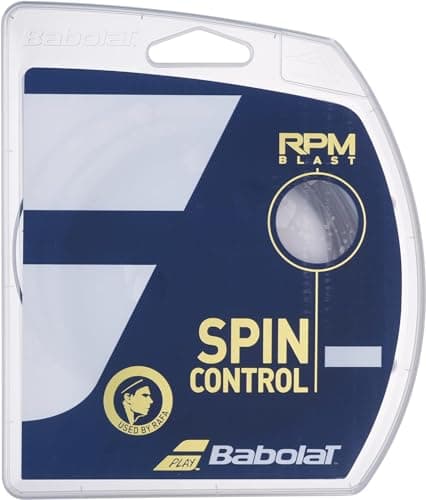
3. Babolat RPM Blast — the spin specialist
An octagonal co-polyester at 17g, and the string to buy if the reason you want poly is topspin rather than durability. Published commentary is direct about both halves of it: its “shaped profile and firm response reward fast swings with heavy rotation”, and it suits “aggressive baseline players who accelerate quickly through the ball”. In the same breath it is described as “not the most comfortable poly on this list”.
Both statements point the same way. RPM Blast is a specialist, and specialists are a poor general recommendation. If you brush up the back of the ball and your misses go long rather than into the net, this is the string that fixes the pattern.
The honest con:firm, and the comfort penalty is real. If you have had any elbow trouble at all, this is the wrong string on this page — go to the arm-friendly string ranking instead, and read it before you buy anything.
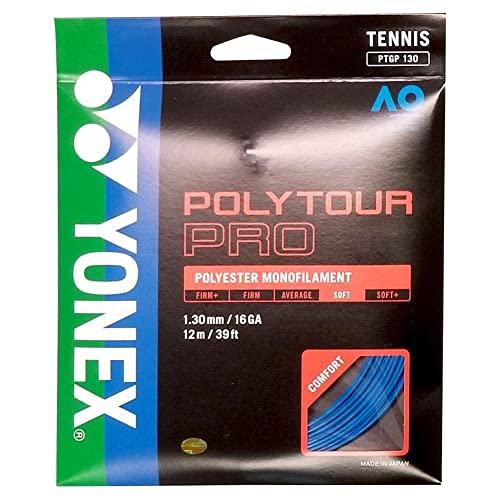
4. Yonex Poly Tour Pro — the comfortable poly
A silicone-infused co-polyester at 1.25 mm, and the answer to the most common real question about this material: “I want the control but my arm cannot take it.” Poly Tour Pro is built soft within the category rather than shaped for maximum bite, and it is the pick for a player stepping into polyester for the first time from a multifilament or a synthetic gut.
Be clear about the ceiling, though. A comfortable poly is comfortable for a poly. Published guidance still classifies the whole material as a poor choice for players with existing arm problems, and the published mitigation is not a softer poly but a hybrid — mixing polyester with “a softer multifilament or natural gut”. If your elbow is already sore, the hybrid route is the honest recommendation and this string is a good half of it.
The honest con: a smoother profile means less bite than the shaped strings above it, so a heavy topspin player will feel the spin drop.
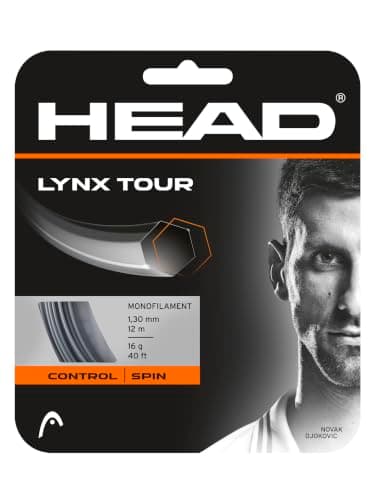
5. HEAD Lynx Tour 17 — for tension maintenance
A hexagonal co-polyester at 17g, and the pick for the player whose complaint is not comfort or spin but that their string bed goes dead too fast. Lynx Tour is the string on this page chosen specifically for holding tension, which is the single thing polyester as a category does worst.
That choice has a cost, and published commentary names it: Lynx Tour is “firmer than many other polys”. Tension stability and softness pull against each other, and this string sits on the stable side of that trade.
The honest con: it is one of the firmer options here. If you are choosing between this and the Hyper-G Soft on comfort, the Hyper-G Soft wins; if you are choosing on how the bed feels in week three, this one does.
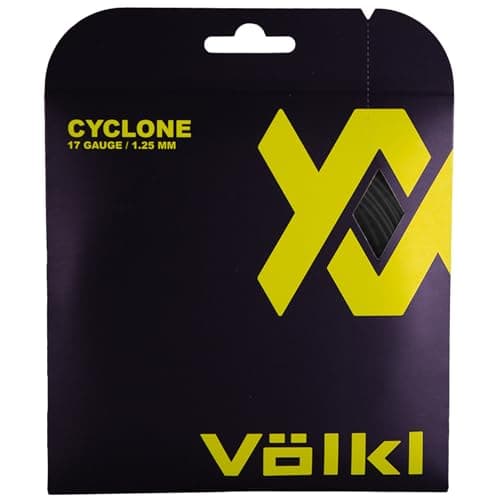
6. Volkl Cyclone 17 — the budget pick
A gear-shaped co-polyester at 17g, routinely the cheapest set on this page, and the right answer to “I have never hit a poly and I do not want to spend money finding out whether I like it”. Cyclone has been the standard cheap shaped poly for years and it is genuinely good, not merely tolerable.
There is a second, better reason to buy it: poly is the material where the cheap option is least penalized, because the thing you are paying extra for in a premium poly is tension maintenance and refinement — and a string you replace often does not need to hold tension for long. A cheap poly restrung on schedule outplays an expensive poly left in for a season. That is not an opinion about brands; it follows from the published fact that polys go dull quickly.
The honest con: it is a firm string without the softening work the premium options have had, and the shaped edges round off relatively quickly. Expect to replace it, which is the point.
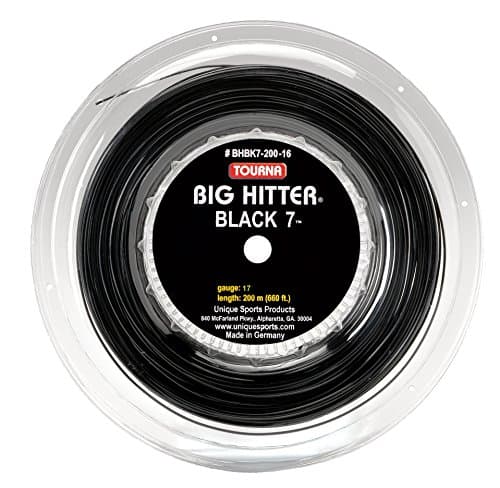
7. Tourna Big Hitter Black 7 — the reel, for string breakers
A seven-sided co-polyester at 17g, sold as a reel rather than a set. It is on this page for the player whose problem is arithmetic: if you saw through a string every three or four sessions, you are not buying a string, you are buying a subscription, and sets are the expensive way to do it.
Compare the live prices in the table above and the ratio does the arguing. A reel holds enough string for a long run of restrings; a set holds enough for one. Any player restringing monthly or more is better off on a reel, and seven edges is a lot of bite for a string bought this way. If you are not sure whether you qualify, the restringing-frequency guide has the published rule of thumb.
The honest con: a reel is a commitment to one string, and it only saves money if you actually get through it. Buy a set of something first, confirm you like it, then buy the reel.
The four things people search for, answered
The refinements behind this query are specific, so here is each one directly.
Best poly for control.Any of them, which is the honest answer — control is the defining property of the material, not a point of difference inside it. If you want the most of it, ALU Power is the benchmark and the firmest. The lever that matters more than brand is tension: poly “still plays well at low tensions” in a way other materials do not, so you can drop a few pounds for comfort without losing the control, which is the single best adjustment most players never make. The tension guide has the starting numbers.
Best poly for power. This is the question with the least satisfying answer: polyester is a low-power material by design and no poly is a power string. If you need power, you need a different material or a lower tension, not a different poly. The power string ranking covers the materials that actually do this.
Best poly for comfort.Yonex Poly Tour Pro, then the Solinco Hyper-G Soft. But the published mitigation for poly discomfort is a hybrid rather than a softer poly — polyester in the mains with a multifilament in the crosses keeps most of the control and takes the edge off.
Best poly for tension maintenance. HEAD Lynx Tour, by design. Set your expectations: no polyester holds tension the way natural gut does, and the published description of the whole category is that it goes dull relatively quickly.
How often to replace a polyester bed
This is where most club players lose the benefit they paid for. Polyester does not fail by breaking — it fails by going dead while still intact, and an intact dead poly is the stiffest, least comfortable string bed in tennis. The player who strings poly once a year and never breaks it has the worst of every world: no control, no comfort, and an arm taking the load.
We publish no interval here because the sources we trust publish none either — the honest rule is the one in the restringing guide: restring as many times a year as you play per week, and treat that as a floor rather than a target if you are on poly. If a bed feels dull, flat or weirdly powerful, it is done, whatever the calendar says.
One related check worth doing at the same time. If a racquet feels dead and a fresh poly bed does not fix it, the frame may be the problem rather than the string — the frame-replacement guide covers how to tell the two apart, and the order matters: strings first, always.
Gauge and tension, in two sentences each
Gauge.Most of the strings here are 17g / 1.20–1.25 mm, which is the club standard for a reason: thin enough for the shaped edges to bite, thick enough to last a few weeks in a 16x19 bed. Go to 16g if you break strings faster than you want to restring them, and accept a little less spin for it.
Tension.Start lower than you would with a multifilament. Poly is stiff, it plays fine at low tensions, and a few pounds down is the cheapest comfort you will ever buy. In a denser pattern — a 16x20 or 18x20 frame like the ones on the Blade alternatives page — drop further again, because a dense bed is already stiffer at the same tension.
Who should close this page
Three groups, stated plainly, because selling polyester to any of them is the most common bad recommendation in club tennis.
- Anyone with current elbow, wrist or shoulder pain.Published guidance says poly is “generally not a good choice” here. Start at the arm-friendly strings page.
- Anyone who has never broken a string. You are buying durability you do not need and paying for it in feel. Beginner strings and intermediate strings are honest about this.
- Anyone with a short, blocky swing. Poly rewards racquet-head speed. Without it you get the stiffness and none of the spin, which is the worst trade on offer.
If none of those is you — you break strings, you swing fast and your arm is fine — polyester is the right material and the list above is the order to consider it in. Start with the Hyper-G Soft, and only move up the price list when you can say what the cheap string was failing to do.