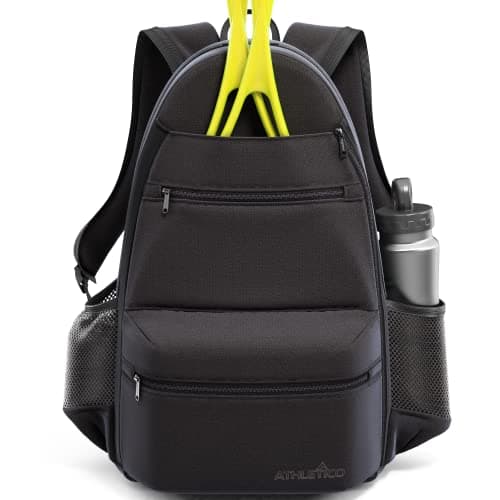
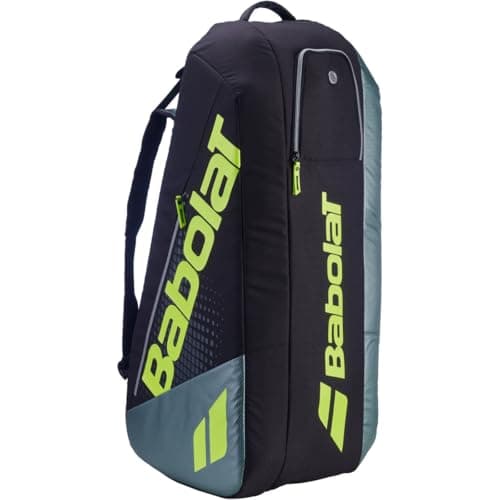
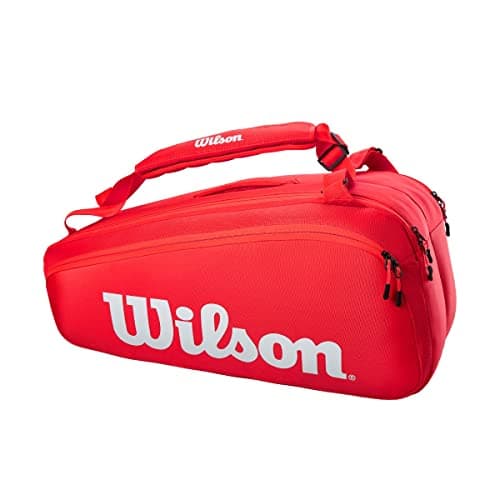
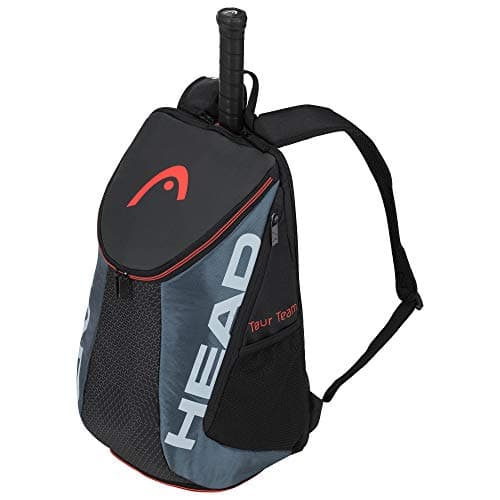
The best tennis bag for most women is the HEAD Tour Team backpack: two racquets, a shoe compartment, and a backpack carry that puts the load on both shoulders rather than across one. It is the shape that stays comfortable when it is full. If you want the lightest and cheapest, the Athletico Compact City. If you carry two frames strung identically for league matches, the Wilson Super Tour 9-Pack.
Say the obvious thing first: tennis bags are not built on a women's pattern. There is no women's-specific bag construction, and a bag sold in a pastel colorway is the same bag. What differs is carry comfort — and that is a real, physical, mostly-unmentioned difference that this page ranks on.
What actually changes for a smaller frame
Strap spacing on a backpack. The single biggest factor and almost never published. Backpack straps on tennis bags are set for a broad back; on narrower shoulders the same straps sit wide and slide outward, which puts the load on the outside of the shoulder rather than on top of it. A bag with adjustable sternum strapping or closer-set straps is meaningfully more comfortable, regardless of capacity.
Loaded weight, not empty weight. A nine-pack bag weighs little empty and a great deal with two frames, shoes, two liters of water and a towel in it. Empty weight is the number on the listing; loaded weight is the number you carry across a car park. If you walk or take transit to play, buy smaller than you think.
Where the mass sits. A long nine-pack carried on one shoulder puts the weight behind and beside you, which loads one side of the neck and back. Two straps and a shorter body keep the mass over your spine. This is why the ranking here leads with backpacks and ends with the big bag, which is the reverse of our general bags ranking.
The feature that justifies the money: thermal lining
Not a comfort feature — a performance one. Heat accelerates string tension loss substantially, and repeated heat cycling is worse than one hot afternoon. A racquet that lives in a car in summer plays measurably looser and more powerful week to week, and you will blame yourself for it.
A thermal-lined racquet compartment genuinely slows this down. It is the practical argument for buying a tennis bag rather than using a rucksack, and it is why the Babolat and Wilson bags here cost what they do. The mechanism is explained at how to choose tennis strings.
How many racquets do you actually carry?
Be honest about this before you buy capacity. One frame and you want a compact backpack; everything bigger is dead volume you carry around. Two frames — which is the right setup if you play league tennis, so a mid-match string break does not end your afternoon — and a six-pack or a two-racquet backpack is the sweet spot. Three or more, or you coach, or you carry a family's kit, and the nine-pack earns its size.
The common error is buying nine-pack capacity for a one-racquet life because it looks serious. The bag then lives half-empty, carries badly, and costs more.
The shoe compartment is not optional
A separate, ventilated shoe compartment is the difference between a bag you keep and a bag you replace. Court shoes come off a hard court covered in rubber dust and grit, and putting them in with your racquets and a towel means that dust ends up on your grip, which is exactly where you do not want it.
Four of the five bags here have one. The Athletico is the exception, and it is the compromise you accept for the price and the size.
On the men's and women's question in bags, it is worth saying plainly that for a racquet backpack there is no load-bearing difference — strap length and styling aside. The tennis backpacks page ranks the format for anyone, including the quilted option the frame makers do not offer, and the small bags page covers the flatter 2-3 racquet end of the range.
The five compared
| Bag | Carry | Racquets | Thermal | Shoe compartment |
|---|
| HEAD Tour Team Backpack | Backpack, two straps | 2 | No | Yes |
| Athletico Compact City | Backpack, two straps | 1–2 | No | No |
| Babolat Pure Aero (RH6) | Shoulder or backpack straps | 6 | Yes | Yes |
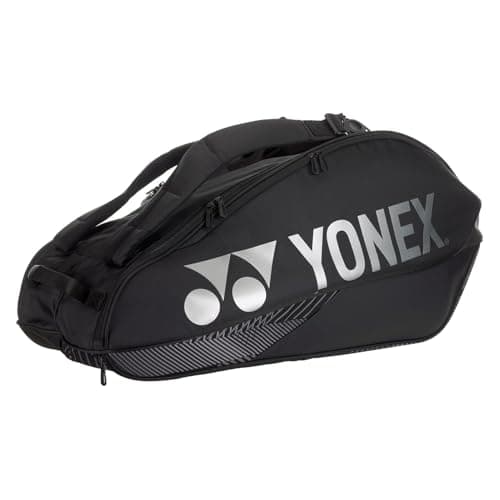
| Yonex Pro Racquet Bag 6 | Shoulder or backpack straps | 6 | Yes | Yes |
| Wilson Super Tour 9-Pack | Shoulder or backpack straps | 9 | Yes | Yes |
Note what is absent: strap spacing in centimeters. No manufacturer publishes it, so we rank on carry type— two straps versus one, and whether the body is short enough to sit over your spine rather than beside it — rather than inventing a measurement.
Which one, in one line each
You carry one or two frames and walk to the court → HEAD Tour Team backpack. You want the cheapest bag that is still a tennis bag → Athletico Compact City. You play league and leave the bag in a hot car → Babolat Pure Aero RH6 or Yonex Pro 6. You coach, or carry a family's kit → Wilson Super Tour 9-Pack.
A note on the December peak
This is a gift-season purchase — demand for it roughly doubles in December — and a bag is genuinely one of the two safe tennis gifts, because unlike shoes and racquets it does not depend on fit. The other safe gift is a multipack of overgrips.
If you are buying for someone else, the compact two-racquet backpack is the lowest-risk choice: it suits a one-frame player and a two-frame player, and it does not look oversized if they only ever carry one.
The rest of that decision — what else is safe to buy, grouped by price, and the one present never to choose for a tennis player — is in gifts for tennis players, with separate pages for her and him.
What a bag will not fix
Carrying a bag badly is mostly about load, not about the bag. Two liters of water is two kilos; a second pair of shoes is another. If the bag is uncomfortable, take the audit before you take the credit card — most club players carry things they have not used in months.
And if the issue is shoulder or neck pain rather than convenience, a backpack carry with both straps used properly fixes more of it than any bag upgrade. Single-shoulder carrying of a loaded nine-pack is the thing to stop doing.