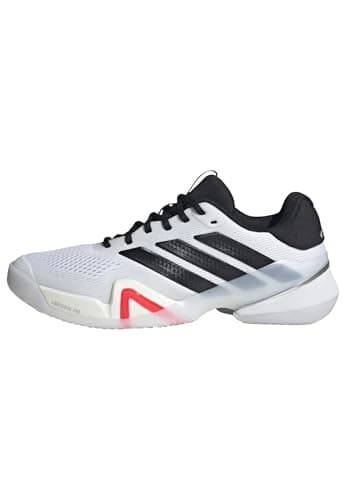
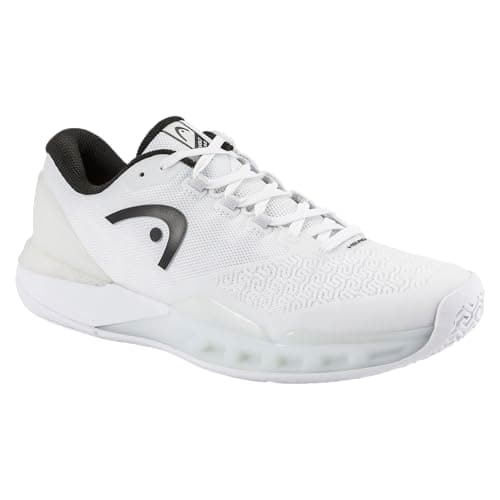
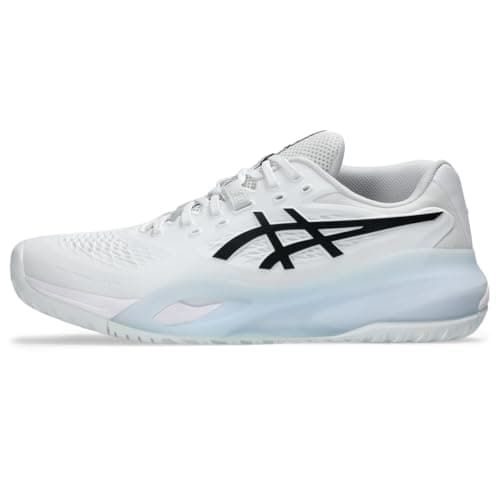
The longest lasting tennis shoe for most club players is the ASICS Gel-Resolution X, and the reason is boring: a full-length AHAR Plus rubber outsole, a heavily built upper, and a line that gets iterated rather than reinvented. If you specifically destroy toes on your serve, the adidas Barricade is the most armored shoe in tennis and the one with the longest durability reputation. If your pairs die from the upper blowing out at the side rather than the sole wearing flat, the New Balance FuelCell 996 v6 in the correct width is the fix, because that failure is almost always a fit problem wearing a durability costume.
This page is for the player who buys for life. The search runs under half a dozen wordings — longest lasting tennis shoes, long lasting tennis shoes, what is the most durable tennis shoe, best quality tennis shoes, high quality tennis shoes — and underneath all of them is one buyer: somebody who has already wrecked a pair faster than they expected and does not want to do it again.
As everywhere on this site: these are tennis court shoes, with court outsoles and lateral support. "High quality tennis shoes" in the everyday-sneaker sense is a different product and not what any of this applies to.
What actually wears out, in order
Durability is not one property. Four separate things fail, usually in this order, and the shoe that solves your failure is the durable one for you.
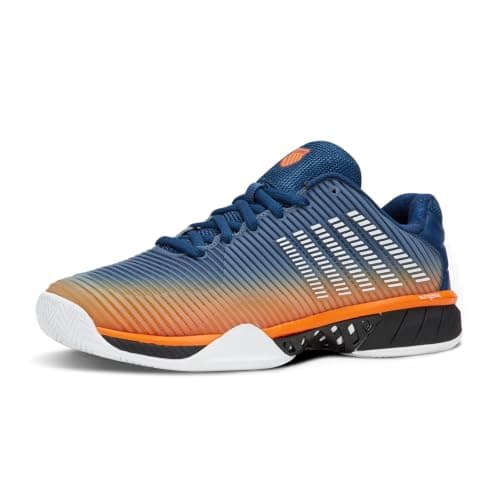
1. The toe, from the serve drag. A slice or kick server drags the toe of the back foot across the court on nearly every serve. On a shoe without a drag guard that is a hole in the mesh inside a season. Court shoes armor it specifically — adidas publishes an Adituff toe drag guard on the Barricade, K-Swiss a DragGuard toe on the Hypercourt — and if this is how your shoes die, it is the only spec that matters to you.
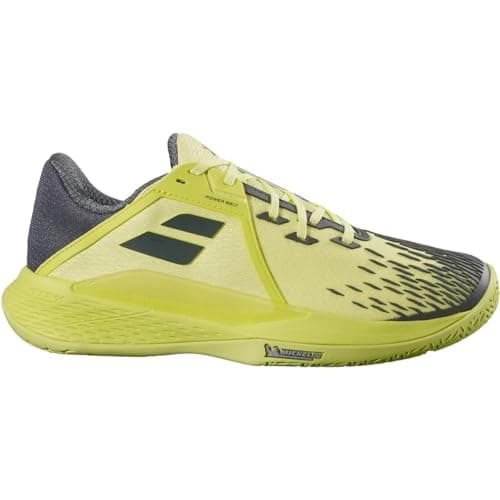
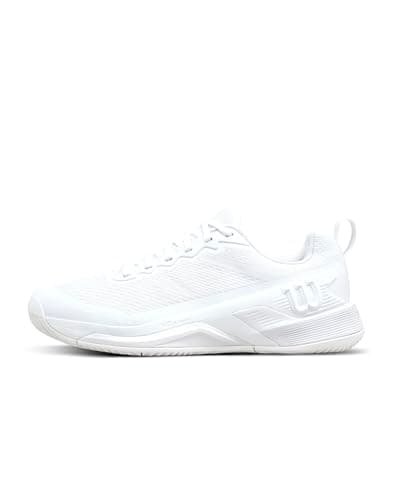
2. The outsole under the ball of the foot and the outside edge. This is where the pivot happens, and an abrasive outdoor hard court takes rubber off it steadily. What helps: a dense abrasion-rated compound and full-length coverage. ASICS publishes a full-length AHAR Plus rubber outsole on the Gel-Resolution X, adidas an Adiwear outsole on the Barricade, New Balance an NDurance outsole on the 996, Wilson a Duralast outsole on the Rush Pro, Babolat a Michelin outsole on the Propulse Fury. A shoe with a cut-out midfoot has nothing there to wear, which sounds efficient until you slide through it.
3. The lateral wall and the upper above it. The upper shears sideways off the midsole when you load the shoe hard. A stiffened structure resists it — ASICS publishes a re-engineered DYNAWALL on the Gel-Resolution X, adidas a Torsion System on the Barricade, Wilson a 4D Support Chassis on the Rush Pro, New Balance PROBANK stability on its women's 796. When the upper tears at the pinky-toe side instead, that is a width problem, not a durability one.
4. The midsole, silently. Foam compresses and stops returning energy long before it looks worn. This is the failure nobody notices: the shoe still has tread and feels dead, and your knees find out first.
The durability guarantee worth knowing about
There is one more piece of information that genuinely belongs on a page like this, and it comes with a caveat we are going to state plainly. The specialist retailer Tennis Warehouse attaches a six-month outsole durability guarantee to the ASICS Gel-Resolution X. That guarantee is the retailer's, not ASICS'. It is not a manufacturer warranty, it does not travel with the shoe when you buy it somewhere else, and it covers the outsole rather than the upper.
We mention it anyway because it tells you something real: a retailer that sees every warranty claim in club tennis is willing to underwrite that particular outsole for six months. That is an informed commercial judgment about outsole life, which is more than most durability marketing amounts to. If you buy from a retailer that offers it, it is worth having. If you buy the shoe elsewhere, you still get the same outsole.
Why the most durable shoe is almost always the heaviest
There is no free lunch in this category. Outsole life comes from dense rubber, and dense rubber weighs more. Lateral durability comes from structure, and structure weighs more. The shoes at the top of this page are the heavy ones, and the lightest court shoes — the Babolat Jet Mach, the ASICS Court FF — trade exactly that away. They are not badly made. They are built for a player who moves more than they grind.
So the honest version of the durability question is: how much weight will you carry to stop replacing shoes twice a season? If the answer is "as much as it takes," the Barricade. If the answer is "some, but I still want to feel quick," the Gel-Resolution X is the compromise the whole category is built around, and the Wilson Rush Pro 4.5 does a similar job for less money.
Three things that extend any pair
Rotate two pairs. Midsole foam recovers between sessions. Two pairs alternated last noticeably longer than one pair played into the ground, and they cost the same.
Match the outsole to the surface. A hard-court tread on clay packs with grit and stops clearing; a clay herringbone on a hard court abrades fast. Both are avoidable. See clay court shoes and hard court shoes.
Buy the right width. Most "this shoe fell apart" stories are a narrow shoe losing a fight with a wide foot at the forefoot seam. Fix that first in court shoes for wide feet, and fit them in the socks you play in.
One more honest qualification before the picks. We have not worn any of these shoes through to failure — nobody publishes a court-shoe wear test, including us. The ranking below is built from the published outsole compounds, the published structural components and the construction weight of each shoe, scored against our rubric. It is a judgment from documented specifications, which is what durability information in this category actually is.
Durability is half the question; knowing when a pair is done is the other half, and most club players get it wrong by judging the tread. How long tennis shoes last sets out what wears out first — midsole foam, then lateral structure, then the toe, then the outsole — with a four-point test you can run on a table in ten seconds.
Two of the shoes above share an outsole compound and not much else. If your shortlist has come down to the ASICS pair, Gel-Resolution vs Court FF compares them on published weight, support structure and outsole construction — and is clear that the six-month outsole guarantee on one of them is the retailer's rather than ASICS'.