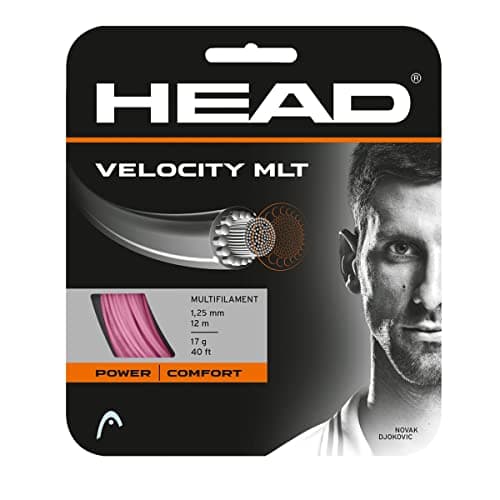
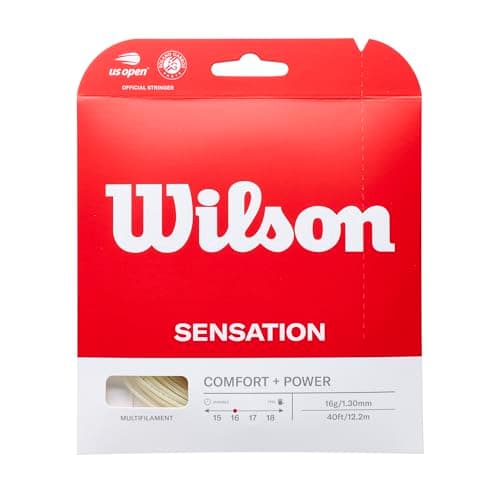
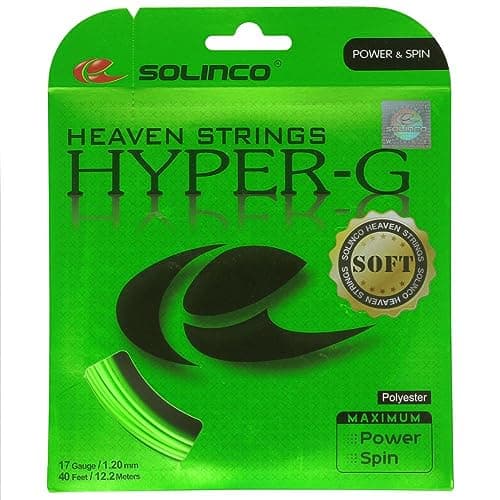
Start in the middle of your racquet's published range. Higher tension gives control and less power; lower tension gives power, comfort and a little more spin. Polyester should be strung two to four pounds lower than a multifilament in the same frame.
What tension actually changes
A string bed is a trampoline. The tighter it is, the less it deforms on impact, and the less energy it returns to the ball.
Higher tension→ less power, flatter launch angle, more predictable depth, more perceived control. Also: a stiffer bed, more shock to the arm, and faster string breakage.
Lower tension→ more power, higher launch angle, more comfort, and generally a bit more spin, because looser mains slide and snap back more freely. Also: less depth control, and the ball can feel like it is leaving before you meant it to.
The old advice — “string tight for control” — is largely a pre-polyester idea. With a modern poly, most players are better served lower than they think.
The tension chart
| Goal | Where to sit in the published range | Typical |
|---|
| Maximum control | Upper third | 54–58 lb (multi), 50–54 lb (poly) |
| Balanced default | Middle | 50–54 lb (multi), 46–50 lb (poly) |
| Power and comfort | Lower third | 46–50 lb (multi), 42–46 lb (poly) |
| Arm trouble | Bottom of range | As low as the frame allows |
These are starting points, not prescriptions. The published range is printed on the frame, usually inside the throat — a modern Pure Drive, for instance, lists 46–55 lb. Always work inside your own frame's range; stringing outside it risks the frame and voids warranties.
Why polyester needs less
Because tension is not the same as stiffness, and the two get confused constantly.
Polyester is an inherently stiff material. At the same tension as a multifilament, the poly bed deforms far less and feels much tighter. So stringing poly at “your usual 55” produces a bed that is effectively far tighter than the multifilament 55 you were used to — which is harsh, low-powered, and hard on the arm.
Two to four pounds lower is the standard correction. Many 4.0+ players using a shaped poly go lower still, into the low forties, and find they get more spin and more comfort without losing control.
How to find your number
Methodically, and one variable at a time. This takes three restrings and it is worth it.
Restring 1: the middle of the published range, in the string you intend to keep using. Play four or five sessions. Note whether your errors are mostly long or mostly short.
Restring 2: if errors were long, go up two pounds. If short, go down two. Play another four or five sessions.
Restring 3: adjust again by two pounds in the direction that helped, or stop if restring 2 felt right.
Two pounds is roughly the smallest change most players can reliably detect. Changing by five at once tells you only that something changed.
Tension loss is immediate and unavoidable
A freshly strung racquet starts losing tension the moment it comes off the machine. Most of the drop happens in the first 24–48 hours, and polyester loses more and faster than any other material.
Two practical consequences. First, a racquet strung the night before a match plays differently from one strung a week before — string two or three days ahead if you want consistency. Second, “my strings feel dead” usually means tension loss rather than visible wear, which is why you should restring on a schedule rather than waiting for a break.
Temperature changes tension too
Strings contract in the cold and loosen in heat. A racquet that lived in a car boot through a hot afternoon plays noticeably looser and more powerful than the same frame in a cool clubhouse; the same frame on a cold morning plays tighter and harsher.
This is the practical argument for a bag with a thermal-lined racquet compartment — see best tennis bags. It is also why your racquet sometimes feels wrong for reasons that have nothing to do with you.
Hybrid tensions
If you string a hybrid, the mains and crosses are usually not strung at the same number. The convention is to string the polyester mains two pounds lowerthan the multifilament crosses, which compensates for poly's greater stiffness and keeps the bed feeling even.
Any competent stringer will know this. If you are asked for a single number for a hybrid, give the cross tension and say “mains two pounds lower”.
What tension will not fix
Tension is a fine adjustment, not a transformation. If you are hitting every ball long by six feet, the problem is not two pounds of tension — it is the frame, the string type, or your swing. Tension moves the needle; it does not move the dial.
Get the string type right first (see poly vs multifilament), then tune tension within it. Doing it the other way round means chasing a number that was never going to solve the problem.