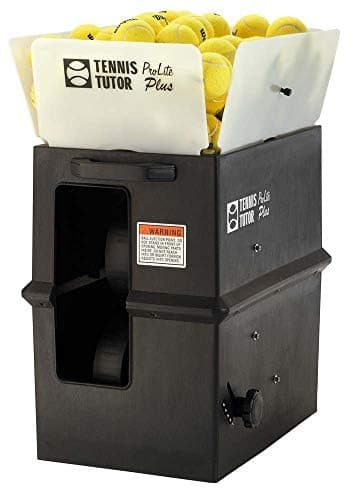
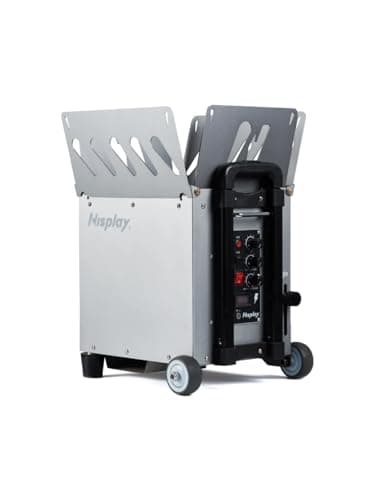
The Slinger Bag is the right buy for one specific player: a beginner or improver who wants one object that is both their kit bag and their ball feeder, and who will never need a ball above 45 mph. Its published specs are 33 lb (15 kg), up to 144 balls, a launch speed range of 10-45 mph (16-73 km/h), a variable 2-7 second feed interval, elevation adjustable from 10 to 40 degrees, a lithium battery rated up to 3.5 hours and a 12-month limited warranty. The ceiling is the problem: 45 mph is below a 3.5 player's rally ball, so if you are already a competent club player, a conventional machine like the Nisplay or the Tennis Tutor ProLite Plus is the better purchase.
The ground rules, as on every review here. We have not owned or used a Slinger Bag. Every figure above comes from the published retailer specification cited at the foot of this page. And Slinger is not sold on Amazon — our 2026-10-13 catalog check returned no listing — so there is no live price for it on this page. This site's prices come from a feed that expires after 48 hours; rather than print a number we cannot verify today, we will tell you to check with a specialist dealer. The machines with prices below are the Amazon-sold alternatives.
What the format gets right
It is one object instead of three. A conventional setup is a machine, a hopper and a bag. The Slinger is a wheeled tennis bag with the launcher built into it, at published dimensions of 14 x 18 x 34 inches. One thing to put in the car, one thing to wheel onto the court. For the player whose actual obstacle to practice is logistics — and that is most players — collapsing three objects into one is a bigger deal than any feature on a spec sheet.
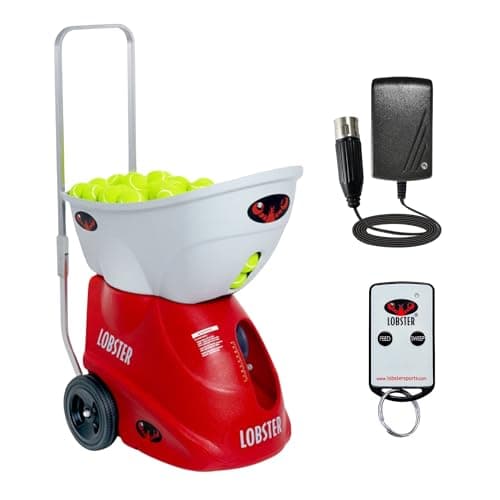
144 balls is a lot. That is the largest published capacity of anything on this site, ahead of the Lobster Elite Two's 150-ball figure only slightly but well ahead of the 80-100 of the portable machines. More balls means less collecting, and collecting is what kills solo sessions.
Wheels, and 33 lb. 33 lb is not light in absolute terms — the Nisplay publishes 26 lb and the TENNIIX 18.7 lb — but a wheeled bag you pull is a different proposition from a 33 lb box you carry. On smooth paths this is the easiest-moving thing in the category.
The feed and elevation adjustments are real. A 2-7 second interval covers everything from a gentle rally rhythm to a brutal conditioning drill, and 10 to 40 degrees of elevation means you can feed a flat drive or a high looping ball. Those two controls, used together, are most of what a drill needs.
What it gives up, and this is the important part
The top speed is 45 mph. This is the number that decides whether the Slinger is right for you, and most reviews bury it. 45 mph (73 km/h) is a slow ball. A 3.5 club player's rally ball is comfortably faster; a 4.0 first serve is roughly double it. Against a 45 mph feed you will groove a stroke, learn a contact point and get a workout — all genuinely useful — but you will not practice handling pace, because there is no pace to handle. By contrast the Nisplay publishes 68 mph and the Tennis Tutor ProLite Plus 75 mph.
Oscillation is a separate accessory. The launcher itself does not oscillate; it sits on an oscillator plate which is included in the Grand Slam packs and sold separately otherwise. So the entry-level configuration feeds to one spot. A one-spot feeder has its uses, but it is not what most people picture when they imagine owning a ball machine, and the version that moves you costs more than the version advertised.
Spin control is limited. The published controls are speed, feed frequency and elevation. There is no published topspin/backspin selection of the kind the dual-motor machines offer. Elevation changes trajectory, which is not the same thing as spin: a high slow ball without topspin sits up and dies, where a real topspin ball drives forward and climbs.
No balls included, and 144 of them is a real additional cost. Budget for a couple of bags of pressureless practice balls.
Who should buy it, honestly
A beginner or a returning player. If you are learning, 45 mph is not a limitation — it is roughly the right speed. The all-in-one format means you will actually take it to the court, and the 144-ball capacity means a session is hitting rather than gathering. For this buyer the Slinger is genuinely the best-designed thing in the category.
A parent or a coach feeding juniors. Slow, adjustable, high-capacity and wheeled is a good description of what junior group coaching needs.
A player who will only ever practice at one venue they can wheel to. Wheels are a superpower on a path and a liability on grass or gravel.
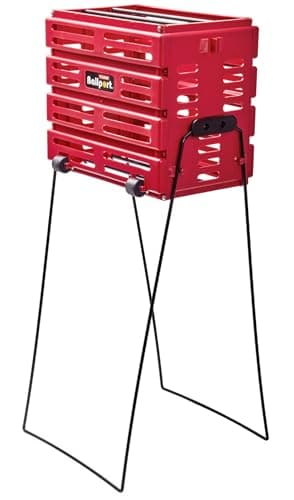
Not a 3.5+ player who wants to practice against real pace. The budget machines feed faster and with spin for comparable money, and the advanced machines are a different tool entirely. And if what you really want is 144 balls somewhere convenient rather than a powered feed at all, a large wheeled hopper costs a tiny fraction of this and is the honest alternative nobody selling a machine will mention.
One last practical note on the warranty: the published figure is a limited 12-month warranty from delivery. That is standard for the category and shorter than you might want on a powered device you will wheel over curbs.