Yes. The TSA's own "What Can I Bring?" entry for tennis rackets says Carry On Bags: Yes, and Checked Bags: Yes. It is not a prohibited item and it is not a sporting-goods exception like a baseball bat or a lacrosse stick, both of which are checked-only. The TSA adds its standing caveat that "the final decision rests with the TSA officer on whether an item is allowed through the checkpoint," which is true of everything, including your shoes.
The confusion in this question comes from conflating two completely separate rules, and once you separate them the whole thing becomes simple:
Security (TSA) decides what is allowed. A tennis racket is allowed, in the cabin or the hold.
The airline decides what fits. Your racket bag has to meet their cabin baggage size limit or it goes in the hold, and that has nothing to do with it being a racket.
So the practical question is not whether you can bring a tennis racket as a carry on. It is whether the bag your rackets are in counts as a cabin bag.
The airline rule is a size rule, and that is the whole problem
A standard adult racket is 27 inches long. Cabin bag allowances vary by airline and by fare, and they change often enough that we are not going to publish a table of dimensions that would be wrong within a season — check your specific airline for the trip you are taking.
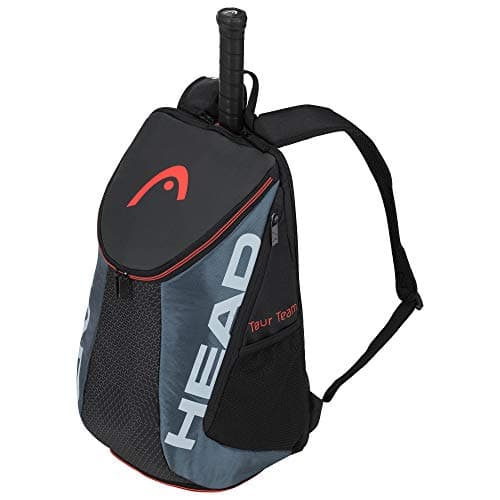
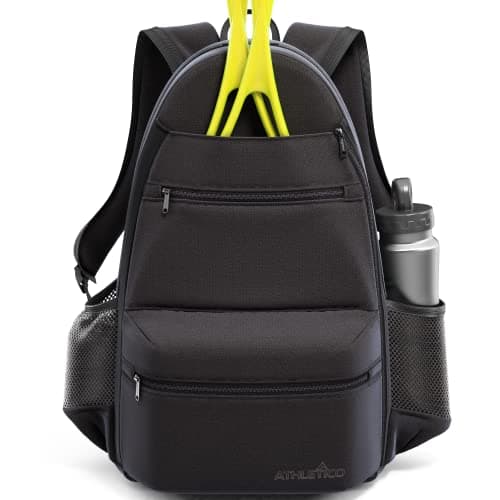
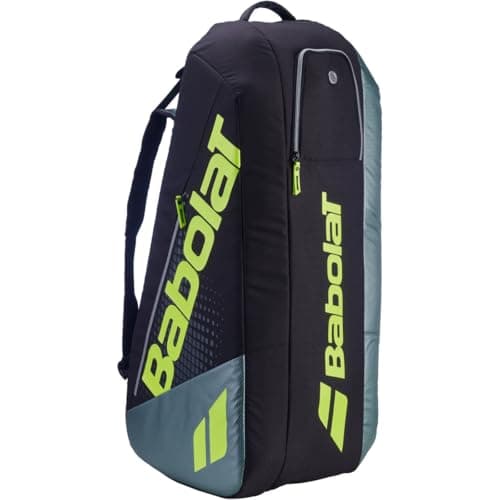
What does not change is the geometry. A two-racquet tennis backpack is roughly the shape and volume of an ordinary daypack, which is why it goes in an overhead bin or under a seat without a conversation. A six-racquet thermal bag is a long, wide, soft duffel that does not fit under anything, and a nine or twelve-racquet bag is unambiguously checked luggage. Shape is the variable you control.
Two further things worth knowing. Some airlines treat a racket bag as sports equipment with its own fee schedule when checked, which can be better or worse than a standard checked bag depending on the carrier — worth two minutes of reading before you pay. And a racket bag used as your personal item plus a roller counts as two cabin items on most carriers, so if you are flying a basic-economy fare with one bag included, the racket bag needs to be that bag.
How to pack frames so they survive the trip
Carry them on if you can. Not for security reasons — for handling ones. A frame in the hold is a frame being thrown, and a cracked graphite frame is not repairable. If the rackets matter to you, they go in the cabin.
Loosen nothing, and do not restring before you fly. Cargo holds are pressurized and the pressure change is not what damages strings; temperature is. A hold can get genuinely cold, and a thermal-lined compartment is the feature that exists for this. If you have a choice, string at your destination rather than the day before you fly — strings lose about 10 percent of tension in the first 24 hours anyway (see how often to restring).
Protect the head and the throat. Those are where frames break. Pack shoes and clothing around the head of the racquet rather than against the handle, and if two frames are going in together, put them head-to-tail so the heads are not stacked.
Take the dampener out and check your grip. Small point: a vibration dampener can pop out in transit and get lost, and a fresh overgrip takes thirty seconds to apply at home and ten awkward minutes in a hotel room.
Balls are fine, and so is a can. A pressurized can of tennis balls is not a prohibited item. It is also cheap to buy at your destination and heavy to carry, so buy there.
Which bag to travel with
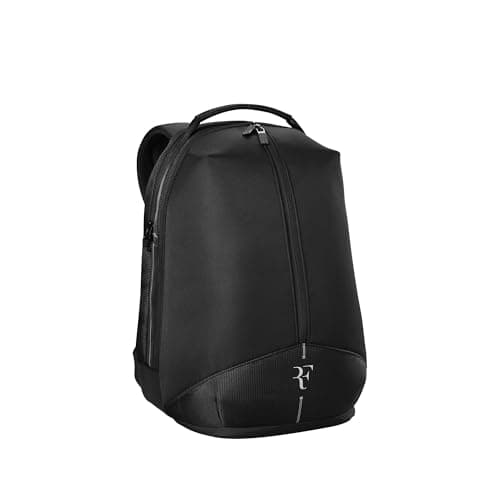
The picks below are chosen for travel specifically, which is a different brief from a league bag. A two-racquet backpack is the answer in almost every case: it holds two frames, shoes and kit, it fits a bin, and it leaves both hands free in a terminal.
If you want the longer version of this — which bags work as carry-on, what to look for in a thermal compartment, and the six-pack that travels best when you genuinely need six frames — that is the best tennis bags for travel. The general rankings are the best tennis bags, men's and women's.
International flights, and other racket sports
The TSA rule is a US rule. Security authorities in other countries publish their own prohibited-item lists, and tennis rackets are not on the restricted lists of the major ones — but if you are flying out of an airport outside the US, check that country's aviation security authority rather than assuming the TSA page applies. The airline size rule travels with you either way.
For comparison, since this comes up: the TSA lists lacrosse sticks as checked-only, while tennis rackets are allowed in both. Length and whether an item reads as a club is the distinction, and a racket's open head is why it lands on the permissive side.