Skip to content
Four Oh Club

Know your level · Guides

A Tennis Beginner's Guide

Three things to buy, three things to learn, and one rule about how fast to spend money. Everything else can wait until you know whether you like this.

By Stephen V.Updated How we score
#ad

We earn a commission when you buy through our Amazon links, at no extra cost to you. It never changes our rankings, and we say so when the cheaper racquet is the better buy. How this works.

Start with shoes, not a racquet. A pair of real court shoes is the single purchase that changes whether you can play safely, and the racquet barely matters for your first three months — any oversized, light, pre-strung frame will do. Buy court shoes, a cheap oversize racquet and a can of balls, take two or three group lessons rather than one private lesson, and learn the Continental grip and the split step before you spend another dollar. The most common beginner mistake is not buying the wrong racquet; it is buying a good racquet and playing in running shoes.

Four questions bring people to a page like this — a beginners guide, how to start learning tennis, how to learn tennis by yourself, and how to train for tennis. They get answered in that order below, because the answers build on each other.

Step 1: the three things to buy, in this order

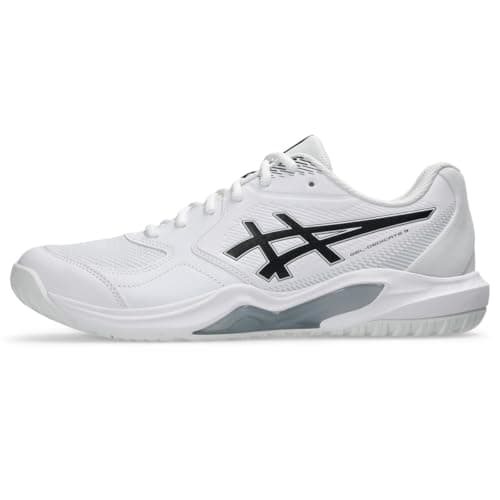
1. Court shoes. This is not a preference. Podiatry guidance on court sports states that "wearing running shoes for tennis significantly increases lateral ankle sprain risk because running shoes are designed for forward motion, not the lateral cuts that tennis requires constantly," and credits tennis shoes with "reinforced lateral walls, extra durability at the toe drag area, and appropriate lateral stability." A beginner moves badly, lands awkwardly and is on the court for the first time — which is exactly when a lateral wall earns its money. The ASICS Gel-Dedicate 9 is the entry pick and it is the clearest upgrade a beginner can make.

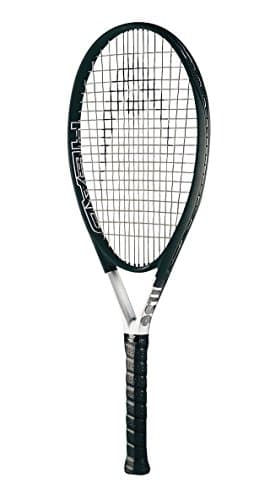
2. A cheap, light, oversize racquet. A bigger head means a bigger sweet spot, which means more balls going over the net in month one, which means you keep playing. A lighter frame means your arm survives learning. The HEAD Ti S6 at 115 square inches and 8.9 oz strung is the archetype of this — and you will outgrow it, which is fine, because by then you will know what you want. Do not buy a $250 player's frame as a first racquet; an 11.5 oz control frame punishes exactly the mistakes a beginner makes.

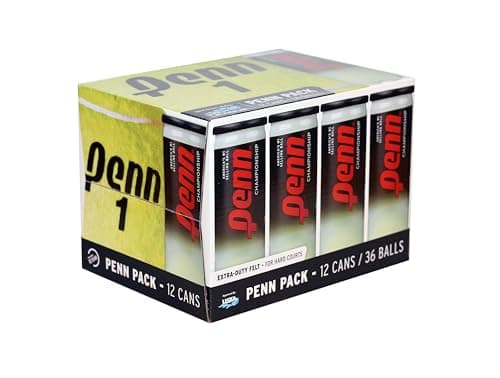
3. A can of balls. Any pressurized club ball. Penn Championship is the US default and extra duty is the right felt for the hard courts you will learn on. That is the whole decision.

What you do not need yet: a six-racquet thermal bag, a second racquet, a ball machine, an overgrip collection, a dampener, or any string that costs more than the restring labor. All of it comes later and most of it never matters. What tennis gear actually costs has the full budget, and the gear checklist is what ends up in the bag eventually.

Step 2: how to start learning tennis

Take group lessons, not private ones, at first. A beginner group clinic is cheaper per hour, gives you people to hit with, and — the part nobody mentions — a private coach feeding you perfect balls teaches you to hit perfect balls. Playing with other beginners teaches you to deal with the ball you actually get. Most clubs and public programs run adult beginner clinics; that is the single highest-value thing in this guide.

Learn the Continental grip early. Tennis.com's grip guide describes Continental as having "the V created by your thumb and forefinger on top of the handle," and it is the grip for serves, volleys and slices. It is also the one beginners avoid, because it feels bad on a forehand. For the forehand itself the same guide says the Eastern grip — one bevel clockwise from Continental, the "shake hands with the racquet" grip — is "generally considered the easiest grip for learning the forehand." Those two grips cover your first season. How to grip a tennis racket is the full page.

Learn the split step before you learn a backhand. A small hop so you land as your opponent strikes the ball. It is the single piece of footwork that separates people who look like they play tennis from people who are chasing the ball, and nobody teaches it early enough.

Rally, do not play points. For your first month, the goal of a session is the longest rally you can manage, not winning. Points teach you to end rallies, which is the opposite of what you need when you cannot sustain one yet.

Step 3: how to learn tennis by yourself

You can get genuinely good at three things alone, and they are three of the most valuable things in the game.

Serve. The only stroke that needs no opponent. A basket of balls and an empty court beats any lesson for serve repetitions, and the serve is the stroke that most limits beginner tennis.

Wall work. A backboard or any flat wall gives you more contacts per hour than a court session with a partner. It is the cheapest practice in tennis and it builds the thing beginners lack most: consistent contact.

Shadow swings and footwork. No ball, no court, five minutes in a garage. It feels foolish and it works, because the swing path you groove without a ball is the one that shows up with one.

How to practice tennis alone is the full page on this, including when a ball machine starts making sense (later than you think) and what a training aid can and cannot do.

Step 4: how to train for tennis

Tennis is a lateral, stop-start sport, and the fitness that helps is the fitness that matches that: short bursts, changes of direction, and the ability to repeat them for an hour. Jogging is not especially useful preparation for tennis; neither is anything performed in a straight line.

The two injuries to pre-empt are the ankle and the elbow. The ankle is a shoe problem, solved in step 1. The elbow is a load problem: the American Academy of Orthopaedic Surgeons notes that most people who get tennis elbow are between 30 and 50 and that athletes are not the only ones who get it. How to prevent tennis elbow is worth reading before you need it, because the single biggest risk factor for a beginner is going from zero to four sessions a week in a fortnight.

What to upgrade, and when

After about three months: nothing. Keep playing.

After about six months, or when you first play a set and enjoy it: a proper racquet. By now you know whether you swing fast or slow, whether the ball goes long or short, and whether your arm complains — which is exactly what you need to pick a frame. Start at the best racquets for beginners and how to choose a racquet.

When you first play league or club tennis: a bag, a second overgrip, and an understanding of what level you are. Tennis labels its levels with the NTRP, which the USTA publishes; NTRP ratings explained is the page, and a new adult player is typically self-rating at 2.0 to 2.5 before their first season.

When you break your first string: congratulations, you are a tennis player. Read how to choose tennis strings and buy synthetic gut.

One purchase from that list deserves its own page, because almost every beginner gets it wrong: the balls. A green-dot low-compression ball at a published 75% of standard compression is full size, plays on a full court, and gives you time — which is the one thing a standard yellow ball will not do for you.

One thing almost no beginner is told: the string in your frame is a separate purchase from the frame, it goes dead long before it snaps, and it is the cheapest thing on this list to get wrong. Strings for beginners is the short version — synthetic gut, 16 gauge, middle of the printed tension range, and no polyester at this level whatever the pros use.
The short answer

Quick picks

#Racquet / gearBest forScorePrice
01
ASICS ASICS Gel-Dedicate 9 (Men's)
ASICS Gel-Dedicate 9 (Men's)

The best cheap tennis shoe. A real ASICS court shoe at a fraction of the Resolution's price — the one to buy for a beginner, no argument.

Budget and beginners
7.2
$79.95Amazon
02
HEAD HEAD Ti S6
HEAD Ti S6

The best-selling beginner frame of the last twenty years, and still the right answer: enormous head, feather weight, free power on every swing.

Beginners and seniors
6.6
$99.00Amazon
03
Penn Penn Championship Extra Duty (12 cans)
Penn Championship Extra Duty (12 cans)

The most-played ball in America, bought the way you should buy balls — by the case. Extra duty felt for hard courts.

Hard-court club play
8.2
$34.97Amazon
04
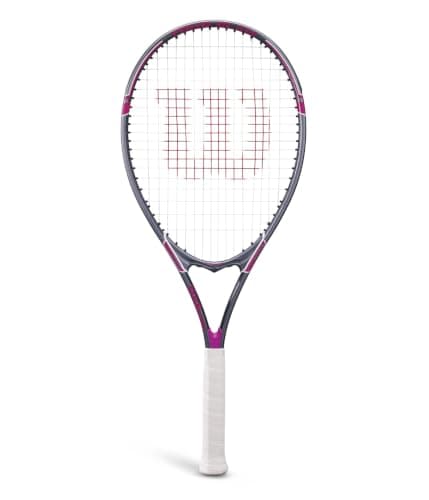
Wilson Wilson Tour Slam
Wilson Tour Slam

A recreational Wilson with shock-absorbing grommets at a price that undercuts most restringing jobs — the sane impulse buy.

Casual and social players
6.4
$38.99Amazon

#ad · Live prices from the Amazon Product API, as of October 20, 2026. Where we have no verified live price, we show none — we would rather leave a gap than print a number that has rotted.

In detail

The picks, in full

01
ASICS ASICS Gel-Dedicate 9 (Men's)

Budget and beginners

ASICS Gel-Dedicate 9 (Men's)

Wrapped midsoleHerringbone outsoleSynthetic upperHard court
7.2/10

The best cheap tennis shoe. A real ASICS court shoe at a fraction of the Resolution's price — the one to buy for a beginner, no argument.

Stability
7
Cushioning
6
Durability
6
Comfort
7
Value
10

Pros

  • A genuine court outsole and a flat, stable platform for well under half the price of a performance shoe
  • ASICS' entry shoe still uses a proper herringbone tread, which is what actually grips a hard court
  • Perfectly adequate for one or two sessions a week

Cons

  • Thin cushioning compared with the Resolution — long sessions on concrete will be felt
  • Outsole wears faster; expect a season, not three

Don't buy this if…

…you play four times a week. You will replace these twice in the time one pair of Resolutions lasts, and spend more.

$79.95View on Amazon

$90.0011% off

Price as of October 20, 2026. Prices change — Amazon's is the one that counts.

#ad · we may earn a commission from this link to ASICS Gel-Dedicate 9 (Men's)

02
HEAD HEAD Ti S6

Beginners and seniors

HEAD Ti S6

115 sq in head8.9 oz strung16x19 patternTitanium/graphite
6.6/10

The best-selling beginner frame of the last twenty years, and still the right answer: enormous head, feather weight, free power on every swing.

Control
5
Power
9
Spin
5
Comfort
6
Value
8

Pros

  • 115 square inches is one of the largest heads on the market — the sweet spot is huge and off-center hits still clear the net
  • Under 9 oz strung, so it is swingable for a player with no developed technique and for anyone with shoulder trouble
  • Extended 27.75" length adds reach and serve leverage without adding weight

Cons

  • So light and so powerful that controlling depth is hard once you develop a real swing
  • Thin, stiff beam transmits shock — not the frame for an arm that already hurts

Don't buy this if…

…you already rally consistently. You will out-grow the free power within a season and spend that season learning to hit short to compensate.

$99.00View on Amazon

Price as of October 20, 2026. Prices change — Amazon's is the one that counts.

#ad · we may earn a commission from this link to HEAD Ti S6

03
Penn Penn Championship Extra Duty (12 cans)

Hard-court club play

Penn Championship Extra Duty (12 cans)

Extra duty felt12 cans / 36 ballsPressurizedUSTA approved
8.2/10

The most-played ball in America, bought the way you should buy balls — by the case. Extra duty felt for hard courts.

Durability
8
Consistency
8
Feel
7
Visibility
8
Value
10

Pros

  • Extra duty felt is woven thicker specifically for abrasive hard courts — a regular duty ball fluffs up and dies in a set
  • Buying by the case is substantially cheaper per can than singles
  • The default club ball in the US, so it is the ball you will play matches with anyway

Cons

  • Pressurized balls go dead whether you use them or not once the can is open
  • Extra duty felt is the wrong choice on clay, where it picks up and holds the surface

Don't buy this if…

…you play on clay or indoor carpet. Buy regular duty felt instead.

$34.97View on Amazon

Price as of October 20, 2026. Prices change — Amazon's is the one that counts.

#ad · we may earn a commission from this link to Penn Championship Extra Duty (12 cans)

04
Wilson Wilson Tour Slam

Casual and social players

Wilson Tour Slam

112 sq in headPre-strungShock-absorbing grommetsVolcanic frame
6.4/10

A recreational Wilson with shock-absorbing grommets at a price that undercuts most restringing jobs — the sane impulse buy.

Control
5
Power
7
Spin
4
Comfort
7
Value
9

Pros

  • Stop Shock Pads in the grommet strip take some sting out of mishits, which matters more at this level than anything else
  • Oversize head and light swing weight make it genuinely easy to use from day one
  • Comes strung and gripped — a complete racquet, not a project

Cons

  • Aluminum-class construction flexes and twists on a hard hit
  • Spin potential is minimal; the string bed is too open and the frame too light to brush up on the ball

Don't buy this if…

…you are playing a weekly league. League tennis will expose this frame's lack of stability within a month.

$38.99View on Amazon

Price as of October 20, 2026. Prices change — Amazon's is the one that counts.

#ad · we may earn a commission from this link to Wilson Tour Slam

How we picked

We have not physically tested this gear

Everyone in this category says they tested twenty racquets. We have not tested any — and we say so. What we did instead: compiled the manufacturer-published specifications (head size, strung weight, string pattern, stiffness, outsole compound), normalized them, and scored each product against a published rubric weighted for the NTRP tier this page serves. The scores are judgments from documented research, not measurements we took, because we do not have a lab and are not going to pretend we do.

Questions

Frequently asked

How do you start learning tennis as a beginner?
Buy court shoes first, then a cheap light oversize racquet and a can of balls. Take a beginner group clinic rather than a private lesson — cheaper per hour, and you learn to handle real balls rather than fed ones. Learn the Continental and Eastern grips and the split step, and spend your first month rallying rather than playing points.
What does a beginner need to play tennis?
Three things: tennis court shoes, a light oversize racquet, and a can of balls. That is it. The shoes are the one you cannot substitute — published podiatry guidance says running shoes for tennis significantly raise lateral ankle sprain risk, because they are built for forward motion rather than lateral cuts.
Can you learn tennis by yourself?
Partly, and the parts you can learn alone are valuable. Serving needs no opponent; wall work gives you more contacts per hour than a court session; shadow swings groove a swing path in five minutes in a garage. What you cannot learn alone is dealing with a ball you did not expect, which is what a clinic is for.
What racquet should a beginner buy?
Something light and oversized, and cheap. A bigger head means a bigger sweet spot and more balls going over the net in month one; a lighter frame protects your arm while you learn. The HEAD Ti S6 at 115 sq in and 8.9 oz strung is the archetype. Do not start on a heavy control frame — it punishes exactly the mistakes beginners make.
How long does it take to get decent at tennis?
Playing twice a week with some coaching, most adults are rallying competently within a few months and playing social sets within a season. In NTRP terms, a new adult player typically self-rates at 2.0 to 2.5 and reaching a solid 3.0 to 3.5 is a matter of seasons rather than weeks — see NTRP ratings explained.

Keep reading

Receipts

Sources

We do not run a testing lab, and we do not pretend to. Our specs come from manufacturer listings and spec sheets; our rules and dimensions come from the official rulebook. Where we could not verify something, we say so on the page rather than quietly leaving it out. Read our full method.