Skip to content
Four Oh Club

The flagship · Racquets

The Best Tennis Racquets for Doubles

Doubles is decided at the net, inside half a second. That makes the doubles racquet a different frame from the singles racquet — lighter in the hand, wider in the sweet spot, quicker to turn.

By Stephen V.Updated How we score
#ad

We earn a commission when you buy through our Amazon links, at no extra cost to you. It never changes our rankings, and we say so when the cheaper racquet is the better buy. How this works.

The HEAD Radical MP is the best doubles racquet for most club players. It is the most balanced frame in tennis — a 98 sq in head at 11.1 oz strung with a 16x19 pattern — which means it turns fast enough for a reflex volley and still has the mass to absorb a return hit straight at your chest. If you want the biggest possible volley target, the Yonex EZONE 100 is the pick: its isometric head widens the sweet spot sideways, which is exactly where a doubles player makes contact when they are stretched. For the fastest hands at net, the Wilson Blade 100L v9 at 10.4 oz strung is the lightest player's frame here. The HEAD Speed MP suits a serve-and-volley game, the Wilson Clash 100 v3 is the comfort answer at RA 54 stiffness, and the Wilson Ultra 100UL is the one to pick if lifting a heavier frame for two hours is the actual problem.

Doubles rewards a different racquet than singles does, and almost nobody sells frames that way. Think about what the doubles ball actually asks of your equipment. You serve, and then you are at the service line within two steps. The return comes back hard and low, at your feet or at your hip. You have perhaps four tenths of a second to get the frame in front of it, and the shot you need is a block, not a swing. Then you are poaching — one step across, racquet already up, punch it at the gap.

Nothing in that sequence is a long baseline swing. Which means the specs that matter in a doubles frame are maneuverability (how fast you can get the head to the ball), stability (how little the head twists when you catch a hard ball off-center) and sweet spot width. Baseline plow-through — the thing heavy singles frames are sold on — is nearly irrelevant.

The three specs that decide a doubles frame

Strung weight, around 10.4–11.3 oz. Light enough to turn, heavy enough not to get knocked back. Below about 10 oz a hard return pushes the head around; above about 11.5 oz your hands get late at net by the third set. Every frame ranked here sits in that window, and the published strung weights are in the table.

Head size, 98–100 sq in. A doubles volley is frequently off-center by an inch or two, because you got to it rather than lined it up. A larger head gives you more margin for that, and a 100 is the sensible default unless you have the hands of a club champion. If you are deciding between the two sizes specifically, we built 98 vs 100 head size for exactly that.

Balance, head-light. A head-light frame feels faster in the hand than its weight suggests, because the mass sits near your grip rather than out at the tip. That is the single spec most responsible for "this racquet feels quick". It is also the spec you can change yourself for the price of a roll of tape — swing weight explained covers what is actually going on, and how to add weight to a racquet covers doing it.

What about the serve?

Fair objection: doubles is also a serving format, and a lighter frame serves a slightly lighter ball. Two answers. First, doubles serving is more about placement than pace — a body serve that produces a weak return is worth more than an extra 5 mph that comes back at your feet. Second, if you want serve weight without losing hand speed, add mass at the handle rather than buying a heavier frame; published customization guidance notes that adding weight in the handle area is how you counterweight a frame without slowing the head.

The doubles-specific mistake: buying a singles stick

The frames that dominate "best tennis racquet" lists are 11.4–11.7 oz control frames built for a 4.5 hitting out from the baseline. They are excellent racquets and they are the wrong tool for a 4.0 doubles player, because the thing they are best at — driving a heavy ball from eight feet behind the baseline — is a shot you will hit maybe six times a match. If you play 80% doubles, weight the decision toward hands and forgiveness, and spend the difference on a better string job.

One honest note on what these rankings are. We have not play-tested these frames. The numbers in the table are the manufacturers' published specifications — head size, strung weight, string pattern, construction — and the scores are judgments made against the published rubric on our methodology page, weighted here for a doubles brief rather than a baseline one. Where a maker publishes a stiffness figure, as Wilson does for the Clash at RA 54, we quote it; where they do not, we do not invent one.

The short answer

Quick picks

#Racquet / gearBest forScorePrice
01
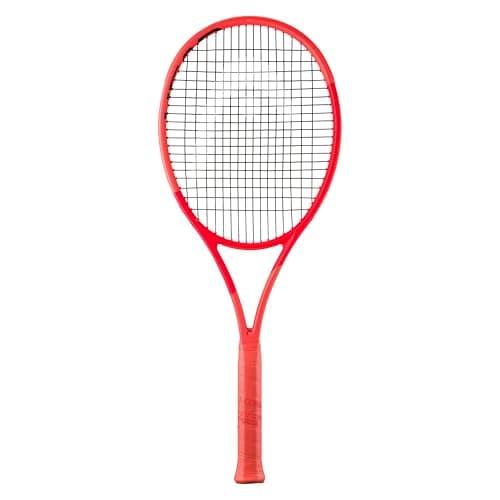
HEAD HEAD Radical MP
HEAD Radical MP

The most balanced racquet in tennis. Nothing about the Radical MP is extreme, which is exactly why it has stayed in the range for thirty years.

All-court 4.0s
7.4
$219.00Amazon
02
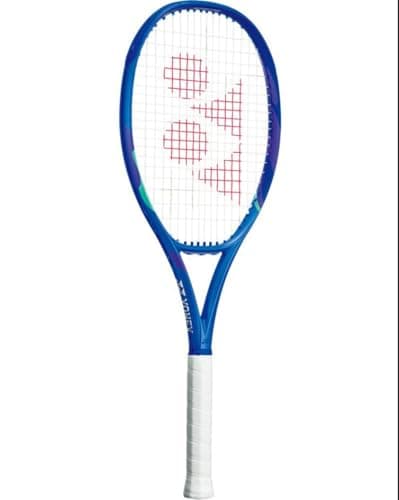
Yonex Yonex EZONE 100
Yonex EZONE 100

Power with manners. The isometric head shape widens the sweet spot sideways, which is exactly where a 4.0 player misses.

Spin-and-power 4.0s
8.0
Check price →
03
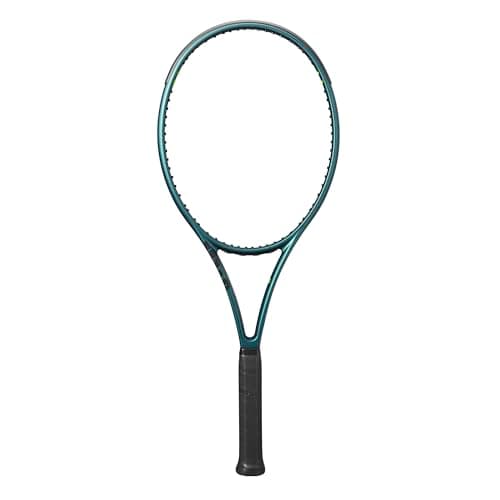
Wilson Wilson Blade 100L v9
Wilson Blade 100L v9

A Blade you can actually swing all match. The light version of the control benchmark, which makes a player's frame available to a 3.5.

3.5s who want feel
7.8
$199.00Amazon
04
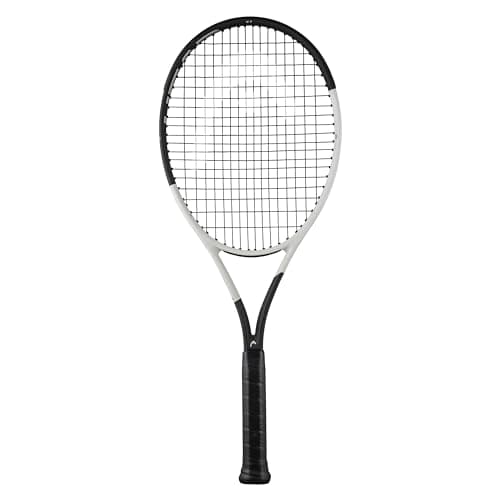
HEAD HEAD Speed MP (2024)
HEAD Speed MP (2024)

The fast, modern all-court frame — a 100 sq in head with a dense-enough pattern to control it. Djokovic's family of racquet, in a club-playable spec.

Fast-swinging all-courters
7.8
$169.00Amazon
05
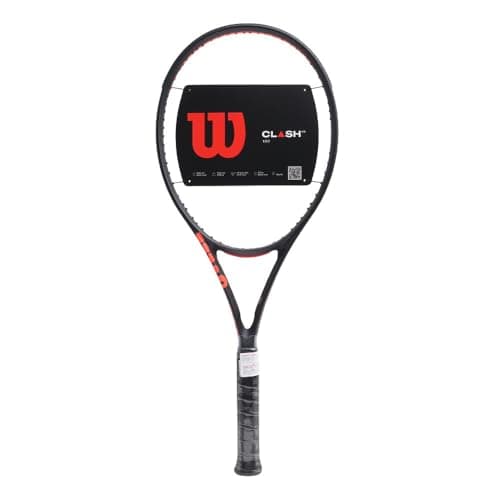
Wilson Wilson Clash 100 v3
Wilson Clash 100 v3

The 4.0 player's racquet. Unusually flexible for a modern frame, so it bends around the ball instead of jarring your arm — and it still hits a heavy ball.

NTRP 3.5–4.0 all-courters
8.0
$224.25Amazon
06
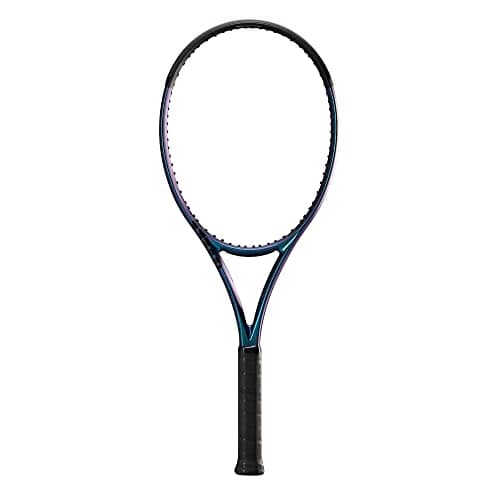
Wilson Wilson Ultra 100UL v4
Wilson Ultra 100UL v4

An ultra-light Ultra: free power in a frame light enough for a developing swing or a player coming back from injury.

Light frames with power
7.2
$189.00Amazon

#ad · Live prices from the Amazon Product API, as of October 20, 2026. Where we have no verified live price, we show none — we would rather leave a gap than print a number that has rotted.

In detail

The picks, in full

01
HEAD HEAD Radical MP

All-court 4.0s

HEAD Radical MP

98 sq in head11.1 oz strung16x19 patternShips strung
7.4/10

The most balanced racquet in tennis. Nothing about the Radical MP is extreme, which is exactly why it has stayed in the range for thirty years.

Control
8
Power
7
Spin
7
Comfort
7
Value
8

Pros

  • Genuinely does everything adequately — serve, volley, drive, slice — which suits the all-court club player better than a specialist frame
  • 98 sq in with a 16x19 pattern is the classic control-plus-spin compromise
  • Ships strung at mid tension, so it is playable immediately

Cons

  • Being good at everything means it wins nothing outright — no category here is a 9
  • This is an older generation of the Radical; the current model costs considerably more

Don't buy this if…

…you know your game needs one specific thing (free power, maximum spin, maximum comfort). Buy the specialist.

$219.00View on Amazon

Price as of October 20, 2026. Prices change — Amazon's is the one that counts.

#ad · we may earn a commission from this link to HEAD Radical MP

02
Yonex Yonex EZONE 100

Spin-and-power 4.0s

Yonex EZONE 100

100 sq in isometric head11.2 oz strung16x19 patternGraphite + VDM
8.0/10

Power with manners. The isometric head shape widens the sweet spot sideways, which is exactly where a 4.0 player misses.

Control
8
Power
9
Spin
8
Comfort
9
Value
6

Pros

  • Isometric (squared) head shape enlarges the effective sweet spot on off-center hits without adding head size
  • Vibration Dampening Mesh in the handle takes the edge off impact — Yonex markets this frame as arm-friendly and the construction backs it
  • Generous power and spin together, which is a rarer combination than the marketing suggests

Cons

  • Premium pricing, and Yonex rarely discounts
  • The soft feel reads as 'muted' to players coming off a crisp HEAD or Wilson

Don't buy this if…

…you want maximum feedback from the string bed. Yonex damps impact information out on purpose.

Check price on Amazon →

No buyable offer at the last price check (October 20, 2026). We show nothing rather than a stale number.

#ad · we may earn a commission from this link to Yonex EZONE 100

03
Wilson Wilson Blade 100L v9

3.5s who want feel

Wilson Blade 100L v9

100 sq in head10.6 oz strung16x19 patternFORTYFIVE flex
7.8/10

A Blade you can actually swing all match. The light version of the control benchmark, which makes a player's frame available to a 3.5.

Control
9
Power
6
Spin
8
Comfort
8
Value
8

Pros

  • Blade feel and flex at nearly an ounce less than the standard 98 — the control frame that does not need an advanced swing
  • Ships strung with Sensation 16 multifilament at mid tension, a genuinely comfortable factory setup
  • 100 sq in gives the forgiveness a 3.5 needs without turning it into a power frame

Cons

  • The lighter mass means it gets bullied by heavy pace — the trade you make for swinging it easily
  • Less free depth than a Pure Drive; you have to generate your own

Don't buy this if…

…you are a strong 4.5 hitting against pace. Go to the Blade 98 and accept the extra weight.

$199.00View on Amazon

$210.005% off

Price as of October 20, 2026. Prices change — Amazon's is the one that counts.

#ad · we may earn a commission from this link to Wilson Blade 100L v9

04
HEAD HEAD Speed MP (2024)

Fast-swinging all-courters

HEAD Speed MP (2024)

100 sq in head11.3 oz strung16x19 patternAuxetic 2.0
7.8/10

The fast, modern all-court frame — a 100 sq in head with a dense-enough pattern to control it. Djokovic's family of racquet, in a club-playable spec.

Control
9
Power
7
Spin
8
Comfort
7
Value
8

Pros

  • Combines a 100 sq in head with control-frame weight, so it is forgiving without being loose
  • Auxetic 2.0 gives crisp, precise feedback — you know exactly where on the face you hit it
  • Very quick through the air for its weight, which suits a serve-and-first-strike game

Cons

  • Crisper and stiffer-feeling than the Clash or Boom — less forgiving on the arm
  • Falls between stools for some: not as controlled as a 98, not as powerful as a Pure Drive

Don't buy this if…

…you are prone to elbow pain. The Speed's crisp feel comes from a frame that transmits rather than absorbs.

$169.00View on Amazon

Price as of October 20, 2026. Prices change — Amazon's is the one that counts.

#ad · we may earn a commission from this link to HEAD Speed MP (2024)

05
Wilson Wilson Clash 100 v3

NTRP 3.5–4.0 all-courters

Wilson Clash 100 v3

100 sq in head11.0 oz strung16x19 patternRA 54 stiffness
8.0/10

The 4.0 player's racquet. Unusually flexible for a modern frame, so it bends around the ball instead of jarring your arm — and it still hits a heavy ball.

Control
8
Power
7
Spin
8
Comfort
10
Value
7

Pros

  • Low stiffness rating with modern power — the combination that makes it the default recommendation for a club player with a twinge in the elbow
  • Flexible layup gives a long dwell time on the string bed, which translates directly into feel on drop shots and touch volleys
  • 100 sq in and a 16x19 pattern is the most forgiving spec that still rewards clean contact

Cons

  • The flex that makes it comfortable also costs you some free depth against a pusher
  • Premium price; this is the most expensive intermediate frame we list

Don't buy this if…

…you want a frame that does the work for you. The Clash asks you to swing; the Pure Drive does not.

$224.25View on Amazon

$299.0025% off

Price as of October 20, 2026. Prices change — Amazon's is the one that counts.

#ad · we may earn a commission from this link to Wilson Clash 100 v3

06
Wilson Wilson Ultra 100UL v4

Light frames with power

Wilson Ultra 100UL v4

100 sq in head9.5 oz unstrung16x19 patternUnstrung
7.2/10

An ultra-light Ultra: free power in a frame light enough for a developing swing or a player coming back from injury.

Control
6
Power
9
Spin
7
Comfort
7
Value
7

Pros

  • Very light for a 100 sq in performance frame, so late preparation still gets the racquet through the ball
  • Power-oriented layup means depth comes easily even at low swing speeds
  • Sold unstrung, so you pick the string and tension from the start

Cons

  • Sold unstrung — add the cost of a string job before you compare prices
  • At 9.5 oz unstrung it has very little mass to absorb incoming pace

Don't buy this if…

…you play against heavy hitters weekly. Light frames lose that argument every time.

$189.00View on Amazon

Price as of October 20, 2026. Prices change — Amazon's is the one that counts.

#ad · we may earn a commission from this link to Wilson Ultra 100UL v4

If you play both formats with one frame

Pick the doubles end of the range. A 100 sq in frame at 11.0–11.3 oz is perfectly capable from the baseline in club singles; a 97 sq in, 11.7 oz control frame is genuinely hard to volley with when you are stretched. The compromise costs you less in singles than in doubles, so bias toward the format that punishes the wrong choice more.

Grip size matters more at net than at the baseline

A block volley is held, not swung, and a grip that is too big makes that harder — you cannot squeeze. Most club players are in a 4 1/4 or 4 3/8; measure rather than guess, using the grip size guide. Going down a size and building up with an overgrip is a legitimate fix; going up a size is not reversible.

Two frames, strung the same

Doubles players break fewer strings than singles baseliners, which lulls people into carrying one frame. A string that breaks mid-match in a league doubles tie ends the tie. Carry a second frame strung identically, which is also the cheapest excuse to own a bag with room for it — see bags with a shoe compartment.
How we picked

We have not physically tested this gear

Everyone in this category says they tested twenty racquets. We have not tested any — and we say so. What we did instead: compiled the manufacturer-published specifications (head size, strung weight, string pattern, stiffness, outsole compound), normalized them, and scored each product against a published rubric weighted for the NTRP tier this page serves. The scores are judgments from documented research, not measurements we took, because we do not have a lab and are not going to pretend we do.

Questions

Frequently asked

What is the best tennis racquet for doubles?
The HEAD Radical MP, for most club doubles players: a 98 sq in head at a published 11.1 oz strung, which is maneuverable enough for reflex volleys and heavy enough to hold a hard return. If you want the most forgiving volley target instead, the Yonex EZONE 100 and its isometric head widen the sweet spot where a stretched doubles player actually makes contact.
Should a doubles racquet be lighter than a singles racquet?
Usually, yes — or at least more head-light. Doubles is decided by how fast you get the frame to the ball at net, not by baseline plow-through, so a frame in the 10.4 to 11.3 oz strung range with a head-light balance beats a heavier control frame for most players.
Is a bigger head size better for doubles?
Generally yes. Doubles volleys are frequently off-center because you reached for them, and a 100 sq in head gives more margin for that than a 97 or 98. The trade is a little less precision on a clean swing, which matters less in a format built on blocks and punches.
Do I need a different racquet for doubles and singles?
No, but if you own one frame and play mostly doubles, choose it for doubles. A 100 sq in, 11-ounce frame handles club singles perfectly well; a 97 sq in, 11.7-ounce control frame is genuinely awkward on a stretched volley. The compromise is cheaper in one direction than the other.
What string setup suits a doubles player?
Something softer than a full polyester bed, because doubles contact is often a block rather than a full swing and a stiff string bed gives you nothing on those. A multifilament, or a poly-main hybrid with a soft cross, is the sensible doubles setup — see strings for intermediate players.

Keep reading

Receipts

Sources

We do not run a testing lab, and we do not pretend to. Our specs come from manufacturer listings and spec sheets; our rules and dimensions come from the official rulebook. Where we could not verify something, we say so on the page rather than quietly leaving it out. Read our full method.