Skip to content
Four Oh Club

The flagship · Racquets

How to Choose a Tennis Racquet

Four numbers decide almost everything about how a racquet plays. Read them in the right order and the shortlist writes itself.

By Stephen V.Updated How we score
#ad

We earn a commission when you buy through our Amazon links, at no extra cost to you. It never changes our rankings, and we say so when the cheaper racquet is the better buy. How this works.

Choosing a tennis racquet is a four-decision problem, and they are not equally important. Head size first, then weight, then string pattern, then stiffness — in that order. Everything else you will read about — beam shape, layup names, the technology stickers — is downstream of those four, and mostly marketing for them.

Step 1: head size

Measured in square inches, and the biggest lever on forgiveness. A bigger head has a bigger sweet spot, more power and less precision. A smaller head has the opposite.

Head sizeCharacterWho it suits
105–115 sq inOversize: maximum forgiveness and free powerBeginners, seniors, short swings
100 sq inMid-plus: the modern all-court standardNTRP 3.0–4.5, most club players
97–98 sq inMid: control and feel, less marginNTRP 4.0+ with consistent contact

If you take one thing from this page: 100 sq in is right for most people. It is the default for a reason, and the players who should deviate from it know why they are deviating.

Step 2: weight

Heavier frames are more stable and produce a heavier ball; lighter frames are easier to swing when you prepare late. The common mistake is buying too light, because a light racquet feels better in the shop and worse in the third game of a match against someone who hits hard.

Under 10 oz strung is a beginner or senior spec. 10.5–11.3 oz covers almost all club tennis. Over 11.5 ozis a player's frame. Remember that unstrung weights run about 0.5–0.6 oz lighter than strung ones, so compare like with like.

Step 3: string pattern

16x19 is the open pattern: the mains slide and snap back, which generates topspin. 18x20 is dense: flatter, lower, far more predictable, and longer string life. Nine club players out of ten want 16x19.

Step 4: stiffness (RA)

The spec almost nobody checks and the one that decides whether you are still playing in six months. Under RA 62 is soft and comfortable; above RA 67 is stiff and powerful. The Clash 100 v3 at RA 54 and the Pure Drive at RA 69 are the two ends of the mainstream range, and they are otherwise nearly identical on paper.

The short answer

Quick picks

#Racquet / gearBest forScorePrice
01
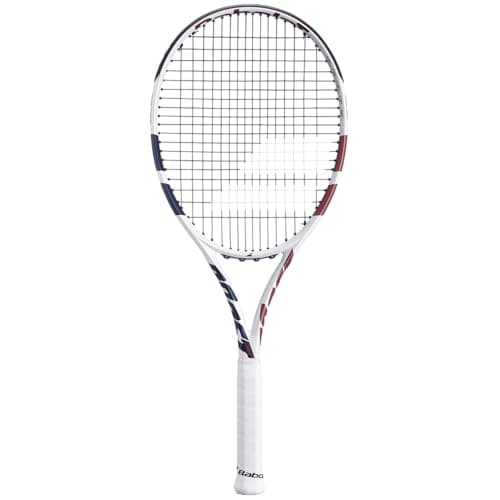
Babolat Babolat Boost Drive
Babolat Boost Drive

The best true beginner racquet here: a real graphite Babolat tuned down to beginner weight, so it plays like the frame you will upgrade to.

Committed beginners
7.0
$119.00Amazon
02
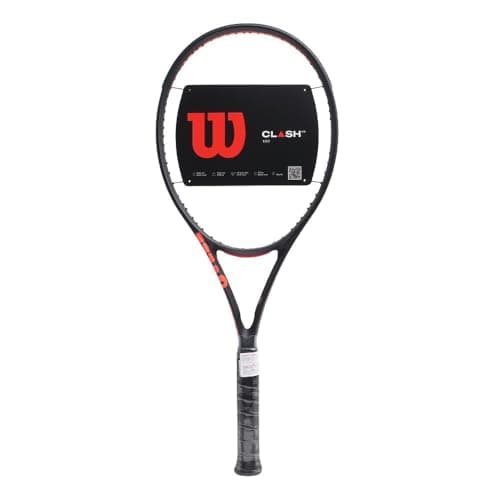
Wilson Wilson Clash 100 v3
Wilson Clash 100 v3

The 4.0 player's racquet. Unusually flexible for a modern frame, so it bends around the ball instead of jarring your arm — and it still hits a heavy ball.

NTRP 3.5–4.0 all-courters
8.0
$299.00Amazon
03
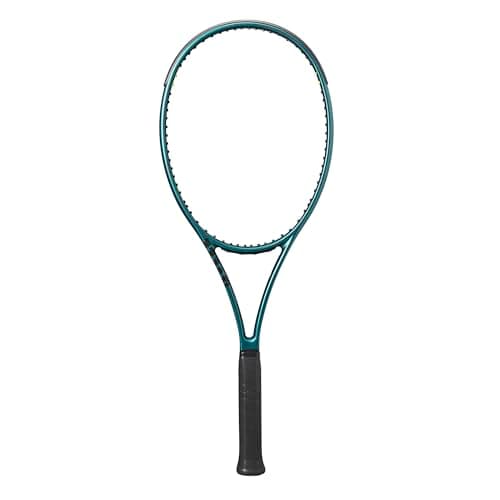
Wilson Wilson Blade 98 (16x19) v9
Wilson Blade 98 (16x19) v9

The control benchmark that still hits a heavy ball — the most-used frame in competitive club tennis, and deservedly.

Advanced all-courters
7.8
$199.00Amazon

#ad · Live prices from the Amazon Product API, as of October 7, 2026. Where we have no verified live price, we show none — we would rather leave a gap than print a number that has rotted.

In detail

The picks, in full

01
Babolat Babolat Boost Drive

Committed beginners

Babolat Boost Drive

105 sq in head9.5 oz strung16x19 patternFull graphite
7.0/10

The best true beginner racquet here: a real graphite Babolat tuned down to beginner weight, so it plays like the frame you will upgrade to.

Control
7
Power
7
Spin
6
Comfort
7
Value
8

Pros

  • Full graphite construction, not aluminium — it holds its shape through contact, which is what makes depth repeatable
  • Shares the Pure Drive's cosmetic and feel family, so moving up later is a small step rather than a relearn
  • 105 sq in is forgiving without being so oversized that it teaches bad habits

Cons

  • Costs several times a Tour Slam, which is a lot to spend before you know you will play
  • Strung at factory mid-tension with generic string — budget a proper restring within a year

Don't buy this if…

…you are buying a racquet for a one-off holiday week. This is the frame for someone who has booked lessons.

$119.00View on Amazon

Price as of October 7, 2026. Prices change — Amazon's is the one that counts.

#ad · we may earn a commission from this link to Babolat Boost Drive

02
Wilson Wilson Clash 100 v3

NTRP 3.5–4.0 all-courters

Wilson Clash 100 v3

100 sq in head11.0 oz strung16x19 patternRA 54 stiffness
8.0/10

The 4.0 player's racquet. Unusually flexible for a modern frame, so it bends around the ball instead of jarring your arm — and it still hits a heavy ball.

Control
8
Power
7
Spin
8
Comfort
10
Value
7

Pros

  • Low stiffness rating with modern power — the combination that makes it the default recommendation for a club player with a twinge in the elbow
  • Flexible layup gives a long dwell time on the string bed, which translates directly into feel on drop shots and touch volleys
  • 100 sq in and a 16x19 pattern is the most forgiving spec that still rewards clean contact

Cons

  • The flex that makes it comfortable also costs you some free depth against a pusher
  • Premium price; this is the most expensive intermediate frame we list

Don't buy this if…

…you want a frame that does the work for you. The Clash asks you to swing; the Pure Drive does not.

$299.00View on Amazon

Price as of October 7, 2026. Prices change — Amazon's is the one that counts.

#ad · we may earn a commission from this link to Wilson Clash 100 v3

03
Wilson Wilson Blade 98 (16x19) v9

Advanced all-courters

Wilson Blade 98 (16x19) v9

98 sq in head11.4 oz strung16x19 patternFORTYFIVE flex
7.8/10

The control benchmark that still hits a heavy ball — the most-used frame in competitive club tennis, and deservedly.

Control
9
Power
7
Spin
8
Comfort
8
Value
7

Pros

  • FORTYFIVE construction gives it a flex profile that is comfortable without going soft — the reason it is the default 4.5 recommendation
  • 16x19 on a 98 is the sweet spot of the whole racquet market: control, but with real spin access
  • Ships strung with Sensation 16, a comfortable multifilament, so the factory setup is actually usable

Cons

  • Needs a full swing to produce depth; it does not help a short stroke
  • The v9's muted feel divides opinion against the crisper v7

Don't buy this if…

…you need help generating pace. The Blade rewards the swing you bring; it adds nothing.

$199.00View on Amazon

Price as of October 7, 2026. Prices change — Amazon's is the one that counts.

#ad · we may earn a commission from this link to Wilson Blade 98 (16x19) v9

The decision path, by level

NTRP 2.0–3.0:105–115 sq in, under 10 oz, strung, and cheap. You are buying forgiveness and nothing else. Start at beginner rackets.

NTRP 3.5–4.0:100 sq in, 10.5–11.3 oz, 16x19. Then choose your stiffness: soft if your arm has ever complained, stiff if you want free depth. See intermediate racquets.

NTRP 4.5+:97–100 sq in, 11.3–11.7 oz, and now the 16x19 versus 18x20 question becomes a real one about your game style rather than your level. See advanced rackets.

Grip size is a fifth decision, and it is not optional

Head size gets the attention; grip size causes the injuries. Too small and you squeeze, which is a direct route to tennis elbow. Most adult men land on 4 3/8" and most adult women on 4 1/4", but measure properly — the grip size guide has the test.

One practical note: you can always build a grip up with an overgrip or a heat-shrink sleeve, and you can never make one smaller. If you are genuinely between sizes, buy the smaller one.

Things that matter less than the shop will suggest

The technology names.Auxetic, FreeFlex, VDM, REVA — these are real engineering, but they are the mechanism by which a frame achieves its published stiffness and feel. The published numbers already tell you the result.

The colour and the pro endorsement. No professional plays the retail version of the frame with their name on it. Their frames are custom-weighted, often an older mould painted to look current.

Swing weight, until you are advanced. It matters enormously, but it is also the spec you can adjust yourself with a few grams of lead tape. Get the other four right and tune this later.

Demo if you possibly can

Specs predict most of how a racquet behaves and none of how it feels. Two frames with identical published numbers can feel completely different, and feel is what you will notice on court. Most specialist retailers run demo programmes; a club with a coach usually has demos too. Everything on this site is an attempt to narrow the shortlist so that demoing three frames tells you something, instead of demoing thirty.

And if you cannot demo: buy in the middle of the window for your level, string it properly, and give it six sessions before you judge it. Almost every racquet feels wrong for the first two.
How we picked

We have not physically tested this gear

Everyone in this category says they tested twenty racquets. We have not tested any — and we say so. What we did instead: compiled the manufacturer-published specifications (head size, strung weight, string pattern, stiffness, outsole compound), normalized them, and scored each product against a published rubric weighted for the NTRP tier this page serves. The scores are judgments from documented research, not measurements we took, because we do not have a lab and are not going to pretend we do.

Questions

Frequently asked

What size tennis racquet do I need?
A standard 27-inch adult frame unless you are buying for a child. The decision that actually matters is head size: 100 sq in for most club players, 105–115 for beginners, 97–98 for 4.0+ players with consistent contact.
Is a heavier or lighter tennis racquet better?
Heavier, for most people who are past beginner stage. Mass gives stability against pace and a heavier ball of your own, and it transmits less shock to your arm. The limit is whether you can still swing it fully late in a match.
What does RA stiffness mean on a tennis racquet?
It is a published measure of how much the frame deflects under load. Lower numbers mean a softer, more comfortable, lower-powered frame; higher numbers mean a stiffer, more powerful frame that transmits more shock. Under 62 is soft; over 67 is stiff.

Keep reading

Receipts

Sources

We do not run a testing lab, and we do not pretend to. Our specs come from manufacturer listings and spec sheets; our rules and dimensions come from the official rulebook. Where we could not verify something, we say so on the page rather than quietly leaving it out. Read our full method.