Hold a tennis racket by shaking hands with it. Stand the racquet on edge, put your palm flat against the strings, slide your hand down the handle and close your fingers around it — that is the eastern forehand grip, and Tennis.com describes it as "generally considered the easiest grip for learning the forehand." Keep your fingers slightly spread, not bunched, and squeeze about as hard as you would hold a bird: firmly enough that it cannot fly away, gently enough that you do not crush it.
You need exactly two grips to play tennis, and one of them is the handshake above. The second is the continental, for serves and volleys. Everything else on this page is detail you can come back for.
The eight bevels: how grips are actually described
Pick up a racquet and feel the handle. It is not round — it is an octagon, with eight flat faces called bevels. Every grip in tennis is defined by which bevel the base knuckle of your index finger sits on, plus where the heel of your hand sits.
You do not need to count bevels to learn. But it is how every coach and every video will describe a grip to you, so it is worth two sentences:
Numbering is relative, and sources differ on where to start — some number the top bevel as 1, some number the continental position as 2. Do not get stuck on this. What is consistent everywhere, and what actually matters, is the direction and the number of steps: from the continental grip, each bevel you rotate your hand clockwise (for a right-hander) takes you to the next forehand grip. Tennis.com puts it as the index knuckle shifting "one bevel clockwise" from continental to eastern, and "one additional bevel clockwise" from eastern to semi-western.
The forehand grip: shake hands with the racquet
This is the grip to learn first and the one to keep for months.
How to find it. Hold the racquet by the throat with your non-dominant hand, strings perpendicular to the ground, as if the racquet were a hand held out to you. Now shake hands with the handle. The V between your thumb and index finger should sit on top of the handle, slightly to the side.
What it does. The racquet face ends up roughly vertical at contact, which means a ball hit with a normal swing goes forward and roughly flat. Tennis.com notes it gives "great control, especially for low balls and fast surfaces," with the trade-off that a flatter stroke "can also be inconsistent" in long rallies — which is a problem for a tour player and not a problem for you yet.
Why to start here. Because the face is vertical, the relationship between what your arm does and where the ball goes is direct. You swing forward, the ball goes forward. That feedback is what you need while you are learning to time contact.
The continental grip: serves, volleys and slice
The second grip, and the one most self-taught players are missing.
How to find it. From the handshake grip, rotate your hand one bevel counterclockwise (right-handers) — back toward the top of the handle. Tennis.com describes the landmark as "the V created by your thumb and forefinger on top of the handle." It is sometimes called the hammer grip, because it is how you would hold a hammer to drive a nail.
What it is for. Serves, volleys, overheads, slice and drop shots. It lets the wrist pronate freely through a serve, which is where serve speed comes from, and it keeps the face slightly open on a volley, which is what puts underspin on the ball and makes it sit down.
The thing to know. You cannot serve properly with a forehand grip. You can get a ball in with one, and plenty of beginners do, but it caps your serve permanently because it blocks the forearm rotation the motion depends on. If you learn one thing from this page beyond the handshake, learn to serve continental. It feels wrong for about two weeks and then it does not.
Semi-western: the grip to move to later
One more bevel clockwise from the handshake grip. Tennis.com calls it "a prevalent grip for power baseliners on the pro tours", and it is what most of the modern game is played with.
It closes the racquet face slightly, so to hit the ball over the net you have to brush up the back of it. That brushing motion is topspin, and topspin is what lets you swing hard and still land the ball in — the ball dips. Tennis.com notes it "generates stronger topspin than the Eastern grip, making shots safer and easier to control."
When to switch. Once you can rally twenty balls cross-court without thinking about your grip. Not before. A closed face plus an undeveloped swing path produces balls into the net, you compensate by pushing the ball up, and you build a bad habit on top of a good grip. There is no hurry: an eastern forehand is a perfectly good grip for club tennis and plenty of 4.0s use one.
The backhand: one hand or two
Two-handed, which is what most people should learn. Dominant hand in a continental grip at the bottom of the handle, non-dominant hand above it in a semi-western forehand grip — Tennis.com describes exactly this combination. Practically: hold the racquet in a continental grip, then put your other hand on the handle above it as if you were hitting a forehand with that hand. Two hands are easier to control, easier to generate topspin with, and far easier to learn.
One-handed. The eastern backhand grip is one bevel counterclockwise from continental, with the knuckle on top of the handle. It takes much longer to learn and demands earlier preparation. Beautiful shot; not a beginner project.
How tight to hold it
This is the most common unforced error in the whole topic, and it is worth more than any grip change.
Grip pressure should be light, and should rise only at contact. A death-grip on the handle does three bad things: it stiffens your wrist, so you lose the whip that generates racquet-head speed; it transmits more shock up your arm; and it exhausts your forearm.
That last point is not cosmetic. Squeezing hard is a load on the forearm extensor tendon, and per OrthoInfo, tennis elbow is overuse microtearing of exactly those tendons where they attach on the outside of the elbow. Over-gripping is a genuine contributor, and so is a grip that is too small — because a handle you cannot control without squeezing makes you squeeze. Measure yours with the grip size chart, and if you are between sizes, buy the smaller frame and build it up with an overgrip. A handle can always be made bigger and can never be made smaller.
Fingers spread, not bunched. A slight gap between your index and middle finger (a "trigger finger" position) gives you more control of the racquet face than a closed fist. Bunching all four fingers together is how people end up gripping harder to compensate.
The grip on the handle: what to actually buy
Now the equipment half, because the thing physically in your hand matters once your technique does not depend on it.
Your racquet came with a replacement grip (also called a base grip) on the bare handle: thick, cushioned, replaced about once a season. Almost everybody then adds an overgrip — a thin wrap, around half a millimeter, that goes on top and gets changed every few weeks when it goes slick. One is structural, one is a consumable. The full distinction is in overgrip vs replacement grip.
Which overgrip for a beginner. There are two families and they work in opposite ways:
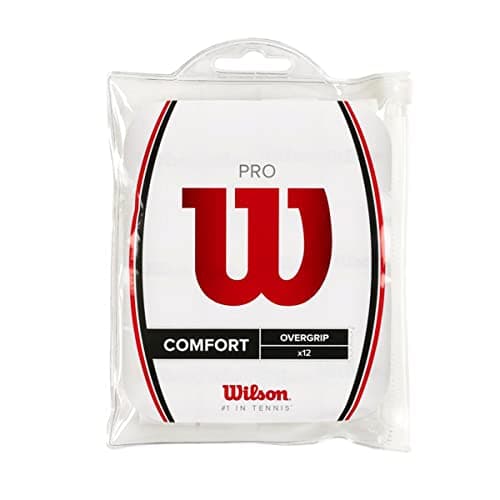
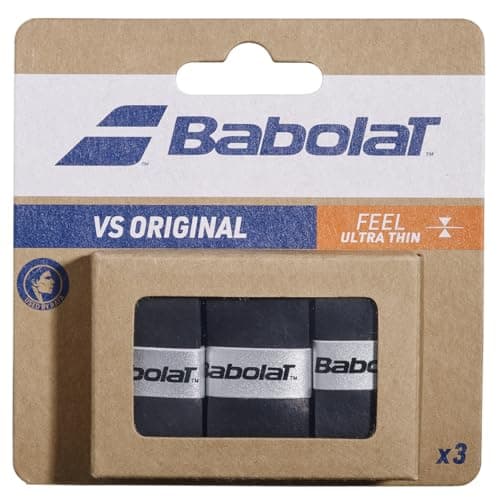
Tacky — Wilson Pro Overgrip, Babolat VS Original. Sticky to the touch, so the handle feels glued to your hand. This is what most people prefer, and it is the right default if your hands do not sweat much. Start here.
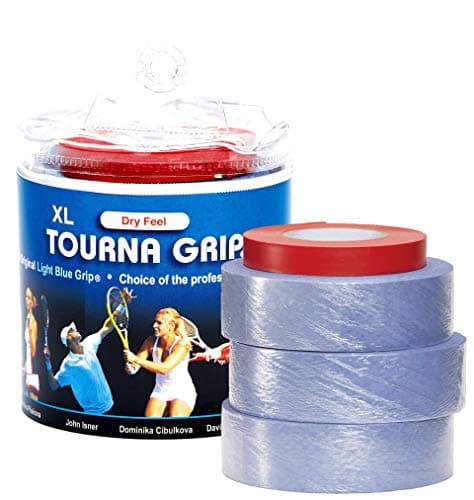
Absorbent (dry) — Tourna Grip, the chalky blue one. It works by taking up moisture and gets grippier as your hand sweats, which is the opposite behavior. If you sweat heavily, play in heat, or find a tacky grip turns slick after twenty minutes, this is the answer and it is not close.
One practical note that matters for a beginner specifically: every overgrip adds roughly half a grip size. If you have just measured your hand and bought a frame in the right size, adding two stacked overgrips undoes that. One overgrip at a time, and peel the old one off before you put the new one on.
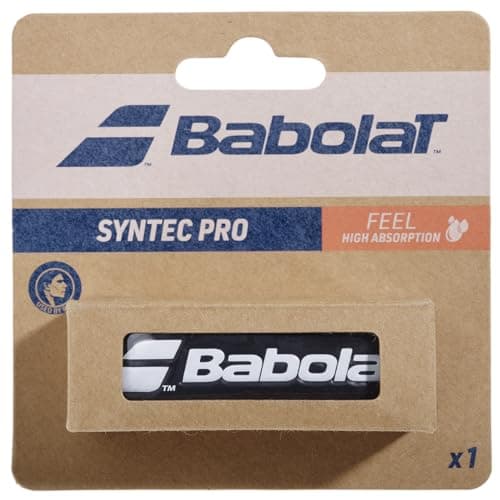
If the handle underneath has gone hard and thin — you can feel the bevel edges unusually sharply — the cushioning has compressed flat and a fresh replacement grip (the Babolat Syntec Pro here) makes the racquet feel new for the price of a can of balls. More options in the overgrip ranking, and fitting one takes two minutes once you know the method — how to regrip a tennis racket.
A beginner's practice order
If you take one thing away: learn the handshake forehand grip, then learn to serve continental. Those two cover every shot you will hit in your first season.
Then, in order: the two-handed backhand grip, keeping grip pressure light, and only then the semi-western forehand once you can rally without thinking. If you want the rest of the beginner picture — what level you are, what to buy, what it costs — start at the beginner hub and what the NTRP ratings mean.