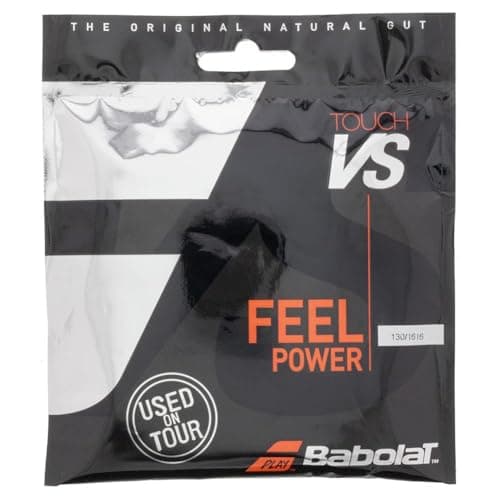
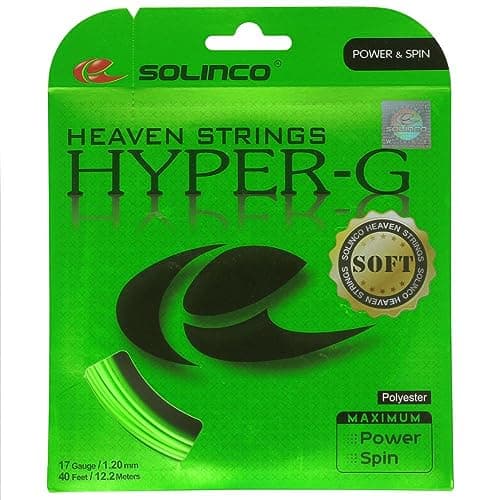
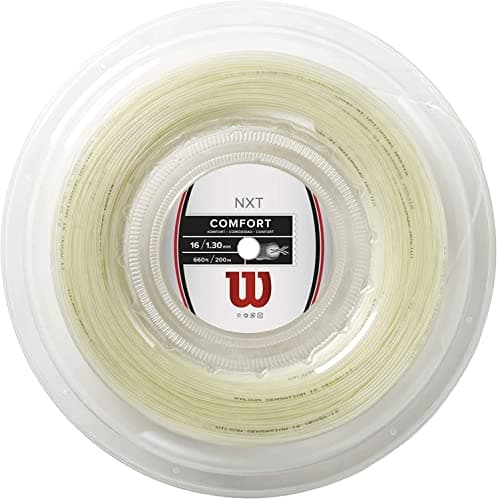
If you want one string that gives you power and spin, the answer is Wilson NXT — a 16 gauge multifilament with high elasticity, which is the mechanism power actually comes from. If budget is no object, natural gut is the most powerful string there is and Babolat VS Touch is the one to buy. If you want the spin half of the question answered harder and will accept less free depth, Solinco Hyper-G Soft at 1.20 mm is the best-value shaped polyester on this site. And if you are serious about both at once, stop looking for one string: put polyester in the mains for bite and a multifilament in the crosses for power. That is the hybrid, and it is what the players who care most actually do.
This page exists because three searches ask the same confused question — best tennis strings for power and spin, tennis strings for spin and power, best tennis strings for power and control — and the confusion is worth clearing up before the picks, because it changes which pick is right for you.
Why power and spin fight each other
Power in a stringbed is stored energy. A string that stretches a long way under load and returns that energy efficiently gives you free depth — you swing the same and the ball goes further. That property is elasticity, and the most elastic strings are natural gut first and multifilament nylon second. Babolat publishes natural gut as having the highest elasticity of any string material; Wilson publishes high elasticity on NXT.
Spin is a surface effect. The string has to grip the ball on impact and then snap back across the stringbed, dragging the ball into rotation. That wants a slick, stiff, shaped string that moves and resets — which is the description of a co-polyester, and polyester is the least elastic material in common use.
So the two properties want opposite materials. Which is why "the best string for power and spin" is a question with three honest answers rather than one, and why anybody who gives you a single product name is selling rather than explaining.
The three honest answers
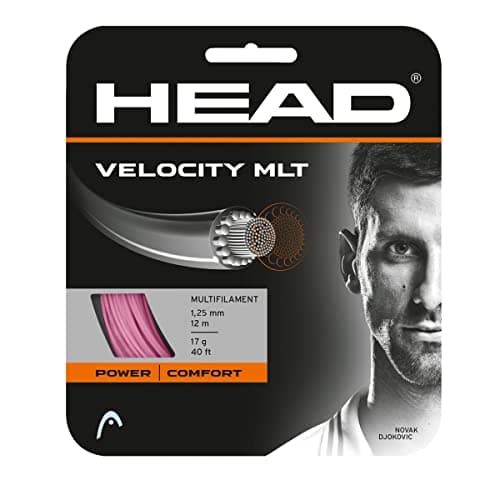
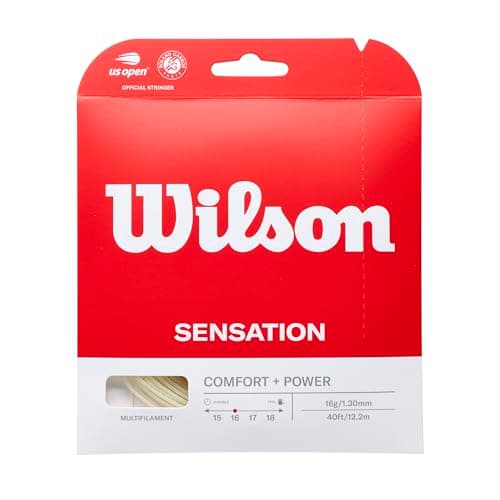
Answer 1: a multifilament, and get your spin from your swing. This is the right call for most club players, and it is the top pick for a reason. A multifilament gives you real power and real comfort; the spin you generate comes from your racquet-head speed and swing path, which is where most of anyone's spin comes from anyway. Wilson NXT is the benchmark, HEAD Velocity MLT is the budget version, Wilson Sensation sits between them.
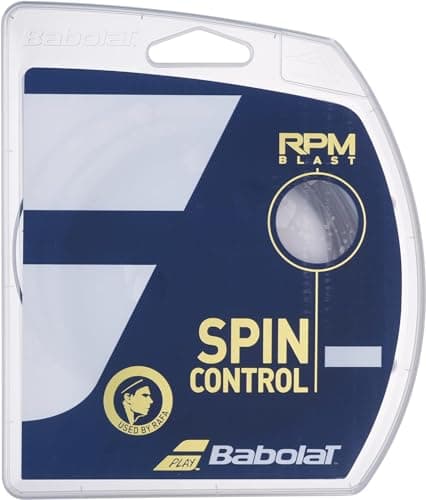
Answer 2: a soft, shaped polyester. A full polyester bed maximizes bite and gives up power — but the softer, thinner co-polyesters claw some of it back. Solinco Hyper-G Soft at 1.20 mm is a square-profile co-polyester in a deliberately softened formulation; Babolat RPM Blast is the octagonal spin benchmark with high snapback. Pick these if you already hit a big enough ball and what you want is the ball coming down inside the baseline.
Answer 3: a hybrid, which is the real answer. Polyester in the mains, a multifilament or gut in the crosses. The mains are what move and snap back, so they control spin; the crosses contribute much of the stringbed's stretch, so they control power. You get most of both and you pay for it in complexity: your stringer needs to know, and the two halves wear at different rates. Gut mains with polyester crosses is the premium version of the same trick.
And "power and control"? That is a different question
The third search in this cluster asks for power and control, which is not the same request at all — and it is the one where expectations need managing. Control in a stringbed largely means the ball not flying: a stiff, low-powered bed that keeps the ball short. A string cannot simultaneously add depth and take it away.
What people asking that question usually want is a powerful string that still lands in, and there are two real routes to it. The first is a multifilament strung tighter than you normally would — you get the comfort and elasticity, and the tension takes the edge off the depth. The second is the hybrid above. If control is genuinely your problem rather than a word you reached for, the dedicated page is the best strings for control, and it will serve you better than this one.
Two things that change power more than string choice
Tension. Lower tension equals more power, and the effect is bigger than most string swaps. Dropping a few pounds is free, reversible at your next restring, and the first thing to try. See the tension guide.
The frame. A stiff, head-heavy, open-pattern racquet is a power racquet, and no string will turn an 18x20 player's stick into one. If free depth is what you are chasing, the frame is the bigger lever — power-oriented frames and head size both matter more than the string in them.
One honest caveat on the string-bed physics above: it is the standard published account of how elasticity and snapback work, drawn from the manufacturers' own material descriptions. We have not measured rebound energy or spin rates for any of these strings. The scores are judgments from documented specifications against our rubric, which is what string information in this category honestly is.
If you break strings while chasing all this, note the gauge trap: 16 vs 17 gauge explains why the thin-and-lively string you just paid for keeps snapping, and the spin ranking goes deeper on the shaped polys above.