Skip to content
Four Oh Club

Court footwear · Shoes

How Long Do Tennis Shoes Last?

Court shoes die from the inside out. The tread is usually the last thing to go, which is why most club players are playing in shoes that stopped supporting them months ago.

By Stephen V.Updated How we score
#ad

We earn a commission when you buy through our Amazon links, at no extra cost to you. It never changes our rankings, and we say so when the cheaper racquet is the better buy. How this works.

A pair of tennis shoes worn twice a week on hard court typically lasts a club player somewhere between six and twelve months — and the honest version of that answer is that it depends far more on how you move than on how often you play. Hard court is the surface that destroys shoes; clay and indoor carpet are gentle by comparison. What almost never decides it is the tread: the outsole on a decent court shoe outlives the midsole cushioning and the lateral structure that keep your foot over it. So the question to ask is not "is the tread worn through", it is "does this shoe still hold my foot in a hard lateral stop". If the answer is no, it is finished, whatever the bottom looks like.

What wears out, in the order it actually happens

1. The midsole foam compresses. This is first and it is invisible. The foam that absorbed your landing stops rebounding, so the shoe feels flat and your knees and heels do more work. You will notice it as new shoes feeling startlingly bouncy rather than as old shoes feeling dead.

2. The lateral structure gives. The upper stretches, the midsole edge compresses, and your foot starts sitting slightly off the outside of the platform in a wide stop. This is the failure that matters for injury, and it is the reason to replace shoes on time — shoes for ankle support explains what that structure is doing while it lasts.

3. The toe drag area opens. If you drag your toe on serves, this can be first instead, and it is the one wear pattern that looks dramatic. Toe drag guards — adidas' Adituff, the drag guards on the K-Swiss Hypercourt and Babolat Michelin shoes — exist for exactly this.

4. The outsole wears smooth. Usually last, on a decent shoe. Published durability-first outsole compounds — ASICS AHAR Plus, adidas Adiwear, New Balance NDurance — are specified for this, which is why the three picks on this page are the shoes from our registry built around them.

Surface changes the answer more than frequency does

Hard court is abrasive and unforgiving; it grinds outsoles and transmits every landing straight back up. Clay is the opposite — you slide into stops rather than jarring into them, which spares both the outsole and the midsole, and clay-specific full herringbone tread is shallower by design. Indoor carpet and grass are gentler still. A pair that lasts a season of twice-weekly hard-court tennis might last two on clay. Our surface pages — hard court and clay court — cover what changes besides lifespan.

Body weight, foot-strike and style matter too, and not politely: a heavy player who stops hard and slides will go through shoes two or three times faster than a lighter player who glides. That is also why the shoes built for grinders are the shoes that last.

The four-point replacement test

Do this with the shoes on a table rather than on your feet, because feet adapt and lie to you.

Press the midsole edge. If the lateral edge squashes easily under a thumb, the support is gone. Set them on a flat surface and look from behind. If the uppers lean outward over the soles, your foot is no longer centered on the platform. Twist them. A new court shoe resists; a finished one wrings out. Then, last, look at the tread — and specifically at whether the herringbone pattern is still raised under the ball of the foot and the outside edge of the heel, where it is doing the work.

One pair of shoes failing two of those four tests is done, even at four months old. One pair passing all four at eighteen months is fine, and you should keep playing in them.

How to make a pair last longer

Only wear them on court. Walking to the courts in your court shoes is the most common way club players lose a third of a shoe's life. Pavement is more abrasive than any court surface and it wears the tread in a pattern that is no use to you. This is the entire argument for a bag with a separate, vented shoe compartment — see bags with a shoe compartment.

Rotate two pairs if you play more than three times a week. Midsole foam recovers between sessions; foam that never gets a day off compresses permanently sooner. Two pairs rotated genuinely outlast two pairs worn consecutively.

Dry them, do not bake them. Out of the bag, laces loose, at room temperature. Heat — a radiator, a hot trunk, a dryer — degrades the adhesives and hardens the foam, and a shoe left damp in a sealed bag rots from the inside.

Check the manufacturer's outsole guarantee before you buy. Some premium court shoes are sold with a six-month outsole durability guarantee from the retailer or brand. It is worth knowing whether yours carries one, because if you are wearing through outsoles in under six months, that is the cheapest shoe budget available to you. Our most durable tennis shoes page ranks the field on exactly this.

A final note on what we can and cannot tell you. There is no published hour-count for a tennis shoe, and anyone quoting you "45 to 60 hours" as a measured figure is guessing with decimal places. What exists is the manufacturers' outsole compounds and support constructions, which we quote, plus a wear test you can run yourself in ten seconds — which is more useful than any number we could invent.

The short answer

Quick picks

#Racquet / gearBest forScorePrice
01
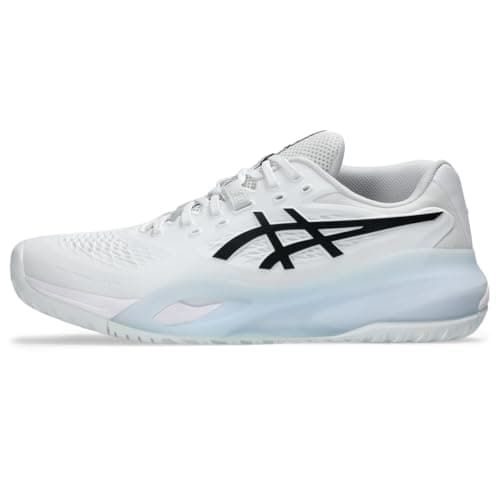
ASICS ASICS Gel-Resolution X (Men's)
ASICS Gel-Resolution X (Men's)

The most supportive tennis shoe sold, and the default answer to 'best tennis shoes'. If you slide, stop and change direction hard, buy these.

Hard-court baseliners
8.6
$139.95Amazon
02
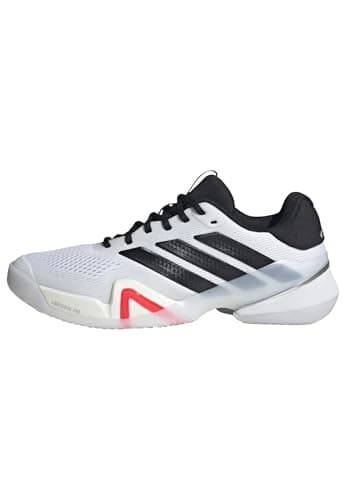
adidas adidas Barricade (Men's)
adidas Barricade (Men's)

The other durability king. Built like a tank, with the most aggressive torsional support of any shoe here.

Heavy, hard-court grinders
8.4
$127.95Amazon
03
New Balance FuelCell 996 v6 (Men's)

The cushioning pick, and the one to buy if your feet hurt. New Balance is the only tennis brand that sells real width options.

Foot pain and wide feet
8.6
Check price →

#ad · Live prices from the Amazon Product API, as of October 20, 2026. Where we have no verified live price, we show none — we would rather leave a gap than print a number that has rotted.

In detail

The picks, in full

01
ASICS ASICS Gel-Resolution X (Men's)

Hard-court baseliners

ASICS Gel-Resolution X (Men's)

Full-length AHAR Plus outsoleRe-engineered DYNAWALLFlyteFoam Blast+ midsoleHard court
8.6/10

The most supportive tennis shoe sold, and the default answer to 'best tennis shoes'. If you slide, stop and change direction hard, buy these.

Stability
10
Cushioning
8
Durability
10
Comfort
7
Value
8

Pros

  • DYNAWALL midsole technology physically blocks the foot from rolling over the edge during a hard lateral stop — the single most important thing a tennis shoe does
  • Full-length AHAR Plus rubber in a multi-directional tread with pivot points — the hardest-wearing compound ASICS makes, and the reason specialist retailers are willing to put outsole durability guarantees on this model
  • The most widely worn shoe in club tennis, so sizing advice is easy to find

Cons

  • Heavy and stiff out of the box; it takes a few sessions to break in
  • The support structure means less ground feel than a speed shoe

Don't buy this if…

…you are a serve-and-volley player who wants a light, fast shoe. Look at the Court FF 3.

$139.95View on Amazon

$164.9515% off

Price as of October 20, 2026. Prices change — Amazon's is the one that counts.

#ad · we may earn a commission from this link to ASICS Gel-Resolution X (Men's)

02
adidas adidas Barricade (Men's)

Heavy, hard-court grinders

adidas Barricade (Men's)

Adituff toe drag guardTorsion systemAdiwear outsoleHard court
8.4/10

The other durability king. Built like a tank, with the most aggressive torsional support of any shoe here.

Stability
9
Cushioning
8
Durability
10
Comfort
7
Value
8

Pros

  • Adituff reinforcement on the medial toe is the best answer on the market to toe-drag wear on a kick serve
  • The Torsion shank resists the twisting that destroys cheaper shoes and ankles alike
  • adidas' Barricade line has the longest continuous durability reputation in tennis

Cons

  • One of the heaviest shoes here; it is noticeable by the third set
  • Long break-in period — these are stiff for the first few hits

Don't buy this if…

…you are a light, quick player who wants to feel the court. The Barricade is armor, not a slipper.

$127.95View on Amazon

Price as of October 20, 2026. Prices change — Amazon's is the one that counts.

#ad · we may earn a commission from this link to adidas Barricade (Men's)

03

Foot pain and wide feet

New Balance FuelCell 996 v6 (Men's)

FuelCell foamNDurance outsoleMultiple widths (D/2E/4E)Hard court
8.6/10

The cushioning pick, and the one to buy if your feet hurt. New Balance is the only tennis brand that sells real width options.

Stability
8
Cushioning
10
Durability
8
Comfort
9
Value
8

Pros

  • Sold in genuine 2E and 4E widths — not a 'roomy standard', an actual last change, which is why it is our plantar-fasciitis and wide-foot pick
  • FuelCell is the most cushioned midfoot platform here, which takes load off the plantar fascia
  • NDurance outsole rubber in the high-wear zones holds up well

Cons

  • The soft FuelCell ride costs some court feel and some lateral firmness
  • Heavier than a speed shoe

Don't buy this if…

…you want maximum ground feel and a locked-down fit. Softness and precision trade against each other.

Check price on Amazon →

We don't have a verified live price for this right now, so we aren't showing one.

#ad · we may earn a commission from this link to New Balance FuelCell 996 v6 (Men's)

The short version

Twice a week on hard court: expect six to twelve months, and check the four points every couple of months after month four. Clay or indoors: longer, often much. Heavy player who stops hard: shorter, and buy the durable shoes rather than the light ones.

Do not judge a shoe by the tread alone

It is the last thing to go on a good court shoe and the first thing people look at. Midsole compression and lateral collapse arrive earlier and matter more, and both are findable with your thumb.

If yours die fast, buy for durability deliberately

Full-length durable outsole compounds, a toe drag guard and a heavier build are what extend life, and they come at the cost of weight. The three picks here are the registry's durability-first shoes; the light, fast ones are on lightweight tennis shoes and they will not last as long.
How we picked

We have not physically tested this gear

Everyone in this category says they tested twenty racquets. We have not tested any — and we say so. What we did instead: compiled the manufacturer-published specifications (head size, strung weight, string pattern, stiffness, outsole compound), normalized them, and scored each product against a published rubric weighted for the NTRP tier this page serves. The scores are judgments from documented research, not measurements we took, because we do not have a lab and are not going to pretend we do.

Questions

Frequently asked

How long do tennis shoes last?
For a club player on hard court playing twice a week, usually six to twelve months. Clay and indoor surfaces are far gentler and can double that. The variable that matters most is not frequency but how hard you stop and how heavy you are.
How long do tennis shoes last on hard court?
Hard court is the harshest surface for a shoe: abrasive on the outsole and unforgiving on the midsole. Expect the short end of the range — and if you are wearing through outsoles in a few months, buy a shoe specified with a durable full-length compound such as AHAR Plus, Adiwear or NDurance.
How do I know when to replace my tennis shoes?
Four checks: press the lateral midsole edge (it should not squash), look from behind for the upper leaning out over the sole, twist the shoe (it should resist), and only then look at the tread under the ball of the foot. Failing two of the four means replace, whatever the age.
Is it bad to wear tennis shoes off the court?
For the shoes, yes. Pavement is more abrasive than any court and wears the tread unevenly, so walking to the courts in your court shoes can cost a third of their life. Carry them and change at the court — which is what a vented shoe compartment in a tennis bag is for.
Should I rotate two pairs of tennis shoes?
If you play more than about three times a week, yes. Midsole foam recovers between sessions, and foam that never gets a rest day compresses permanently sooner, so two pairs rotated outlast two pairs worn one after the other.

Keep reading

Receipts

Sources

We do not run a testing lab, and we do not pretend to. Our specs come from manufacturer listings and spec sheets; our rules and dimensions come from the official rulebook. Where we could not verify something, we say so on the page rather than quietly leaving it out. Read our full method.