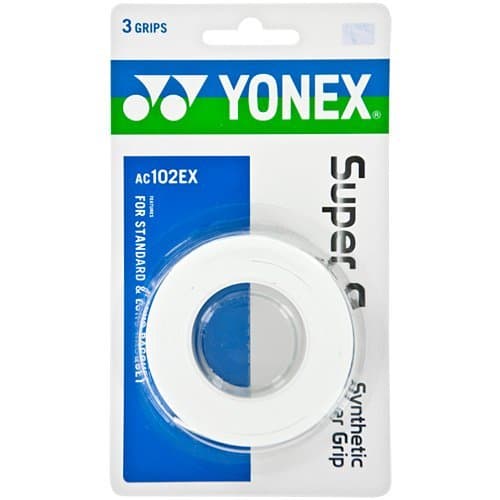
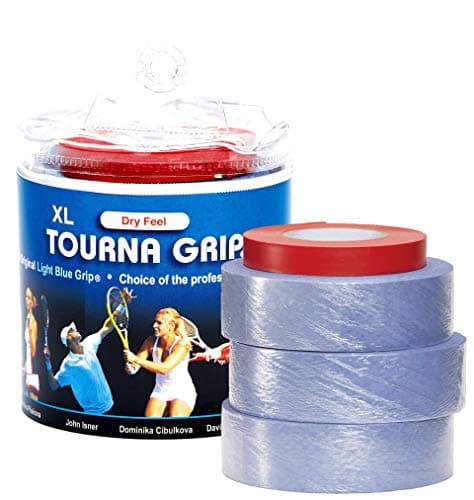
If your hands sweat, buy Tourna Grip XL — the dry-feel absorbent grip, in the 30-pack, and it is not close. Dry-feel and tacky are two different materials that behave in opposite ways when wet: a tacky polyurethane grip relies on surface adhesion and loses it the moment there is moisture between your palm and the grip, while an absorbent dry grip pulls the moisture into itself and gets grippier as it dampens. If you sweat moderately rather than heavily, Yonex Super Grap is the middle ground. If you have tried everything and it still goes slick, the problem is probably the change interval rather than the grip.
This is a specific problem with a specific fix, so this page leads with the fix. Two searches land here — best tennis overgrip for sweaty hands and best tennis grip for sweaty hands — and they are the same question from a player who is tired of regripping the handle mid-point.
Why tacky grips fail you and dry grips do not
An overgrip holds your hand through one of two mechanisms, and almost nobody buying one knows which they have.
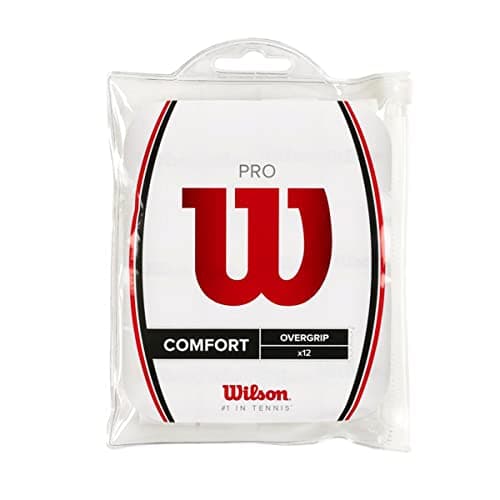
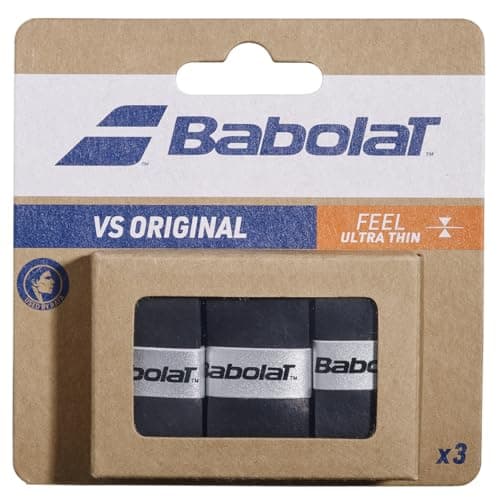
Tacky (polyurethane). The surface is slightly adhesive. Dry, it is excellent — a tacky grip feels locked to your palm and transmits every bit of the handle. Wet, the adhesion has a film of water between it and your skin, and adhesion across a water film is close to zero. This is why a tacky grip can feel perfect for twenty minutes and like a wet bar of soap in the third set. Wilson Pro Overgrip, Babolat VS Original and most of the grips on a pro shop wall are this type.
Dry-feel (absorbent). The material takes moisture in rather than sitting on top of it. It feels slightly rough and chalky in the hand when new, which puts people off on day one, and then it stays consistent as you sweat because the moisture is going somewhere. Tourna Grip is the long-standing example of this category.
The practical test: if your grip feels great at the start of a match and slick by the middle, you are on a tacky grip and you need a dry one. If it feels odd at the start and fine all the way through, you are already on a dry one and the fix is elsewhere.
What else causes a slick handle
Four things, roughly in order of how often they are the real cause.
1. You are not changing the grip often enough. This is the most common answer and the least popular one. A grip for sweaty hands is a consumable, and the interval for a heavy sweater in summer can be every session. That is why the right product is a 30-pack and not a 3-pack — the point of buying in bulk is that it stops being a decision. If you are rationing grips you are playing on a used one.
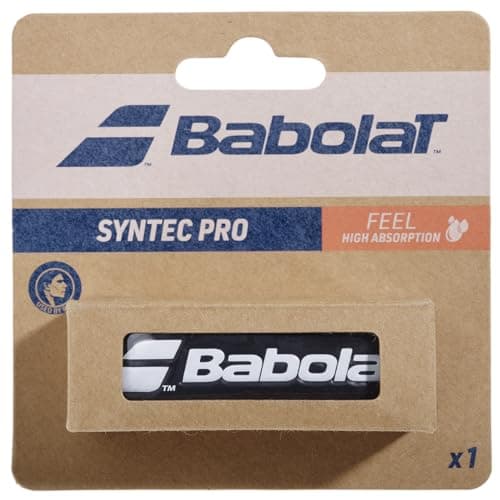
2. The base grip underneath is saturated. Moisture goes through an overgrip into the replacement grip below, and a base grip that has absorbed two seasons of sweat is permanently damp and will defeat any overgrip you put on it. If the handle smells, replace the base grip — Babolat publishes the Syntec Pro at 1.9 mm and 110 cm, and the method is in how to regrip a racquet.
3. Your grip size is too large. A handle that is too big makes you squeeze to control it, squeezing generates heat, heat generates sweat. Going down a size can do more for a sweaty hand than any grip will — measure it in the grip size guide.
4. You are not using a towel or a wristband. Unglamorous and effective. A towel on the fence and a wristband that stops sweat running down your forearm into your palm solve a meaningful share of this problem for the price of nothing.
Two notes on the dry-grip experience
It feels wrong at first. A dry grip is not tacky, and if you are used to tacky it will feel loose and slightly papery for a session or two. Several players give up at this point. Give it two full sessions, in the heat, before you judge it.
Dampen it, do not baby it. Dry grips are at their best slightly damp rather than bone dry, which is the opposite of what the name suggests and the reason the category confuses people. Experienced users sometimes wet their hands lightly before they start. You do not need to do that, but it tells you something about how the material works.
One more honest point: we have not run a friction test on wet grips, because no such published test exists for this category and we do not have the equipment. What this page is built on is the material difference between absorbent and adhesive surfaces, which is documented in the manufacturers' own descriptions of their products, plus the published pack sizes and thicknesses. The scores are judgments from that documentation against our rubric, weighted here toward wet performance because that is what this page is for.
So which grip should you buy?
Hands sweat heavily, or you play in humidity → Tourna Grip XL, 30-pack. The dry-feel absorbent grip in the pack size that matches the change interval. This is the answer.
Hands sweat moderately, and a fully dry grip feels too rough → Yonex Super Grap. Thin, lightly absorbent, with some grab left in it — the compromise pick, three to a pack.
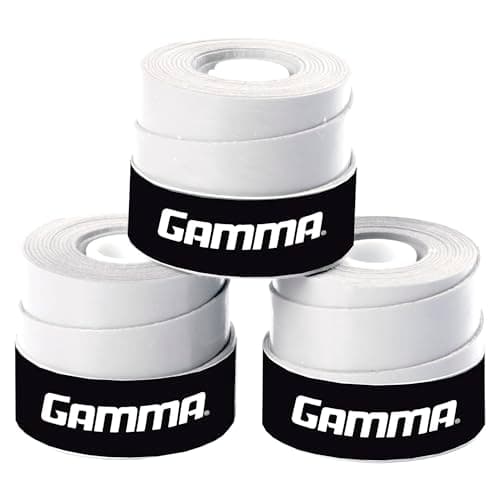
You want to test whether a cheap overgrip changed weekly is enough → GAMMA Supreme, three to a pack at the lowest price here. A fresh grip beats a clever grip, and this is the cheapest way to find out whether that is true for you.
Your hands are dry and you want maximum feel → Wilson Pro Overgrip at 0.5 mm (tacky, 12-pack) or Babolat VS Original (ultra-thin, 3-pack). Both are excellent and neither is for a sweaty hand. The general ranking is the best tennis overgrips.
The handle smells, or the base grip is hard and shiny → replace the base grip first with the Babolat Syntec Pro, then put a dry overgrip on top. No overgrip can fix a saturated grip underneath it, and overgrip vs replacement grip explains which is which.