There is no best tennis racket brand, and anyone ranking them one to ten is selling you something. Wilson, Babolat, HEAD and Yonex all make excellent frames. What separates them is temperament: Wilson builds feel, Babolat builds power, HEAD builds the balanced all-courter, Yonex builds comfort at a price. Pick the philosophy that matches how you play, then pick the frame inside it.
That is a more useful question than “which brand is best”, and it is the one this page answers. Below: what each brand actually optimises, the frame to look at from each, and where the second-tier makers are genuinely the better buy.
What a brand actually is, in racquets
Three things, and only the first two are design decisions.
A layup philosophy. How the graphite is laid, how stiff the resulting frame is, and where the mass sits. This is the one that produces a recognisable family feel. Tennis Warehouse publishes a stiffness figure (RA) for almost every frame, and brand tendencies show up in it clearly — Wilson's Clash line at RA 54, Babolat's Pure Drive at RA 69.
A grip shape and handle treatment. Underrated and the most common reason someone “just does not get on” with a brand. Wilson handles are rectangular, Babolat's are rounder, Yonex damps the handle with its VDM insert. You feel this on every shot.
Distribution and stock depth. Not a design decision but it decides what you can actually buy in your grip size this week, which is why the two biggest brands end up in most hands.
Wilson — feel, and the softest frames in tennis
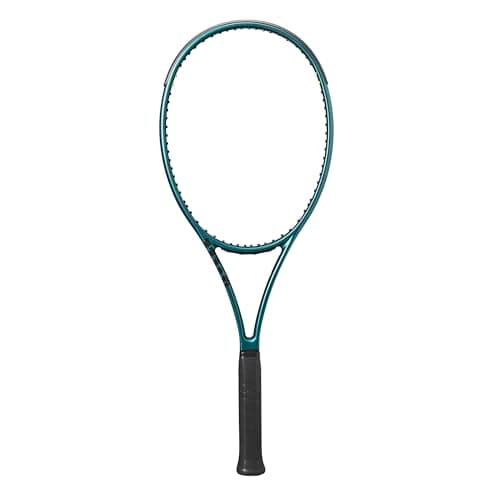
Wilson's identity is feel over free power. The Blade line is the control frame most 4.0–4.5 players cross-shop, and the Clash line is the softest performance family anyone sells — RA 54 against a market norm in the low sixties, which is why it is the standing recommendation for a player with any arm history.
Buy Wilson if your errors go long rather than short, if you value touch at the net, or if your elbow has ever complained. Do not buy Wilson expecting the frame to supply depth: it will not, by design. The picks are the Blade 98 for a 4.5 and the Clash 100 v3 for anyone in the four-oh club.
Babolat — power, and the best-selling frame in tennis
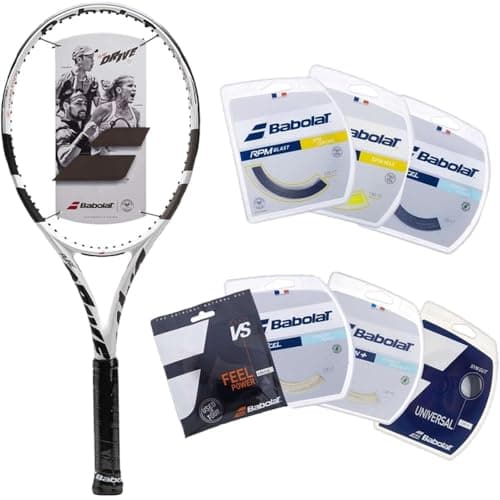
Babolat optimises free depth and spin. The Pure Drive has outsold almost everything in the sport for two decades by giving a club player pace they cannot generate themselves; the Pure Aero does the same thing through spin rather than flat pace.
Buy Babolat if you hit short, if your swing is compact, or if you play a lot of doubles and need pop on the volley. The warning is honest and specific: these are stiff frames, and a stiff frame strung with a tight full polyester bed is the most reliable way to develop tennis elbow in club tennis. String it with a multifilament or a hybrid — see strings for tennis elbow, and the in-family comparison at Pure Drive vs Pure Aero.
HEAD — the balanced all-courter, and the best value at the top
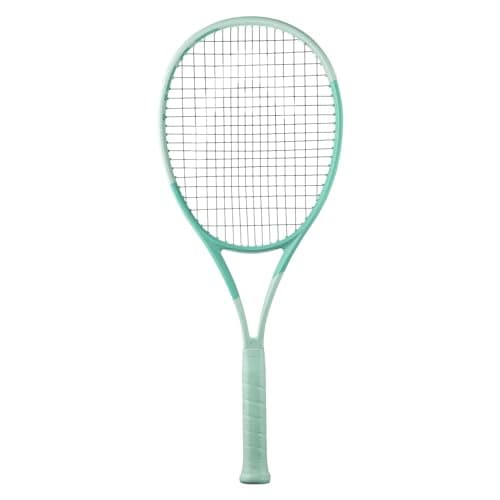
HEAD sits deliberately in the middle. The Boom, Speed, Radical and Extreme families cover the spectrum without any of them being extreme, and HEAD frames are the ones most likely to ship strung, which quietly saves you a stringing job on top of the sticker price.
Buy HEAD if you want one frame to do everything, or if you want performance specs at a lower price than Wilson or Babolat ask. The Boom MP is the best-value intermediate frame we rank; the Gravity MP is the quiet recommendation for a flat-hitting 4.5, because an 18x20 pattern on a 100 sq in head is an unusually clever combination.
Yonex — comfort engineering, at a price
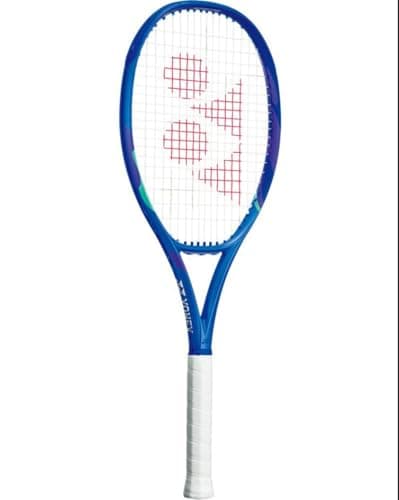
Yonex is the brand that refuses the usual trade. The isometric (squarer) head shape enlarges the sweet spot without enlarging the frame, and the VDM handle insert damps impact at the source — so an EZONE 100 delivers real power while transmitting less shock than a stiff frame of the same power. That is genuinely unusual and it is why it costs what it costs.
Buy Yonex if you want power without the arm risk and the budget allows. The EZONE line is the power family; VCORE is the spin family; Percept is the control family for 4.5+.
The brands people forget, and when they are the right answer
Dunlop makes the CX line — genuine control frames, consistently cheaper than the equivalent Wilson or Yonex. If you want an 18x20 player's frame without paying flagship money, this is where to look.
Völkl builds some of the most comfortable frames in tennis and almost nobody tries them, because distribution is thin. If comfort is the priority and you can find one, they are a real alternative to the Clash.
Prince and Tecnifibre both have loyal followings and narrower ranges. Prince in particular remains a serious string brand even where its frames are less visible — the Synthetic Gut reel on our string types page is the most-sold string in club tennis.
What none of these brands are is worse. Second-tier distribution is not second-tier engineering, and the main cost of buying one is that you cannot demo it as easily.
Distribution is also the quiet argument for the big four if you intend to keep a frame for years: a line that gets refined rather than replaced still has matching frames and grommet strips available in four years, which is what buying for life actually means in this category. That case is made in full at high quality tennis rackets.
The four majors, side by side
| Brand | Optimises | Flagship families | Buy it if | Skip it if |
|---|
| Wilson | Feel and comfort | Blade, Clash, Pro Staff, Ultra | Your errors go long; your arm complains | You need the frame to supply depth |
| Babolat | Power and spin | Pure Drive, Pure Aero, Boost | You hit short or swing compactly | You want a full stiff poly bed |
| HEAD | Balance and value | Boom, Speed, Radical, Gravity, Extreme | You want one frame for everything | You want a strong family character |
| Yonex | Comfort with power | EZONE, VCORE, Percept | You want depth without the shock | Budget is the binding constraint |
The brand to buy at each NTRP level
| Level | Best brand fit | Why |
|---|
| NTRP 2.0–3.0 | HEAD or Babolat | Oversize, light, pre-strung and cheap — HEAD's Ti line and Babolat's Boost line both do this properly |
| NTRP 3.5–4.0 | HEAD for value, Wilson for comfort | The Boom MP ships strung at a fraction of flagship money; the Clash is the safe pick for a developing swing |
| NTRP 4.5+ | Wilson, Yonex or Dunlop | Control frames and 18x20 patterns, where Dunlop's CX line undercuts the flagships |
| Any level, arm trouble | Wilson Clash or Yonex EZONE | RA 54 and handle damping respectively — the two published answers to shock |
What brand loyalty actually costs you
More than people think. The common pattern is a player who buys their third consecutive frame from one brand because the last two were fine, and never discovers that a different family feel would have suited them better. Frames last three to five years; that is a long time to be in the wrong family.
The one genuine argument for staying put is the handle. If you have adapted to a brand's grip shape and built your grip up a particular way, switching costs you a few weeks of recalibration. That is real, and it is also only a few weeks.
Pro endorsement is the least useful signal there is
Every brand has a world-class player under contract, which means endorsement carries no information about which brand suits you. Worse, most tour frames are notwhat is in the shop: the retail version shares a name and a paint job with a custom-weighted, custom-balanced frame built to a player's specification.
What is genuinely useful: the published specs, the stiffness figure, the string pattern and whether the frame ships strung. All four are on the record for every frame we rank. The method is at how to choose a tennis racquet, and the sizing at how to choose tennis racket size.
Demo across brands, not within one
If you can borrow or demo frames, the useful experiment is one frame from each of three brands rather than three frames from one. Within a family the differences are small; across families they are the whole point. Hit a Clash, a Pure Drive and a Boom back to back and the answer to “which brand” will be obvious within a set.
And if you cannot demo — most club players cannot — buy the brand whose published temperament matches the errors you actually make. Long errors want Wilson. Short errors want Babolat. No strong pattern wants HEAD.