Skip to content
Four Oh Club

The flagship · Racquets

The Best Professional Tennis Racquets

Every frame on this page is a retail version of something on tour. That is a reason to want one and not, by itself, a reason to buy one — and the difference is the whole page.

By Stephen V.Updated How we score
#ad

We earn a commission when you buy through our Amazon links, at no extra cost to you. It never changes our rankings, and we say so when the cheaper racquet is the better buy. How this works.

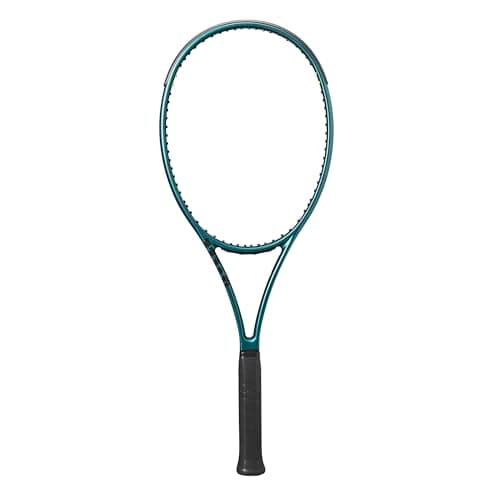
Buy the Wilson Pro Staff 97 v14. At 97 square inches, 11.7 oz strung and a 16x19 pattern in braided graphite and Kevlar, it is the closest thing in a shop to a genuine tour frame, and the line has barely changed its character in thirty years — which is exactly what you want from a frame you are buying as a destination rather than a step. The Wilson Blade 98 is the more forgiving tour frame and the one more club players end up keeping; the Yonex Percept 97 is the choice if feel matters more to you than pace. And the honest warning first: a tour-spec frame makes a good player better and a tired player worse, and the difference between those two is fitness, not talent.

This page is written for a specific buyer: a competent player — NTRP 4.0 and up — who has decided their next racquet should be a real one, and who wants to know what the professionals actually use. It is not the same question as which racquet suits an advanced player (that page ranks by playability at 4.5+) or which racquets are built best (that one ranks by construction and line longevity). This page is about tour specs and whether you want them.

What "professional" actually means on a racquet

There are three separate things being sold under that word and conflating them is how people waste money.

1. The retail frame from a tour line. This is what you can actually buy, and it is what is on this page. A Pro Staff 97, a Blade 98, a Prestige MP: the same mold, layup and pattern as the frame the line is named for, built on a production line to a retail tolerance. For the overwhelming majority of good players this is the right thing to own, and the gap between it and a tour frame is smaller than the gap between you and the tour.

2. Pro stock. Frames made in a different facility, to tighter tolerance, often in moulds that are no longer retail, and specified individually for a contracted player. They are sold on the secondary market, they are expensive, their codes are opaque, and the specs vary frame to frame because they were built for somebody else's hand. Buying pro stock to improve your tennis is a category error: it is a collector's market with a performance story attached.

3. A paint job. The frame a player appears to use and the frame they actually use are frequently different: the paint is current-season, the mold underneath may be a decade old. This is why "the racquet X plays with" is a bad shopping criterion, and why we rank by published spec instead.

The three specs that make a frame tour-spec

Weight: 11.0 oz strung and up. Every frame on this page is between 11.0 and 11.7 oz strung. Mass is what makes a racquet stable against a heavy ball, and stability is the single reason a professional frame feels better than a light one — the ball does not push it around. The cost is real and physical: you will be slower to the ball in the third set, and if your technique relies on racquet-head speed you will lose some.

Head size: 97 to 100 square inches. Smaller stringbeds do two things: they shrink the sweet spot (which punishes a late ball) and they increase precision (because the string movement is more uniform). A 97 is noticeably less forgiving than a 100. This is the spec most often over-bought — many good club players are better off at 98 or 100 than at 95.

Pattern: 16x19 or 18x20. 16x19 is the open pattern: more spin, more power, shorter string life. 18x20 is dense: more control, flatter trajectory, more arm load. The Prestige MP L and the Gravity MP here are the 18x20s and they are the two frames on this page a big topspin hitter should probably avoid.

Should a 4.0 buy a tour frame? Three honest tests

Test 1: the third set. Can you still swing freely at the end of a long match with your current racquet? If you are already late on the ball when you are tired, adding half an ounce will not help you. Fitness first, frame second.

Test 2: your misses. If your errors are mostly long and loose, a heavier, lower-powered, denser frame will genuinely tighten your game. If your errors are mostly short and framed, you need a bigger sweet spot, not a smaller one, and this is the wrong page — read the 4.0 page instead.

Test 3: your elbow. Tour frames are heavy, and heavy is usually comfortable — mass absorbs shock. But a heavy, stiff frame strung with a stiff polyester is the single worst combination for an arm. The American Academy of Orthopaedic Surgeons describes tennis elbow as overuse causing microtearing of the forearm tendons at the elbow, and if you have had it, pick the flexible options: the Blade 98 publishes FORTYFIVE flex and the Gravity MP is HEAD's arm-conscious tour frame. Then string them soft — see strings for tennis elbow.

The cheaper way to get most of the way there

If the frame you own plays well but feels pushed around, you may not need a new racquet at all. Six grams of lead tape at 3 and 9 o'clock adds stability without changing anything else about how the frame swings, and Tennis Warehouse publishes the arithmetic: one inch of half-inch lead tape weighs 0.5 grams, and the usual starting point is about 10 grams in four strips. That is the cheapest meaningful upgrade in tennis, and the how-to is here.

As everywhere on this site: we have not hit with these frames. Every spec above is the manufacturer's published figure, and the scores are judgments from that documentation against our rubric, weighted here toward stability, precision and tour-line continuity rather than toward forgiveness.

The short answer

Quick picks

#Racquet / gearBest forScorePrice
01
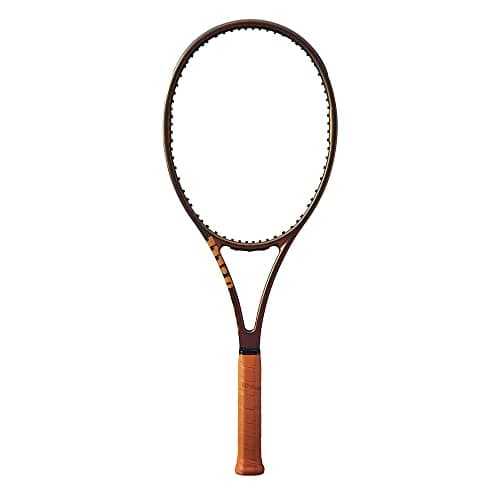
Wilson Wilson Pro Staff 97 v14
Wilson Pro Staff 97 v14

The purist's frame. Dense pattern, low power, total control — it gives you nothing and lets you do anything.

Advanced flat hitters
7.0
$319.55Amazon
02
Wilson Wilson Blade 98 (16x19) v9
Wilson Blade 98 (16x19) v9

The control benchmark that still hits a heavy ball — the most-used frame in competitive club tennis, and deservedly.

Advanced all-courters
7.8
$219.00Amazon
03
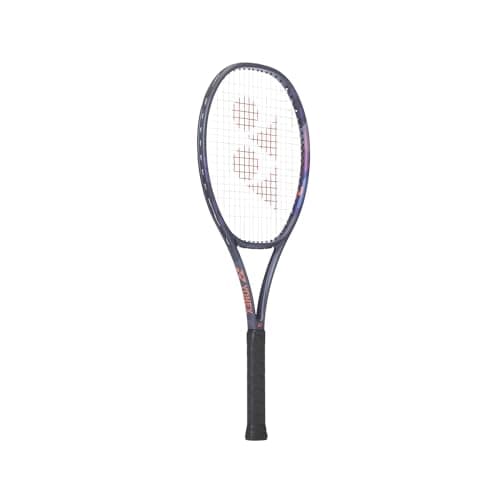
Yonex Yonex Percept 97
Yonex Percept 97

Yonex's flexible control frame — the one for a 4.5 who wants feel and comfort rather than a stiff, loud string bed.

Feel players
7.6
$305.00Amazon
04
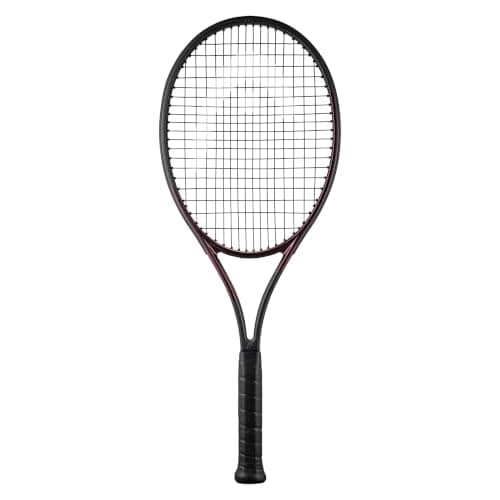
HEAD HEAD Prestige MP L (2023)
HEAD Prestige MP L (2023)

The classic 18x20 control frame, in its lighter L spec. Nothing goes long with this racquet — which is the entire point.

Precision ball-strikers
7.0
$259.00Amazon
05
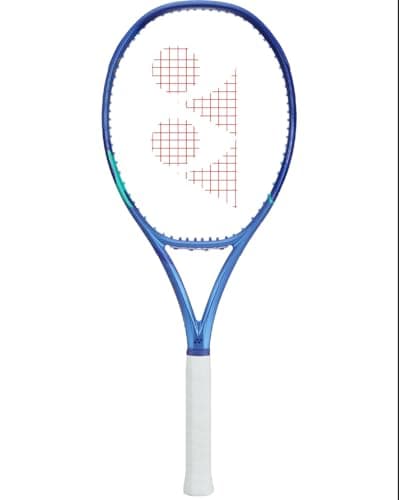
Yonex Yonex EZONE 98
Yonex EZONE 98

The EZONE's control sibling, and the most complete racquet on this page: power, spin, comfort and a 98 sq in head that still forgives.

Advanced all-rounders
8.0
$305.00Amazon
06
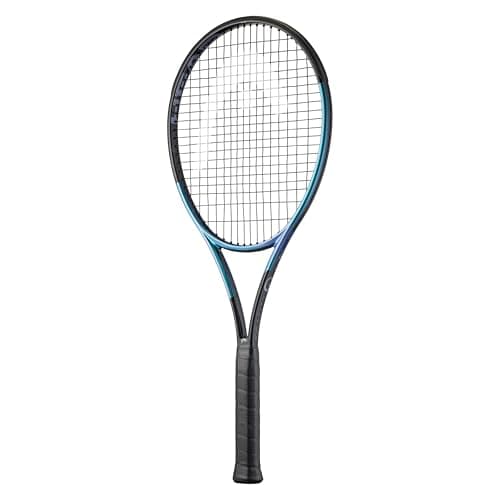
HEAD HEAD Gravity MP (2025)
HEAD Gravity MP (2025)

The most comfortable advanced frame here. A big 100 sq in head on a soft, low-powered layup — control without the harshness.

Advanced, arm-conscious
7.6
$219.00Amazon

#ad · Live prices from the Amazon Product API, as of October 19, 2026. Where we have no verified live price, we show none — we would rather leave a gap than print a number that has rotted.

In detail

The picks, in full

01
Wilson Wilson Pro Staff 97 v14

Advanced flat hitters

Wilson Pro Staff 97 v14

97 sq in head11.7 oz strung16x19 patternBraided graphite/Kevlar
7.0/10

The purist's frame. Dense pattern, low power, total control — it gives you nothing and lets you do anything.

Control
10
Power
5
Spin
7
Comfort
7
Value
6

Pros

  • Braided graphite and Kevlar layup delivers the most connected, informative feel of any frame on this list
  • Low-powered by design, which means you can swing out fully and the ball still lands in
  • Heavy enough (11.7 oz strung) to absorb pace rather than be deflected by it

Cons

  • Demands a long, complete swing — an incomplete stroke produces a short ball every time
  • Almost no free power; a 3.5 will spend the whole match pushing

Don't buy this if…

…you are below 4.5 or your swing is still developing. This frame is a diagnosis, not a cure.

$319.55View on Amazon

Price as of October 19, 2026. Prices change — Amazon's is the one that counts.

#ad · we may earn a commission from this link to Wilson Pro Staff 97 v14

02
Wilson Wilson Blade 98 (16x19) v9

Advanced all-courters

Wilson Blade 98 (16x19) v9

98 sq in head11.4 oz strung16x19 patternFORTYFIVE flex
7.8/10

The control benchmark that still hits a heavy ball — the most-used frame in competitive club tennis, and deservedly.

Control
9
Power
7
Spin
8
Comfort
8
Value
7

Pros

  • FORTYFIVE construction gives it a flex profile that is comfortable without going soft — the reason it is the default 4.5 recommendation
  • 16x19 on a 98 is the sweet spot of the whole racquet market: control, but with real spin access
  • Ships strung with Sensation 16, a comfortable multifilament, so the factory setup is actually usable

Cons

  • Needs a full swing to produce depth; it does not help a short stroke
  • The v9's muted feel divides opinion against the crisper v7

Don't buy this if…

…you need help generating pace. The Blade rewards the swing you bring; it adds nothing.

$219.00View on Amazon

Price as of October 19, 2026. Prices change — Amazon's is the one that counts.

#ad · we may earn a commission from this link to Wilson Blade 98 (16x19) v9

03
Yonex Yonex Percept 97

Feel players

Yonex Percept 97

97 sq in isometric head11.6 oz strung16x19 patternFlexible layup
7.6/10

Yonex's flexible control frame — the one for a 4.5 who wants feel and comfort rather than a stiff, loud string bed.

Control
10
Power
5
Spin
8
Comfort
9
Value
6

Pros

  • Flexible by design, which gives a long ball-pocketing dwell time and exceptional touch at the net
  • Isometric head keeps a 97 usable on off-center contact
  • Comfort and control together, which usually means choosing one

Cons

  • Lowest raw power of the advanced frames here — a pusher will test your patience
  • Yonex premium pricing again

Don't buy this if…

…you need help with depth. The Percept is for players who already hit through the court.

$305.00View on Amazon

Price as of October 19, 2026. Prices change — Amazon's is the one that counts.

#ad · we may earn a commission from this link to Yonex Percept 97

04
HEAD HEAD Prestige MP L (2023)

Precision ball-strikers

HEAD Prestige MP L (2023)

98 sq in head11.0 oz strung18x20 patternAuxetic
7.0/10

The classic 18x20 control frame, in its lighter L spec. Nothing goes long with this racquet — which is the entire point.

Control
10
Power
5
Spin
6
Comfort
7
Value
7

Pros

  • 18x20 on a 98 is the tightest commonly available string bed — depth control is absolute
  • The L spec drops weight from the standard Prestige, which makes an unforgiving frame playable for a club player
  • Thirty-year lineage; stringers and coaches know exactly how to set it up

Cons

  • Lowest power and lowest spin on this list — you must generate everything
  • A dense pattern eats strings more slowly but transmits more shock

Don't buy this if…

…you are not consistently hitting the middle of the string bed. The Prestige is merciless about that.

$259.00View on Amazon

Price as of October 19, 2026. Prices change — Amazon's is the one that counts.

#ad · we may earn a commission from this link to HEAD Prestige MP L (2023)

05
Yonex Yonex EZONE 98

Advanced all-rounders

Yonex EZONE 98

98 sq in isometric head11.6 oz strung16x19 patternGraphite + VDM
8.0/10

The EZONE's control sibling, and the most complete racquet on this page: power, spin, comfort and a 98 sq in head that still forgives.

Control
9
Power
8
Spin
8
Comfort
9
Value
6

Pros

  • Hits the rare four-way balance — real power, real spin, real control and a soft feel
  • Isometric head shape makes a 98 behave closer to a 100 on off-center hits
  • The most-played frame on the women's tour family, which tells you about its usability

Cons

  • Expensive, and Yonex rarely discounts
  • Muted Yonex feel will frustrate anyone who wants crisp feedback

Don't buy this if…

…budget is the deciding factor. The Dunlop CX 200 LS gets you 80% of the control for a third of the money.

$305.00View on Amazon

Price as of October 19, 2026. Prices change — Amazon's is the one that counts.

#ad · we may earn a commission from this link to Yonex EZONE 98

06
HEAD HEAD Gravity MP (2025)

Advanced, arm-conscious

HEAD Gravity MP (2025)

100 sq in head11.3 oz strung18x20 patternAuxetic 2.0
7.6/10

The most comfortable advanced frame here. A big 100 sq in head on a soft, low-powered layup — control without the harshness.

Control
10
Power
6
Spin
6
Comfort
9
Value
7

Pros

  • 18x20 dense pattern on a 100 sq in head is rare and brilliant: the forgiveness of a big face with the control of a tight string bed
  • One of the lowest stiffness ratings in HEAD's performance range, so it is genuinely kind to the arm
  • Ships strung at mid tension, which for an 18x20 is the right call

Cons

  • The dense 18x20 pattern cuts spin potential compared with a 16x19
  • Low power means you supply all of it

Don't buy this if…

…spin is the core of your game. An 18x20 pattern fights you on it; buy the VCORE or Extreme.

$219.00View on Amazon

Price as of October 19, 2026. Prices change — Amazon's is the one that counts.

#ad · we may earn a commission from this link to HEAD Gravity MP (2025)

Buy two, and demo first

Two things every player who moves to a tour frame learns late. First, demo before you buy — a 97 square inch frame is not something you can assess from a spec sheet, and the difference between a 97 and a 100 is enormous in the hand and invisible on paper. Second, buy two matched frames if you can, because a tour frame will be strung tighter and with stiffer string than a recreational one, and it will break strings mid-match.

String them softer than you think

A tour frame plus full polyester at high tension is how good players acquire elbow problems. If you are moving up in frame weight, move down in string stiffness at the same time: a multifilament, or a polyester crossed with a multifilament, at the lower end of the frame's range. The tension guide has the numbers and poly versus multifilament has the choice.

What to skip

Skip pro stock unless you collect frames. Skip buying the racquet a particular player appears to use. And skip the smallest head size available: 95 square inches and under is a spec for someone whose contact point is reliable on every ball, every time, and that is a smaller group of players than the people buying those frames.
How we picked

We have not physically tested this gear

Everyone in this category says they tested twenty racquets. We have not tested any — and we say so. What we did instead: compiled the manufacturer-published specifications (head size, strung weight, string pattern, stiffness, outsole compound), normalized them, and scored each product against a published rubric weighted for the NTRP tier this page serves. The scores are judgments from documented research, not measurements we took, because we do not have a lab and are not going to pretend we do.

Questions

Frequently asked

What is the best professional tennis racket?
The Wilson Pro Staff 97 v14 is the closest retail frame to a genuine tour racquet: 97 sq in, 11.7 oz strung, 16x19, braided graphite and Kevlar, in a line whose character has barely changed in decades. The Wilson Blade 98 is the more forgiving tour frame and the one more club players keep long-term; the Yonex Percept 97 is the feel-first choice.
Do professional players use the same rackets you can buy?
Sometimes, and often not exactly. Many tour frames are pro stock — built in a different facility to tighter tolerances, sometimes in moulds that are no longer retail, and specified individually. Others are current retail frames in a current paint job over an older mold. The retail version from a tour line is the thing worth buying; the gap between it and a true tour frame is smaller than the gap between any club player and the tour.
Should a 4.0 player use a professional racket?
Only if three things are true: you can still swing freely in the third set, your errors are mostly long rather than framed, and your arm is healthy. A tour-spec frame rewards a player who supplies their own pace and punishes one who is late on the ball. If your misses are short and off-center, buy a bigger sweet spot instead, not a smaller one.
What is pro stock in tennis?
Frames made for contracted players: tighter tolerances, sometimes discontinued moulds, often individually weighted and balanced, sold on a secondary market with opaque codes. Specs vary frame to frame because each was built for a specific person. It is a collector's market with a performance story attached, not a route to better tennis.
Is there a cheaper way to get a tour-frame feel?
Yes, and it is the first thing to try. Adding roughly 6 to 10 grams of lead tape at 3 and 9 o'clock on the frame you already own adds stability against a heavy ball without changing much else — Tennis Warehouse publishes 0.5 grams per inch for half-inch tape and suggests starting with about 10 grams in four strips. It costs the price of a can of balls.

Keep reading

Receipts

Sources

We do not run a testing lab, and we do not pretend to. Our specs come from manufacturer listings and spec sheets; our rules and dimensions come from the official rulebook. Where we could not verify something, we say so on the page rather than quietly leaving it out. Read our full method.