Skip to content
Four Oh Club

Know your level · Guides

What Is a 4.0 Tennis Player?

The level this site is named after. A 4.0 is the solid club player — good enough that equipment choices show up in results, not yet good enough for them to be the limiting factor.

By Stephen V.Updated How we score
#ad

We earn a commission when you buy through our Amazon links, at no extra cost to you. It never changes our rankings, and we say so when the cheaper racquet is the better buy. How this works.

A 4.0 NTRP player has dependable groundstrokes on both wings, hits with direction and depth on moderate-paced balls, uses spin and pace deliberately, and is comfortable at the net. What a 4.0 still lacks is consistency under real pressure — and that is precisely the gap to 4.5.

Why 4.0 is the level that matters

Recreational tennis is organised around it. 4.0 is where USTA League play gets genuinely competitive, where most clubs have their deepest pool of players, and where the majority of people who stick with tennis eventually settle.

It is also the level where gear starts to pay off. Below 3.5, equipment mostly needs to stay out of your way — see what a 3.5 player looks likefor the rung below. Above 4.5, the player is the limiting factor and any decent frame will do. At 4.0 you generate enough racquet-head speed for a frame's specs to change your results, and your technique is not yet efficient enough to overcome a bad choice. That is why this site exists and why it is called the Four Oh Club.

What a 4.0 can do

Groundstrokes: both wings are reliable at moderate pace. Forehand has some topspin and some directional control; backhand holds up in a rally even if it is not a weapon.

Serve:first serve goes in with intent and occasional pace. There is a genuine second serve rather than a pat — usually with some slice or kick — though it gets attacked by better players.

Net play: comfortable volleying, can put away a straightforward ball, and moves to the net deliberately rather than reluctantly. The overhead is reliable on an easy lob.

Tactics: aware of patterns. Will deliberately hit to a weaker wing, change pace to break rhythm, or use a slice to buy time. This tactical awareness is a lot of what separates 4.0 from 3.5.

What a 4.0 cannot do yet

Execute under pressure.The 4.0's strokes are reliable in a rally and become unreliable at 4–5 in a tiebreak. A 4.5 hits the same shot either way, and that is the single biggest difference between the levels.

Handle heavy pace consistently. A 4.0 can return a hard ball; a 4.5 can return it and do something useful with it.

Construct a point over several shots.A 4.0 plays good shots. A 4.5 plays sequences — a wide ball to open the court, then the ball into the space.

Rely on the second serve.At 4.5 the second serve is a shot you can trust at 30–40. At 4.0 it is usually the weakness a good opponent targets all afternoon.

How long does it take to reach 4.0?

Honest answer: it varies enormously, and anyone giving you a number is guessing. The factors that actually predict it are prior racquet-sport or athletic background, how often you play, whether you take coaching, and whether you play matches or only rally.

What is consistently true is that most players who plateau below 4.0 plateau for tactical and consistency reasons rather than stroke-quality reasons — which is why more coaching and more competitive matches move people up, and more ball-machine repetition often does not.

The short answer

Quick picks

#Racquet / gearBest forScorePrice
01
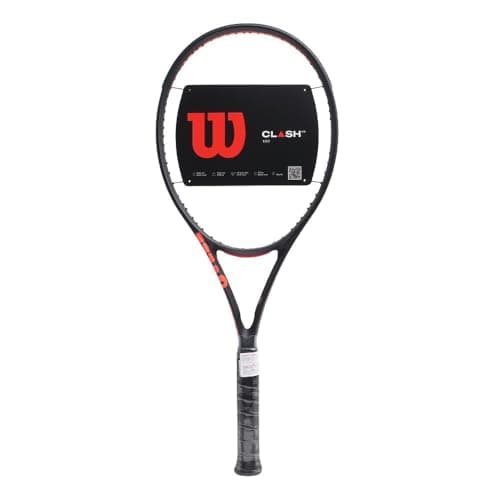
Wilson Wilson Clash 100 v3
Wilson Clash 100 v3

The 4.0 player's racquet. Unusually flexible for a modern frame, so it bends around the ball instead of jarring your arm — and it still hits a heavy ball.

NTRP 3.5–4.0 all-courters
8.0
$299.00Amazon
02
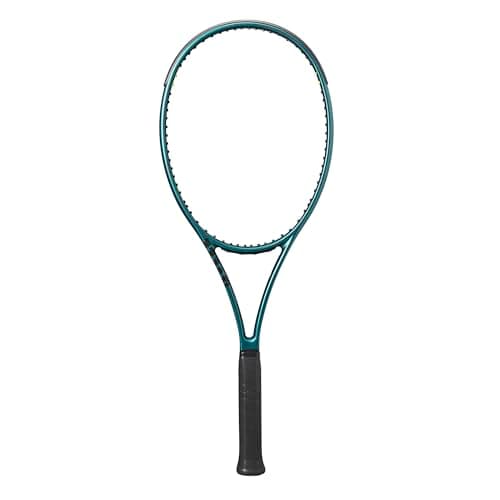
Wilson Wilson Blade 98 (16x19) v9
Wilson Blade 98 (16x19) v9

The control benchmark that still hits a heavy ball — the most-used frame in competitive club tennis, and deservedly.

Advanced all-courters
7.8
$199.00Amazon
03
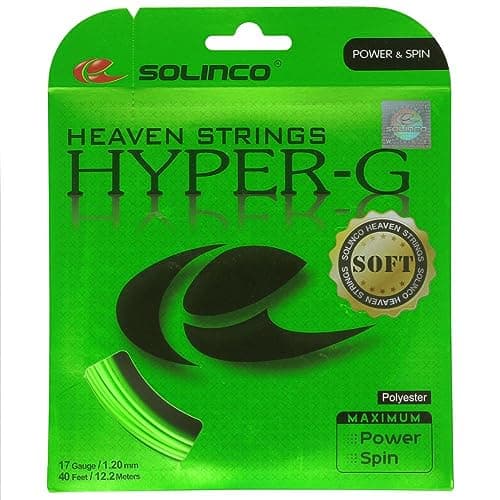
Solinco Solinco Hyper-G Soft 17 (set)
Solinco Hyper-G Soft 17 (set)

The best-value spin poly, and the one to buy first. Hyper-G gives you most of an RPM Blast for roughly half the price.

Best-value polyester
8.2
$12.99Amazon

#ad · Live prices from the Amazon Product API, as of October 7, 2026. Where we have no verified live price, we show none — we would rather leave a gap than print a number that has rotted.

In detail

The picks, in full

01
Wilson Wilson Clash 100 v3

NTRP 3.5–4.0 all-courters

Wilson Clash 100 v3

100 sq in head11.0 oz strung16x19 patternRA 54 stiffness
8.0/10

The 4.0 player's racquet. Unusually flexible for a modern frame, so it bends around the ball instead of jarring your arm — and it still hits a heavy ball.

Control
8
Power
7
Spin
8
Comfort
10
Value
7

Pros

  • Low stiffness rating with modern power — the combination that makes it the default recommendation for a club player with a twinge in the elbow
  • Flexible layup gives a long dwell time on the string bed, which translates directly into feel on drop shots and touch volleys
  • 100 sq in and a 16x19 pattern is the most forgiving spec that still rewards clean contact

Cons

  • The flex that makes it comfortable also costs you some free depth against a pusher
  • Premium price; this is the most expensive intermediate frame we list

Don't buy this if…

…you want a frame that does the work for you. The Clash asks you to swing; the Pure Drive does not.

$299.00View on Amazon

Price as of October 7, 2026. Prices change — Amazon's is the one that counts.

#ad · we may earn a commission from this link to Wilson Clash 100 v3

02
Wilson Wilson Blade 98 (16x19) v9

Advanced all-courters

Wilson Blade 98 (16x19) v9

98 sq in head11.4 oz strung16x19 patternFORTYFIVE flex
7.8/10

The control benchmark that still hits a heavy ball — the most-used frame in competitive club tennis, and deservedly.

Control
9
Power
7
Spin
8
Comfort
8
Value
7

Pros

  • FORTYFIVE construction gives it a flex profile that is comfortable without going soft — the reason it is the default 4.5 recommendation
  • 16x19 on a 98 is the sweet spot of the whole racquet market: control, but with real spin access
  • Ships strung with Sensation 16, a comfortable multifilament, so the factory setup is actually usable

Cons

  • Needs a full swing to produce depth; it does not help a short stroke
  • The v9's muted feel divides opinion against the crisper v7

Don't buy this if…

…you need help generating pace. The Blade rewards the swing you bring; it adds nothing.

$199.00View on Amazon

Price as of October 7, 2026. Prices change — Amazon's is the one that counts.

#ad · we may earn a commission from this link to Wilson Blade 98 (16x19) v9

03
Solinco Solinco Hyper-G Soft 17 (set)

Best-value polyester

Solinco Hyper-G Soft 17 (set)

Square-profile co-polyester17g / 1.20 mmSoft variant40 ft set
8.2/10

The best-value spin poly, and the one to buy first. Hyper-G gives you most of an RPM Blast for roughly half the price.

Control
9
Spin
9
Comfort
6
Durability
7
Value
10

Pros

  • Square profile for spin, in the Soft version that takes a real edge off the harshness of standard Hyper-G
  • Among the cheapest quality polys sold, which matters because poly needs replacing often
  • Holds tension noticeably better than most budget polyesters

Cons

  • 'Soft' is relative — it is still a polyester and still stiffer than any multifilament
  • The bright green dye transfers onto light-coloured frames

Don't buy this if…

…you are stringing a stiff frame and have elbow history. Soft poly is not soft enough for that combination.

$12.99View on Amazon

$13.997% off

Price as of October 7, 2026. Prices change — Amazon's is the one that counts.

#ad · we may earn a commission from this link to Solinco Hyper-G Soft 17 (set)

What a 4.0 should be playing with

ItemSpecWhy
Racquet98–100 sq in, 11.0–11.4 oz strung, 16x19Control with forgiveness still intact
StringHybrid, or soft polyester, or multifilamentEnough control for a full swing, without the shock
TensionMiddle of range, 2–4 lb lower for polyPoly plays tighter than its number
ShoesFull performance court shoeYou are now moving enough to need the support

The full ranking is at best racquets for 4.0 players.

The mistakes 4.0 players make with gear

Buying the better player's racquet. The 4.5 at your club uses a Pro Staff 97 and hits beautifully with it. In your hand it produces short balls, because it is designed to remove power you have not got yet.

Going full polyester too early. 4.0 is the level where swing speed is high enough to justify poly and technique is not yet efficient enough to tolerate it. This is the single most common route into tennis elbow. Hybrid first.

Not restringing. A 4.0 playing twice a week on an eighteen-month-old string bed is losing more performance than any racquet upgrade would return. See how often to restring.

Buying a ball machine to fix consistency. Machine repetition grooves whatever you already do, pressure included or excluded. The 4.0-to-4.5 gap is pressure-performance and point construction, which needs matches and coaching.

What actually gets a 4.0 to 4.5

Not equipment. In rough order of impact: a reliable second serve you can hit at 30–40; the ability to construct a point rather than hit good individual shots; better footwork, so you arrive balanced instead of reaching; and competitive match play, because pressure is a skill and it is only trainable under pressure.

The role of gear at this level is narrow and real: do not let it hold you back. A frame in the right window, strung in the last few months, and shoes that let you get to the ball. That is the whole contribution equipment makes, and it is worth getting right precisely because it is finite.

If you are not sure you are a 4.0

A quick self-test. Can you rally twenty balls cross-court with a 4.0 without a short ball? Do you have a second serve you would hit at 30–40 in a league match? Do you move to the net on purpose? If yes to all three, you are at or near 4.0. If no to the second one, you are a 3.5 with 4.0 groundstrokes, which is extremely common.

See NTRP ratings explained for the full scale, and for how a formal rating is assigned.
How we picked

We have not physically tested this gear

Everyone in this category says they tested twenty racquets. We have not tested any — and we say so. What we did instead: compiled the manufacturer-published specifications (head size, strung weight, string pattern, stiffness, outsole compound), normalized them, and scored each product against a published rubric weighted for the NTRP tier this page serves. The scores are judgments from documented research, not measurements we took, because we do not have a lab and are not going to pretend we do.

Questions

Frequently asked

What is a 4.0 tennis player?
A player with dependable groundstrokes on both wings who hits with direction and depth on moderate-paced balls, uses spin and pace tactically, and is comfortable at the net. The gap to 4.5 is consistency under pressure and point construction.
Is 4.0 a good tennis level?
Yes. 4.0 is a strong standard of club tennis and the level most recreational players aim at. USTA League play at 4.0 is genuinely competitive, and most clubs have their deepest pool of players there.
What is the difference between a 3.5 and a 4.0 player?
Mostly reliability and tactical awareness. A 3.5 is consistent on moderate balls; a 4.0 is consistent and is deliberately choosing where the ball goes and why, with a real second serve and purposeful net play.
What racquet should a 4.0 player use?
A 98–100 sq in frame around 11.0–11.4 oz strung with a 16x19 pattern. The Wilson Blade 98 v9 if your contact is clean and consistent; the Wilson Clash 100 v3 if you still mishit or have any arm sensitivity.

Keep reading

Receipts

Sources

We do not run a testing lab, and we do not pretend to. Our specs come from manufacturer listings and spec sheets; our rules and dimensions come from the official rulebook. Where we could not verify something, we say so on the page rather than quietly leaving it out. Read our full method.