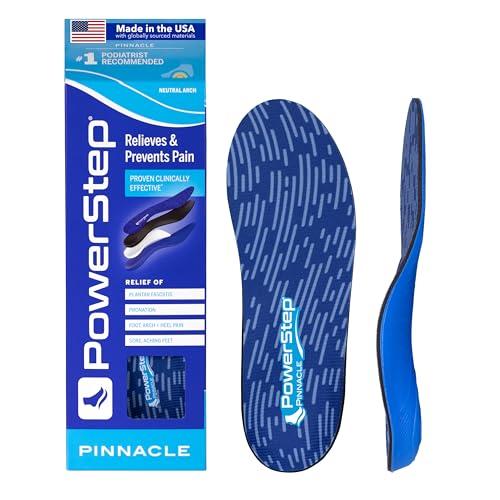
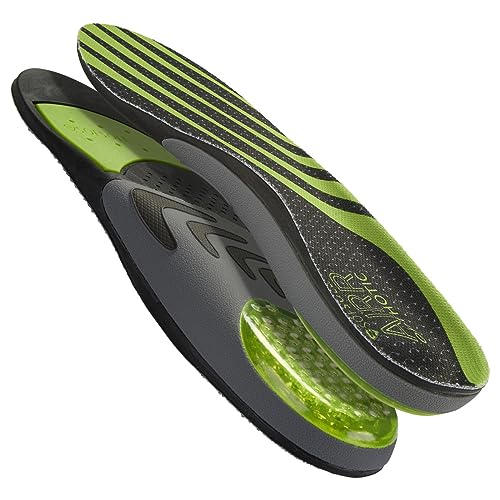
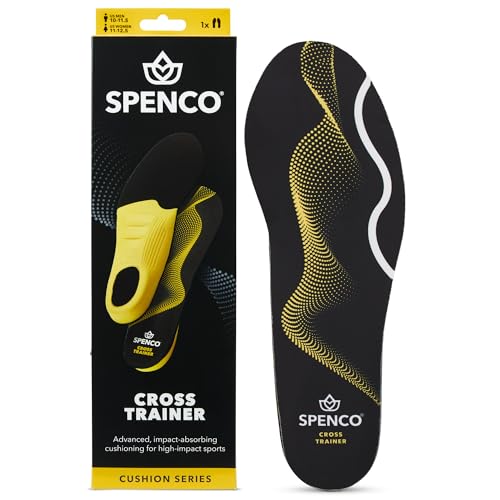
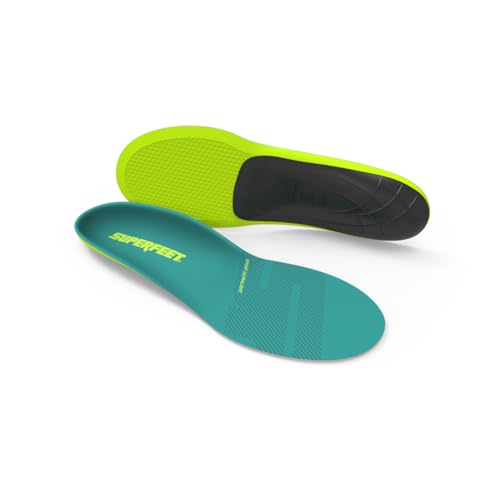
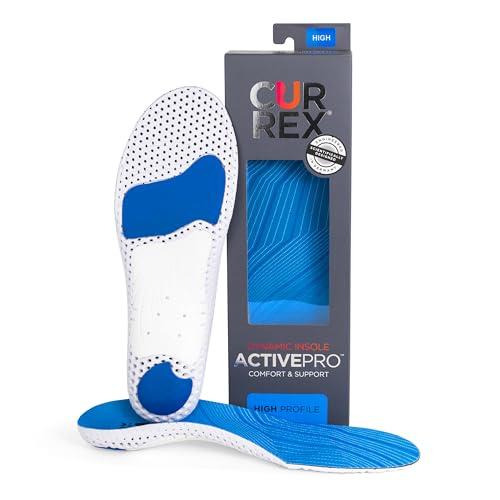
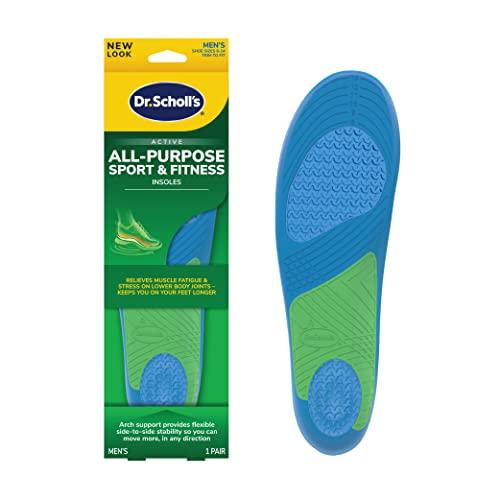
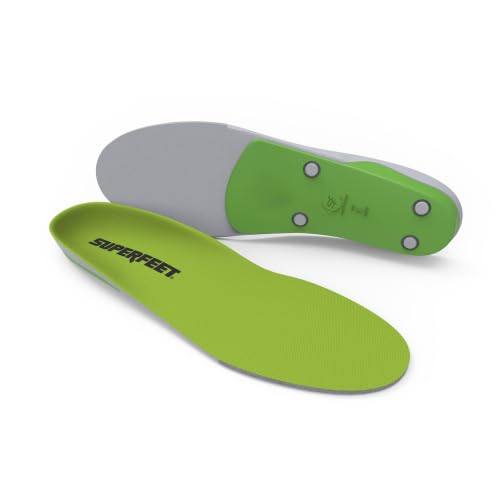
The best insole for most club players is the Superfeet All-Purpose Support High Arch, and it wins for an unglamorous reason: it is the only insole here whose shape is published as a spec rather than described in adjectives — arch shape “High”, profile “Moderate-high”, “Closed-cell, high density foam”, with a deep structured heel cup. If plantar fasciitis is why you are reading this, the PowerStep Pinnacle is sold on exactly that claim and sized by shoe size rather than trimmed. If your court shoes are already tight, the Superfeet Sport Ultralight is the low-bulk one. And if you have never used an insole and do not know whether it will help, the Dr. Scholl's Sport insole is the budget pick and the right first purchase — find out cheaply before you spend four times as much.
Two things have to be said before any of the picks, because they change how you read the rest of this page. First: nobody makes a tennis insole.Not Superfeet, not PowerStep, not CURREX, not Spenco. Every product below is sold as a running, cross-training or all-purpose insole, and anything that calls itself a “tennis insole” online is an athletic insole with a tennis photograph next to it. That is not a scandal, but it means you are choosing from a category that was not designed for your sport, and you have to do the matching yourself.
Second: none of them publish a thickness.Not one brand on this page publishes a thickness, a stack height, a volume figure or a durometer rating — and in a tennis shoe, volume is the whole problem. Court shoes are built snug on purpose, because a foot that slides inside the shoe cannot change direction with it. Put a thick support insole into a performance tennis shoe without removing the factory insole and you will lace it looser, which undoes the reason you bought a court shoe. We cannot tell you the millimeters because nobody prints them. We can tell you which picks are built to be low-bulk and which are not, and we have.
Why a tennis foot is a different problem
Running insoles are designed for load that arrives in one direction. Tennis load arrives sideways. Published injury guidance for court sports is explicit about what that does: “wearing running shoes for tennis significantly increases lateral ankle sprain risk because running shoes are designed for forward motion, not the lateral cuts that tennis requires constantly”, and court shoes answer it with “reinforced lateral walls, extra durability at the toe drag area, and appropriate lateral stability”.
Read that again, because it is the single most important limit on this entire category. The lateral stability comes from the shoe, not the insole. An insole cannot give a running shoe a reinforced lateral wall. If you are playing tennis in running shoes and your feet or ankles hurt, the fix is not an insert — it is a court shoe, and tennis shoes vs running shoes is the page that explains why in detail.
What an insole genuinely does for a tennis player is narrower and still worth money: it controls how your arch behaves under load, it cushions impact on hard courts, it takes up volume in a shoe that is slightly too roomy, and it replaces a factory insole that has packed flat halfway through a season. Those are four real jobs. None of them is “stability” in the sense a court shoe means it.
The criteria, in the order that decides your purchase
- Will it physically fit your shoe?First question, every time, and the one that sends most insoles back. A moderate-high profile support insole in a low-volume speed shoe does not fit, whatever the size chart says. Remove the factory insole first — not optional — and prefer a build described as light or thin if your shoes are snug.
- Structure or cushioning — which problem do you have?These are different products. A shaped, firm insole with a heel cup controls motion. A gel or foam insole absorbs impact. Both are called “insoles” and they are not substitutes: if hard courts are hammering your heels, a rigid support insole will not help, and if your arch is collapsing, gel will not hold it.
- Does the arch shape match your arch? The most common way an insole makes things worse. A high-arch shape under a flat foot is a lump in the wrong place. Where a brand sells one shape, read the shape it is published as; where it sells three (CURREX), buy the one that matches you.
- How is it sized? Trim-to-fit insoles are cut to your shoe using the old insole as a template, which is permanent and easy to get wrong. Size-run insoles arrive shaped and land the arch where the maker intended. For a tennis shoe, where a few millimeters at the toe decide whether your toes hit the bumper on a lunge, sized is safer.
- What will it cost you per season?Published lifespan guidance for the Superfeet picks is “up to 12 months or 500 miles, whichever comes first”. A club player who plays twice a week will reach that in a year; a league player sooner. Cheap insoles replaced annually are a legitimate strategy.
What the clinical guidance actually says about inserts
Insoles are sold with a lot of implied medicine, so here is what published orthopedic guidance commits to. On footwear and inserts for the most common foot complaint in recreational sport, OrthoInfo (the patient resource of the American Academy of Orthopaedic Surgeons) states that “Shoes with thick soles and extra cushioning can reduce pain with standing and walking”, that “A cushioned shoe or insert reduces this tension and the microtrauma that occurs with every step”, and that “Pre-made or custom orthotics (shoe inserts) are also helpful”.
Two details in that same guidance matter more than the product you choose. It says to “Avoid shoes that do not provide support or are worn out” and to “Make sure to replace your old athletic shoes before they wear out and no longer support your feet”. An insole in a dead shoe is a patch on a flat tire. If your court shoes have done a full season, how long tennis shoes last is the more useful page, and the money is better spent there.
And on expectations: the same guidance reports that “More than 90% of patients with plantar fasciitis will improve within 10 months of starting simple treatment methods”. Simple methods, plural — inserts are one of several, alongside stretching and footwear changes. Notably, that page does not compare over-the-counter orthotics with custom ones or say which works better, so neither will we. Anyone who tells you a pre-made insole equals a custom orthotic is selling, not citing.
Which pick, by what is actually bothering you
Your arch aches after two sets → a shaped support insole with a real heel cup. The Superfeet All-Purpose if your arch is medium-to-high, the PowerStep Pinnacle if the pain is in the heel rather than the arch.
Hard courts are pounding your heels → cushioning, not structure. The Sof Sole AIRR pairs air-capsule cushioning with a nylon arch plate; the Dr. Scholl's Sport gel insole is the cheap version of the same idea.
Your shoe fits but feels dead → the factory insole has packed out, which happens long before the outsole wears through. Any pick here replaces it; the Spenco Cross Trainer is the cheapest sensible swap and the only one here sold for side-to-side sport.
Your shoes are too tight for an insole → the Superfeet Sport Ultralight, which is built around being light and thin, or nothing at all. Do not force a high-volume insole into a performance shoe.
Your shoe is slightly too roomy → an insole is a legitimate volume filler, and it is the cheapest fix for a half-size-too-big shoe. If roominess is chronic across every shoe you buy, the shoe is the problem: court shoes for narrow feet ranks the models with measured narrow interiors.
How to put an insole in a tennis shoe properly
Take the old one out.Nearly every tennis shoe ships with a removable factory insole, and stacking a new insole on top of it is the single most common mistake in this category. It raises your foot in the shoe, lifts your heel toward the collar and makes the upper feel too tight across the top — which gets blamed on the insole when the cause is two insoles.
Trim with the old insole as a template, and cut less than you think. Lay the factory insole on top of the new one, line up the heels, trace, then cut outside the line. You can always take more off. Tennis shoes are tapered at the toe, so a trim that looks right on a table can still bunch at the front when you lunge.
Re-lace afterwards. A support insole changes how much room is left over your instep. If the shoe now feels tight across the top, skip an eyelet or use a window lacing pattern before you conclude the insole is wrong.
Give it three sessions, not three minutes.A shaped insole feels strange standing in your kitchen. What matters is how your feet feel in the third set, and whether the ache you bought it for is smaller. If something hurts in a new place, stop — that is the shape being wrong for your foot, not your foot needing to toughen up.
When to replace an insole
Published guidance from Superfeet, the only brand here that commits to a figure, is “up to 12 months or 500 miles, whichever comes first”, with three stated signs that an insole is finished: “white marks from bending on the plastic heel cup”, an arch support that is worn down, and the shape of your foot imprinted across the whole insole. That last one is the easiest to check and the most reliable.
For a tennis player, assume the shorter end of that. Lateral movement loads the edges of an insole in a way walking does not, and toe drag on serve chews the forefoot. If you play twice a week and your insole has done a season, it has done its season.
What an insole will not fix
A worn-out shoe. Covered above, and worth repeating because it is the most expensive mistake here: published guidance is to replace athletic shoes before they stop supporting your feet, not to re-line them.
The wrong shoe for your foot shape.An insole changes the inside of the shoe by a few millimeters; it does not change the last. If you have wide feet, the answer is a shoe built wide — court shoes for wide feet covers the models that actually come in width options. The same logic applies at the other end of the range.
A foot problem you have not had looked at.Persistent heel pain, numbness or pain that wakes you at night is not an insole purchase. Published guidance puts surgery on the table only after twelve months of aggressive nonsurgical treatment, which tells you how long these things can run — and how much better it is to start properly.
Blisters. Those are a sock-and-fit problem far more often than an insole problem. The tennis socks ranking is the cheaper first move, and a moisture-wicking insole top cover helps at the margin.
Where insoles sit against everything else
In the hierarchy of money that improves how tennis feels on your feet, the shoe comes first, socks come second, and insoles come third — ahead of almost everything else in the bag. If your feet are the reason you stop enjoying the third set, work down that list in order. How to choose tennis shoes is the right starting point, and the gear checklist puts the whole kit in priority order.
One last honest note on value. The cheapest insole on this page costs a fraction of the most expensive, and for a player whose feet are basically fine it will do the same job: replace a packed-out factory insole with something fresher. The expensive, shaped, arch-specific insoles earn their money for feet with a specific complaint. Buy up the range when you have a reason, not on principle.