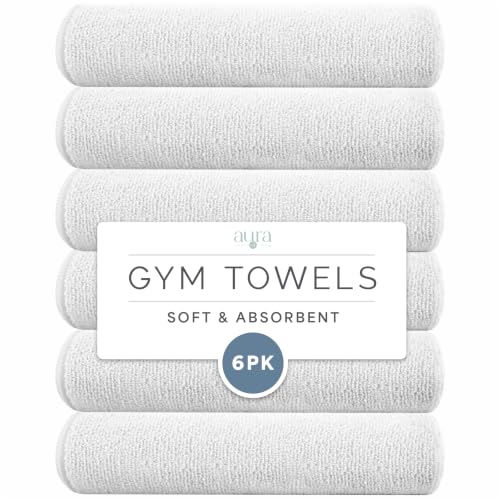
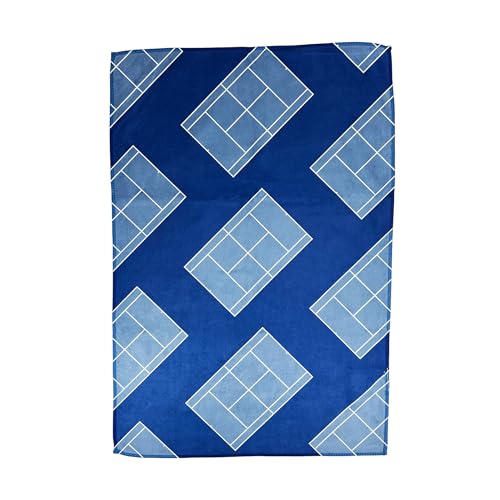
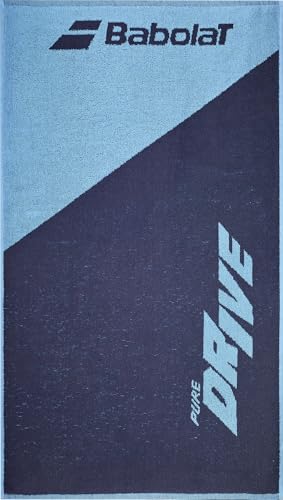
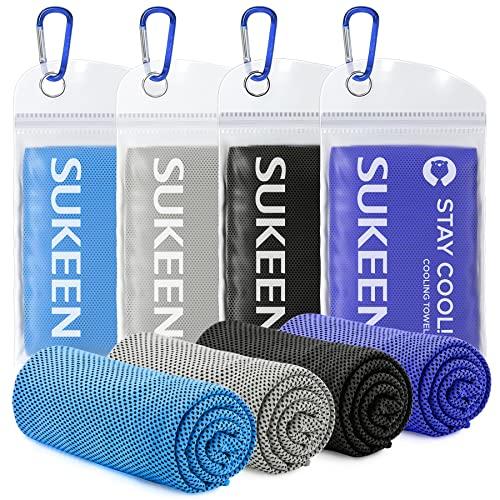
The best tennis towel for most club players is the Wilson Tour Towel: a proper tennis-company bench towel with the weight and drape to sit on a courtside bench and actually move sweat off your forearms between points. If you play more than once a week, buy the S&T six-pack instead — six published-size microfiber towels for less than one tennis-brand towel, because the real fix for a towel that smells is frequency, not fabric. The tennis-pattern microfiber towel is the compromise if you want microfiber drying with a towel that still looks like tennis kit, the Sukeen cooling four-pack is a different product for a different problem (heat, not sweat), and the Tourna Sport Towel is the budget pick from the company whose overgrip this site recommends everywhere.
A tennis towel is not a gym towel, and here is the actual difference
It would be easy to write this page as though “tennis towel” were marketing, and mostly it is — but not entirely. A towel used in tennis does three jobs a gym towel does not.
It hangs on a bench or a fence for an hour and gets grabbed one-handed, which wants weight and drape rather than a thin cloth that slides off. It dries a hand that is about to hold a grip, which is a different standard from drying a face — a slightly damp hand on a dry overgrip is fine, a wet hand on a worn grip is a mishit. And it lives in a closed racquet bag between sessions, which is why material matters more than it does for a towel that goes straight in the wash at home.
Everything below follows from those three jobs, and the honest conclusion of the page is that two cheap towels beat one expensive one for most club players.
The problem with this category: nobody publishes a size
This is the single most useful thing on the page, and it is a complaint rather than a feature. Wilson publishes no dimensions, no weight and no GSM for its Tour Towel. Babolat publishes a size class— “Medium” — and no inches. Tourna publishes “One Size”. Three tennis companies, three towels, zero measurements between them.
The only towels on this page with published dimensions are the two generic ones: the S&T multipack at 16 by 27 inches and the Sukeen cooling towels at 40 by 12 inches. Both of those are immediately useful numbers — 16 by 27 is hand-towel size, which is the right shape for a racquet bag, and 40 by 12 is long and narrow, which is why it works around a neck.
So the practical rule: if the exact size matters to you, buy a towel that publishes one. If you want the towel that looks right hanging on a club bench, you are buying a brand and a photograph, and you should know that is what you are doing.
Material: three different products under one word
Cotton-style bench towels (the Wilson, and most likely the Babolat and Tourna, though neither publishes a material) absorb a lot, feel plush, drape well and dry slowly. That last part is the catch: a heavy cotton towel goes back into a zipped bag damp and sours within a couple of days. If you buy one of these, it has to come out of the bag at home every single time.
Microfiber(the tennis-pattern towel, the S&T multipack) moves sweat fast and dries fast, which is exactly what a bag-dwelling towel needs. It feels slick rather than plush, and it is thinner, so it is a hand-and-face towel rather than something that hangs impressively. On microfiber, GSM is the number that separates a good towel from a flimsy one — and no towel on this page publishes it.
Cooling mesh (the Sukeen) is not a drying towel at all. You soak it, wring it and wear it, and it works by evaporation. It is the right answer to heat and the wrong answer to a slippery grip, because it is deliberately wet. If you play through a hot summer, a cooling towel and a drying towel are two items, not one.
The frequency argument, which is the real answer
Here is the thing most roundups in this category will not say: the most common towel problem is not absorbency, it is that the towel smells. That is a laundry-frequency problem dressed up as a product problem, and no amount of money fixes it.
If you play twice a week with one towel, that towel is damp in a bag for most of its life. If you play twice a week with six towels, every session starts with a clean dry one and the problem disappears. Six microfiber towels cost less than one tennis-brand towel, which is why the multipack ranks second on a page whose top pick is a single premium towel — it is the better buy for the player who plays most.
The sensible kit for a club player who plays regularly is one presentable bench towel and a stack of cheap microfiber ones, and that is what the top two picks here are.
Towel and grip: the interaction that actually costs you points
A towel exists in a racquet bag mostly because of your hands. Sweat travels down the forearm into the grip, and once an overgrip is saturated it stops being tacky and starts being slippery — which is a thrown racquet or a mishit, not a comfort issue.
The towel is half of that fix and the grip is the other half. If your hands sweat enough that you are thinking about towels, you should also be reading best overgrips for sweaty hands, because an absorbent overgrip like Tourna Grip XL Original (30-pack) changes the equation more than any towel does. The towel dries your hand between points; the grip has to survive the whole match.
Two habits that cost nothing: dry your forearm, not just your palm, because that is where the sweat comes from; and keep the towel folded so you always grab a dry face of it rather than the part you just used.
Which pick, by what is actually bothering you
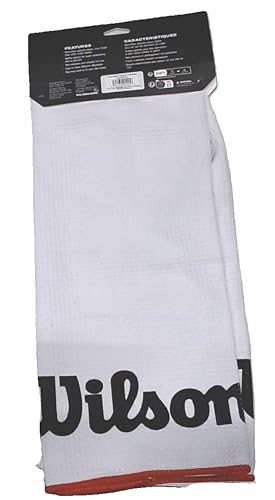
You want one towel that looks right at a club match → the Wilson Tour Towel. The weight and drape of a proper bench towel, from the biggest name in the sport.
You play two or three times a week → the S&T six-pack. Published 16 by 27 inch microfiber, one clean towel per session, for less than a single branded towel.
You want microfiber that does not look like gym kit → the tennis-pattern microfiber towel. Fast-drying, tennis-patterned, mid-bracket.
You want a tennis brand without the flagship price → the Babolat Medium Towel, which at least commits to a size class and sits at roughly half the Wilson.
Heat is what finishes you, not sweat → the Sukeen cooling four-pack. Published 40 by 12 inches, soaked at the changeover, worn on the neck. Not a drying towel.
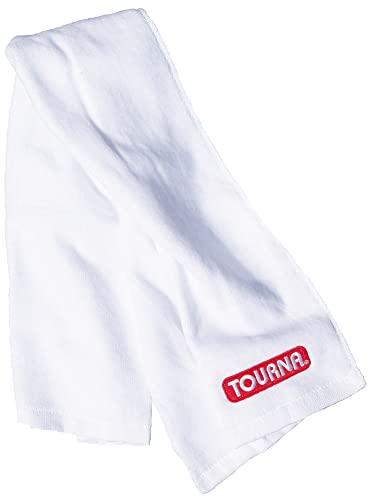
Budget, one towel, done → the Tourna Sport Towel. The cheapest tennis-brand option here, in white so you can see when it is genuinely dirty.
How to look after a tennis towel so it lasts a season
Take it out of the bag every time. This is the whole of towel care. A damp towel in a zipped racquet bag is a warm wet environment, and the smell that results is permanent long before the towel wears out. If you remember one thing from this page, it is this one.
Wash microfiber separately, and skip the fabric softener. Softener coats microfiber fibers and is the fastest way to turn a quick-dry towel into a cloth that pushes water around. Cotton bench towels do not mind it; microfiber does.
Do not use it on your shoes. Clay and hard-court grit are abrasive, and a towel that has wiped an outsole is no longer a towel you want on your face. If you play on clay, that is a second cheap towel, not the same one.
Wring a cooling towel properly. A soaked cooling towel dripping down your back is unpleasant and does not cool better. Wring it until it stops dripping, then wear it.
What a towel will not fix
A grip that is finished.Covered above and worth repeating, because it is the mistake this category invites. If the racquet is turning in your hand, the answer is a fresh overgrip, not more towelling — best tennis overgrips ranks the options, and an overgrip costs about a third of a cheap towel.
Heat exhaustion. A cooling towel helps at the margin. Shade, water, salt and stopping are the actual answers, and a towel is not a substitute for any of them.
Sunburn. A towel over the shoulders between games is not sun protection. That is a hat and sunscreen, and on a long summer morning both matter more than anything on this page.
Where the money goes in this category
Honestly? Mostly into the logo. A tennis-brand towel buys you weight, drape and the look of belonging on a club bench, and those are real things — but the drying is done at least as well by microfiber costing a fraction as much. This is the cheapest category on the whole site, and it is also the one where paying up buys the least measurable improvement.
That is not an argument against the Wilson. It is an argument for buying it and a multipack, spending less in total than one mid-range overgrip reel, and never thinking about towels again.