Skip to content
Four Oh Club

Know your level · Guides

How to Prevent Tennis Elbow

Tennis elbow is a load problem. Five things change the load on that tendon, and three of them cost less than a restring.

By Stephen V.Updated How we score
#ad

We earn a commission when you buy through our Amazon links, at no extra cost to you. It never changes our rankings, and we say so when the cheaper racquet is the better buy. How this works.

To prevent tennis elbow: string with a soft multifilament rather than a stiff polyester, drop your tension a few pounds, make sure your grip is not too small, stop squeezing the handle, and hit the ball in front of you rather than late. Those five things change how much load reaches the tendon on the outside of your elbow, which is the only thing that determines whether you get tennis elbow or not. If you only do one, change the string. It is the cheapest and the highest-leverage.

Here is the mechanism, because it makes every recommendation below obvious. Per OrthoInfo, the patient-education site of the American Academy of Orthopaedic Surgeons, tennis elbow — lateral epicondylitis — is an overuse injury: "microtearing of the tendons that join the forearm muscles on the outside of the elbow," usually involving the extensor carpi radialis brevis, a muscle that "helps stabilize the wrist when the elbow is straight."

So it is not a mystery and it is not bad luck. It is a tendon taking more cumulative load than it can repair between sessions. Prevention is therefore a single question asked five ways: what is putting load through that tendon, and can I reduce it?

Worth knowing, and genuinely reassuring: OrthoInfo notes that "athletes are not the only people who get tennis elbow" — painters, plumbers, carpenters and cooks get it at higher rates than the general population — and that most sufferers are between 30 and 50. If you have a day job that involves gripping tools, that is part of your load budget too.

1. Change your string. This is the big one.

A stiff polyester string at a high tension is the single most common equipment cause of elbow pain in club tennis, and it is also the easiest thing on this page to change.

Why it matters: a stiff string bed does not stretch much on impact, so more of the collision energy comes back up the frame into your arm instead of being absorbed by the strings. Poly is popular because it gives control and spin to players who swing fast enough to need them. If you are not swinging that fast, you are paying the arm cost of poly and collecting none of the benefit.

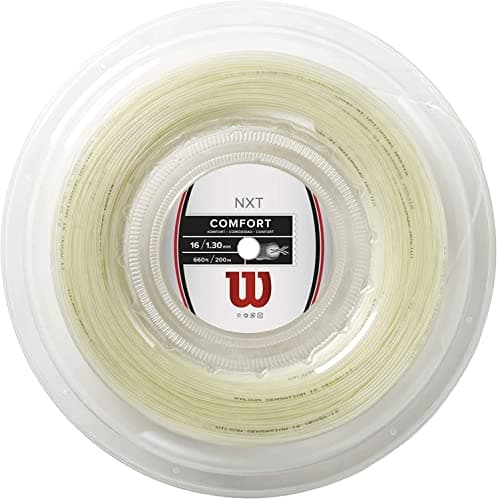
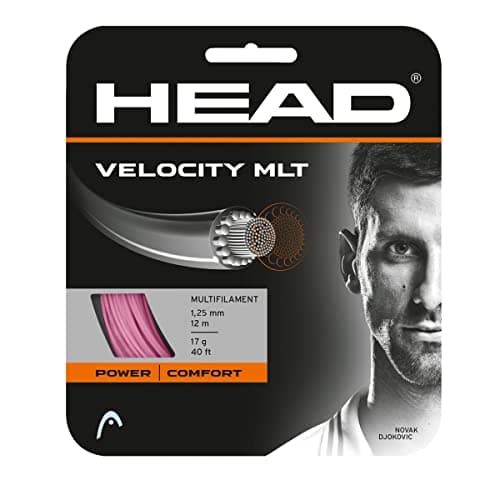
What to use instead: a multifilament. Thousands of fine fibers bundled in a matrix, which stretches on impact and gives the ball back depth rather than giving your arm back shock. Wilson NXT and HEAD Velocity MLT are the two to know. The full comparison is in the arm-friendly strings page and poly vs multifilament.

And drop the tension. A few pounds lower is a softer string bed, more dwell time and less shock. If your racquet's range is 50–60 lb and you have been at 58, try 52. It costs nothing extra and you will feel it immediately. The trade-off is slightly less control, which for most club players is a trade worth making — the tension guide has the detail.

2. Check your grip size

A handle that is too small makes you squeeze harder to stop the frame twisting in your hand, and squeezing harder is direct load on the extensor tendon. A grip that is too small is one of the recognized contributors to tennis elbow, and it is the mistake the club-shop instinct pushes you toward, because a smaller grip feels more maneuverable in the shop.

Measure it properly — it takes a ruler and thirty seconds, and the method is in the grip size chart. If you are between sizes, buy the smaller frame and build it up: every overgrip adds roughly half a size, so you can always go bigger and you can never go smaller.

3. Stop over-gripping

Free, immediate, and the one most people ignore. Grip pressure should be light through the swing and rise only at contact. A permanent death-grip stiffens the wrist (so you lose racquet-head speed and compensate with your arm), transmits more shock, and keeps that forearm muscle loaded for the entire two hours rather than for the twenty milliseconds of each impact.

The practical cue: hold it firmly enough that someone could not pull it out of your hand, and no firmer. If your forearm is tired before your legs are, you are gripping too hard. More on hand position in how to grip a tennis racket.

4. Hit the ball in front of you

This is the technique half, and it is the one a coach is for — but the principle is simple enough to be useful on its own.

A late ball, caught beside or behind your body, is hit with the arm and the wrist because the body has already rotated past it. That puts the whole collision through the forearm. A ball met out in front, with your shoulder turned and your weight moving forward, is hit with the kinetic chain — legs, hips, trunk, shoulder — and the forearm is along for the ride.

The same logic is why a one-handed backhand hit late is notorious for causing this exact injury: late contact on that shot puts the extensor tendon under tension at the worst possible moment. If you hit a late one-hander and your elbow hurts, that is the cause and no brace fixes it.

5. Manage your total load, not just your tennis

Tendons fail from cumulative load with insufficient recovery. Three practical consequences:

Ramp up gradually. Going from once a week to four times a week at the start of a season is the classic way to acquire this injury. It is also why these searches peak in September, at the end of a northern-hemisphere season of accumulated volume.

Warm up the forearm, not just the legs. A few minutes of easy mini-tennis before you start hitting hard does more for your elbow than any gear change.

Count your non-tennis load. A weekend of painting, a day with a drill, or a lot of typing all load the same tendon. If you have a heavy week at work, that is not the week to add a third match.

What a brace does, honestly

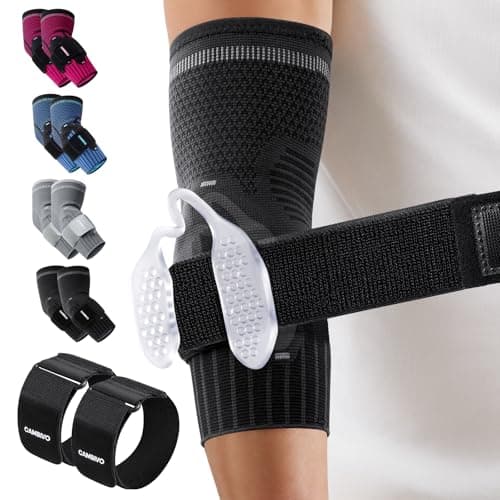
A counterforce strap is useful, and it is useful for a specific reason. It gives the forearm muscle a second anchor point an inch or two below the elbow, so some of the force generated when you hit is absorbed there rather than pulling on the tendon's attachment at the bone. OrthoInfo lists it among standard nonsurgical treatments: "using a brace centered over the back of your forearm may also help relieve symptoms."

What it does not do: heal the tendon, or change the string, the grip size or the late forehand that caused the problem. Wearing a brace so you can keep playing through pain is not prevention — it is deferral. Buy one as a tool alongside the five fixes above, not instead of them. The CAMBIVO two-pack is the one to buy, for the simple reason that two in the box means one lives in the racquet bag permanently; the alternatives are in the brace ranking.

If it already hurts

This page is about prevention, so briefly and carefully.

OrthoInfo's first listed nonsurgical step is rest — stopping the activities that cause the painful symptoms "for several weeks" — followed by NSAIDs, physical or occupational therapy with specific exercises, and a brace. It reports that "approximately 80 to 95% of patients have success with nonsurgical treatment." That is a good number, and it is a number that depends on the rest actually happening.

We are a gear site, not a clinic. If your elbow hurts at rest, if your grip strength has dropped, or if it has not improved after a few weeks of backing off, that is a conversation with a physician rather than a purchase. The equipment changes on this page are what you do once it settles, so that it does not come back.

And if you are replacing the frame anyway, a heavier, more flexible racquet transmits less shock than a light stiff one — arm-friendly racquets ranks them.

And one piece of equipment to cross off the list: a vibration dampener will not prevent tennis elbow. It absorbs the stringbed's ping rather than the frame shock that travels into your forearm. Buy one because you prefer the sound; change your string, your tension or your frame to protect the arm.
The short answer

Quick picks

#Racquet / gearBest forScorePrice
01
Wilson Wilson NXT 16 (200 m reel)
Wilson NXT 16 (200 m reel)

The premium multifilament, bought the sensible way — a reel. The closest a synthetic string gets to natural gut, at a tenth of gut's price.

Comfort and feel
6.6
$276.21Amazon
02
HEAD HEAD Velocity MLT 17 (set)
HEAD Velocity MLT 17 (set)

The budget multifilament, and the right first upgrade from factory string — comfortable, lively and genuinely cheap.

Arm-friendly on a budget
7.0
$10.00Amazon
03
CAMBIVO CAMBIVO Tennis Elbow Brace (2-Pack)
CAMBIVO Tennis Elbow Brace (2-Pack)

The brace to buy first: a two-pack of dual-gel-pad straps, so one lives in the racquet bag and one lives at home and you never skip wearing it because it is in the wrong place.

Most players with elbow pain
8.4
$19.99Amazon

#ad · Live prices from the Amazon Product API, as of October 20, 2026. Where we have no verified live price, we show none — we would rather leave a gap than print a number that has rotted.

In detail

The picks, in full

01
Wilson Wilson NXT 16 (200 m reel)

Comfort and feel

Wilson NXT 16 (200 m reel)

Multifilament16g / 1.30 mm200 m reel (~16 jobs)High elasticity
6.6/10

The premium multifilament, bought the sensible way — a reel. The closest a synthetic string gets to natural gut, at a tenth of gut's price.

Control
6
Spin
5
Comfort
10
Durability
4
Value
8

Pros

  • Thousands of fibers bundled in polyurethane give it the elastic, ball-pocketing feel of natural gut
  • The most arm-friendly synthetic string widely sold — the first thing to try if your elbow hurts
  • A 200 m reel works out to a fraction of the per-job cost of sets

Cons

  • Multifilament frays and breaks far faster than poly if you hit heavy spin
  • A reel is a large up-front purchase that only pays back if you restring often

Don't buy this if…

…you break strings in under ten hours. You will be restringing weekly and should hybrid with a poly.

$276.21View on Amazon

$324.9515% off

Price as of October 20, 2026. Prices change — Amazon's is the one that counts.

#ad · we may earn a commission from this link to Wilson NXT 16 (200 m reel)

02
HEAD HEAD Velocity MLT 17 (set)

Arm-friendly on a budget

HEAD Velocity MLT 17 (set)

Multifilament17g / 1.25 mm40 ft setNylon multifilament
7.0/10

The budget multifilament, and the right first upgrade from factory string — comfortable, lively and genuinely cheap.

Control
6
Spin
5
Comfort
9
Durability
5
Value
10

Pros

  • Multifilament comfort at roughly a third of NXT's per-set price
  • The cheapest meaningful step a 3.0–3.5 player can take toward a softer string bed
  • Lively enough to add free depth to a low-powered frame

Cons

  • Frays and breaks faster than NXT, never mind poly
  • Less control than any polyester — big swings will send balls long

Don't buy this if…

…you break strings every few sessions. Hybrid it with a poly in the mains instead.

$10.00View on Amazon

Price as of October 20, 2026. Prices change — Amazon's is the one that counts.

#ad · we may earn a commission from this link to HEAD Velocity MLT 17 (set)

03
CAMBIVO CAMBIVO Tennis Elbow Brace (2-Pack)

Most players with elbow pain

CAMBIVO Tennis Elbow Brace (2-Pack)

2 braces per packDual gel padsAdjustable strapCounterforce style
8.4/10

The brace to buy first: a two-pack of dual-gel-pad straps, so one lives in the racquet bag and one lives at home and you never skip wearing it because it is in the wrong place.

Effectiveness
8
Build
7
Ease of use
9
Comfort
8
Value
10

Pros

  • A counterforce strap works by moving load off the tendon's attachment point, which is a real mechanism rather than a comfort illusion
  • Two in the pack solves the reason people stop wearing a brace — it is in the other bag
  • Dual pads spread pressure over a wider area than a single-pad strap, which is what stops it digging in across a two-hour match

Cons

  • A strap manages the symptom. It does nothing about the stiff frame, the tight polyester or the late forehand that caused it
  • Sized by adjustment rather than by measurement, so a very slim or very large forearm sits near the end of the range

Don't buy this if…

…you have not changed your string setup yet. A softer string at a lower tension is the first intervention and it is cheaper than a season of physical therapy.

$19.99View on Amazon

Price as of October 20, 2026. Prices change — Amazon's is the one that counts.

#ad · we may earn a commission from this link to CAMBIVO Tennis Elbow Brace (2-Pack)

How we picked

We have not physically tested this gear

Everyone in this category says they tested twenty racquets. We have not tested any — and we say so. What we did instead: compiled the manufacturer-published specifications (head size, strung weight, string pattern, stiffness, outsole compound), normalized them, and scored each product against a published rubric weighted for the NTRP tier this page serves. The scores are judgments from documented research, not measurements we took, because we do not have a lab and are not going to pretend we do.

Questions

Frequently asked

How do you prevent tennis elbow when playing tennis?
Reduce the load reaching the tendon: string with a soft multifilament instead of a stiff polyester, drop tension a few pounds, make sure your grip is not too small, hold the handle lightly, and meet the ball in front of your body rather than late. If you only change one thing, change the string — it is the cheapest and highest-leverage fix.
What is tennis elbow, exactly?
Per OrthoInfo (American Academy of Orthopaedic Surgeons), it is an overuse injury — "microtearing of the tendons that join the forearm muscles on the outside of the elbow" — usually involving the extensor carpi radialis brevis. Most people who get it are between 30 and 50, and it is common in non-athletes too, including painters, plumbers and carpenters.
Do tennis strings cause tennis elbow?
A stiff polyester at a high tension is the most common equipment contributor in club tennis. A stiff string bed does not stretch much on impact, so more collision energy travels up the frame into your arm. A multifilament at a lower tension absorbs more of it, and costs the same to install.
Does a tennis elbow brace prevent tennis elbow?
It reduces load during activity rather than preventing the injury. A counterforce strap gives the forearm muscle a second anchor point so some force bypasses the tendon attachment, and OrthoInfo lists a brace among standard nonsurgical treatments. But it does not change the string, the grip size or the technique that caused the problem.
Should I stop playing tennis if I have tennis elbow?
Rest is the first nonsurgical step OrthoInfo lists — stopping the activities that cause pain for several weeks — and it reports roughly 80 to 95% of patients succeed with nonsurgical treatment. Playing through it in a brace defers the problem rather than solving it. If it hurts at rest or your grip strength has dropped, see a physician.

Keep reading

Receipts

Sources

We do not run a testing lab, and we do not pretend to. Our specs come from manufacturer listings and spec sheets; our rules and dimensions come from the official rulebook. Where we could not verify something, we say so on the page rather than quietly leaving it out. Read our full method.