Skip to content
Four Oh Club

Bags, machines & training · Gear

The Best Portable Tennis Ball Machines

A ball machine you do not take to the court is worth nothing. So this ranking starts with published weight and works outward, because weight is the thing that decides whether you use it.

By Stephen V.Updated How we score
#ad

We earn a commission when you buy through our Amazon links, at no extra cost to you. It never changes our rankings, and we say so when the cheaper racquet is the better buy. How this works.

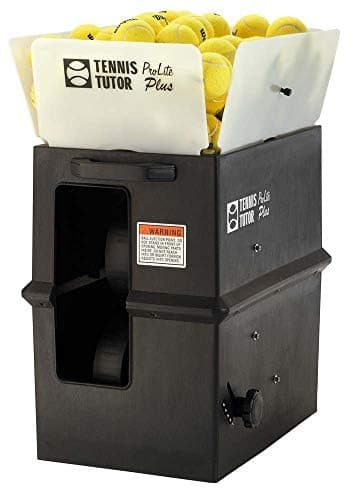
The most portable tennis ball machine on this site is the TENNIIX Basic at a published 18.7 lb — light enough to carry in one hand with a bag on the other shoulder, with a 100+ ball hopper and a 4 hour runtime. The best balance of portable and serious is the Tennis Tutor ProLite Plus, which is the lightest full-featured machine from an established maker. If you want the brand with the longest service record and will accept a published ~35 lb, the Lobster Elite Liberty. And the cheapest machine here that is still a real machine is the Nisplay at a published 26 lb with dual motors for genuine topspin.

This page is written for one constraint: you have to move the thing. If you had a court in your yard and a shed beside it, weight would be irrelevant and you would buy on feed quality. Most people do not. Most people carry a machine from a trunk, across a parking lot, possibly down a flight of steps, onto a court, and back again — twice a week if it is easy and never if it is not.

What "portable" actually means

Every ball machine listing says portable. The word is doing almost no work, so here is what to check instead.

Published weight, with the battery in it. This is the number that decides everything. Under about 20 lb you carry it one-handed like a suitcase. Twenty-five to 35 lb is a two-handed carry you can manage alone but will think about. Above 40 lb you want the wheels and a ramp, and stairs become a genuine obstacle. The machines here publish 18.7 lb, 26 lb and about 35 lb respectively, which is a real spread.

Does it fold, and into what shape? A machine that collapses into a box shape fits a trunk; one that keeps a tall hopper does not. This is where photographs lie and dimensions do not.

Battery, and where the battery lives. An internal battery is one object to carry. An external battery pack is lighter to lift in two trips but is a second thing to remember, and it is the component most likely to degrade with age. The Nisplay's published 4+ hour runtime is an external lithium pack; the TENNIIX publishes 4 hours.

Hopper size, because it is a portability spec. This is the one people miss. A small hopper means you stop every few minutes to collect balls, which is the real tax on a solo session. The TENNIIX publishes 100+ balls, the Nisplay 80+, the Lobster Elite Two 150. Pair any of them with a pick-up hopper and the collecting stops being the workout.

What you give up to go light

There is a real trade here and the category does not advertise it.

Ball speed. Lighter machines top out lower. The Nisplay publishes a 68 mph maximum and the TENNIIX 75 mph; a heavy club machine will do considerably more. For a 3.0 to 4.0 player drilling groundstrokes, 68 to 75 mph is plenty. For a 4.5 player wanting match-pace balls, it is not.

Oscillation and programmability. The heavy machines move the ball around the court in patterns: the Lobster Elite Two publishes triple oscillation and a 10-function remote, the Spinshot Plus-2 publishes app-controlled programmable drill sequences. A light machine typically gives you one axis of movement or none. If your weakness is moving to the ball rather than hitting it, this matters more than weight does.

Longevity and service. The lightest machines here are also the newest entrants, and an established maker with a parts and service network is worth real money on a purchase at this price. Tennis Tutor publishes its ProLite Plus as made in the USA; Lobster has been in this category for decades. That is the honest argument against buying the lightest thing available.

Stability in wind. A light machine on a breezy court is a light machine on a breezy court. Nobody publishes this and everybody discovers it.

So which one should you buy?

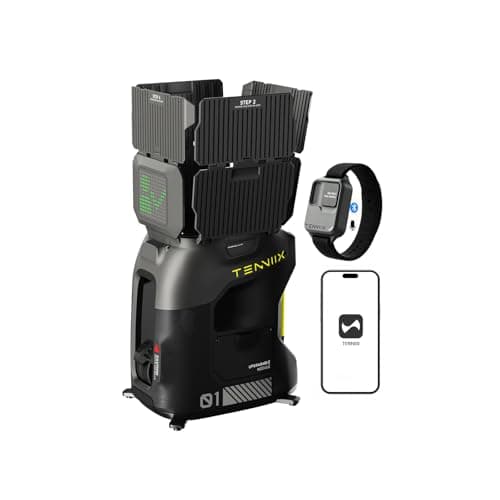
Weight is your binding constraint → TENNIIX Basic, at a published 18.7 lb with a 100+ ball hopper. If the reason you do not own a ball machine is that you cannot face carrying one, this is the answer. Our full look at it is the TENNIIX review.

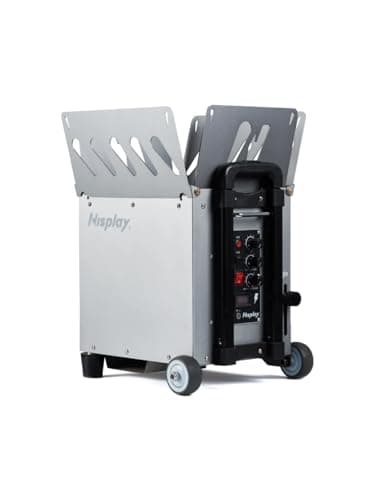
Cheapest real machine → Nisplay, 26 lb published, dual motors for genuine topspin and backspin rather than a flat feed. Dual motors at this price is the spec that separates a machine from a toy.

Portable but from an established maker → Tennis Tutor ProLite Plus. One-touch topspin and underspin, a built-in oscillator, up to 75 mph, and a company with a service history. The sensible middle of this page.

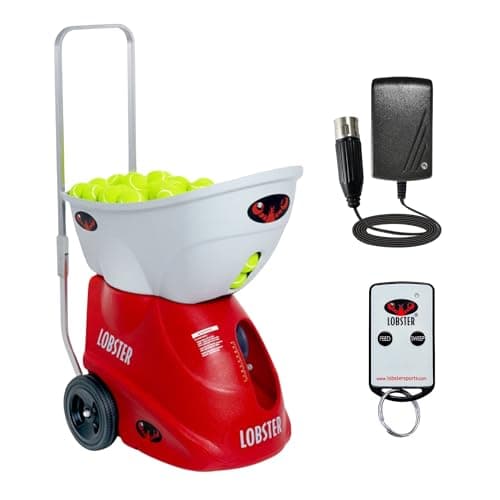
You will carry 35 lb for a better machine → Lobster Elite Liberty, with random horizontal oscillation and a 2 to 4 hour battery. The entry point to the brand most clubs use.

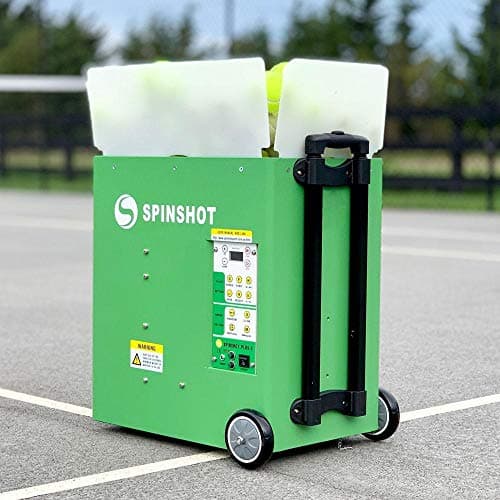
You want programmed drills more than a light carry → Spinshot Plus-2, app-controlled with programmable sequences. This is a different purchase: not portable so much as transportable.

If portability is not actually your constraint, the broader rankings are the best tennis ball machines and the budget machines. And if you want to practice alone without buying a machine at all, that is a real option — how to practice tennis alone covers rebound nets and swing trainers, which cost a fraction of this.

Two things to buy with it

Practice balls, by the box. A machine eats balls and dead balls feed badly. Pressureless practice balls are the standard answer and they do not go flat in the hopper — see the longest lasting tennis balls.

A pick-up hopper. You are about to hit a hundred balls to one end of a court and then go and get them. A press-down hopper turns twenty minutes of bending into three minutes of walking: the ball hopper ranking.

One honest note on the ranking above: every weight, speed, capacity and runtime figure on this page is the manufacturer's published number, and we have not weighed, timed or clocked any of these machines. We do not own them. The scores are judgments from those published specifications against our rubric, weighted here toward portability because that is what this page is for.

Two machines that belong in any portability conversation but are not sold on Amazon, so they cannot be ranked here with a live price: the Proton, which publishes under 20 lb in backpack dimensions with app shot placement, and the Slinger Bag, which solves portability by being a wheeled bag rather than a light box. Both pages set out the published specs and say plainly what we cannot verify.
The short answer

Quick picks

#Racquet / gearBest forScorePrice
01
TENNIIX TENNIIX Basic Tennis Ball Machine
TENNIIX Basic Tennis Ball Machine

The lightest machine on this site at a published 18.7 lb, with app and voice control at a price where most machines have a single dial.

Lightest to carry
7.8
$899.99Amazon
02
Nisplay Nisplay Portable Tennis Ball Machine
Nisplay Portable Tennis Ball Machine

The cheapest tennis ball machine we can find that is still a real machine: dual motors for genuine topspin, 80+ balls, and under 30 lb to carry.

The cheapest real machine
7.4
$889.00Amazon
03
Tennis Tutor Tennis Tutor ProLite Plus
Tennis Tutor ProLite Plus

The light one. Under the weight of the Lobsters with one-touch spin and 75 mph feeds — the machine for someone who has to carry it up steps.

Lightest full machine
8.4
$1,329.00Amazon
04
Lobster Sports Lobster Sports Elite Liberty
Lobster Sports Elite Liberty

The ball machine to buy. Battery powered, genuinely portable, with oscillation and spin — the cheapest machine that is not a compromise.

Most club players
8.4
$1,179.00Amazon
05
Spinshot Spinshot Plus-2 Ball Machine
Spinshot Plus-2 Ball Machine

The programmable one. Spinshot's machines run app-controlled drill sequences, which is a genuinely different training tool from a feeder.

Programmable drills
7.6
$1,899.00Amazon

#ad · Live prices from the Amazon Product API, as of October 19, 2026. Where we have no verified live price, we show none — we would rather leave a gap than print a number that has rotted.

In detail

The picks, in full

01
TENNIIX TENNIIX Basic Tennis Ball Machine

Lightest to carry

TENNIIX Basic Tennis Ball Machine

100+ ball capacity18.7 lb75 mph4 hr runtime
7.8/10

The lightest machine on this site at a published 18.7 lb, with app and voice control at a price where most machines have a single dial.

Feed quality
7
Build
6
Portability
10
Programmability
8
Value
8

Pros

  • 18.7 lb published weight is light enough to carry in one hand with a bag over the other shoulder, which is the difference between using a machine and leaving it at home
  • 100+ ball capacity is the largest hopper in this price band
  • Smart app and voice control plus multiple training modes, which at this price is unusual — most budget machines offer a speed dial and nothing else

Cons

  • Listed as 'Basic' in the maker's own range, so the feature set is the entry point rather than the full version
  • Availability has been intermittent — the listing has shown multi-day dispatch estimates rather than immediate stock

Don't buy this if…

…you want a machine that will still be serviceable in ten years. The established brands have parts and service networks that a newer entrant does not.

$899.99View on Amazon

Price as of October 19, 2026. Prices change — Amazon's is the one that counts.

#ad · we may earn a commission from this link to TENNIIX Basic Tennis Ball Machine

02
Nisplay Nisplay Portable Tennis Ball Machine

The cheapest real machine

Nisplay Portable Tennis Ball Machine

80+ ball capacity26 lbMax 68 mph4+ hr external battery
7.4/10

The cheapest tennis ball machine we can find that is still a real machine: dual motors for genuine topspin, 80+ balls, and under 30 lb to carry.

Feed quality
7
Build
6
Portability
9
Programmability
6
Value
9

Pros

  • Dual motors, which is what allows real topspin and backspin rather than a flat feed — single-motor machines at this price cannot do it
  • 26 lb published weight means one person can get it out of a car and onto a court without help
  • 80+ ball capacity is roughly two hoppers, so a solo session does not become a collecting session every four minutes

Cons

  • 68 mph top speed is well below the tour-level machines; it will not simulate a 4.5 opponent's pace
  • The 4+ hour runtime figure is for the external lithium battery, which is the part most likely to degrade with age

Don't buy this if…

…you are a 4.5+ player wanting match-pace drilling. Buy the Lobster Elite Liberty or above, where the speed range and programmability actually match your game.

$889.00View on Amazon

Price as of October 19, 2026. Prices change — Amazon's is the one that counts.

#ad · we may earn a commission from this link to Nisplay Portable Tennis Ball Machine

03
Tennis Tutor Tennis Tutor ProLite Plus

Lightest full machine

Tennis Tutor ProLite Plus

Up to 75 mphOne-touch topspin/underspinBuilt-in oscillatorMade in USA
8.4/10

The light one. Under the weight of the Lobsters with one-touch spin and 75 mph feeds — the machine for someone who has to carry it up steps.

Portability
10
Features
7
Build
9
Ease of use
9
Value
7

Pros

  • The lightest full-feature machine here, which is the single biggest predictor of whether a machine gets used
  • One-touch spin switching means you change from topspin to slice without a settings menu
  • 75 mph top speed is genuinely enough to practice returns against

Cons

  • Smaller ball capacity than the Lobster Elite Two
  • Fewer drill features for a comparable price

Don't buy this if…

…you leave the machine at a home court. Buy the feature set instead of the light weight.

$1,329.00View on Amazon

Price as of October 19, 2026. Prices change — Amazon's is the one that counts.

#ad · we may earn a commission from this link to Tennis Tutor ProLite Plus

04
Lobster Sports Lobster Sports Elite Liberty

Most club players

Lobster Sports Elite Liberty

Battery, 2-4 hr runtimeRandom horizontal oscillationTopspin/backspin~35 lb
8.4/10

The ball machine to buy. Battery powered, genuinely portable, with oscillation and spin — the cheapest machine that is not a compromise.

Portability
9
Features
7
Build
9
Ease of use
9
Value
8

Pros

  • Battery operation and large wheels mean one person can actually get it onto a public court — the thing that decides whether a machine gets used
  • Random horizontal oscillation makes you move, which is the entire reason to own a machine rather than a basket
  • Adjustable topspin and backspin, not just a feed

Cons

  • Horizontal oscillation only — no vertical, so every ball arrives at the same depth
  • Four figures. This is the most expensive thing on the site

Don't buy this if…

…you want varied depth as well as width. Step up to the Elite Two for vertical oscillation.

$1,179.00View on Amazon

Price as of October 19, 2026. Prices change — Amazon's is the one that counts.

#ad · we may earn a commission from this link to Lobster Sports Elite Liberty

05
Spinshot Spinshot Plus-2 Ball Machine

Programmable drills

Spinshot Plus-2 Ball Machine

App-controlledProgrammable drill sequencesFull oscillationPhone app
7.6/10

The programmable one. Spinshot's machines run app-controlled drill sequences, which is a genuinely different training tool from a feeder.

Portability
7
Features
10
Build
8
Ease of use
7
Value
6

Pros

  • Programmable six-shot drill sequences let you rehearse real patterns of play, not just one repeated ball
  • Phone app control replaces walking back to the machine between settings
  • Combines the Plus and Player feature sets in one unit

Cons

  • The most expensive machine here
  • App-dependence is a long-term risk if support lapses

Don't buy this if…

…you want to buy a machine and never think about software. The Lobsters are knobs and switches.

$1,899.00View on Amazon

Price as of October 19, 2026. Prices change — Amazon's is the one that counts.

#ad · we may earn a commission from this link to Spinshot Plus-2 Ball Machine

How we picked

We have not physically tested this gear

Everyone in this category says they tested twenty racquets. We have not tested any — and we say so. What we did instead: compiled the manufacturer-published specifications (head size, strung weight, string pattern, stiffness, outsole compound), normalized them, and scored each product against a published rubric weighted for the NTRP tier this page serves. The scores are judgments from documented research, not measurements we took, because we do not have a lab and are not going to pretend we do.

Questions

Frequently asked

What is the most portable tennis ball machine?
The TENNIIX Basic, at a published 18.7 lb with a 100+ ball hopper and a 4 hour runtime — light enough for a one-handed carry. The Nisplay is next at a published 26 lb and costs less, and the Tennis Tutor ProLite Plus is the lightest full-featured machine from an established maker.
How heavy is too heavy for a portable ball machine?
Under about 20 lb you carry it one-handed. Twenty-five to 35 lb is a manageable two-handed carry. Above 40 lb you are depending on wheels, and a flight of steps between the parking lot and the court becomes the thing that decides whether you use the machine at all. Check the published weight with the battery included.
Do portable ball machines have oscillation?
Some do and the light ones mostly do not. The Lobster Elite Liberty publishes random horizontal oscillation, the Lobster Elite Two publishes triple oscillation with a 10-function remote, and the Spinshot Plus-2 publishes app-controlled programmable sequences. The lightest machines generally feed to one spot, which is fine for grooving a stroke and poor for footwork.
How many balls should a portable machine hold?
Think of hopper size as a portability spec. Eighty balls is roughly two hoppers and gives you several minutes of hitting before you collect; 100+ is better. A small hopper turns a solo session into a collecting session, which is the real tax on practicing alone.
What balls should I use in a ball machine?
Pressureless practice balls. They have no internal pressure to lose, so they do not go flat sitting in a hopper, and machines feed them consistently. A machine is unforgiving of soft or inconsistent balls. Keep your pressurized match balls for matches.

Keep reading

Receipts

Sources

We do not run a testing lab, and we do not pretend to. Our specs come from manufacturer listings and spec sheets; our rules and dimensions come from the official rulebook. Where we could not verify something, we say so on the page rather than quietly leaving it out. Read our full method.